Event submissions
Published
This submission belongs to the session S1. Digital Health Adoption and Innovation—A Vision for the Future of Healthcare of the event The 1st International Online Conference on Healthcare
Published date
20 Mar, 2026
Academic Editor
'%3e%3cpath%20d='M12.6657%2010.9104C12.4185%2010.325%2012.0599%209.79327%2011.6097%209.34482C11.1609%208.89508%2010.6293%208.5365%2010.0442%208.28888C10.0389%208.28626%2010.0337%208.28495%2010.0285%208.28233C10.8446%207.69279%2011.3752%206.73249%2011.3752%205.64904C11.3752%203.8542%209.92103%202.39999%208.1262%202.39999C6.33136%202.39999%204.87715%203.8542%204.87715%205.64904C4.87715%206.73249%205.40774%207.69279%206.22393%208.28364C6.21869%208.28626%206.21345%208.28757%206.20821%208.29019C5.62129%208.5378%205.09463%208.89284%204.64265%209.34613C4.1929%209.79493%203.83432%2010.3266%203.58671%2010.9117C3.34345%2011.4845%203.21226%2012.0987%203.20023%2012.7209C3.19988%2012.7349%203.20233%2012.7488%203.20744%2012.7619C3.21255%2012.7749%203.22022%2012.7867%203.22998%2012.7968C3.23975%2012.8068%203.25142%2012.8147%203.26431%2012.8202C3.2772%2012.8256%203.29105%2012.8284%203.30504%2012.8284H4.09109C4.14874%2012.8284%204.19459%2012.7825%204.1959%2012.7262C4.2221%2011.7148%204.62823%2010.7676%205.34617%2010.0497C6.08899%209.30683%207.0755%208.89808%208.1262%208.89808C9.17689%208.89808%2010.1634%209.30683%2010.9062%2010.0497C11.6242%2010.7676%2012.0303%2011.7148%2012.0565%2012.7262C12.0578%2012.7838%2012.1037%2012.8284%2012.1613%2012.8284H12.9474C12.9613%2012.8284%2012.9752%2012.8256%2012.9881%2012.8202C13.001%2012.8147%2013.0126%2012.8068%2013.0224%2012.7968C13.0322%2012.7867%2013.0398%2012.7749%2013.0449%2012.7619C13.0501%2012.7488%2013.0525%2012.7349%2013.0522%2012.7209C13.0391%2012.0947%2012.9094%2011.4855%2012.6657%2010.9104ZM8.1262%207.9024C7.52486%207.9024%206.9589%207.6679%206.53312%207.24211C6.10733%206.81633%205.87283%206.25037%205.87283%205.64904C5.87283%205.0477%206.10733%204.48174%206.53312%204.05596C6.9589%203.63018%207.52486%203.39567%208.1262%203.39567C8.72753%203.39567%209.29349%203.63018%209.71927%204.05596C10.1451%204.48174%2010.3796%205.0477%2010.3796%205.64904C10.3796%206.25037%2010.1451%206.81633%209.71927%207.24211C9.29349%207.6679%208.72753%207.9024%208.1262%207.9024Z'%20fill='%235D1EE1'/%3e%3c/g%3e%3c/svg%3e) James Chow
James ChowCitation
Aikaterini Papachristou, Michael Rovithis, Areti Stavropoulou, Exploring Human–AI interaction in Primary Healthcare: A Qualitative study, in Proceedings of The 1st International Online Conference on Healthcare, 25 March–26 March 2026, MDPI: Basel, Switzerland
Share
Email
Facebook
Twitter
LinkedIn
Exploring Human–AI interaction in Primary Healthcare: A Qualitative study
'%3e%3cpath%20d='M12.6647%2010.9104C12.4176%2010.325%2012.0589%209.7933%2011.6088%209.34485C11.16%208.89511%2010.6283%208.53653%2010.0432%208.28891C10.038%208.28629%2010.0327%208.28498%2010.0275%208.28236C10.8437%207.69282%2011.3743%206.73252%2011.3743%205.64907C11.3743%203.85423%209.92005%202.40002%208.12522%202.40002C6.33038%202.40002%204.87618%203.85423%204.87618%205.64907C4.87618%206.73252%205.40677%207.69282%206.22296%208.28367C6.21772%208.28629%206.21248%208.2876%206.20724%208.29022C5.62031%208.53783%205.09365%208.89287%204.64167%209.34616C4.19192%209.79496%203.83334%2010.3266%203.58573%2010.9117C3.34247%2011.4846%203.21128%2012.0987%203.19925%2012.721C3.1989%2012.735%203.20135%2012.7489%203.20646%2012.7619C3.21157%2012.7749%203.21924%2012.7868%203.22901%2012.7968C3.23877%2012.8068%203.25045%2012.8148%203.26334%2012.8202C3.27623%2012.8256%203.29007%2012.8284%203.30406%2012.8284H4.09012C4.14776%2012.8284%204.19362%2012.7825%204.19493%2012.7262C4.22113%2011.7148%204.62726%2010.7676%205.34519%2010.0497C6.08802%209.30686%207.07452%208.89811%208.12522%208.89811C9.17592%208.89811%2010.1624%209.30686%2010.9052%2010.0497C11.6232%2010.7676%2012.0293%2011.7148%2012.0555%2012.7262C12.0568%2012.7839%2012.1027%2012.8284%2012.1603%2012.8284H12.9464C12.9604%2012.8284%2012.9742%2012.8256%2012.9871%2012.8202C13%2012.8148%2013.0117%2012.8068%2013.0214%2012.7968C13.0312%2012.7868%2013.0389%2012.7749%2013.044%2012.7619C13.0491%2012.7489%2013.0515%2012.735%2013.0512%2012.721C13.0381%2012.0947%2012.9084%2011.4856%2012.6647%2010.9104ZM8.12522%207.90243C7.52388%207.90243%206.95792%207.66793%206.53214%207.24215C6.10636%206.81636%205.87185%206.2504%205.87185%205.64907C5.87185%205.04773%206.10636%204.48177%206.53214%204.05599C6.95792%203.63021%207.52388%203.3957%208.12522%203.3957C8.72655%203.3957%209.29252%203.63021%209.7183%204.05599C10.1441%204.48177%2010.3786%205.04773%2010.3786%205.64907C10.3786%206.2504%2010.1441%206.81636%209.7183%207.24215C9.29252%207.66793%208.72655%207.90243%208.12522%207.90243Z'%20fill='%235D1EE1'/%3e%3c/g%3e%3c/svg%3e)
Aikaterini Papachristou 1
Michael Rovithis 2

Areti Stavropoulou 1
1. Department of Nursing, Faculty of Health and Care Sciences, University of West Attica, Egaleo Park Campus, Ag. Spyridonos Str., 12243 Athens, Greece, Greece
2. Department of Business Administration and Tourism, School of Management and Economics Sciences, Hellenic Mediterranean University, Gianni Kornarou, Estavromenos 1, 71410 Heraklion, Greece, Greece
Abstract
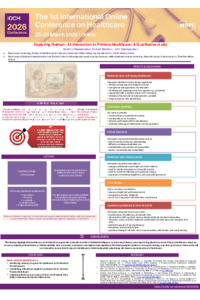
Background: Artificial intelligence is rapidly reshaping the healthcare sector. Technological advancements are accelerating, and healthcare professionals often appear unprepared to seize the opportunities and, even more so, address the challenges. In some countries, where the applications of AI in primary health care range from limited to non-existent, it is of particular importance to consider the readiness for AI integration, with a view to properly preparing healthcare professionals.
Aim: This study explores the perceptions of healthcare professionals in Greek Primary Healthcare regarding the future use of AI, focusing on expected benefits, potential risks, ethical concerns, and their readiness for human-AI-assisted care.
Methods: A qualitative design was implemented through two focus groups with a total of 18 Primary Healthcare professionals: 3 physicians, 8 nurses, 1 midwife, 3 health visitors, and 3 administrative staff from a Health Center and a local PHC unit (TOMY). The data were collected using a semi-structured guide and thematically analyzed using the framework of Braun and Clarke (2006).
Results: Participants identified potential benefits in supporting decision-making through the management and organization of patient data, as well as time savings that could be leveraged in providing personalized care. However, they raised serious concerns about data confidentiality, accountability, professional deskilling, and the possible loss of human control. Training and rigorous oversight of systems emerged as key enablers for preparedness and trust.
Conclusion: Exploring healthcare professionals’ perceptions of human–AI interaction before implementation provides meaningful insights for planning, training, and ethical policymaking. Building digital and ethical readiness today will determine how responsibly AI shapes the future of Primary Healthcare.
Keywords
human-AI interaction
primary care
digital readiness
AI-assisted care
qualitative study
healthcare professionals.
Poster
ioch 2026 poster final AI PHC.pdf
Enhancing Early Autism Screening with Behavioural Data and Machine Learning Algorithms
Evaluating the Scalability of SNOMED CT for Jurisdictional Level Semantic Interoperability