Event submissions
Published
This submission belongs to the session S2. Patient-Centered Care—Optimizing Care Pathways through Engagement and Outcome Measurement of the event The 1st International Online Conference on Healthcare
Published date
20 Mar, 2026
Academic Editor
'%3e%3cpath%20d='M12.6657%2010.9104C12.4185%2010.325%2012.0599%209.79327%2011.6097%209.34482C11.1609%208.89508%2010.6293%208.5365%2010.0442%208.28888C10.0389%208.28626%2010.0337%208.28495%2010.0285%208.28233C10.8446%207.69279%2011.3752%206.73249%2011.3752%205.64904C11.3752%203.8542%209.92103%202.39999%208.1262%202.39999C6.33136%202.39999%204.87715%203.8542%204.87715%205.64904C4.87715%206.73249%205.40774%207.69279%206.22393%208.28364C6.21869%208.28626%206.21345%208.28757%206.20821%208.29019C5.62129%208.5378%205.09463%208.89284%204.64265%209.34613C4.1929%209.79493%203.83432%2010.3266%203.58671%2010.9117C3.34345%2011.4845%203.21226%2012.0987%203.20023%2012.7209C3.19988%2012.7349%203.20233%2012.7488%203.20744%2012.7619C3.21255%2012.7749%203.22022%2012.7867%203.22998%2012.7968C3.23975%2012.8068%203.25142%2012.8147%203.26431%2012.8202C3.2772%2012.8256%203.29105%2012.8284%203.30504%2012.8284H4.09109C4.14874%2012.8284%204.19459%2012.7825%204.1959%2012.7262C4.2221%2011.7148%204.62823%2010.7676%205.34617%2010.0497C6.08899%209.30683%207.0755%208.89808%208.1262%208.89808C9.17689%208.89808%2010.1634%209.30683%2010.9062%2010.0497C11.6242%2010.7676%2012.0303%2011.7148%2012.0565%2012.7262C12.0578%2012.7838%2012.1037%2012.8284%2012.1613%2012.8284H12.9474C12.9613%2012.8284%2012.9752%2012.8256%2012.9881%2012.8202C13.001%2012.8147%2013.0126%2012.8068%2013.0224%2012.7968C13.0322%2012.7867%2013.0398%2012.7749%2013.0449%2012.7619C13.0501%2012.7488%2013.0525%2012.7349%2013.0522%2012.7209C13.0391%2012.0947%2012.9094%2011.4855%2012.6657%2010.9104ZM8.1262%207.9024C7.52486%207.9024%206.9589%207.6679%206.53312%207.24211C6.10733%206.81633%205.87283%206.25037%205.87283%205.64904C5.87283%205.0477%206.10733%204.48174%206.53312%204.05596C6.9589%203.63018%207.52486%203.39567%208.1262%203.39567C8.72753%203.39567%209.29349%203.63018%209.71927%204.05596C10.1451%204.48174%2010.3796%205.0477%2010.3796%205.64904C10.3796%206.25037%2010.1451%206.81633%209.71927%207.24211C9.29349%207.6679%208.72753%207.9024%208.1262%207.9024Z'%20fill='%235D1EE1'/%3e%3c/g%3e%3c/svg%3e) Lorraine Evangelista
Lorraine EvangelistaCitation
Mopelola Agboje, Omotayo O Omotowa, Mary A. Nies, Julius O. Kehinde, Understanding the Collective Mindset: A Quantitative Analysis of Nurses’ Views on Team Nursing Education, in Proceedings of The 1st International Online Conference on Healthcare, 25 March–26 March 2026, MDPI: Basel, Switzerland
Share
Email
Facebook
Twitter
LinkedIn
Understanding the Collective Mindset: A Quantitative Analysis of Nurses’ Views on Team Nursing Education
'%3e%3cpath%20d='M12.6647%2010.9104C12.4176%2010.325%2012.0589%209.7933%2011.6088%209.34485C11.16%208.89511%2010.6283%208.53653%2010.0432%208.28891C10.038%208.28629%2010.0327%208.28498%2010.0275%208.28236C10.8437%207.69282%2011.3743%206.73252%2011.3743%205.64907C11.3743%203.85423%209.92005%202.40002%208.12522%202.40002C6.33038%202.40002%204.87618%203.85423%204.87618%205.64907C4.87618%206.73252%205.40677%207.69282%206.22296%208.28367C6.21772%208.28629%206.21248%208.2876%206.20724%208.29022C5.62031%208.53783%205.09365%208.89287%204.64167%209.34616C4.19192%209.79496%203.83334%2010.3266%203.58573%2010.9117C3.34247%2011.4846%203.21128%2012.0987%203.19925%2012.721C3.1989%2012.735%203.20135%2012.7489%203.20646%2012.7619C3.21157%2012.7749%203.21924%2012.7868%203.22901%2012.7968C3.23877%2012.8068%203.25045%2012.8148%203.26334%2012.8202C3.27623%2012.8256%203.29007%2012.8284%203.30406%2012.8284H4.09012C4.14776%2012.8284%204.19362%2012.7825%204.19493%2012.7262C4.22113%2011.7148%204.62726%2010.7676%205.34519%2010.0497C6.08802%209.30686%207.07452%208.89811%208.12522%208.89811C9.17592%208.89811%2010.1624%209.30686%2010.9052%2010.0497C11.6232%2010.7676%2012.0293%2011.7148%2012.0555%2012.7262C12.0568%2012.7839%2012.1027%2012.8284%2012.1603%2012.8284H12.9464C12.9604%2012.8284%2012.9742%2012.8256%2012.9871%2012.8202C13%2012.8148%2013.0117%2012.8068%2013.0214%2012.7968C13.0312%2012.7868%2013.0389%2012.7749%2013.044%2012.7619C13.0491%2012.7489%2013.0515%2012.735%2013.0512%2012.721C13.0381%2012.0947%2012.9084%2011.4856%2012.6647%2010.9104ZM8.12522%207.90243C7.52388%207.90243%206.95792%207.66793%206.53214%207.24215C6.10636%206.81636%205.87185%206.2504%205.87185%205.64907C5.87185%205.04773%206.10636%204.48177%206.53214%204.05599C6.95792%203.63021%207.52388%203.3957%208.12522%203.3957C8.72655%203.3957%209.29252%203.63021%209.7183%204.05599C10.1441%204.48177%2010.3786%205.04773%2010.3786%205.64907C10.3786%206.2504%2010.1441%206.81636%209.7183%207.24215C9.29252%207.66793%208.72655%207.90243%208.12522%207.90243Z'%20fill='%235D1EE1'/%3e%3c/g%3e%3c/svg%3e)
Mopelola Agboje 1,2
Omotayo O Omotowa 1
Mary A. Nies 1
Julius O. Kehinde 3
1. School of Nursing, Idaho State University, Pocatello ID 83209, United States of America, USA
2. Geriatric and Extended Care Nursing Service, James A. Haley Veterans' Hospital, Tampa FL 33612, United States of America
3. VA Office of Nursing Services, U.S. Department of Veterans Affairs, Washington DC 20420, United States of America, USA
Abstract
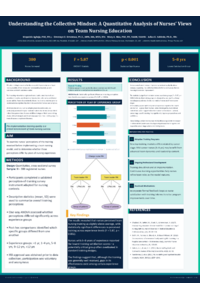
Background. Effective training is essential for the successful implementation of team nursing, ensuring that nurses are adequately prepared to provide high-quality, coordinated care. Training prior to implementation of the care delivery model has been shown to significantly affect the use of the team nursing model, whereas its absence leads to ineffectiveness and inefficiency.
Aim: This study examines nurses' perceptions of the training they received before implementing a team nursing model.
Methods. A quantitative survey was administered to assess nurses' views on the training program's comprehensiveness, relevance, and effectiveness. Descriptive statistics and mean frequency scores were used to assess nurses’ perceptions. A one-way ANOVA was conducted to assess whether nurses’ perceptions differed by years of nursing experience.
Result. A total of 380 nurses participated in the study. The results revealed that nurses perceived team nursing training as slightly above average, with statistically significant differences in perceived training across experience levels (F = 5.87, p < 0.001). Nurses with 5–8 years of experience reported the lowest satisfaction. The findings suggest that, although the training was generally well received, gaps in its effectiveness exist among certain experience groups.
Conclusion. Tailoring training programs to address the specific needs of nurses at different career stages may enhance their confidence and preparedness for team nursing. Nursing administrators should develop flexible policies for adaptive training frameworks and invest in ongoing professional development to address gaps in training effectiveness. They should also implement policies, including regular feedback mechanisms and continuous updates to training programs, to ensure high-quality, coordinated care in team nursing. Future research should explore additional factors influencing training effectiveness and its impact on patient outcomes, and investigate how tailored training programs for nurses at different career stages impact both preparedness and patient outcomes.
Keywords
team nursing
team nursing education
training perception
nursing experience
Poster
Team_Nursing_Training Poster.pdf
Toward a Unified Understanding of Digital Professionalism in Nursing Students: A Concept Analysis
EFFECTS OF A 16-WEEK INTERDISCIPLINARY INTERVENTION ON BODY WATER DISTRIBUTION AND CARDIOMETABOLIC RISK INDICATORS IN OVERWEIGHT MIDDLE-AGED WOMEN