Event submissions
Published
This submission belongs to the session S2. Patient-Centered Care—Optimizing Care Pathways through Engagement and Outcome Measurement of the event The 1st International Online Conference on Healthcare
Published date
20 Mar, 2026
Academic Editor
'%3e%3cpath%20d='M12.6657%2010.9104C12.4185%2010.325%2012.0599%209.79327%2011.6097%209.34482C11.1609%208.89508%2010.6293%208.5365%2010.0442%208.28888C10.0389%208.28626%2010.0337%208.28495%2010.0285%208.28233C10.8446%207.69279%2011.3752%206.73249%2011.3752%205.64904C11.3752%203.8542%209.92103%202.39999%208.1262%202.39999C6.33136%202.39999%204.87715%203.8542%204.87715%205.64904C4.87715%206.73249%205.40774%207.69279%206.22393%208.28364C6.21869%208.28626%206.21345%208.28757%206.20821%208.29019C5.62129%208.5378%205.09463%208.89284%204.64265%209.34613C4.1929%209.79493%203.83432%2010.3266%203.58671%2010.9117C3.34345%2011.4845%203.21226%2012.0987%203.20023%2012.7209C3.19988%2012.7349%203.20233%2012.7488%203.20744%2012.7619C3.21255%2012.7749%203.22022%2012.7867%203.22998%2012.7968C3.23975%2012.8068%203.25142%2012.8147%203.26431%2012.8202C3.2772%2012.8256%203.29105%2012.8284%203.30504%2012.8284H4.09109C4.14874%2012.8284%204.19459%2012.7825%204.1959%2012.7262C4.2221%2011.7148%204.62823%2010.7676%205.34617%2010.0497C6.08899%209.30683%207.0755%208.89808%208.1262%208.89808C9.17689%208.89808%2010.1634%209.30683%2010.9062%2010.0497C11.6242%2010.7676%2012.0303%2011.7148%2012.0565%2012.7262C12.0578%2012.7838%2012.1037%2012.8284%2012.1613%2012.8284H12.9474C12.9613%2012.8284%2012.9752%2012.8256%2012.9881%2012.8202C13.001%2012.8147%2013.0126%2012.8068%2013.0224%2012.7968C13.0322%2012.7867%2013.0398%2012.7749%2013.0449%2012.7619C13.0501%2012.7488%2013.0525%2012.7349%2013.0522%2012.7209C13.0391%2012.0947%2012.9094%2011.4855%2012.6657%2010.9104ZM8.1262%207.9024C7.52486%207.9024%206.9589%207.6679%206.53312%207.24211C6.10733%206.81633%205.87283%206.25037%205.87283%205.64904C5.87283%205.0477%206.10733%204.48174%206.53312%204.05596C6.9589%203.63018%207.52486%203.39567%208.1262%203.39567C8.72753%203.39567%209.29349%203.63018%209.71927%204.05596C10.1451%204.48174%2010.3796%205.0477%2010.3796%205.64904C10.3796%206.25037%2010.1451%206.81633%209.71927%207.24211C9.29349%207.6679%208.72753%207.9024%208.1262%207.9024Z'%20fill='%235D1EE1'/%3e%3c/g%3e%3c/svg%3e) Lorraine Evangelista
Lorraine EvangelistaCitation
Mohammad T Alashqar, Yazan Barqawi, Milap C Nahata, Clinical Impact of Digital Health Education for Patients with Heart Failure: A Systematic Review and Meta-Analysis, in Proceedings of The 1st International Online Conference on Healthcare, 25 March–26 March 2026, MDPI: Basel, Switzerland
Share
Email
Facebook
Twitter
LinkedIn
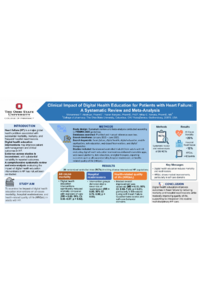
Clinical Impact of Digital Health Education for Patients with Heart Failure: A Systematic Review and Meta-Analysis

Mohammad T Alashqar 1
'%3e%3cpath%20d='M12.6647%2010.9104C12.4176%2010.325%2012.0589%209.7933%2011.6088%209.34485C11.16%208.89511%2010.6283%208.53653%2010.0432%208.28891C10.038%208.28629%2010.0327%208.28498%2010.0275%208.28236C10.8437%207.69282%2011.3743%206.73252%2011.3743%205.64907C11.3743%203.85423%209.92005%202.40002%208.12522%202.40002C6.33038%202.40002%204.87618%203.85423%204.87618%205.64907C4.87618%206.73252%205.40677%207.69282%206.22296%208.28367C6.21772%208.28629%206.21248%208.2876%206.20724%208.29022C5.62031%208.53783%205.09365%208.89287%204.64167%209.34616C4.19192%209.79496%203.83334%2010.3266%203.58573%2010.9117C3.34247%2011.4846%203.21128%2012.0987%203.19925%2012.721C3.1989%2012.735%203.20135%2012.7489%203.20646%2012.7619C3.21157%2012.7749%203.21924%2012.7868%203.22901%2012.7968C3.23877%2012.8068%203.25045%2012.8148%203.26334%2012.8202C3.27623%2012.8256%203.29007%2012.8284%203.30406%2012.8284H4.09012C4.14776%2012.8284%204.19362%2012.7825%204.19493%2012.7262C4.22113%2011.7148%204.62726%2010.7676%205.34519%2010.0497C6.08802%209.30686%207.07452%208.89811%208.12522%208.89811C9.17592%208.89811%2010.1624%209.30686%2010.9052%2010.0497C11.6232%2010.7676%2012.0293%2011.7148%2012.0555%2012.7262C12.0568%2012.7839%2012.1027%2012.8284%2012.1603%2012.8284H12.9464C12.9604%2012.8284%2012.9742%2012.8256%2012.9871%2012.8202C13%2012.8148%2013.0117%2012.8068%2013.0214%2012.7968C13.0312%2012.7868%2013.0389%2012.7749%2013.044%2012.7619C13.0491%2012.7489%2013.0515%2012.735%2013.0512%2012.721C13.0381%2012.0947%2012.9084%2011.4856%2012.6647%2010.9104ZM8.12522%207.90243C7.52388%207.90243%206.95792%207.66793%206.53214%207.24215C6.10636%206.81636%205.87185%206.2504%205.87185%205.64907C5.87185%205.04773%206.10636%204.48177%206.53214%204.05599C6.95792%203.63021%207.52388%203.3957%208.12522%203.3957C8.72655%203.3957%209.29252%203.63021%209.7183%204.05599C10.1441%204.48177%2010.3786%205.04773%2010.3786%205.64907C10.3786%206.2504%2010.1441%206.81636%209.7183%207.24215C9.29252%207.66793%208.72655%207.90243%208.12522%207.90243Z'%20fill='%235D1EE1'/%3e%3c/g%3e%3c/svg%3e)
Yazan Barqawi 2
Milap C Nahata 1,3
1. Institute of Therapeutic Innovations and Outcomes, College of Pharmacy, The Ohio State University, Columbus, OH, USA
2. AstraZeneca, Gaithersburg, 20878, USA
3. College of Medicine, The Ohio State University, Columbus, OH, USA
Abstract
Background: Heart failure (HF) is a major global health issue, with high morbidity, death, and frequent hospital readmissions. Digital health education may improve clinical outcomes in HF, but the variability observed across studies has not yet been assessed through a systematic review and meta-analysis in this population.
Objective: To examine the impact of digital health education interventions on all-cause mortality, hospital readmissions, and health-related quality of life (HRQoL) in adults with HF.
Methods: A systematic review and meta-analysis were conducted in accordance with the PRISMA 2020 standards. Randomized controlled trials (RCTs) published between January 2015 and June 2025 were identified using PubMed and manual searches. Studies of adults with HF who had received digital health education via mobile apps, web-based platforms, tele-education, or digital therapies were eligible for inclusion. Primary outcomes included all-cause mortality, hospital readmission, and HRQoL. Risk ratios (RRs) and mean differences (MDs) were aggregated using fixed-effects or random-effects models, depending on the presence of heterogeneity.
Results: Twenty-six RCTs involving diverse international cohorts were included. Digital health education interventions significantly reduced all-cause mortality (RR = 0.80; 95% CI: 0.66–0.97; p = 0.02). Hospital readmission risk was also lower in the intervention groups (RR = 0.88; 95% CI: 0.79–0.99; p = 0.03) than in the standard of care (SoC) group. HRQoL showed modest improvements overall (MD = 4.11; 95% CI: 0.98–7.25; p = 0.01), particularly reflected in improved Minnesota Living with Heart Failure Questionnaire scores and self-care behavior domains. Heterogeneity was moderate for mortality and high for HRQoL outcomes.
Conclusions: Digital health education interventions offer clinically significant benefits for patients with HF, reducing hospital readmissions and mortality while improving selected HRQoL metrics. These findings support the integration of digital education into multidisciplinary HF care. Future studies should focus on standardizing intervention components, assessing long-term viability, and evaluating cost-effectiveness.
Keywords
Heart failure
digital health education
clinical outcomes
systematic review
meta-analysis.
Poster
The 1st International Online Conference on Healthcare.pdf
The Mediating Role of Out-of-Hospital Adherence between Health Literacy and Quality of Life in Chinese Stroke Survivors: A Cross-Sectional Study
Using Probiotics as a Preventive Strategy for Recurrent Urinary Tract Infections: Focusing on Patient Engagement and Quality of Care