Antibiotics 2026—Advances in Antimicrobial Action and Resistance
11–14 May 2026, Barcelona, Spain
resistance, antibiotics, antimicrobials, one health, ethnopharmacology, stewardship, antimicrobial discovery, antimicrobial therapy, antimicrobial research
- Go to the Sessions
-
- S1. Antimicrobial Resistance Mechanisms
- S2. Antimicrobials, Antimicrobial Resistance, and One Health
- S3. Ethnopharmacology in Antimicrobial Research and Treatment
- S4. Conventional and Novel Approaches in the Discovery of New Antimicrobial Agents
- S5. Innovation in Antimicrobial Stewardship and Optimized Clinical Strategies
- Event Details
-
- Welcome from the Chairs
- Event Chairs
- Event Speakers
- Sessions
- Program
- List of Accepted Submissions
- Poster Sessions
- Poster Gallery
- Book of Abstracts
- Registration
- Instructions for Authors
- Relevant Special Issue
- Event Awards
- Location and Venue
- Conference Dinner
- Plan Your Trip
- Visa Information
- Partnership Opportunities
- Sponsors and Partners
Now Accepting Late News Submissions - For a Limited Time Only!
Due to exceptionally high demand, we are accepting late news submissions for consideration as poster presentations.
If you haven’t had a chance to submit yet, this is your final opportunity to share your work at Antibiotics 2026. Email antibiotics2026@mdpi.com to express your interest before it's too late!
Welcome from the Chairs
Dear Colleagues,
We are pleased to welcome you to Antibiotics 2026—Advances in Antimicrobial Action and Resistance, which will take place in Barcelona, Spain, from the 11th to the 14th of May 2026. This conference aims to bring together researchers, industry professionals, and experts from around the world to share the latest advancements, exchange ideas, and foster collaboration in the field of antimicrobials, antimicrobial resistance, and innovative therapeutic strategies.
Over the course of four days, we will explore a wide range of topics, including antimicrobial resistance mechanisms, antimicrobials and One Health, ethnopharmacology in antimicrobial research and treatment, conventional and novel approaches in the discovery of new antimicrobial agents, and innovation in antimicrobial stewardship and optimized clinical strategies, through keynote lectures, oral presentations, and poster sessions. Our program is designed to provide an engaging platform for discussing cutting-edge research, emerging challenges, and future directions in the field.
We encourage you to actively participate by presenting your work, engaging in discussions, and networking with fellow attendees. Beyond the scientific sessions, Barcelona offers a vibrant setting to connect with colleagues while enjoying its rich culture, history, and cuisine.
We look forward to an inspiring and productive conference and to welcoming you to Antibiotics 2026.
Sincerely,
Prof. Dr. Manuel Simões
Prof. Dr. Jordi Vila
Prof. Dr. Nicholas Dixon
Dr. Marc Maresca
Conference Secretariat
Ms. Raquel Sellés
Ms. Roberta Miglioranza
Dr. Ana Sanchis
antibiotics2026@mdpi.com
Join us on LinkedIn Events!
If you want to stay updated with the latest information, or if you want to connect with your fellow researchers before, during, and after the event, then be sure to join the Antibiotics 2026 – Advances in Antimicrobial Action and Resistance LinkedIn Event.
See you over there!

Follow the conversation on X with #Antibiotics2026
Event Chairs
Department of Chemical Engineering, Faculty of Engineering, University of Porto, Portugal
Prof. Dr. Manuel Simões is an Associate Professor with Habilitation in the Department of Chemical Engineering at the University of Porto (FEUP). He holds a PhD in Chemical and Biological Engineering from the University of Minho, Portugal. Since 2020, he has been recognized as a Clarivate Highly Cited Researcher, having published over 200 peer-reviewed articles, 5 books, and more than 40 book chapters in international publications. His work is centred around understanding the mechanisms of biofilm formation and developing innovative, sustainable approaches to control microbial communities using advanced bioprocess engineering. His areas of interest include biofilm science and technology, antimicrobial resistance, disinfection, emerging antimicrobial strategies, and the use of microalgae in bioremediation.
Prof. Dr. Jordi Vila is a Research Professor at the Barcelona Institute for Global Health (ISGlobal), the Head of the Clinical Microbiology Department of the Hospital Clínic of Barcelona, and a Professor at the School of Medicine of the University of Barcelona (UB). In addition, he leads the Antibiotic Resistance Initiative at the Barcelona Institute for Global Health (ISGlobal). His main field of research is the development of new antibiotics against multi-resistant bacteria and molecular tools for the rapid diagnosis of infectious diseases. Prof. Dr. Vila was the Director of the Congress of the European Society for Clinical Microbiology and Infectious Diseases (ESCMID) from 2009 to 2014 and a member of the ICAAC Scientific Committee for 4 years. He is currently the President of the Spanish Society of Infectious Diseases and Clinical Microbiology (SEIMC). He has published 450 articles in peer-reviewed journals and has two patented molecules. His lines of research include the design of new antibiotics against multidrug-resistant bacteria, research on the molecular bases of antimicrobial resistance, and the development of new rapid diagnostic tools to diagnose infectious diseases.

Molecular Horizons and School of Chemistry and Molecular Bioscience, University of Wollongong, Australia
Prof. Dr. Nicholas Dixon holds a PhD in Biochemistry from the University of Queensland (1978). He was a Research Fellow with Prof Alan Sargeson (Research School of Chemistry, ANU) before being awarded the C.J. Martin and Fulbright Fellowships to study with Nobel laureate Prof. Arthur Kornberg at Stanford University, U.S.A. He returned to the John Curtin School of Medical Research at ANU as a Queen Elizabeth II Fellow in 1983, and was appointed as Fellow in Biological Chemistry at the Research School of Chemistry, ANU, in 1986. He was subsequently promoted to Senior Fellow and Professor, before leaving ANU in 2006 to take up his present position as Professor of Biological Chemistry at the University of Wollongong. He was awarded an Australian Research Council Australian Professorial Fellowship in 2008 and established the UOWs Centre for Medical and Molecular Bioscience in 2010. He is currently an academic leader of Molecular Horizons, a new facility for molecular visualization which opened in 2019. His research focuses on biochemistry and cell biology, medicinal and biomolecular chemistry, enzymes, and structural biology, including macromolecular modelling.

Institut des Sciences Moléculaires de Marseille (ISM2), UMR CNRS 7313, Aix Marseille Université, France
Marc Maresca was awarded his PhD in Biochemistry from the Université Paul Cézanne (France, 2003), working on bacterial, fungal, and viral toxins causing intestinal pathologies. In 2003, he moved to Bristol (UK) to work on the bacteria enteropathogenic E. coli in the laboratory of Brendan Kenny. He is currently working at the Aix-Marseille Université as Associate Professor. His work focuses on the identification and characterization of therapeutic molecules (either natural or chemical ones) including antimicrobial molecules—particularly antimicrobial peptides—for use in human and animal health. In parallel, Dr. Maresca also conducts research in food safety, with a specific focus on mycotoxins and their impact on human health. He published more than 120 scientific publications in international journals and 6 patents. Beyond academic research, he serves as a scientific expert and consultant for private pharmaceutical companies.
Event Committee
Institute of Hygiene and Tropical Medicine (IHMT), NOVA University of Lisbon (UNL), Portugal
Prof. Dr. Isabel Couto is an Associate Professor of Medical Microbiology (Bacteriology) at the Institute of Hygiene and Tropical Medicine, Nova University of Lisbon (IHMT-NOVA). She is Vice-President of the IHMT Scientific Council, an elected member of the General Council, and coordinates the THOP research group within the Global Health and Tropical Medicine (GHTM) R&D Unit. Her research focuses on the molecular characterization and antimicrobial resistance of bacterial pathogens, particularly staphylococci and mycobacteria, and her current interests include efflux-driven resistance mechanisms, biocide and antibiotic resistance determinants, and molecular tools for the rapid detection of resistant bacteria. Prof. Dr. Couto has coordinated several national and international research projects, including the FCT-funded BIOSAFE project on biocide use and AMR prevention. She has published over 110 peer-reviewed papers and 11 book chapters, and coordinates the Summer School on Antimicrobial Resistance (2022, 2024).
Department of Public Health, Albert Szent-Györgyi Faculty of Medicine, University of Szeged, Hungary
Dr. Márió Gajdács is currently a Senior Lecturer in the Department of Public Health, Albert Szent-Györgyi Faculty of Medicine at the University of Szeged. He received his pharmacy degree, Ph.D. (medical microbiology), board certification in “Pharmacology”, and “Non-clinical and clinical research” from the University of Szeged, and holds a Master in Public Health (MPH; specialization: epidemiology) and a Master of Healthcare Management from the University of Pécs. His research interests comprise the investigation of the influencing factors and facilitators of antimicrobial resistance (AMR) using epidemiological and social science methods; he is also interested in digital epidemiological/infodemiological studies, and other topics of public health importance. He published >180 publications in peer-reviewed journals.
Scientific Director and Microbiology Area Head, Fundación MEDINA, Spain
Dr Olga Genilloud is Scientific Director and Head of the Microbiology Department of Fundación MEDINA, a non-profit research organization focused on the research of novel bioactive microbial natural products (NPs), with proven track record of discovery novel antimicrobial molecules with novel MOAs. She has over 30 years of extended experience in the discovery of novel microbial natural products (NPs) both in the clinical and academic environments (Hospital Ramón y Cajal, Spain & Harvard Medical School, Boston) and in the pharma sector (Merck Sharp & Dohme Research Labs). She has a PhD in Chemistry (Biochemistry and Molecular Biology) from the University Complutense of Madrid and a solid background in industrial microbiology and molecular biology with expertise in NPs discovery and NPs biosynthesis. She has over 200 publications and is the inventor in 18 patents. Her main research interests are the discovery of novel NPs, the exploration of microbial diversity to deliver novel chemistry, and the development of molecular and chemical tools to support NPs drug discovery and the identification of potential new therapeutics.
Prof. Dr. Efstathios (Stathis) Giaouris is Associate Professor of Food Microbiology at the Department of Food Science and Nutrition, University of the Aegean. He holds an MSc in Food Science and Technology (2003) and a PhD in Agricultural Sciences (with a focus on food microbiology) (2008) from the Agricultural University of Athens. A significant part of his doctoral research was conducted at INRA–AgroParisTech in Paris, supported by a European Union Marie Curie Fellowship. He has participated in numerous funded projects on food microbiology, hygiene, and safety, collaborating with academic institutions, research centers, and the food industry. His research output includes over 60 peer-reviewed articles (with more than 2,800 citations; h-index 28, Scopus), nine book chapters, and over 100 presentations at conferences and workshops (including 28 oral presentations at international events, several of which he was invited to deliver). Prof. Giaouris serves on the editorial boards of multiple international scientific journals, including Food Microbiology, Journal of Food Protection, Foods, and Heliyon, and has reviewed over 450 manuscripts and research proposals for national and international bodies. He is also a member of several scientific societies, including the Food Safety Working Group of the Greek Technology Platform “Food for Life”. Registered as a trainer with the Hellenic Food Authority (EFET), he provides specialized training in food hygiene and safety to professionals and food control agencies.
Stephen Hawser PhD has 30 years of anti-infective industrial experience and has been Vice-President of Global Affairs for IHMA since March 2025, based in Monthey, Switzerland. He was CEO of IHMA Europe Sàrl from 2009 to 2025. Prior to joining IHMA, Stephen held several key positions in the pharmaceutical industry spanning around 15 years with focus in antibacterial and antifungal research and development. His industry experience has come with his affiliations with Arpida (Switzerland), GlaxoWellcome (Italy), Hoechst Marion Roussel (France) and Marion Merrell Dow (Italy) and secondments to Hoechst (Frankfurt, Germany and Mumbai, India) and to University Hospitals / CWRU (Cleveland, OH, USA). Prior to joining IHMA, Stephen earned his BSc (hons) in Microbiology (University of Aberdeen), PhD in biochemical toxicology (University of Dundee) and his post-doctorate on fungal catheter biofilms at the University of Glasgow. Stephen has regularly published at scientific conferences (>800 posters), in international peer-reviewed journals (>100 articles) and is co-inventor of a number of patents. In addition he is an editor and reviewer for multiple peer-reviewed scientific journals and has actively participated at CLSI meetings for more than 18 years.
Universitat Pompeu Fabra, Hospital del Mar, Barcelona, Spain
Juan P. Horcajada, MD, PhD is Head of the Department of Infectious Diseases at Hospital del Mar, Barcelona, where he also coordinates the Infection Control Program and serves as President of the Infection Control Committee. He is Director of the Clinical and Translational Research Program at the Hospital del Mar Research Institute (HMRI) and Coordinator of the Infectious Pathology and Antimicrobials Research Group (IPAR) at the HMRI. He is Professor of Medicine and Vice-Dean of the Medicine and Life Sciences Department at Universitat Pompeu Fabra. His main research interests include the prevention, surveillance, and control of nosocomial infections, as well as antimicrobial therapy, with a particular focus on multidrug-resistant bacteria. His work has extensively addressed multidrug-resistant microorganisms, hospital outbreaks, urinary tract infections, antibiotic stewardship programs, and antimicrobial pharmacokinetics and pharmacodynamics. Dr. Horcajada has published widely on both nosocomial and community-acquired infections. He is the principal investigator of numerous clinical studies and competitively funded research projects and has participated in the development and evaluation of multiple novel antimicrobial agents, including ceftaroline, telavancin, rezafungin, ceftolozane, avibactam, and cefiderocol. He has also served as a consultant for several pharmaceutical companies, including MSD, Pfizer, GSK, Alifax, Menarini, and Advanz Pharma.
Vice-Director of Applied Molecular Biosciences Unit (UCIBIO), Faculty of Pharmacy of the University of Porto (FFUP), Portugal
Prof. Dr. Luísa Peixe is Vice-Director of the Applied Molecular Biosciences Unit (UCIBIO) at FFUP and founder of the BACT_DRUGS Lab. A recognized expert in Bacteriology, Antimicrobials, and Antimicrobial Resistance (AMR), she is an ESCMID Fellow and conducts research across basic, translational, and clinical domains within a One Health framework. Her work focuses on antimicrobial resistance mechanisms, bacterial transmission in diverse environments, urobiome diversity, and the development of rapid diagnostic tools. She has contributed to major advances, including the WHO-recommended Blue-Carba test and FT-IR typing, and has described new bacterial species expanding knowledge of the urinary microbiota. Prof. Dr. Peixe serves as an expert for EFSA and EMA, as well as advises JPIAMR. She has reviewed for major funding bodies (e.g., Horizon 2020, Swiss NSF) and is active in international scientific networks and societies. She has published over 270 peer-reviewed articles, holds a patent, and has received 32 awards, including the 2022 Maratona da Saúde Prize. She also coordinates citizen science initiatives (MicroMundo@UP and SAFE-Porto) to raise AMR awareness, and has supervised over 60 researchers and students.
Dr. Yolanda Sáenz is the Principal Investigator in the Molecular Microbiology Area at the Center for Biomedical Research of La Rioja (CIBIR), Spain. Her group characterises mechanisms used by pathogenic bacteria to resist antimicrobial action, increase virulence or protect themselves from environmental pressures. Over the last years, she has achieved a long track record from a One Health approach in antimicrobial resistance, mainly in Pseudomonas spp. and Enterobacteriaceae. Her work also focuses on the finding of new substances, compounds or technologies (such as cold atmospheric plasma) with antimicrobial or antibiofilm activity. Overall, she has participated in 32 national and international research projects, has published more than 150 indexed articles, 11 book chapters, 300 conference communications, and holds one patent. She has acquired a broad and varied research experience from academic stays at prestigious research centres in Spain, Belgium and Peru. She has also supervised numerous students and collaborated in national and international university teaching and scientific activities. She is a member of the Networks RED2022-134545-T and RED2024-153647-T, and was also a member of the Network P220RT0168 CYTED, COST Actions CA19110 and CA18113, and REIPI Spanish Networks. She is a member of various scientific societies (ESCMID, SEM, GEIVEX, BSAC, GEMARA-SEIMC), as well as an editor/reviewer of scientific journals and evaluator of international projects.
Biological, Chemical and Pharmaceutical Sciences and Technologies, University of Palermo, Italy
Prof. Schillaci earned a degree in Biological Sciences from the University of Palermo in 1982 with top honors (110/110), followed by a four-year specialization in Microbiology, completed with honors in 1986. His research focuses on antibiotic resistance, particularly the mechanisms linked to biofilm-associated pathogens. He has led projects to improve the effectiveness of antibiotics (e.g., amoxicillin, tobramycin, vancomycin, colistin, ciprofloxacin) using nano/micro-delivery systems and functionalized polymers. He has also investigated anti-virulence strategies, targeting enzymes like Sortase A, in collaboration with Dr. Ainārs Leonīds (Latvian Biomedical Research and Study Center), and explored natural and synthetic anti-biofilm agents. He has also collaborated with Prof. Søren Molin (BioCentrum DTU, Denmark) and taken part in research on food safety and infection control in livestock using antibiotic alternatives. His current scientific interest is on the potential of antimicrobial peptides from natural sources in new drug development. Prof. Schillaci is a regular speaker at international conferences and has authored 117 publications (Scopus AU-ID: 6603674133, h-index: 36, citations: 4,035). In October 2022, October 2023, October 2024, he was named among the World’s Top 2% Scientists by Stanford University. He serves as a peer reviewer for several journals and has been on the editorial board of Antibiotics (MDPI) since April 2021. He teaches Microbiology and supervises numerous theses in the field.
Institute for Global Health (ISGlobal), Hospital Clínic, Universitat de Barcelona, Spain
Currently, Prof. Dr. Sara Soto is the Head of Viral and Bacterial Infections at ISGlobal and Associate Professor at the University of Barcelona. Her research group is focused on the transmission of antimicrobial resistance and related genes in a One-Health vision, the search of new antibiotics and targets, and bacterial virulence and its relationship with antimicrobial resistance. After being awarded an “Extraordinary Doctorate Award” for her PhD degree from the University of Oviedo, Prof. Dr. Soto underwent a Postdoctoral Short-Fellowship in the Federal Institute for Risk Assessment (BfR), Berlin, Germany, followed by a 3-year postdoctoral grant from the Spanish Ministry of Health, at Prof Jordi Vila's laboratory. In 2005, she obtained a prestigious 6-year research contract (Miguel Servet CP05/00140) from the Spanish Ministry of Health that allowed her to establish herself as an independent researcher. She has published more than 82 publications in scientific journals, 86 communications to congresses, 35 research projects (14 as Principal Investigator) and 4 contracts with private companies. She has coordinated the European H2020 project NOMORFILM (Grant. 634588), and ISCIII-national projects directed to find new molecules from natural or synthetic origin with antibacterial and antibiofilm activities (generating three patents).
Keynote Speakers
Mariana Castanheira, Ph.D., has a science degree in Pharmacy and Biochemistry. She completed her Master of Science and Doctoral (Ph.D.) degrees for evaluating molecular epidemiology and resistance mechanisms of Gram-positive and -negative bacteria at Universidade Federal de Sao Paulo (UNIFESP). Dr. Castanheira also received training in the Department of Pathology and Microbiology of the University of Bristol (United Kingdom) to study beta-lactamases. She built on the knowledge gained at Bristol by dedicating the past 20 years to working on discovering and characterizing genes encoding beta-lactamases and other resistance mechanisms. Dr. Castanheira has served as the chief scientific officer at JMI Laboratories since January 2020. Previously, she spent 2 years serving as JMI’s chief operations officer, during which time she oversaw all service divisions and identified opportunities to improve the organization. Now, she is broadening and promoting the scientific endeavours of JMI Laboratories. She is further responsible for designing and overseeing antimicrobial and antifungal drug development projects, surveillance studies and molecular projects that characterize resistance mechanisms. Dr. Castanheira is the leading author of over 250 peer-reviewed publications, presents annually at major field conferences, and interfaces with a global network of research collaborators. Dr. Castanheira was an associate editor for Diagnostic Microbiology and Infectious Diseases (2008-2014) and is currently an editor for mSphere (since 2015). She is also a member of the editorial board for Antimicrobial Agents and Chemotherapy, the Journal of Clinical Microbiology, Microbial Drug Resistance, and Drug Resistance Updates. She also serves as an ad hoc reviewer for many other microbiology journals.
Professor of Medical Microbiology and Antibiotic Resistance, Department of Biology, University of Oxford, UK, and Chief Scientific Advisor, ICARS
Prof. Timothy R. Walsh DSc OBE has been studying antimicrobial resistance (AMR) mechanisms for over 25 years and regularly publishes in international peer-reviewed journals. His primary interests include the following: 1. The use of antimicrobials in animals and its impact of human clinical failures; 2. The drivers of AMR across all “one-health” sectors; 3. The causes and management of AMR neonatal sepsis and stillbirths in low–middle income countries (LMICs); 4. The clinical and economic burden of AMR in LMICs. In 2020, he moved to Oxford to help set up the Ineos Oxford Institute of Antimicrobial Research (IOI) and became the IOI Director of Biology. His group is primary interested in developing new non-human antibiotic compounds to use in animals, screening new antimicrobials and inhibitors of AMR for human medicines, and understanding the clinical and economic burden of AMR in LMICs, including the spatial–temporal analysis of AMR dynamics. While working in many countries across the globe, the group has a focus on South Asia, Africa, and China, and is keen to co-support studentships and fellowships, particularly from LMICs.

Invited Speakers
INSERM and UMR-MD1, Faculty of Pharmacy, Aix-Marseille University, France
Dr. Jean-Michel Bolla is the current Director of Research at INSERM and UMR-MD1, Faculty of Pharmacy, Aix-Marseille University, France. After receiving his Masters in Biochemistry and Molecular Biology from the University of Nice in 1985 and his doctorate in Microbiology and Molecular Biology at Aix-Marseille University in 1991, he obtained a post-doctorate degree in Medical and Bacterial Microbiology from the Necker Faculty of Medicine and the Enfants Malades Hospital in Paris in 1992. In 2001, he returned to Aix-Marseille University to receive his habilitation. His research focuses on bacterial microbiology, physiology and biochemistry, antibiotic resistance via efflux pumps, and the design and evaluation of new antibiotics and new antibiotic adjuvants. He is the author and co-author of 70 peer-reviewed publications, owns 4 patents, and has actively participated in 18 conferences, including 3 Gordon Research Conferences (2011, 2013, and 2015). Between 2007 and 2011, he was an honorary professor, after winning an Inserm-University of Corsica "Interface Contract" (2007-2011). Throughout his career, he has secured multiple grants, including three ANR grants and partnerships with DGA-DGCIS, SATT (PI) Amidex Foundation, and FEAPM (partner). Between 2013 and 2018, he was a member of the European Program Innovative Medicines Initiative (IMI) “New Drugs for Bad Bugs”, in Jean Marie Pagès’ team. He was also active in the translocation project "Molecular basis of the bacterial cell wall permeability".
Prof. Dr. Efstathios (Stathis) Giaouris is Associate Professor of Food Microbiology at the Department of Food Science and Nutrition, University of the Aegean. He holds an MSc in Food Science and Technology (2003) and a PhD in Agricultural Sciences (with a focus on food microbiology) (2008) from the Agricultural University of Athens. A significant part of his doctoral research was conducted at INRA–AgroParisTech in Paris, supported by a European Union Marie Curie Fellowship. He has participated in numerous funded projects on food microbiology, hygiene, and safety, collaborating with academic institutions, research centers, and the food industry. His research output includes over 60 peer-reviewed articles (with more than 2,800 citations; h-index 28, Scopus), nine book chapters, and over 100 presentations at conferences and workshops (including 28 oral presentations at international events, several of which he was invited to deliver). Prof. Giaouris serves on the editorial boards of multiple international scientific journals, including Food Microbiology, Journal of Food Protection, Foods, and Heliyon, and has reviewed over 450 manuscripts and research proposals for national and international bodies. He is also a member of several scientific societies, including the Food Safety Working Group of the Greek Technology Platform “Food for Life”. Registered as a trainer with the Hellenic Food Authority (EFET), he provides specialized training in food hygiene and safety to professionals and food control agencies.
Prof. Dr. Walter Luyten is an Associate Professor of Animal Physiology and Neurobiology at KU Leuven. After studying Medicine at Ghent University and obtaining a PhD in Neuroscience at UC San Diego, Prof. Dr. Luyten was the executive director of Johnson & Johnson, an American multinational pharmaceutics and biotechnology corporation, for over 10 years. Following this, he focused on biotech consulting, project evaluation and management for pharmaceutical and biotech companies, investors, funding organisations, government agencies and public bodies. Alongside his consulting work, Prof. Dr. Luyten started teaching at KU Leuven in 2003 and now heads his own research group. His group studies the bioactivity of peptides isolated from animal cells or tissues and natural products extracted from medicinal plants. Bioactivities of interest include antiviral, antibacterial, antifungal, anthelmintic, anticancer, anti-ageing, wound healing, etc. For this research, they use AI methods like text mining and automated image analysis, as well as access to big data (e.g., omics data).
Vice-Director of Applied Molecular Biosciences Unit (UCIBIO), Faculty of Pharmacy of the University of Porto (FFUP), Portugal
Prof. Dr. Luísa Peixe is Vice-Director of the Applied Molecular Biosciences Unit (UCIBIO) at FFUP and founder of the BACT_DRUGS Lab. A recognized expert in Bacteriology, Antimicrobials, and Antimicrobial Resistance (AMR), she is an ESCMID Fellow and conducts research across basic, translational, and clinical domains within a One Health framework. Her work focuses on antimicrobial resistance mechanisms, bacterial transmission in diverse environments, urobiome diversity, and the development of rapid diagnostic tools. She has contributed to major advances, including the WHO-recommended Blue-Carba test and FT-IR typing, and has described new bacterial species expanding knowledge of the urinary microbiota. Prof. Dr. Peixe serves as an expert for EFSA and EMA, as well as advises JPIAMR. She has reviewed for major funding bodies (e.g., Horizon 2020, Swiss NSF) and is active in international scientific networks and societies. She has published over 270 peer-reviewed articles, holds a patent, and has received 32 awards, including the 2022 Maratona da Saúde Prize. She also coordinates citizen science initiatives (MicroMundo@UP and SAFE-Porto) to raise AMR awareness, and has supervised over 60 researchers and students.
Molecular and Medical Microbiology Unit, Department of Medicine, University of Fribourg, Switzerland
Prof. Dr. Patrice Nordmann (H-index 130) is the Head of the Molecular Microbiology Unit, Department Medicine, University of Fribourg (Switzerland), the Associated French National Reference Center for Antibiotic Resistance, and the INSERM research unit "Emerging Antibiotic Resistance" at the University Paris XI, France. He obtained his MD and PhD degrees in Microbiology and Infectious Diseases at Paris University. Subsequently, he worked in the fields of molecular genetics and biochemistry in the U.S. at the University of Wisconsin and in Switzerland at the Biozentrum at the University of Basel. Prof. Dr. Nordmann has been the founder of several research units and is the co-author of more than 600 peer-reviewed publications. He has been the recipient of several awards, including the Medaille Louis Pasteur from the French National Academy of Sciences (Paris 2012) and the Excellence Microbiology and Infectious Diseases award from the European Society for Microbiology and Infectious Diseases (Berlin 2013). He has been granted several patents in Microbiology (rapid diagnostic), some of which have led to products currently in development. His research is focused on emerging antibiotic resistance traits in Gram-negative bacteria, from fundamental genetics to applied clinical and molecular microbiology.
Faculty of Science, Sidi Mohamed Ben Abdellah University, Morocco
Prof. Dr. Adnane Remmal is the Founder and Research Director of the Laboratory for the Valorization of Aromatic Plants at Sidi Mohammed Benabdallah University, where he has worked for over three decades. He is also the co-founder of Advanced Scientific Development (ASD LLC, Casablanca, Morocco) and DrugBoost LLC (Delaware, USA), as well as the founder of the Laboratoire Industriel d'Alternatives Vétérinaires (LIAV LLC, Fez, Morocco). After obtaining his PhD in molecular pharmacology from Orsay University in Paris (France), he worked at Necker Children’s Hospital as a researcher for several years, and holds a PhD degree in Microbiology from the University of Fez (Morocco). Throughout his career, Prof. Dr. Adnane Remmal has made significant contributions to the field of medicine, recognized through awards such as the 2017 European Inventor's Award from the European Patent Office and the 2015 African Innovation Grand Prize of the African Innovation Foundation (AIF) for his plant-extract-based feed supplement for livestock. On top of his research efforts, he contributes to the scientific community through his teaching, mentoring, and participation in symposiums around the world. His research addresses the global challenge of antibiotic resistance by taking advantage of the antimicrobial properties of essential oils to develop innovative strategies for combating resistant microbial infections, with applications in both human and veterinary medicine. Additionally, he is also interested in exploring the bio-stimulant and bio-pesticide potential of essential oils and other plant extracts, aiming to integrate their multifunctional benefits into sustainable solutions for health and agriculture.
Infectious Diseases Center for Translational Research (ID-CARE), University of Verona, Italy, and Chief Scientific Officer, European Clinical Research Alliance on Infectious Diseases (ECRAID)
Prof. Dr. Evelina Tacconelli (MD, PhD) is Full Professor of Infectious Diseases and Director of the Infectious Diseases Division at the University of Verona, Italy. She serves as Chief Scientific Officer of the European Clinical Research Alliance on Infectious Diseases (ECRAID) and as Coordinator of the Cohort Coordination Board established by the European Commission to advance cohort research for pandemic preparedness. She chairs the EUCIC Working Group on guidance in infection control and the ESCMID guidelines on the prevention and treatment of multidrug-resistant Gram-negative infections in hospitalised patients. She also led the Technical Group that supported the development of the WHO global priority lists of antibiotic-resistant pathogens for R&D of new antibiotics in 2017 and 2024 update. Evelina has coordinated and contributed to multiple EU-funded projects on antimicrobial resistance and pandemic preparedness.
Center for Infection and Immunity of Lille, Pasteur Institute, France
Prof. Aurélie Tasiemski is a Full Professor at the Centre for Infection and Immunity of Lille at the Institut Pasteur, a position she has held since 2022. Her research focuses on antimicrobial peptides (AMPs), small naturally occurring antibiotic molecules produced by bacteria, plants, fungi, and animals. Her work explores the discovery of novel AMPs and aims to better understand their biological functions, including not only their antibacterial properties but also their neurotrophic roles in the organisms that produce them. In addition, she uses AMPs as genetic markers to investigate how marine organisms adapt to extreme environments, such as highly polluted estuaries and hydrothermal vents. Through this multidisciplinary approach, her research contributes to both fundamental knowledge of host defence mechanisms and the broader understanding of adaptation in challenging ecological niches.
Full Professor of Biochemistry and Molecular Biology, Department of Agriculture and Food, and Leader of OneHealth-UR group, University of La Rioja (UR), Spain
Prof. Dr. Carmen Torres is a Clinical Microbiology specialist and Full Professor of Biochemistry and Molecular Biology at the University of La Rioja (UR), Spain. She coordinates the research group “Antimicrobial Resistance from the One Health perspective” (OneHealth-UR) and leads the Interuniversity Doctoral Program in Biomedical and Biotechnological Sciences. She is a member of the Academia de Farmacia del Reino de Aragón, the Scientific Advisory Council of Fundación Gadea por la Ciencia, and a former president of GEMARA (2019–2021). She also contributes to Spain’s National Plan for Antimicrobial Resistance (PRAN). Her extensive career includes research positions at the University of Chicago, clinical roles in major Spanish hospitals, and coordinating the creation of a Research Unit on Antimicrobial Resistance in the University of Tunis. Internationally, she has coordinated research and training projects in North Africa and Latin America. She has authored over 520 scientific publications (18,500+ citations, h-index 69), contributed to more than 1,000 conferences, and co-holds a Spanish patent on antimicrobial nanoparticles. Her research focuses on antimicrobial resistance (AMR), One Health, bacterial molecular ecology, antimicrobial peptides, and gut microbiota. She has collaborated with numerous institutions across Europe, the Americas, and Africa, and supervised over 75 international PhD and master’s students. She has also served as an expert for the European Agency for Food Security (EFSA) on AMR and food safety. Her group, OneHealth-UR, comprising 15 interdisciplinary researchers, has earned several awards, including the PRAN Award for environmental AMR initiatives. Their work, benefitting from strong global research networks, focuses on antimicrobial resistance, molecular epidemiology, One Health and new alternatives to antibiotics (antimicrobial peptides) with applications in biomedicine and the agrofood sector.
Bijvoet Centre for Biomolecular Research, Chemistry Department, Utrecht University, The Netherlands
Markus Weingarth studied Biochemistry in Greifswald (Germany), followed by a PhD in NMR methodology from École Normale Supérieure in Paris (France). At Utrecht University (the Netherlands), his research group focuses on the molecular mechanisms by which antibiotics target bacterial cell envelopes. Using integrative structural biology approaches, his team has uncovered novel supramolecular killing mechanisms and pioneered solid-state NMR techniques that enable high-resolution studies of antibiotic action directly in intact bacteria. For his antibiotics research, Weingarth has received several honors, including an ERC Consolidator grant (2022, 2M€) and the ‘Founders’ Medal’ (2022) of the ‘International Council on Magnetic Resonance in Biological Systems’, the leading award for mid-career researchers in the NMR field. In 2025, he secured major funding ((VICI, 1.5M€; KIC, 1.5M€) from the Dutch Research Council to develop concepts and technologies for studying how antibiotics target Gram-negatives and Mycobacteria. More information about his research can be found at www.weingarth-group.org.
Sessions
S2. Antimicrobials, Antimicrobial Resistance, and One Health
S3. Ethnopharmacology in Antimicrobial Research and Treatment
S4. Conventional and Novel Approaches in the Discovery of New Antimicrobial Agents
S5. Innovation in Antimicrobial Stewardship and Optimized Clinical Strategies
Program
Monday, 11 May 2026
12:45 – 17:45 CET (Check-In: 12:45 CET)
Tuesday, 12 May 2026
8:50 – 18:15 CET
Wednesday, 13 May 2026
08:50 – 15:00 CET (Conference Dinner: 20:00 CET)
Thursday, 14 May 2026
08:50 – 12:15 CET
※ Please note that the schedule is subject to change.

Detailed Schedule
Day 1 – Monday, 11 May 2026
|
from 12:45 |
Check-In |
|
|
13:45-14:00 |
Opening Ceremony |
|
|
Innovation in Antimicrobial Stewardship and Optimized Clinical Strategies Chaired by Márió Gajdács |
||
|
14:00-14:30 |
Jean-Michel Bolla |
Efflux Pump-Based Diagnostic Approach for Accelerated Antibiotic Resistance Detection |
|
14:30-14:45 |
Lina I. Alnajjar |
The Impact of Intensive Care Unit Stewardship on the Appropriateness of Meropenem Prescription at a Tertiary Hospital: A Quasi-Experimental Study |
|
14:45-15:00 |
Samantha Yulanda Walker |
An Assessment of Factors Impacting Choice of Antibiotics in the Management of Neonatal Infections in a Neonatal Intensive Care Unit in a Resource-Limited Setting – A Pilot Project in Quality Improvement |
|
15:00-15:15 |
Andrea Szabó |
Current State of Antimicrobial Stewardship in the Hungarian Human and Veterinary Health Sectors |
|
15:15-15:30 |
Márió Gajdács |
Does The Problem Begin At The Beginning? Assessment Of Antimicrobial Resistance-Related Knowledge, Attitudes, And Practices Among Health Science Students: A Questionnaire-Based, Single-Centre, Cross-Sectional Study |
|
15:30-16:00 |
Evelina Tacconelli |
Rethinking Clinical Trials for Difficult-to-Treat Resistant Gram-Negative Infections in Europe |
|
16:00-16:30 |
Coffee Break |
|
|
Antimicrobials, Antimicrobial Resistance, Ethnopharmacology and One Health (part 1) Chaired by Marc Maresca |
||
|
16:30-16:45 |
Maggie Liu |
The Impact of Novel Antimicrobial Three-Dimensional Printing (3DP) Dentures on Salivary Biofilm Formation: An In Vitro Study |
|
16:45-17:00 |
Lissette Díaz-Gamboa |
Occurrence and Removal of Antibiotics and Antibiotic Resistance Genes in Urban Wastewater Treatment Plants: A One Health Perspective |
|
17:00-17:15 |
Arseniy Sinichich |
New Insights into the Action of Natural Lipoglycopeptides: Gausemycins |
|
17:15-18:00 |
Mariana Castanheira |
Where Resistance Meets Drug Development: Lessons from 20 Years of Antimicrobial Research |
Day 2 – Tuesday, 12 May 2026
|
09:19-09:45 |
Aurélie Tasiemski |
Bioinspired Antimicrobial Strategy: An Extremophile Deep Sea Peptide to Combat Cystic Fibrosis Infections Caused by Pseudomonas aeruginosa and Staphylococcus aureus |
|
Antimicrobial Resistance Mechanisms Chaired by Sara Soto |
||
|
09:45-10:00 |
Roger de Pedro Jove |
Potential Efflux Pump Inhibition by the Cyclic Peptide MV6 Restores Netilmicin Activity in Acinetobacter baumannii |
|
10:00-10:15 |
Bela Kocsis |
Investigations Of Delafloxacin Resistance Mechanisms in Escherichia coli and Klebsiella pneumoniae Clinical Isolates |
|
10:15-10:30 |
Pol Oliveras Julia |
Antibiotic Resistance in Enterotoxigenic and Enteroaggregative E. coli Causing Traveler’s Diarrhoea: A Genotypic and Phenotypic Correlation Study |
|
10:30-11:00 |
Coffee Break |
|
|
Conventional and Novel Approaches in the Discovery of New Antimicrobial Agents (part 1) Chaired by Domenico Schillaci |
||
|
11:00-11:30 |
Patrice Nordmann |
Emerging Antibiotic Resistances Worldwide |
|
11:30-11:45 |
Umama Qasim |
A novel cyclic peptide CAP-18 and its enantiomer cyclic D-CAP-18 as potential agents against multi-drug resistant bacteria |
|
11:45-12:00 |
Cristina Prudêncio |
An Application Of Cluster Analysis With The Affinity Coefficient And Euclidean Distance To Bacteria Antimicrobial Resistance Profile |
|
12:00-12:15 |
Ceyda Kula |
Metabolic Signatures of Antibiotic Resistance in Pseudomonas aeruginosa: A Systems Biology Approach to Rational Adjuvant Therapy Design |
|
12:15-12:45 |
Markus Weingarth |
Cracking Nature’s Recipes to Design Lipid-Targeting Antibiotics |
|
12:45-14:45 |
Group Photo |
|
|
Conventional and Novel Approaches in the Discovery of New Antimicrobial Agents (part 2) Chaired by Stephen Hawser |
||
|
14:45-15:00 |
Richard Yi-Tsun Kao |
Flufenamic Acid Potentiates Host Clearance of Staphylococcus aureus via Dual Inhibition of the Agr Quorum-Sensing System and NLRP3 Inflammasome |
|
15:00-15:15 |
Nikolet Ilieva Pavlova |
Bioinformatics and Genomic Analysis for the Potential of mRNAs as Antibacterial Drug Targets in ihe Genome of Macrolide-Resistant Strains of Streptococcus pneumoniae Infecting Humans for Novel Antisense Oligonucleotide Design |
|
15:15-15:30 |
Federica Parisi |
In Silico Design Of Synthetic Peptides Inspired By Natural Peptides Scaffolds From A Mediterranean Medical Plant Charybdis pancration (Steinh.) Speta, With Predicted Activity Against Relevant Pathogens |
|
15:30-15:45 |
Tigran Ugujyan |
Epidemiological Features of Catheter-Associated Bloodstream Infections in the Neonatal Intensive Care Unit of a Category III Maternity Hospital in Armenia |
|
15:45-16:00 |
Domenico Schillaci |
Marine Fungi As A Source Of Antibacterial, Antifungal And Antibiofilm Agents |
|
16:00-16:30 |
Coffee Break & Poster Session A |
|
|
Antimicrobials, Antimicrobial Resistance, Ethnopharmacology and One Health (part 2) Chaired by Stephen Hawser |
||
|
16:30-17:00 |
Efstathios Giaouris |
Silencing Bacterial Communication With Lactic Acid Bacteria Metabolites: An Eco-Friendly Approach Against Foodborne Pathogenic Biofilms |
|
17:00-17:15 |
Alessio Fontanot |
Antimicrobial Peptides SET-M33L And SET-M33L-PEG Are Promising Agents Against Strong Biofilm-Forming Clinical Strains of P. Aeruginosa, Including Multidrug-Resistant Isolates |
|
17:15-17:30 |
Miguel I Uyaguari |
Genes on the Move: Exploring Microbiomes Within Aquatic Ecosystems of First Nation Communities in Manitoba |
|
17:30-17:45 |
Preetu Parimal |
Antifungal and Antivirulence Activity of Antimicrobial Peptide Oreoch-1 Against Candida albicans |
|
17:45-18:00 |
Jordan Pratt |
More Than a Prescription: Behavioural Drivers of Antimicrobial Use in Companion Animals |
| 18:00-18:15 |
Daphne León |
Participatory Interventions to Reduce Antibiotic Misuse on Small- and Medium-Scale Laying Hen Farms in Peru |
Day 3 – Wednesday, 13 May 2026
|
08:50-09:45 |
Tim Walsh |
Clinical and Financial Burden of Global AMR |
|
Conventional and Novel Approaches in the Discovery of New Antimicrobial Agents (part 3) Chaired by Jordi Vila |
||
|
09:45-10:00 |
Francesca Berini |
Genome Mining as a Tool for Identifying Novel Glycopeptide Antibiotics: Insights from Kineomicins |
|
10:00-10:15 |
Núria Martín-Vilardell |
PLP-3: A Novel Bicyclic Peptide Active Against Multidrug-Resistant Bacteria |
|
10:15-10:30 |
Wangxue Chen |
Bacteriophage Depolymerases as a Novel Alternative to Antibiotics: Their Promises and Challenges |
|
10:30-10:45 |
Betul Zehra Temur |
Overcoming Resistance Mechanisms via Membrane Disruption with Newly Developed Antimicrobial Peptides |
|
10:45-11:15 |
Coffee Break & Poster Session B |
|
|
Antimicrobials, Antimicrobial Resistance, Ethnopharmacology and One Health (part 3) Chaired by Márió Gajdács |
||
|
11:15-11:45 |
Luisa Peixe |
Are We Measuring or Controlling AMR? Carbapenemases as a One Health Sentinel from Food Systems to Environmental Policy |
|
11:45-12:00 |
Clare Harkins |
The Impact of Sewer Biofilms on Antibiotic Stability and Antimicrobial Resistance Signals in Wastewater |
|
12:00-12:15 |
Alba A Trespalacios |
A One Health Perspective on Helicobacter pylori Along the Bogotá River Basin: Environmental and Clinical Genotyping Reveals Virulence Profiles and Clarithromycin Resistance |
|
12:15-12:30 |
Ziming Wu |
Mobile Resistance Genes in Archaea: Genomic Evidence and One Health Implications |
|
12:30-12:45 |
Laura Espina |
Tracking AMR Transmission Throughout the Food Chain |
|
12:45-13:15 |
Carmen Torres |
Antimicrobial Resistance From the One Health Perspective. The Environment in the Equation. |
|
13:15-15:00 |
Lunch Break & Poster Session B |
|
|
|
Afternoon At Leisure |
|
|
at 20:00 |
Conference Dinner Address: Catalonia Boulevard. C/ del Rosselló, 249, 08008 Barcelona |
|
Day 4 – Thursday, 14 May 2026
|
08:50-09:30 |
Adnane Remmal |
Real-World Insights: Breaking Resistance to Amoxicillin–Clavulanic Acid with 1,8-Cineole |
|
Antimicrobials, Antimicrobial Resistance, Ethnopharmacology and One Health (Part 4) Chaired by Manuel Simões |
||
|
09:30-09:45 |
Manel Camps |
IncQ Plasmids Facilitate the Integration of Antibiotic Resistance Genes in the Chromosome |
|
09:45-10:00 |
Cleménce Cochard |
How Bacteria Survive Their Own Antimicrobial Peptides? The DdD Protein Defines a New Safety Mechanism in Leaderless Bacteriocins |
|
10:00-10:15 |
Krassimira R. Hristova | Bacillus Subtilis-Derived Peptides As Antibiotic Alternative Treatment Of Multidrug-Resistant Staphylococcus Aureus: Mechanistic Study |
|
10:15-10:45 |
Coffee Break |
|
|
10:45-11:00 |
Temesgen Abera Bafa |
Efflux-Modulating Antimicrobial Peptide Combinations Restore Ciprofloxacin Activity Against Clinical Escherichia coli |
|
11:00-11:15 |
Manuel Simões |
The Action Of Phytochemical Products In Antibiotic Potentiation And Biofilm Control |
|
11:15-11:45 |
Walter Luyten |
Why Are There Virtually No Antibiotics in Clinical Use Based on Bioactive Compounds from Plants? |
|
11:45-12:15 |
Closing & Award Ceremony |
|
List of accepted submissions (125)
| Id | Title | Authors | |||||||||||||||||||||||||||||||||||||||
|---|---|---|---|---|---|---|---|---|---|---|---|---|---|---|---|---|---|---|---|---|---|---|---|---|---|---|---|---|---|---|---|---|---|---|---|---|---|---|---|---|---|
| sciforum-166026 | The Impact of Intensive Care Unit Stewardship on the appropriateness of Meropenem prescription at a tertiary hospital: A Quasi-Experimental Study |
Show Abstract |
|||||||||||||||||||||||||||||||||||||||
|
Background: Carbapenem-resistant Enterobacteriaceae (CRE) prevalence has shown increasing prevelance in Saudi Arabia, which poses a significant health concern. The antimicrobial stewardship program (ASP) plays an important role in reducing resistance by ensuring appropriate use of antibiotics. Method: This is a retrospective data collection study performed over 3 years from 2020 to 2022, at a tertiary hospital which included adult patients who were hospitalized in the ICU and received Meropenem. The primary objective was to evaluate the appropriateness of meropenem prescription in the ICU pre-ASP and post-ASP implementation. The secondary objectives were assessing the reason for inappropriateness and the implemented action in response to inappropriate meropenem prescription. Result: In total, 113 patients were included. The pre-ASP group included 34 patients; 41 patients were in the first year post-ASP intervention and 38 patients were in the second year post-ASP implementation. There was a significant increase in the number of patients who received appropriate prescriptions in the post-ASP intervention group 2021 and 2022 compared to pre-ASP implementation (26.8%, 53.7% vs 23.5%, p-value 0.002). The most observed reason for inappropriateness in the post-ASP group compared to the pre-ASP group varied (84.8% vs 76.9%, p value 0.53). Discontinuation of treatment in the post-ASP group was higher compared to the pre-ASP group (60% vs. 30.8%, p-value 0.036) meropenem use. Conclusion: Approximately more than 70% of meropenem prescriptions were inappropriate, and the implementation of ASP shows a significant impact in promoting appropriate meropenem prescription patterns and shorter treatment durations in the ICU. |
|||||||||||||||||||||||||||||||||||||||||
| sciforum-172783 | Current state of antimicrobial stewardship in the Hungarian human and veterinary health sectors | , , , , , |
Show Abstract |
||||||||||||||||||||||||||||||||||||||
|
Introduction: Antimicrobial resistance (AMR) is among the top three health threats worldwide. It requires an effective response by implementing proper antimicrobial stewardship (AMS) measures. In Hungary, AMR is also a considerable problem, with overuse and misuse of antimicrobials. Despite still being one of the highest in Europe, Hungarian veterinary antibiotic consumption has significantly improved over the past decade. In contrast, however, the quantity of antibiotics used in human health care is relatively low, measured as DDD per 1000 inhabitants per day, but utilization and resistance patterns show worsening tendencies. In this study, we wanted to explore the quality of the current Hungarian AMS systems in human and animal health care and the barriers and facilitators of their operations. Methods: We conducted a qualitative study using in-depth interviews with twelve Hungarian stakeholders representing the human, animal, and environmental sectors at ministerial, regulatory authority, and hospital/university levels. Semi-structured interviews were transcribed and analyzed using NVivo 15. Results and discussion: Key informants revealed that the Hungarian veterinary antibiotic policy is greatly driven by the legal obligations of the EU Common Agricultural Policy, with its strong financial protection system focusing on food-producing animals. All sectorial interviewees emphasized that their national veterinary heath sector is aware of the problem of AMR and actively take all measures to achieve their goals. The identified facilitators were good intrasectorial communication and cooperation, ambitious leadership, efficient law-making, high-level education of vets, and the existence of antibiotic reduction strategies. In human health care, almost only pull-back factors were reported by the participants about the weak sectorial antibiotic policy, such as institutional (no dedicated leadership at any levels, no institutional framework, and lack of proper data collection and monitoring), juridical (no implemented national action plan, no legal background,and lack of funding), and personal factors (clinicians’ resistance to change and the general population’s low health literacy). |
|||||||||||||||||||||||||||||||||||||||||
| sciforum-169592 | Does the problem begin at the beginning? Assessment of antimicrobial resistance-related knowledge, attitudes, and practices among health science students: a questionnaire-based, single-centre, cross-sectional study |
Zita Szabó ,
Klaudia Kujundzsity ,
,
|
Show Abstract |
||||||||||||||||||||||||||||||||||||||
|
Introduction: Perspectives and competencies developed during undergraduate health education critically influence antimicrobial resistance (AMR)-associated attitudes and future clinical decision-making in healthcare staff, particularly with regard to fostering patient safety and rational antimicrobial utilization. The aim of our study was to assess nursing and allied health science students’ knowledge, attitudes, and practices related to AMR. Methods: A quantitative, single-centre cross-sectional study was performed with purposive sampling between 01/09/2021 and 20/09/2025. Data collection was carried out using an 83-item, self-administered online questionnaire consisting of the following domains: i) socio-demographic characteristics, ii) AMR-related knowledge, iii) attitudes towards AMR, iv) recognition of AMR-related terms, and v) practices related to antimicrobial consumption. Statistical analyses (descriptive statistics, Welch’s t-tests, binary logistic regression, and a 95% confidence interval [95%CI]) were performed using IBM SPSS 28.0. The study followed the Checklist for Reporting Results of Internet E-Surveys (CHERRIES) guidelines. Results: Among participants (N=312), 85.6% and 46.2% identified their formal health science training and the Internet as their main sources of AMR-related information, respectively. Participants enrolled in study programmes (e.g., nursing, dental hygiene) with stronger clinical and pharmacological components were more likely to possess adequate knowledge (OR=2.36; 95%CI: 1.49–3.71; p<0.001), hold positive attitudes (OR=2.19; 95%CI: 1.38–3.46; p<0.001), and recognize more AMR-related concepts (OR=2.95; 95%CI: 1.49–5.83; p=0.002). Overall, 51.3% demonstrated adequate knowledge, 59.3% had appropriate attitudes, while 15.4% correctly recognized a sufficient number of AMR-related concepts. In the past 12 months, 24.4% had used antibiotics (sources: medical prescription: 81.4%; leftover antibiotics: 6.7%; antibiotics from friends or family members: 7.4%), most commonly taking them to treat a throat ache (34.3%), fever (22.1%), or cough (18.9%). Conclusions: Strengthening knowledge and attitudes toward AMR during undergraduate training is key to fostering evidence-based clinical decision-making in future practice. Continuous evaluation and enhancement of AMR-specific curricula should be considered ascore components of comprehensive AMR mitigation strategies. |
|||||||||||||||||||||||||||||||||||||||||
| sciforum-165168 |
, Behailu Eshetea ,
Maha leila ,
Timothy Cho ,
Raj Malyala
Submitted: 04 Feb 2026 Abstract: Show Abstract |
,
Behailu Eshetea ,
Maha leila ,
Timothy Cho ,
Raj Malyala
|
Show Abstract |
||||||||||||||||||||||||||||||||||||||
|
Denture-associated biofilms remain a significant cause of oral infections such as denture stomatitis. This study evaluated the antibiofilm efficacy of a newly developed silver-based antimicrobial denture material fabricated via stereolithography and compared its performance with that of three-dimensional printed (3DP) methacrylate dentures without an antimicrobial additive (Control). Rectangular test specimens (7.5 cm × 2.5 cm) were printed using stereolithography. The experimental denture material incorporated sodium silver zirconia hydrogen phosphate (SSZHP) as an antimicrobial additive (GL3D), while the control group comprised non-antimicrobial dentures. Both materials were tested in a mouth-simulated drip-flow biofilm reactor inoculated with pooled human saliva and enriched with clinically relevant oral microorganisms, including Candida albicans, Staphylococcus aureus, Streptococcus spp., methicillin-resistant S. aureus (MRSA), and vancomycin-resistant enterococci (VRE). The biofilm's growth and testing were carried out in accordance with a modified version of ASTM E2647-24 protocol. Microbial attachment was quantified on agar media by colony-forming unit (CFU) enumeration. Biofilm architectures were analyzed by confocal laser scanning microscopy (CLSM). Two-way ANOVA was performed using Minitab 2. The log CFU counts in GL3D were consistently lower than those in control (p < 0.05) across all microbial groups tested. CLSM analysis showed a 75.37% decrease in biofilm volume, a 49.02% reduction in mean biovolume, a 93.78% decrease in biomass, a 79.03% drop in substratum coverage, and a 92.37% decline in average thickness compared to controls. The incorporation of SSZHP into a 3D-printed denture material markedly reduced microbial viability and disrupted biofilm formation and structure. These findings demonstrate the potential of silver-based 3D-printed denture materials to improve oral health by minimizing biofilm-associated infections and enhancing the hygiene and longevity of prosthetic devices. |
|||||||||||||||||||||||||||||||||||||||||
| sciforum-164946 | Occurrence and removal of antibiotics and antibiotic resistance genes in urban wastewater treatment plants: a One Health perspective | , , |
Show Abstract |
||||||||||||||||||||||||||||||||||||||
|
Urban wastewater treatment plants (WWTPs) are increasingly recognized as critical control points in the environmental dissemination of antibiotics and antibiotic resistance genes (ARGs), playing a central role within the One Health framework. If insufficient removal of antibiotics or ARGs occurs during wastewater treatment, it may facilitate the spread of antimicrobial resistance (AMR), underscoring the need to assess treatment performance. This study investigated the occurrence, concentration, and removal of selected ARGs and antibiotics in two urban WWTPs in southeastern Spain. The plants differed in their treatment schemes, with one conducting conventional secondary treatment and the other incorporating tertiary treatment; both included lagooning systems as additional stages. A total of nine ARGs associated with resistance to clinically relevant antibiotics were analysed, intI1, sul1, mcr-1, blaKPC-3, blaTEM, blaCTX-M, blaCTX-M-32, blaOXA-48, and blaOXA-58, together with the bacterial marker gene 16S rRNA. ARG concentrations were quantified by quantitative polymerase chain reaction (qPCR) and expressed as log₁₀ absolute gene copies. In parallel, selected antibiotics were quantified using high-performance liquid chromatography. The results showed substantial reduction of both antibiotics and most ARGs in the final effluents, indicating that the applied treatment configurations, including lagooning, effectively reduce the environmental load of AMR. This reduction is particularly relevant from a One Health perspective, as it limits the dissemination of resistant bacteria and determinants from urban wastewater into receiving aquatic environments and water reuse systems. However, certain genes of high clinical and epidemiological relevance, such as intI1, mcr-1, and blaOXA-48, showed limited removal or, in some cases, higher concentrations in effluents than in influents. Correlation analyses revealed relationships between antibiotic concentrations and ARG abundances, providing insight into interactions driving resistance dissemination. This behaviour may reflect complex microbial and physicochemical processes during treatment and highlights the need to better understand ARG dynamics, reinforcing the role of WWTPs as key monitoring interfaces. |
|||||||||||||||||||||||||||||||||||||||||
Poster Sessions
Poster Session A:
- Tuesday, 12 May 2026 (13:15 – 15:00, 16:00 - 16:30)
- Posters can be set up on Tuesday (before 13:00) and must be removed by 18:00 on the same day.
Poster Session B:
- Wednesday, 13 May 2026 (10:45 – 11:15, 13:15 – 15:00)
- Posters can be set up from Wednesday morning (before 10:45) and must be removed by 17:00 on the same day.
Guidelines:
- Please print your poster before the conference and bring it with you. We will not provide on-site printing services or print it for you in advance.
- Posters should not be hung up or taken down during sessions with ongoing presentations. Please do so only during breaks, before sessions begin.
- Each presenter will be provided with a vertical poster board. Note that the maximum poster size is limited to A0: 84 x 120 cm / 33 x 47 in (width x height) in vertical orientation (portrait).
The list of posters, along with the poster numbers, titles, and presenting author, can be found below. Please contact us if the poster presenter's name is incorrect in this list (last updated on 12 May 2026).
By clicking on the button below, you can view and download the list of posters.

Book of Abstracts
Registration
In-Person Registration
The conference will be held fully in person; it is not possible to participate online. The registration fee includes attendance at all conference sessions, morning/afternoon coffee breaks, lunches and a conference bag. Participation in the conference is considered final only once the registration fees have been paid. The number of participants is limited: once the number of paid registrations reaches the maximum number of participants, unpaid registrations will be canceled.
When registering, please provide us with your institutional email address. This will accelerate the registration process.
Important Information
Please note that abstract submission and conference registration are two separate processes. During registration, please provide us with the same email address you used to submit your abstract(s). Otherwise, leave us a comment in the registration form, providing the email address used during the submission process. In addition, please use your institutional email address for both processes.
In order to finalize the scientific program in due time, at least one registration by any of the authors, denoted as the Covering Author, is required to cover the presentation and publication of any accepted abstract. The Covering Author registration deadline is 29 March 2026. Your abstract will be withdrawn if your registration is not complete by this date.
Group Registration: Groups of five or more attendees are offered a 10% discount on the registration fees. To enjoy this discount, you need to complete one multiple registration by selecting the number of people attending in each category (type of registration) during the first step of the registration process. Please note that no other discounts will be applicable.
Certificate of Attendance: Participants of the event will be able to download an electronic Certificate of Attendance by accessing their dashboards on Sciforum.net once the event is concluded. The certificates will be found under the "My Certificates" category.
Reduced fees
If you are affiliated with a university in a low- or middle-income country, you are automatically eligible for a price reduction. However, please note that the reduced price will only be added to your registration when it is processed. This means that you do not have to pay the stated price immediately upon registration, and you will receive an invoice with the price adjustment after you have registered. Below, you can find the list of low- and middle-income countries.
Registration Fees
|
Early Bird Until 15 March 2026 |
Regular Until 6 May 2026 |
Supported documents | |
|---|---|---|---|
| Academic | 590.00 EUR | 690.00 EUR | |
| Student | 290.00 EUR | 390.00 EUR |
Scanned copy or photograph of your current student ID is required. |
| EBM/GE of Antibiotics | 490.00 EUR | 590.00 EUR | |
| Author/Reviewer of Antibiotics | 550.00 EUR | 650.00 EUR | |
| Non-Academic | 890.00 EUR | 990.00 EUR |
| Start date - End date | Price | |
|---|---|---|
| Conference Dinner | ...-11 May 2026 | 60.00 EUR |
Free Registration Options
| Chairs, Invited Speakers, MDPI Guests |
Active discounts
Group of 5: 10% discount
Note: Group size refers to the number of registered attendees in the same registration order.
Cancellation policy
| Cancellation of paid registration is possible under the terms listed below: | |
| > 2 months before the conference | Full refund but 60 EUR is retained for administration |
| > 1 month before the conference | Refund 50% of the applying fees |
| > 2 weeks before the conference | Refund 25% of the applying fees |
| < 2 weeks before the conference | No refund |
Disclaimer
In the unlikely event that MDPI deems it necessary to cancel the conference, all pre-paid registration fees will be reimbursed. MDPI shall not be liable for reimbursing the cost of travel or accommodation arrangements made by individual delegates.
Beware of unauthorized registration and hotel solicitations
Note that Sciforum is the only official registration platform to register to Antibiotics 2026 and that we are not associated with any hotel agency. While other hotel resellers and travel agencies may contact you with offers for your trip, they are not endorsed by or affiliated with Antibiotics 2026 or Sciforum. Beware that entering into financial agreements with non-endorsed companies can have costly consequences.
Insurance
The organizers do not accept liability for personal accident, loss, or damage to private property incurred as a result of participation in Antibiotics 2026. Delegates are advised to arrange appropriate insurance to cover travel, cancellation, or medical costs, and theft or damage of belongings.
MDPI Conference Admissions Policy
-
All registered conference delegates are asked to always wear their badges throughout the conference.
-
Conference sessions, the catering area, and the poster area are solely restricted to badge holders. Any person attending these areas without a badge will be asked to leave the premises.
-
Badge holders must not allow their badges to be worn by anyone else. Any failure to do so is likely to lead to the badge holder and the person wearing the badge being removed from the premises.
-
Press badges are restricted to publishers, editors, journalists, broadcasters, and web bloggers associated with the conference subject area. Members of the press may be asked to produce accreditation in the form of a photocopy of a recognized press or media card, a business card, a letter from the editor, or an official web address linking to a press release in order to verify their position.
-
Photographs and videos may be taken during the conference. Anyone attending the conference consents to such photography and filming without compensation and confirms that the organizers shall be entitled to use such photographs and videos, which may include photographs and videos of visitors, for the purpose of marketing the conference in the future and for exploitation in any and all media, without liability.
Payment methods
Wire transfer, Credit card
Currencies accepted by this event
Swiss francs (CHF) , Euros (EUR) , US dollars (USD) , Pounds sterling (GBP) , Japanese yen (JPY) , Canadian dollars (CAD) and Singapore dollars (SGD)
Instructions for Authors
Antibiotics 2026 will accept abstracts only. The accepted abstracts will be available online on Sciforum.net during and after the conference. Moreover, participants will have the opportunity to contribute with a full manuscript to a Special Issue related to the conference in the open-access journal Antibiotics, with a 20% discount on the publication fees.
The conference will be held fully in person; it is not possible to participate online.
Please note that abstract submission and conference registration are two separate processes. Please use your institutional email address for both processes.
To present your research at the event
- Create an account on Sciforum if you do not have one and then click on ‘New Submission’ in the upper-right corner of the window; or, click on ‘Submit Abstract’ at the top of this webpage.
- Choose a session that is best suited for your research.
- Submit an abstract in English—the word limits are a minimum of 150 words and a maximum of 300 words.
- The deadline to submit your abstract is 15 February 2026.
- Upon submission, you can select if you wish to be considered for oral or poster presentation (or both). Following assessment by the Chairs and Scientific Committee, you will be notified by 10 March 2026 whether your contribution has been accepted for oral or poster presentation.
- Please note that, in order to finalize the scientific program in due time, at least one registration by any of the authors, denoted as the Covering Author, is required to cover the presentation and publication of any accepted abstract. The Covering Author registration deadline is 29 March 2026. Your abstract will be withdrawn if your registration is not complete by this date.
Oral Presentations
Invited talks will be 30 minutes long, including questions (25-minute oral presentation + 5-minute Q&A). Short talks will be 15 minutes long, including questions (10-minute oral presentation + 5-minute Q&A). Please ensure that your slides are formatted in a widescreen (16:9) aspect ratio.
Poster Presentations
Each presenter will be provided with a vertical poster board. Maximum poster size is limited to A0: 84 x 120 cm / 33 x 47 in (width x height) in the vertical orientation (portrait). Please print your poster prior to the conference. A plan for the poster session will be circulated later. For suggestions on poster design, click the button below.
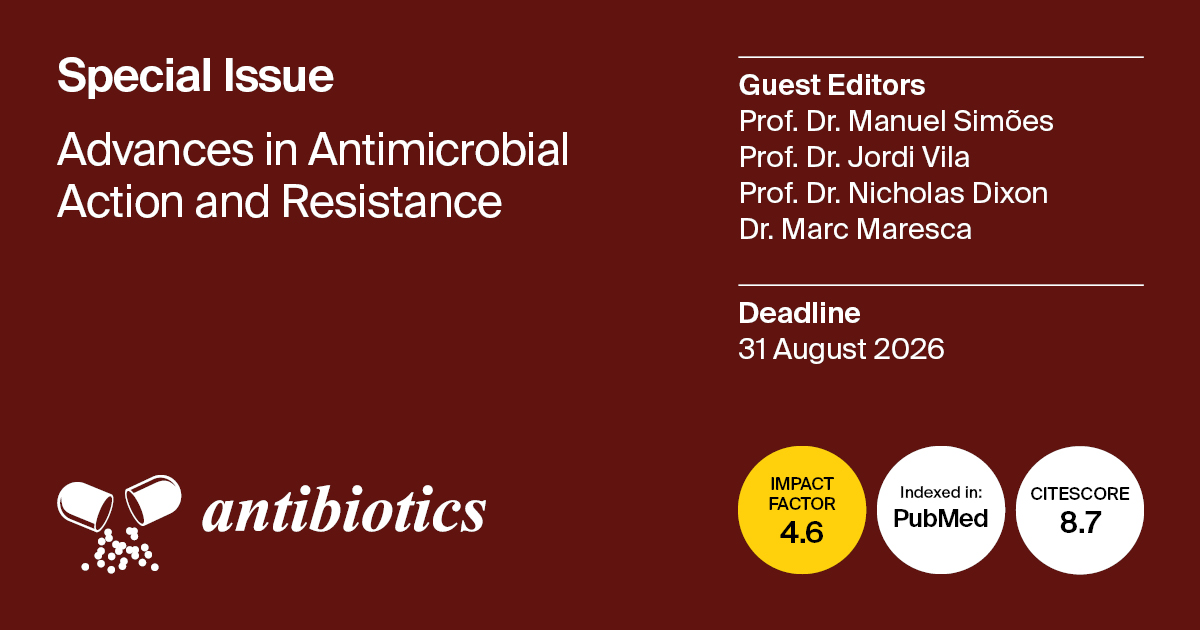
Relevant Special Issue

Participants of Antibiotics 2026 are cordially invited to submit full manuscripts for a dedicated Special Issue in the journal Antibiotics, with a 20% discount on the publication fees. Please note that no other discounts will be applicable.
This Special Issue, titled "Advances in Antimicrobial Action and Resistance", will showcase cutting-edge research presented at the conference. It is an excellent platform to share your findings with a broad readership in the antimicrobial community.

Event Awards

To recognize the outstanding works presented during our conference, we are excited to announce two awards for our participants. Sponsored by the journal Antibiotics, we will offer one Best Oral Presentation Award and one Best Poster Award.
The Awards
Number of Awards Available: 1
Prize: EUR 500
Number of Awards Available: 1
Prize: EUR 500
Location and Venue
UPF - BSM

Address: C/ de Balmes, 132, 134, 08008 Barcelona, Spain

Conference Dinner
We are excited to announce that the Conference Dinner Reception will be held at the prestigious Catalonia Boulevard, located in the heart of Barcelona. Enjoy a delightful evening with contemporary Catalan cuisine in a vibrant setting next to iconic landmarks such as La Pedrera, Passeig de Gràcia, Casa Batlló, and Plaça Catalunya.
When: Wednesday, 13 May 2026, at 20:00 pm CET
Location: Ambassador Room, Catalonia Boulevard. C/ del Rosselló, 249, 08008 Barcelona
Main Course Options: Meat (Pork), Fish, or Vegetarian
Here's How to Reserve Your Seat:
A seat at the dinner can be reserved for an additional 60 EUR, which can be added during registration. Simply select the dinner option along with your registration category (Academic, Student, etc.). If you have already registered without the dinner, you can register again, choosing only the dinner category. Please indicate your main course preference and any allergies or dietary restrictions in the comment box when registering.
Seating at the dinner is limited, and can be reserved as above on a first-come, first-served basis. Note that onsite registration will not be possible.
Join us for an unforgettable dining experience in one of Barcelona's most renowned locations!

Plan Your Trip
Barcelona
Barcelona is the capital of Catalonia and Spain's second-largest city, with a population of over one and a half million people.
Located on the northeastern Mediterranean coast of Spain, this city has a rich and diverse history, with its roots dating back to Roman times. The fruitful medieval period established Barcelona's position as the economic and political center of the Western Mediterranean. The city's Gothic Quarter bears witness to the splendor enjoyed by the city from the 13th to the 15th century.
The 20th century ushered in widespread urban renewal throughout Barcelona, culminating in its landmark Eixample district, which showcases some of the city's most distinctive Catalan art-nouveau, or modernista, buildings, including La Pedrera, Casa Batlló, and the Sagrada Família church, designed by Antoni Gaudí, one of the world's most eminent architects.
In 1992, Barcelona gained international recognition by hosting the Olympic games, which brought about a massive upturn in its tourism industry. For visitors, this has translated into the very modern yet incredibly old city you see now in the 21st century, where new elements work to both preserve and celebrate the city’s heritage and origins.
Barcelona has plenty of outdoor markets, restaurants, shops, museums, and churches. The city is also very walkable, with an extensive and reliable Metro system for more far-flung destinations.
Explore our Travel Guide for the Afternoon at Leisure and discover ideas on how to make the most of your free time during the conference in Barcelona.

Travel
Barcelona is a vibrant and accessible city with excellent transportation links. Whether you are arriving by plane, train, or other means, there are convenient options to reach your destination. Below, you will find detailed guidance to ensure a smooth journey to the conference venue.

By plane:
The international airport of Barcelona, Barcelona-El Prat, is located 10 km from the city center. It is well connected to major airport hubs in Europe and various locations worldwide. For more information about the airport and flights, please visit the official website: https://www.aena.es. Once you arrive at the airport, you have several options to reach the venue:
-
By train: Take the TRAIN R2 NORD (https://rodalies.gencat.cat). Disembark at Barcelona Sants station. From there, you can either take METRO L5 (get off at Diagonal) or a taxi, available just outside the station. The train from the airport costs EUR 5. Tickets can be purchased at train stations. A taxi from the station to the conference venue costs approximately EUR 10.
-
By metro: Take LINE L9 (https://www.tmb.cat), which connects Barcelona Airport (both Terminal 1 and Terminal 2) to the city. Disembark at Collblanc station, and from there, transfer to METRO L5 (get off at Diagonal). The metro from the airport costs EUR 5.90, while a single city metro trip is EUR 2.90. Barcelona offers several public transport card options: the T-casual (10 trips, EUR 13 for Zone 1, not valid for the airport) and the T-usual (unlimited travel for 30 days, EUR 22.80 for Zone 1, including the airport via metro). There are also Hola Barcelona tourist cards, offering unlimited travel for 48 to 120 hours, but local cards usually offer better value for money. Tickets can be purchased at metro stops.
-
By taxi: Taxis are readily available just outside the arrivals area. A taxi from the airport to the conference venue costs approximately EUR 35. Alternatively, VTC apps like Uber, Bolt and Cabify also operate in Barcelona and might offer more competitive rates.

By train:
Barcelona Sants is the city's largest train station, providing rail services for Barcelona, the rest of Spain, and international destinations. For more information about the station and train services, please visit the official website: https://www.renfe.com. Once you arrive at the station, you have the following options to reach the venue:
-
By metro: Take LINE L5 (https://www.tmb.cat) and get off at Diagonal.
-
By taxi: Taxis are available just outside the station. A taxi from the station to the conference venue costs approximately EUR 10.
Accommodation
We want your stay in Barcelona during the conference to be as comfortable as possible. With that in mind, we have agreed on a discount with several hotels to make your choice of accommodations easier. Please book your accommodation online and contact the hotels directly with any issues or requests related to accommodation bookings.
We are delighted to announce that the following hotels will offer a discounted price for all Antibiotics 2026 attendees:
Hotel |
Description |
How to book |
|
A 3-star boutique hotel located next to the emblematic Avenida Diagonal and Paseo de Gracia, the city's most chic shopping area and just 5 minutes on foot from the conference venue. The hotel has a terrace with an outdoor swimming pool and gym, parking, a restaurant, and a museum room dedicated to the Catalan illustrator Ricard Opisso. |
Click below to complete your booking and add the 5% discount code "AB2026", valid for stays between the 8th and 14th May 2026, booked through the official website starting September 2025. |
|
|
|
A 4-star hotel located at the center of the Eixample district of Barcelona, the city's most exclusive shopping area, and only steps away from Barcelona's most famous monuments and tourist attractions. It is a great starting point to discover architectural jewels of Catalan modernism such as La Pedrera, Casa Batlló or the Sagrada Familia, and just 5 minutes on foot from the conference venue. The excellent range of services at the Balmes Hotel also includes its large, tree-covered interior garden with pool, gym, meeting rooms, bar and parking. |
Click below to complete your booking and add the 5% discount code "AB2026", valid for stays between the 8th and 14th May 2026, booked through the official website starting September 2025. |
|
Stay in the heart of Barcelona’s Eixample district at Catalonia Diagonal Centro, just a 1-minute walk from the conference venue. Alternatively, choose Catalonia Gallery/Boulevard, conveniently located at the conference dinner venue and only a 3-minute walk from the main event.
Situated next to Passeig de Gràcia and close to the city’s renowned Modernist architecture route, both hotels offer excellent public transport connections, making it easy to explore Barcelona for both business and leisure.
|
Click below to make a reservation with a 10% discount at either Catalonia Diagonal Centro or Catalonia Gallery/Boulevard, or use the code "CATALONIABCN". |
|
|
Discover the fascinating Barcelona, where the modern blends with the historical, and choose the 1881 Barcelona Gran Rosellón Hotel. It is just a 3-minute walk from the conference venue. |
Click below to complete your booking and add the 10% discount code "MDPI2026". |
|
|
Flexible accommodation option with modern technology, located in Barcelona’s vibrant Poblenou district, a creative and fast-growing area filled with cafés, galleries, and tech hubs.
Just minutes from the beach and well connected to the city center, ideal for those seeking a modern, relaxed stay. |
Click below to complete your booking and add the 10% discount code "NAITLYAB2026" (valid for stays between 11/05/2026 and 14/05/2026). |
|
|
|
Discover the magic of Barcelona and live an unforgettable experience with Atiram Hotels, offering a wide range of options to satisfy your needs. There are four hotels, located in the most emblematic parts of the city, allowing you to immerse yourself in its vibrant culture from the moment you arrive whilst providing you with maximum comfort during your stay. |
Click below to complete your booking and add the 10% discount code "ANTIBIOTICS26" (valid for stays at the Arenas, Oriente, Meson Castilla and Tres Torres between 09/05/2026 and 16/05/2026). |
These accommodations have been carefully chosen to provide comfort and convenience for our guests while ensuring affordability through negotiated rates. Prepare to make the most of your conference experience with our exclusive lodging options designed to enhance your stay.
Beware of Unauthorized Registration and Hotel Solicitations
Note that Sciforum is the only official registration platform to register to Antibiotics 2026 and that we are not associated with any hotel agency (other than those listed above). While other hotel resellers and travel agencies may contact you with offers for your trip, they are not endorsed by or affiliated with Antibiotics 2026 or Sciforum. Beware that entering into financial agreements with non-endorsed companies can have costly consequences.
Visa Information
Please note that you must apply for your own visa application. MDPI is not responsible for any visa application. However, MDPI can provide a Visa Support Letter. To be eligible for such a document, the criteria below must be fulfilled.
Visa Support Letter
- Applicants must have paid for registration and submitted an abstract in order to get a letter of support.
- Applicants must provide us with a scan of their valid, in-date passport that contains a photo of them.
- Applicants must provide us with a letter of support from their institution to confirm that they support the delegate attending the meeting.
-
This must be carried out in good time before the meeting; “last minute” requests will not be processed.
More useful information on visa application
Partnership Opportunities
Sponsoring
As organizers, we are excited to create an immersive and insightful conference, and we invite you to be a vital part of Antibiotics 2026. Explore our sponsorship opportunities and join us in shaping the future of antimicrobial research and innovation.
Find the perfect sponsorship package tailored to your budget and desired exposure in our sponsorship brochure. Simply click on the icon below to access it.

If you have any questions, feel free to contact us via email at antibiotics2026@mdpi.com. We appreciate your consideration!
Society Collaboration
Are you part of a society that isn't partnering with the conference? Contact us via email at antibiotics2026@mdpi.com to discuss a possible partnership! Noteworthy detail: Members from partnering societies are granted a 20% discount on all registration fees.
S1. Antimicrobial Resistance Mechanisms
Show all published submissions (11) Hide published submissions (11)
Submissions
List of Papers (11) Toggle list
S2. Antimicrobials, Antimicrobial Resistance, and One Health
Show all published submissions (55) Hide published submissions (55)
Submissions
List of Papers (55) Toggle list
S3. Ethnopharmacology in Antimicrobial Research and Treatment
Show all published submissions (7) Hide published submissions (7)
Submissions
List of Papers (7) Toggle list
S4. Conventional and Novel Approaches in the Discovery of New Antimicrobial Agents
S5. Innovation in Antimicrobial Stewardship and Optimized Clinical Strategies
Show all published submissions (17) Hide published submissions (17)
Submissions
List of Papers (17) Toggle list