
Applied Sciences Webinar | Nanophotonics in the Third Millennium
the chair
14th Webinar of Applied Sciences
Nanophotonics in the Third Millennium
Photonics in the 3d Millenium will play the role, electronics has played in the 20th century. No electronics means no computers, TV, hearing aids, MRT, household aids,…No photonics means no fast interconnects in mega-data centers, intercontinental data links, laser welding, optical lithography, LIDAR, face recognition in mobile phones or inside cars,…The number of applications, systems which are based on photonic components, as well as the number of their users is exploding. As of today such systems are commercially at least as important as purely electronic based systems.
Alongside with this explosion of use goes an explosion of energy consumption by the systems. Published analysis shows, that e.g. presently 8-10% of the US electricity production is consumed by the users of the internet. The consumption rapidly increases year by year on a world-wide level. Most of this electricity is not produced in a sustainable way, but contributes to the increase of CO2 level in the atmosphere. Structures of reduced dimensionality, like quantum wells or quantum dots, show significant reduction of energy consumption as compared to photonic devices based on three-dimensional structures. Brake-throughs in more energy-efficient photonic device technologies have been additionally reported recently, such that we are now rapidly embarking towards “green photonics” technologies. World-wide work on “Green Photonics and Electronics” until 2017 has been reviewed in the book by G. Eisenstein and D. Bimberg.
This webinar will report in its 3 presentations about recent important developments towards “green photonics”. The first presentation will report brake-throughs in heat management of the active are of QW-based surface emitting lasers (VCSELs) grown by MOCVD based on a novel laser design, for short range interconnects in data centers, or for sensing applications, like face recognition, leading to much increased output power.
The second presentation reports on the results of an international team of scientists from Russia, Germany, and China developing QW-based VCSELs for longer wavelengths, the O- and C-bands, for longer distance data com. These devices are based on active areas and mirrors grown separately by MBE and merged by double wafer fusion showing record output power, data rate and energy consumption per bit.
The third presentation will focus on edge emitting devices, like lasers or semiconductor optical amplifiers based on quantum dotsand is given by one of its pioneers. QD-based lasers are holding the world record for minimum threshold current density, or Tbit/s data rates enabled by a single passively mode-locked lasers using higher order modulation schemes.
Date: 24 February 2024
Time: 10:00 am CET | 05:00 pm CST Asia
Webinar ID: 841 5118 72201
Webinar Secretariat: journal.webinar@mdpi.com
Meet Our Chair
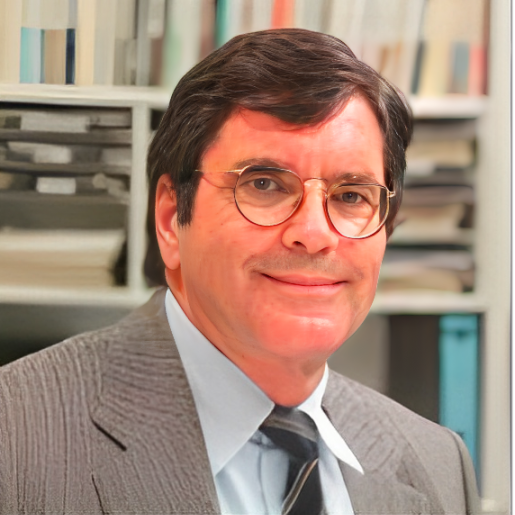
Excecutive Director, "Bimberg Chinese-German Center for Green Photonics", Changchun Institute of Optics, Fine Mechanics and Physics, Chinese Academy of Sciences , China;Founding Director, Center of NanoPhotonics, Institut fuer Festkoerperphysik, Germany;Dieter Bimberg received the Ph.D. magna cum laude from Goethe University, Frankfurt, Germany. He held for 7 years a Principal Scientist position at the Max Planck-Institute for Solid State Research, Grenoble, France. After serving as a Professor of Electrical Engineering, Technical University of Aachen, Germany, he assumed the Chair of Applied Solid-State Physics at Technical University of Berlin. He is the Founding Director of its Center of NanoPhotonics. He was holding guest professorships at the Technion, Haifa, U.C. Santa Barbara, CA, USA, and at Hewlett-Packard in Palo Alto, CA. He was Distinguished Adjunct Professor at KAU, Jeddah 2012-2018. In 2018 he was appointed as executive director of the “Bimberg Chinese German Center for Green Photonics” at the Changchun Institute of Optics, Fine Mechanics and Physics of the Chinese Academy of Sciences.
Meet Our Speakers
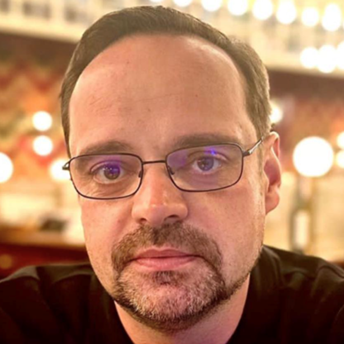
Dr. Alexey R. Kovsh
Alfalume Inc, United States;Alexey received his PhD and D.Sci. degrees under the guidance of Prof.Zhores Alferov (Nobel Prize in Physics, 2000), the head of Ioffe Institute, St,Petersburg known as "Soviet Union Bell Lab". Alexey has numerous publications, conference presentations, patents and awards in the field of diode lasers and LEDs. Together with his colleagues from Ioffe Institute, Alexey started and brought to success two photonics companies Innolume GmbH and Optogan Oy. Alexey's team at Innolume demonstrated the first diode comb-laser and 10Gbps error-free transmission on each lasing line in 2007. Originating from the cooperation between Ioffe Institute and TU Berlin, Innolume’s lasers based on Quantum Dots are being shipped worldwide today for various applications. Before foundation of Alfalume in 2022, Alexey served several Tier 1 US companies in leading technical roles.

Chinese Academy of Sciences, China;Professor Si-Cong Tian received his B. Sc. and Ph. D. degrees in Physics from Jilin University, China, in 2007 and 2012, respectively. From 2016-2017 he studied at Arkansas University, US, as a visiting scholar. Currently, he is a Professor at Bimberg Chinese-German Center for Green Photonics, Changchun Institute of Optics Fine Mechanics and Physics, Chinese Academy of Sciences, China. His research interest includes high-speed vertical-cavity surface-emitting lasers and high-brightness semiconductor lasers. He has published over 80 publications, authorized 30 patents, hosted 20 projects, and given over 20 invited talks.

Dr. Georgiy Sapunov
Chinese Academy of Sciences, China;In 2014 Dr. Georgiy Sapunov joined Laboratory of Renewable Energy Sources at Alferov University, St. Peterburg, Russia. His was focusing on Molecular Beam Epitaxy of III-V heterostuctures on silicon. In 2021 Dr. Sapunov defended his dissertation for the Candidate of Sciences degree (equivalent to PhD) in Physics and Mathematics (Physics of Condensed Matter) in Alferov University. Currently, he is a postdoctoral researcher at Bimberg Chinese-German Center for Green Photonics, Changchun Institute of Optics Fine Mechanics and Physics, Chinese Academy of Sciences, China. His research interests include high-speed, high-power and energy efficient Vertical-Cavity Surface-Emitting Lasers. He has published over 35 publications.


The webinar was hosted via Zoom and required registration to attend. The full recording can be found below. In order to learn about future webinars, you can sign up to our newsletter by clicking “Subscribe” at the top of the page.
"Metamaterials, Quantum and Nanophotonics in the Third Millenium"
Edited by Prof. Dr. Eduard Babulak and Prof. Dr. Dieter Bimberg
Deadline for manuscript submissions: 29 Feb 2024