Atmosphere Webinar | From Traditional to Emerging Air Pollutants: Tools and Health Risk Assessment
The full recording can be found below. You are welcome to subscribe to our webinar and webinar series for the latest updates by clicking the bell icon on the homepage banner.
the chair
2nd Atmosphere Webinar
From Traditional to Emerging Air Pollutants: Tools and Health Risk Assessment
Air pollution continues to represent a major environmental and public health concern worldwide. Over the past decades, considerable efforts have been devoted to the monitoring and regulation of traditional air pollutants. At the same time, increasing attention is being directed toward emerging contaminants, whose sources, environmental behavior, and potential health impacts are still under investigation.
In this context, the development and application of robust tools for air quality monitoring, exposure assessment, and health risk evaluation are essential to support evidence-based decision-making and effective environmental policies.
This webinar aims to provide an overview of current approaches and methodologies used to assess both traditional and emerging air pollutants, with particular focus on tools for evaluating potential health risks. The presentations will highlight recent developments, methodological advances, and ongoing challenges in this evolving field.
Date: 8 April 2026
Time: 11:00 am (CEST) | 5:00 pm (CST Asia)
Webinar ID: 816 2514 1795
Webinar Secretariat: journal.webinar@mdpi.com
Meet Our Chair
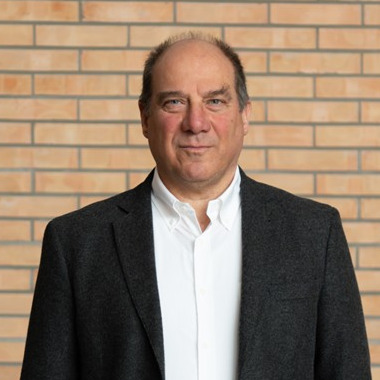
Department of Agricultural, Environmental and Food Sciences (DiAAA), University of Molise, Italy;Division of Rome, Institute of Atmospheric Pollution Research, c/o Ministry of Environment and Energy Security, Italy;Pasquale Avino received his Ph.D. in Chemical Sciences at the University of Rome “La Sapienza” in 1997. He was appointed as Post-Doc (1997-1998) at the Department of Chemistry of the University of California, Irvine (UCI) in the Rowland-Blake group. In 1998 he was at ISPESL/INAIL research center as Researcher until 2017, after he moved to the University of Molise where he is currently Associate Professor in Analytical Chemistry and Environmental Chemistry. His scientific activity is devoted to the development of innovative analytical methodologies for the extraction, concentration and determination of organic micropollutants by gas chromatography-mass spectrometry in food and environmental matrices; to the assessment of air quality in indoor and outdoor environments; to the identification and evaluation of microplastics in food and environmental matrices; biomass and gasification issues in the context of ecological transition. He was the recipient of the “Group Achievement NASA Award” in 1998. In 1998 he was awarded with the “Next Generation Award” during the 22nd International Symposium on Chromatography. In 2003 he was the recipient of the “Environmental Sapio” Award for his research in the environmental field. In 2022 he received the Medal for Ecology from the Moldavian Chemical Society. In 2024 he received the highest honor of the Institute of Ecotoxicology and Environmental Sciences (IE&ES), the “Fellowship Award” for your outstanding contribution to the society through the field of environmental science. Prof. Avino is author and co-author of different scientific publications including original papers published on national and international journals and books (Microplastics in Agriculture and Food Science, 2025, Elsevier, ISBN 9780443222108; New Perspectives in Indoor Air Quality, 2025, Elsevier, ISBN 9780443266430).
Important Dates
8 Apr
2026
Meet Our Speakers
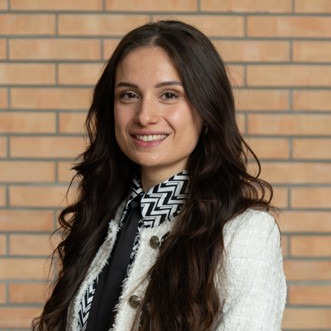
Department of Agriculture, Environmental and Food Sciences, University of Molise, Italy;Cristina Di Fiore was born in Larino, Italy, in 1996. She obtained her Master’s degree in Food Science and Technology in 2020 from the Department of Agricultural, Environmental and Food Sciences at the University of Molise (Campobasso, Italy). She then pursued a PhD in Agricultural Technologies and Biotechnologies at the University of Molise, which she completed in November 2024. Her doctoral research was carried out in the field of analytical and environmental chemistry and focused on the investigation of microplastics and nanoplastics in food, with the aim of developing analytical methods for their extraction and chemical determination. During her doctoral studies, she spent a six-month research period at Imperial College London (London, UK) within the Environmental Research Group, School of Public Health. She has also been nominated as a subject expert in analytical chemistry, applied analytical chemistry, and environmental chemistry. She is currently carrying out a research grant focused on the determination of microplastics in occupational indoor air and is involved in research on contaminants in foods. Recently, she co-authored a publication in Nature Health titled “Microplastics and nanoplastics in the human diet.”

Department of Agriculture, Environmental and Food Sciences, University of Molise, Italy;Fabiana Carriera was born in Campobasso, Italy in 1997. She obtained her Master of Food Science and Technology in 2021 from the Department of Agricultural, Environmental and Food Sciences, University of Molise in Campobasso, Italy. After her Master’s degree, she carried out research at the Department of Civil and Mechanical Engineering of the University of Cassino and Southern Lazio on the characterization of dust emissions in the air from braking systems. From 2023, she is a PhD student in Science for Food Production at the University of Molise. She is working on the research of emerging contaminants in indoor air in the agri-food sector. She also involved in the research of contaminants in foods.
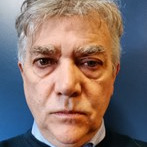
Laboratory Department of Environmental Agency of Veneto Region, Italy;Head of the Physics and Chemistry Laboratory at ARPA Veneto with 30 years of experience in environmental chemistry. Leading expert in organic micropollutants (dioxins, PCBs, PAHs, PFAS), air quality monitoring, and atmospheric emissions. Managing complex units, coordinating specialized sampling and laboratory start-ups. REACH representative for laboratory and scientific author, he has collaborated on the drafting of national protocols for environmental investigations.


| Speaker/Presentation | Time in CEST | Time in CST (Asia) |
| Atmosphere Journal Introduction | 11:00–11:10 am | 05:00–05:10 pm |
| Prof. Dr. Pasquele Avino Webinar Opening and Relevant Special Issue Introduction |
11:10–11:20 am | 05:10–05:20 pm |
| Dr. Cristina Di Fiore Polycyclic Aromatic Hydrocarbons in Air: Current Knowledge and Emerging Issues |
11:20–11:40 am | 05:20–05:40 pm |
| Q&A | 11:40–11:45 am | 05:40–05:45 pm |
| Dr. Fabiana Carriera The Emerging Issue of Airborne Microplastics |
11:45 am–12:05 pm | 05:45–06:05 pm |
| Q&A | 12:05–12:10 pm | 06:05–06:10 pm |
| Dr. Gianni Formenton Occurrence of Perfluorinated Compounds in the Atmospheric Matrix: Sampling and Analytical Methods |
12:10–12:30 pm | 06:10–06:30 pm |
| Q&A | 12:30–12:35 pm | 06:30–06:35 pm |
| Closing of Webinar Prof. Dr. Pasquele Avino |
12:35–12:50 pm | 06:35–06:50 pm |
"From Traditional to Emerging Air Pollutants: Tools and Health Risk Assessment"
Edited by: Dr. Cristina Di Fiore and Prof. Dr. Pasquale Avino
Deadline for manuscript submissions: 30 April 2026