
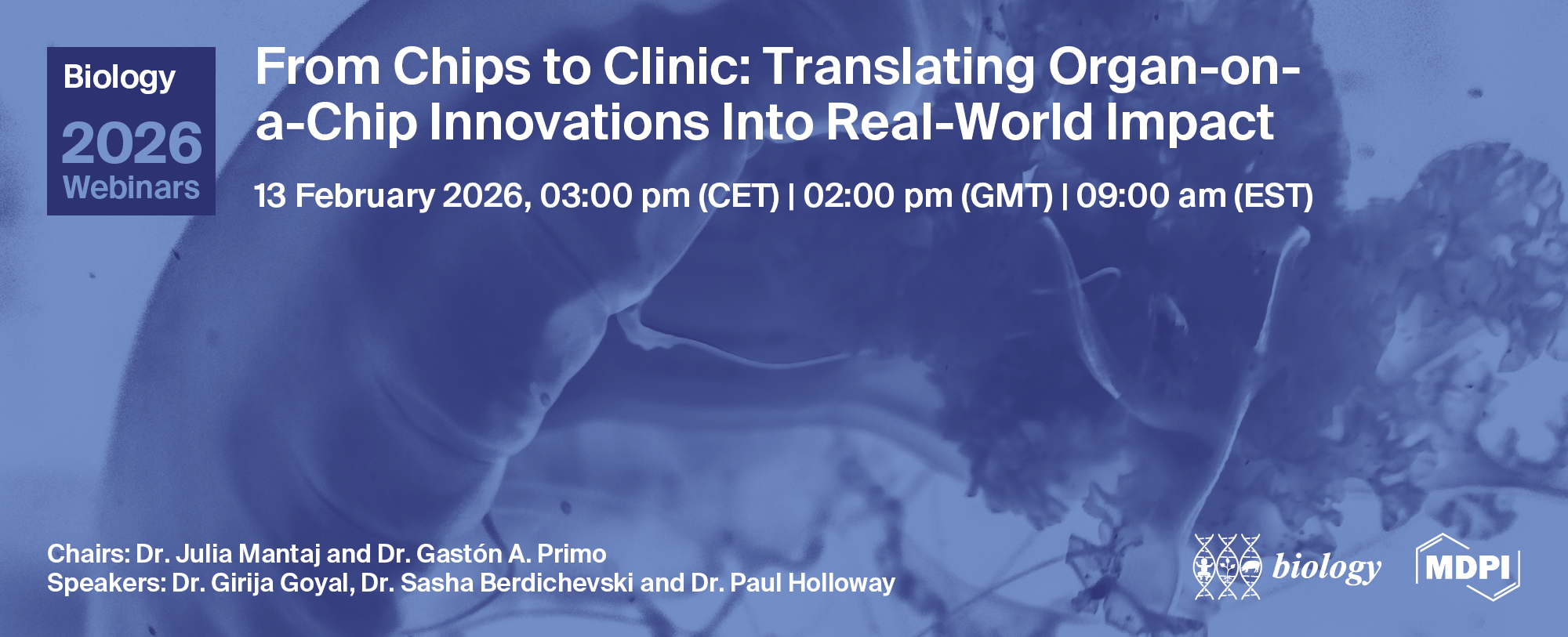
Biology Webinar | From Chips to Clinic: Translating Organ-on-a-Chip Innovations Into Real-World Impact
the chairs
8th Biology Webinar
From Chips to Clinic: Translating Organ-on-a-Chip Innovations Into Real-World Impact
We are delighted to invite you to our upcoming webinar focused on the exciting advances and emerging applications of organ-on-a-chip technologies. As these platforms continue to reshape drug discovery, disease modeling, and translational research, this webinar offers an opportunity to hear directly from leaders at the forefront of innovation.
We are honored to welcome three distinguished speakers:
- Dr. Girija Goyal is an immunologist developing organ-on-chip immune models used across pharma and academia, currently advancing injectable lymphoid organs for ovarian cancer through an ARPA-H Spark award while leading organ-on-chip disease programs at the Wyss Institute.
- Dr. Sasha Berdichevski is a Biomedical Scientist and founder of SciBer Ltd, dedicated to driving the development and global adoption of New Approach Methodologies (NAMs). She currently serves as Mepsgen’s Head of Innovation and Business Development for Europe, where she leads the integration of automated organ-on-a-chip and nanoparticle synthesis technologies into drug development and translational research.
- Dr. Paul Holloway is Lead of the Microfluidic Neurological Models Lab at Oxford, applying his neurovascular and microfluidic engineering background to develop advanced neurovascular-unit chips and incorporate circadian biology into microfluidic stroke models.
Together, they will share insights into cutting-edge developments, practical implementation, and the future potential of these systems to accelerate more ethical and effective biomedical innovation.
We warmly invite researchers, industry professionals, students, and anyone interested in next-generation in vitro technologies to join us for this dynamic and informative session. We look forward to seeing you there.
Date: 13 February 2026
Time: 3:00 p.m. CET | 02:00 p.m. GMT | 09:00 a.m. EST |
Webinar ID: 811 9745 4641
Webinar Secretariat: journal.webinar@mdpi.com
Meet Our Chairs
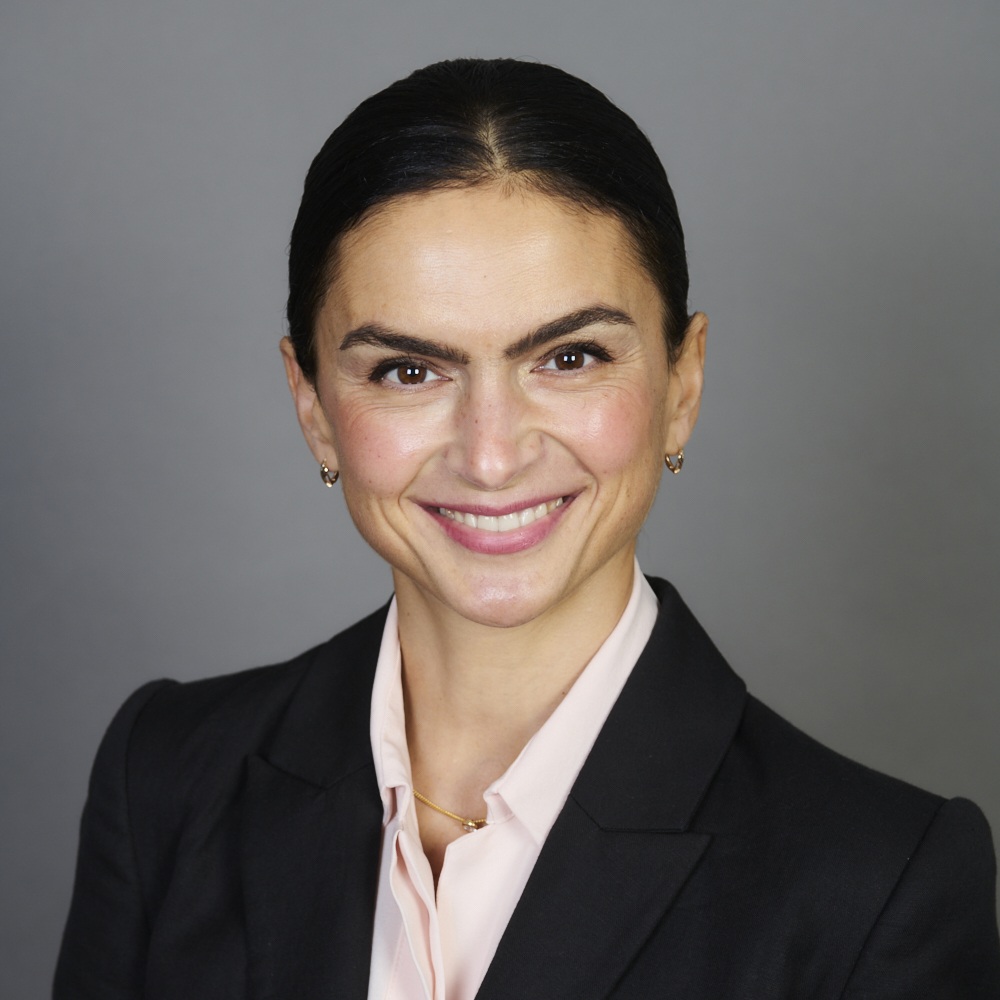
School of Applied and Health Sciences, London South Bank University, London SE1 0AA, UK;Dr Julia Mantaj graduated as a pharmacist from the Technical University of Braunschweig, Germany, before completing a PhD at King’s College London (KCL), where her research focused on DNA minor-groove binding agents and their effects on gene expression. She then spent two years in industry as a Postdoctoral Researcher developing next-generation DNA-interactive payload molecules for antibody–drug conjugates. In 2018, she returned to KCL as a Research Associate, contributing to the design of non-invasive drug delivery systems, and later became a Teaching Fellow in Pharmacy in 2019. Dr Mantaj joined London South Bank University in September 2024 as a Senior Lecturer in Pharmaceutical Science. Her current research focuses on developing human-derived organoid models to enhance in vitro physiological studies and creating hydrogel-based systems for rectal delivery of cell therapies to treat Inflammatory Bowel Disease (IBD).
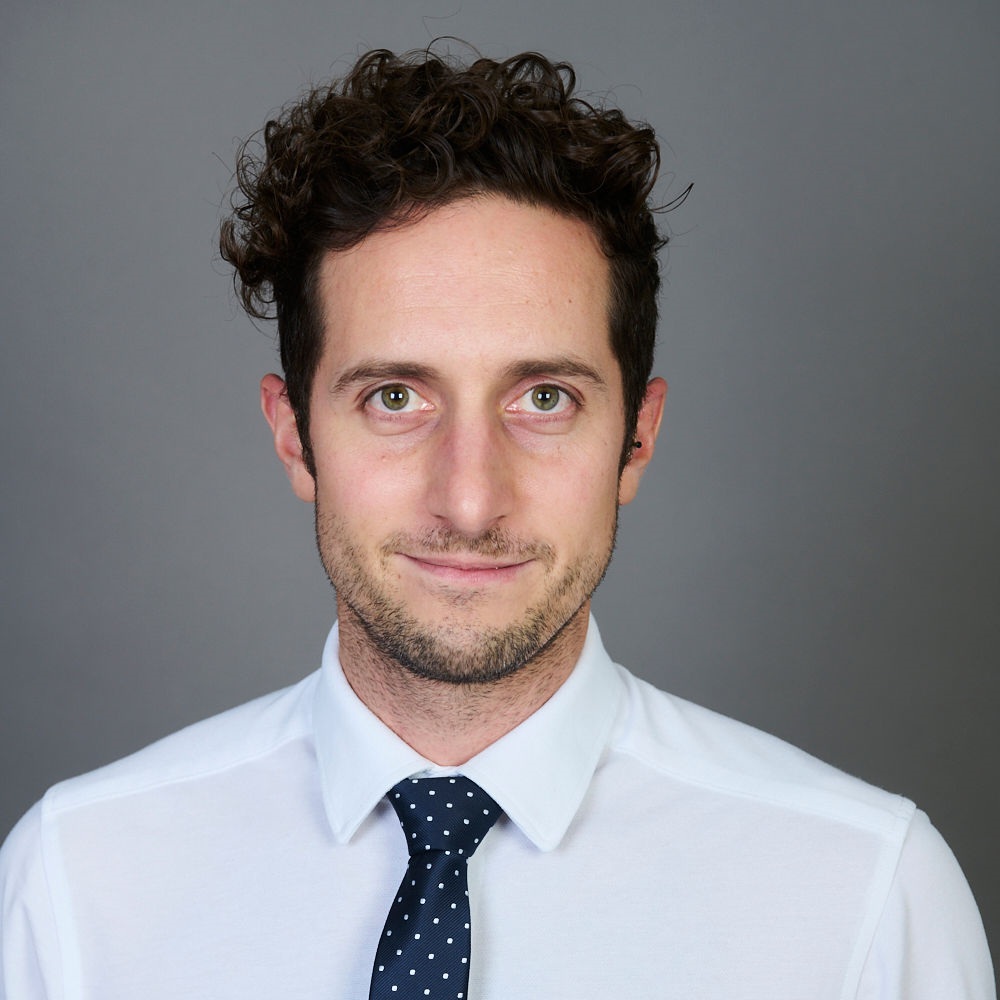
Clarence Centre for Enterprise & Innovation, London South Bank University, London SE1 0AA, UK;Dr Gastón A. Primo discovered his passion for Tissue Engineering early in his Chemistry Undergraduate studies. In 2020, he received a PhD in Medical Engineering from Queen Mary University of London, where he furthered the use of hydrogels, cells, and electric fields for the development of functional scaffolds for tissue engineering applications. Afterwards, he helped build a functional precision medicine company, leading the R&D activities of developing organ-on-chip models for various cancer indications. Gastón’s expertise in biomaterials, 3D in vitro models, tumor microenvironment, and cancer biology allowed him to make a real-world impact in personalized medicine treatments. Currently, he is supporting tech-transfer initiatives at London South Bank University.
Meet Our Speakers

Dr. Girija Goyal
Principal Scientist, Wyss Institute for Biologically Inspired Engineering at Harvard University;Dr Girija Goyal is an immunologist working with the organ-on-chip and diagnostics platforms to design better in vitro models of the human immune system to develop new immunotherapeutics and derisk vaccines. Her research has reached the real world, as these in vitro models are now used at pharmaceutical companies and academic centers. Recently, she secured a prestigious Spark contract from ARPA-H Women’s Health Sprint to advance injected lymphoid organs as therapy for ovarian cancer. At the Wyss Institute, Girija also manages organ-on-chip programs on diseases that affect the human intestine, lung, and female reproductive tract.

Dr. Sasha Berdichevski
SciBer Ltd, England, UK;Dr Sasha Berdichevski is a biomedical scientist and founder of SciBer Ltd, a consultancy supporting the adoption of New Approach Methodologies (NAMs) through strategic business development and scientific expertise. She is currently Head of Innovation and Business Development at Mepsgen (UK and Europe), driving the adoption of organ-on-a-chip technologies to transform drug development and translational research. Previously, she was Principal Team Lead at Emulate, Inc., where she managed customer relationships, global partnerships, and programs for the validation and adoption of organ-on-chip platforms across academia, pharma, biotech, government, and regulatory sectors. She earned a PhD at the Technion, Israel, where she developed imaging methodologies to study host responses to biodegradable implants and designed injectable micro-carriers for cardiac muscle regeneration.
Dr. Paul Holloway
Radcliffe Department of Medicine, University of Oxford, UK;Dr Holloway has a background incorporating both neurovascular biology and microfluidic engineering. His PhD at Imperial College London and postdoctoral position at Louisiana State University focused on novel therapeutic approaches to modulate immune cell trafficking in the cerebral microcirculation following stroke. Following a postdoctoral position at the Centre for Hybrid Biodevices, University of Southampton, developing microfluidic neuronal models, Dr Holloway moved to the University of Oxford on a Royal Commission of 1851 Research Fellowship to develop an organ-on-a-chip model of the neurovascular unit. He is now leading the Microfluidic Neurological Models Lab at Oxford and working with the Leducq Foundation Circadian Network to introduce circadian rhythms into microfluidic in vitro models of stroke and neurovascular function.


In this section, you will find the recordings of this webinar to watch, re-watch and share with your colleagues!
The webinar was highly engaging and insightful, showcasing the speaker’s extensive experience in organ-on-chip technology. It was exciting to hear how these advanced in vitro models are being developed and applied to better replicate human physiology. The talk highlighted the significant translational potential of this technology in bridging the gap between laboratory research and clinical application. It was inspiring to see how organ-on-chip systems are advancing biomedical research and contributing to patient-care improvements.
Organ-on-a-Chip: Biology Meets Technology
Guest editors: Dr. Julia Mantaj
Deadline for manuscript submissions: 31 December 2025
https://www.mdpi.com/journal/biology/special_issues/2VN2YZB1WM?webinar_id=17&_utm_from=42a59d8512