Cancers Webinar | DNA Damage Response Pathways in Cancer and Therapy
the chair
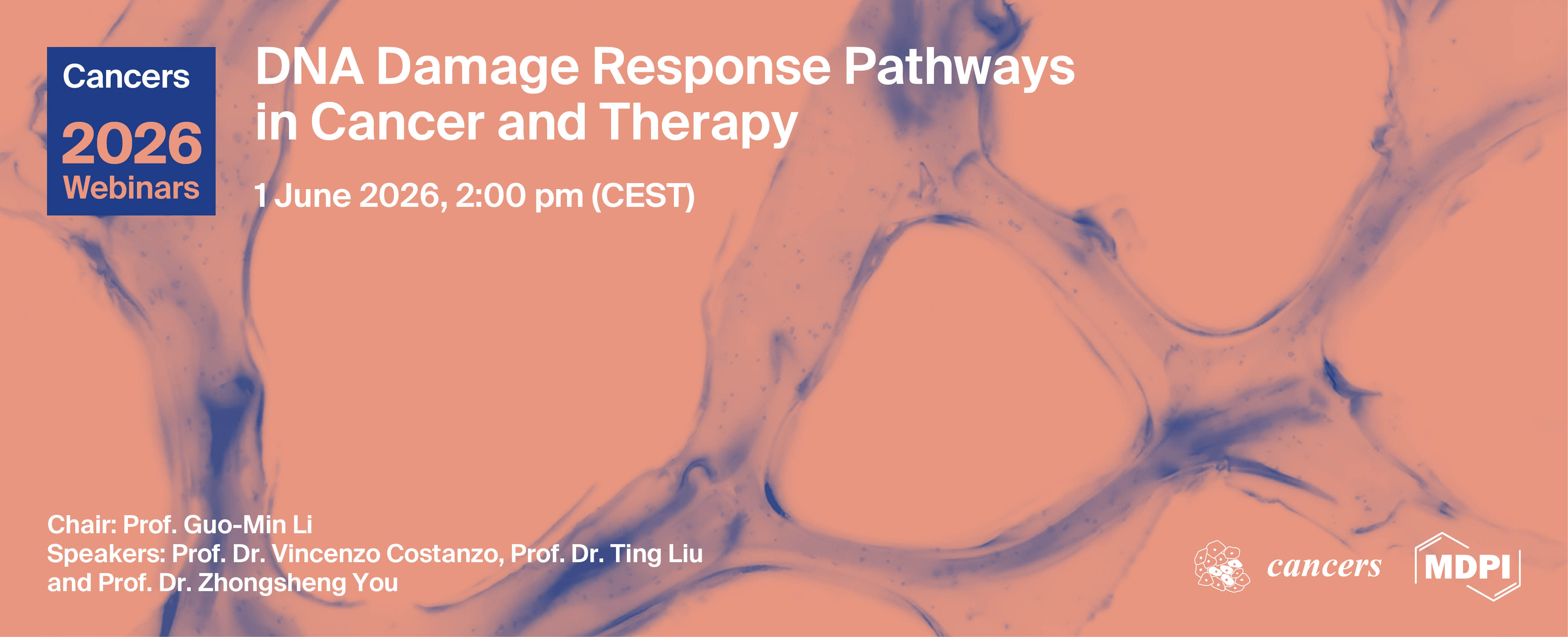
13th Cancers Webinar
DNA Damage Response Pathways in Cancer and Therapy
It is my great pleasure and privilege to welcome you to the Cancers Webinar on "DNA Damage Response Pathways in Cancer and Therapy".
The DNA Damage Response (DDR) represents one of the most vibrant and rapidly evolving fields in cancer research. What began as fundamental inquiries into the mechanisms of genomic stability has transformed into a robust pipeline of therapeutic strategies, from PARP inhibitors to emerging immunotherapy agents. Today, the study of DDR pathways sits at a fascinating intersection—it is central to our understanding of tumor suppression, a key determinant of response to conventional therapies, and a rich source of novel drug targets.
Over the next 3 hours, we will explore the full spectrum of this field. Our program bridges the molecular architecture of repair complexes with the translational challenges of overcoming therapeutic resistance. We will delve into the complexities of synthetic lethality, the interplay between DDR deficiencies and the tumor microenvironment, and the promise of combining DDR inhibitors with immunotherapies.
I extend my deepest gratitude to our distinguished speakers and panelists, whose groundbreaking work forms the backbone of this meeting. I also thank all of you—the attendees—whose passion and curiosity drive this community forward.
I encourage you to engage deeply with the science, ask provocative questions, and forge new collaborations. May this conference spark the ideas that lead to the next generation of cancer therapies.
Welcome, and I look forward to an inspiring meeting.
Date: 1 June 2026
Time: 02:00 pm CEST | 08:00 am EDT | 8:00pm CST Asia
Webinar ID: 847 6925 5911
Webinar Secretariat: journal.webinar@mdpi.com
Meet Our Chair
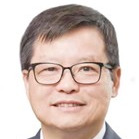
Chinese Institutes for Medical Research, Beijing, China;Professor Guo-Min Li is currently the Director and Distinguished Investigator of the Chinese Institute for Cancer Research at the Chinese Institutes for Medical Research (CIMR) in Beijing. He received his Bachelor's degree in Biology from Wuhan University and his Ph.D. in Chemistry from Wayne State University. He conducted postdoctoral research in the laboratory of Professor Paul Modrich (2015 Nobel Laureate in Chemistry) at Duke University, where he made the seminal discovery that DNA mismatch repair (MMR) defects cause cancer. Before returning to China in 2023, Professor Li served as an Endowed Chair Professor at the University of Texas Southwestern Medical Center and as Director of The Reece A. Overcash Colorectal Cancer Research Center. His research focuses on the mechanisms of MMR and its role in the initiation, progression, and treatment of cancer and neurodegenerative diseases. Throughout his career, Professor Li has made several landmark contributions to the field. He discovered that MMR deficiencies lead to various cancers and successfully purified and identified the components required for human MMR, ultimately reconstituting the human MMR reaction in vitro. He revealed that epigenetic factors and histone modifications serve as important regulators of MMR and elucidated the mechanism by which MMR-deficient tumors promote immune checkpoint therapy response through activation of the cGAS-STING pathway. More recently, he has made significant contributions to understanding how the MMR system promotes the amplification of DNA repetitive sequences, a mechanism that underlies various neurodegenerative diseases.
Meet Our Speakers
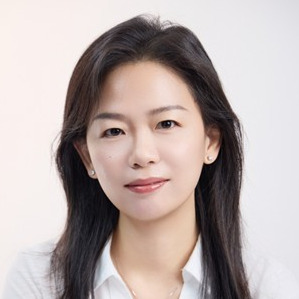
Prof. Dr. Ting Liu
Zhejiang University, Hangzhou, China;Ting Liu is a Professor at the Zhejiang University School of Medicine, China. Her research centers on genome maintenance mechanisms under replication stress, with a primary focus on the regulation of replication fork reversal and reversed fork stability. She also investigates DNA repair and DNA damage checkpoint activation within this broader framework. By dissecting how these coordinated pathways preserve genome integrity, she explores their roles in tumorigenesis and their potential as therapeutic vulnerabilities in cancer. Over the past five years, she has published as corresponding or co-corresponding author in leading journals, including Molecular Cell, Nature Chemical Biology, Nature Communications, The EMBO Journal, and Proceedings of the National Academy of Sciences USA. Her work provides mechanistic insights into replication stress regulation and its implications for cancer development and therapeutic intervention.
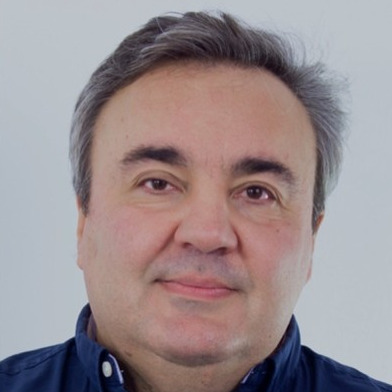
Prof. Dr. Vincenzo Costanzo
University of Milan, Milan, Italy;Vincenzo Costanzo, MD, PhD, is Full Professor at the University of Milan and Group Leader of the DNA Metabolism Laboratory at IFOM in Milan. His research has made seminal contributions to the DNA damage response and genome stability fields, including the discovery that RAD51 protects replication forks and suppresses ssDNA gap accumulation during DNA replication. His current work focuses on the expanding roles of homologous recombination proteins in replication stress, fork protection, gap suppression, and the cellular response to endogenous DNA damage.
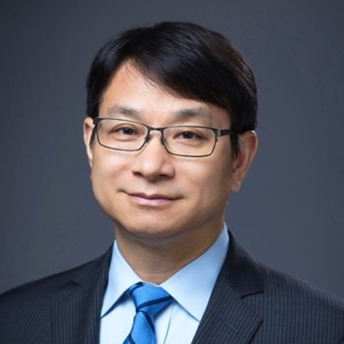
Prof. Dr. Zhongsheng You
Chinese Institutes for Medical Research, Beijing, China;Professor Zhongsheng You earned his bachelor's in 1994 from Zhejiang University and his master's degrees in 1997 from the Shanghai Institute of Biochemistry, Chinese Academy of Sciences. He then obtained his Ph.D. in 2002 from the Division of Biological Sciences at the University of California, San Diego, and completed his postdoctoral training at the Salk Institute in 2009. He subsequently joined the Washington University School of Medicine in St. Louis (WashU Medicine) as an Assistant Professor in the Department of Cell Biology and Physiology, and was promoted to Full Professor with tenure in 2023. In September 2025, he joined the Chinese Institute for Medical Research (CIMR) in Beijing as an Investigator, Associate Director of the Institute for Cancer Research, and Chair of the CIMR Education Committee. Dr. You's laboratory investigates the molecular mechanisms of genome maintenance, RNA quality surveillance, and innate immune responses, aiming to develop novel therapeutic strategies and drugs for diseases including cancer and autoimmune disorders. He has published multiple high-impact papers in journals such as Molecular Cell, Nature Medicine, Nature Cell Biology, and Cell Reports.

In this section, you will find the recordings of this webinar to watch, re-watch and share with your colleagues!