
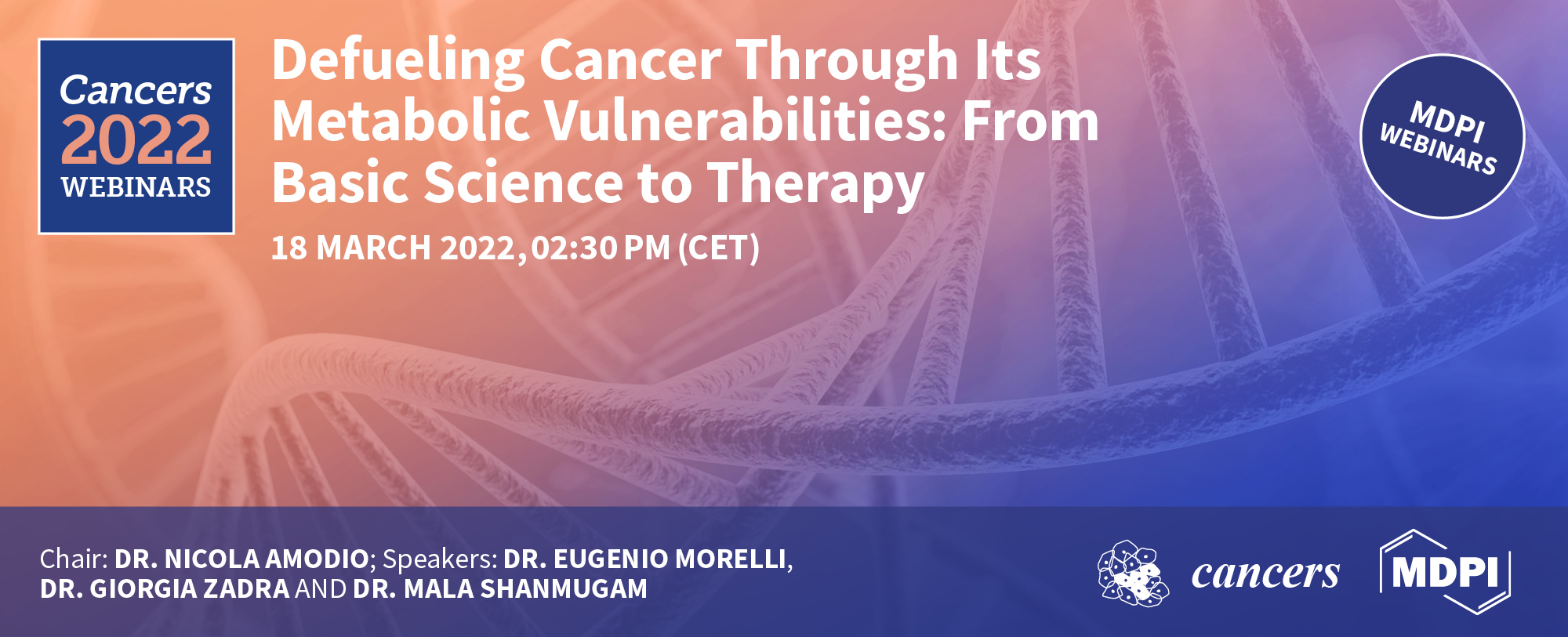
Cancers Webinar | Defueling Cancer Through Its Metabolic Vulnerabilities: From Basic Science to Therapy
Meet Our Speaker
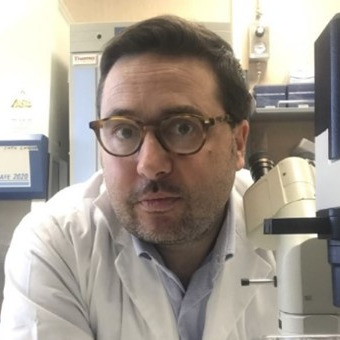
Department of Experimental and Clinical Medicine, Magna Graecia University of Catanzaro, Italy;Nicola Amodio, Ph.D., joined the University Magna Graecia of Catanzaro (I) in 2002 as a PhD student in “Molecular Oncology”, focusing on transcription factors dysregulation in normal and malignant hematopoiesis. After a Post-Doctoral fellowship at MSKCC (NY, USA) in 2006, he returned at University of Catanzaro as a Senior Scientist, focusing on genomic and epigenomic alterations driving solid and hematologic malignancies. Since 2019, Dr. Amodio works as Assistant Professor at University Magna Graecia of Catanzaro, and he is currently in track for the position of Associate Professor of “General Pathology” at the Department of Experimental and Clinical Medicine. He serves as editor in chief for Cancers, section “cancer pathophysiology”. His current research, supported by the Italian Association for Cancer Research (AIRC), is aimed at the identification and characterization of novel druggable vulnerabilities underlying the pathogenesis and progression of plasma cell dyscrasias by using integrated functional and (epi)genomics analyses.

On Friday, 18 March 2022, MDPI and the Journal Cancers organized the 7th webinar on Cancers, entitled "Defueling Cancer Through Its Metabolic Vulnerabilities: From Basic Science to Therapy".
The introduction was held by the Chair of the webinar, Dr. Nicola Amodio, an Assistant Professor at the University Magna Graecia of Catanzaro in Italy. His current research, supported by the Italian Association for Cancer Research (AIRC), is aimed at the identification and characterization of novel druggable vulnerabilities underlying the pathogenesis and progression of plasma cell dyscrasias by using integrated functional and (epi)genomics analyses.
The three presentations by Dr. Eugenio Morelli, Giorgia Zadra and Mala Shanmugam have provided a brushstroke of some of the main mechanisms accounting for dysregulated metabolic pathways in cancers.
We have learnt that metabolic signatures associate with specific genetic and epigenetic aberrations, activate pathways responsible for drug resistance, and disclose novel therapeutic hubs which need to be further investigated.
A complex biological scenario made by non-coding RNA-transcription factor circuitries control metabolic pathways underlying tumor onset and progression, providing novel therapeutic vulnerabilities explored in the preclinical setting which have the potential to be translated into the clinics.
Many metabolic enzymes have been studied as targets for cancer therapy, but vulnerabilities of specific tumor types to metabolic inhibitors, alone or in combination with chemo-, radio- or immunotherapy remain to be decoded.
Metabolic plasticity remains a challenge when targeting specific metabolic enzymes, but deletions or amplifications of metabolic genes might provide a roadmap for the clinical stratification of vulnerable tumours.
The presentations were followed by a Q&A and a discussion, moderated by the Chair. The webinar was offered via Zoom and required registration to attend. The full recording can be found here on Sciforum website. In order to stay updated on the next webinars on Cancers, be sure to sign up for our newsletter by clicking on “Subscribe” at the top of the page.
Cancer Pathophysiology - a section of Cancers