Cells Webinar | Glucocorticoid-induced Proteins Annexin A1 and GILZ in Inflammation
the chair
15th Webinar on Cells
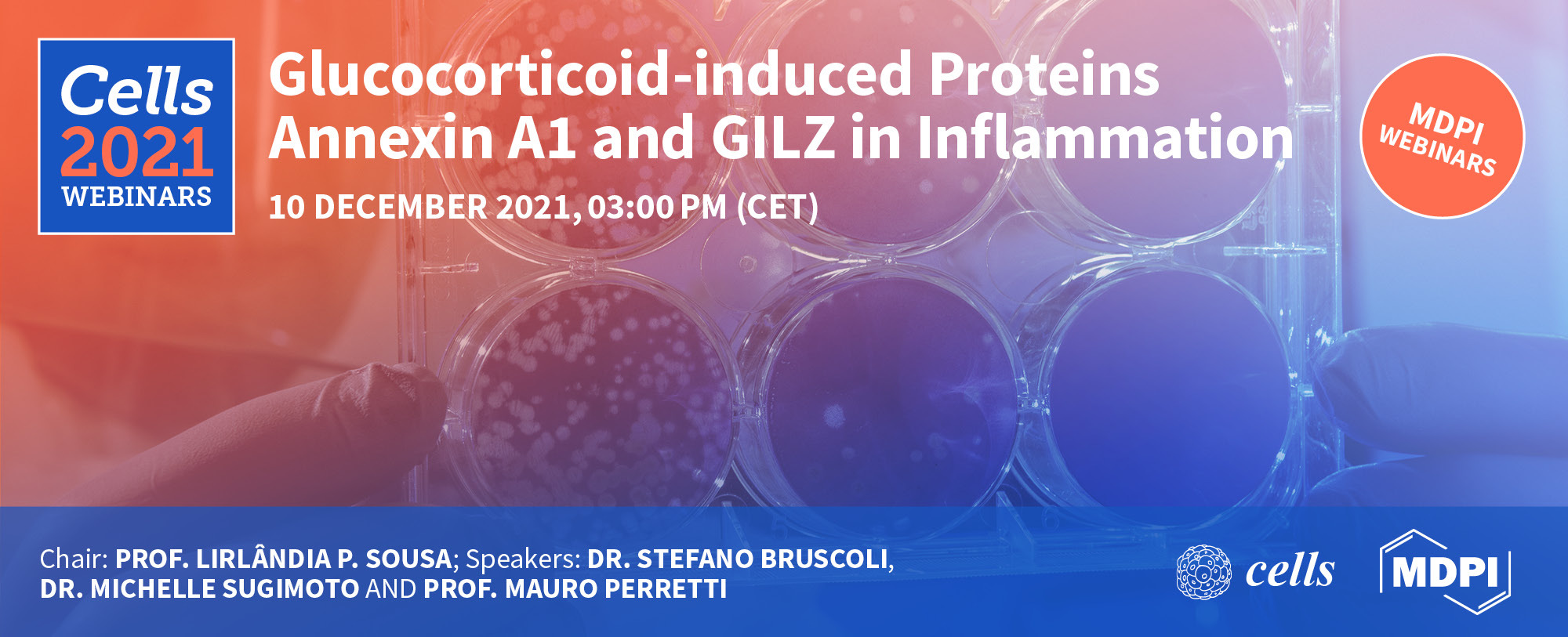
Glucocorticoid-induced Proteins Annexin A1 and GILZ in Inflammation
Glucocorticoids (GCs) are extensively used in clinical practice to treat several inflammatory diseases, representing a successful use of an endogenous molecule for therapeutic purposes. This historical drug has again proven its relevance during the current pandemic, with dexamethasone showing unequivocal benefits in hospitalised COVID-19 patients. However, serious adverse effects and infection risks associated with the long-term use of GC pose clinical challenges. In this context, there is a genuine interest in GC-induced proteins intrinsically involved with the anti-inflammatory functions of GCs without the associated adverse metabolic effects.
In this webinar, Mauro Perretti (William Harvey Research Institute), Stefano Bruscoli (University of Perugia), and Michelle Sugimoto (University College London) will discuss the role of the glucocorticoid-induced proteins GILZ and Annexin A1 in health and disease, highlighting how these proteins may provide a novel therapeutic opportunity in chronic settings.
Date: 10 December 2021
Time: 3:00 pm CET | 9:00am EST | 10:00pm CST Asia
Webinar ID: 898 5963 2940
Webinar Secretariat: cells.webinar@mdpi.com
Meet Our Speaker
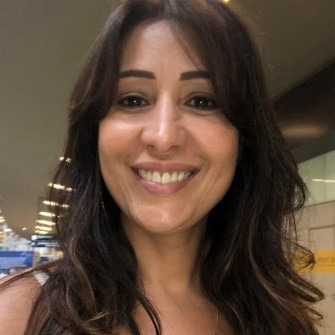
Universidade Federal de Minas Gerais (UFMG), Brazil;Dr Lirlândia (Landa) Sousa graduated in Pharmacy-Biochemistry at the Federal University of Ouro Preto (1995) and received her Master's (1998) and Ph.D. degree in Microbiology from the Federal University of Minas Gerais (2003). She then worked as a postdoctoral fellow at the Immunopharmacology Lab (UFMG) from 2004 to 2007. Dr Sousa was a visiting professor at the Department of Cell and Molecular Biology in the lab of Prof Lindsey Miles in The Scripps Research Institute, San Diego from 2017 to 2018. Currently, Dr Landa Sousa is an Associate Professor at the Faculty of Pharmacy at UFMG. She supervises graduate and post-graduate students at the post-graduate programs in Clinical and Toxicological Analysis and Pharmaceuticals Sciences.


On Friday, 10 December 2021, MDPI and the Journal Cells organized the 15th webinar on Cells, entitled "Glucocorticoid-induced Proteins Annexin A1 and GILZ in Inflammation".
The introduction was held by the Chair of the webinar, Prof. Dr. Lirlândia P. Sousa, an Associate Professor at the Faculty of Pharmacy at Universidade Federal de Minas Gerais (UFMG) in Brazil. Prof. Dr. Sousa supervises graduate and post-graduate students at the post-graduate programs in Clinical and Toxicological Analysis and Pharmaceuticals Sciences.
The first speaker to kick off this webinar was Dr. Stefano Bruscoli from the Department of Medicine at the University of Perugia in Italy. Dr Bruscoli’s research mainly focuses on characterising the biological activities of the GC-induced gene Glucocorticoid-Induced Leucine Zipper (GILZ), which acts as an effector of GC-induced processes in many cell and disease contexts. His presentation was entitled "GILZ (Glucocorticoid-Induced Leucine Zipper) Is an Effector of Glucocorticoid Anti-inflammatory Activities".
The second presentation with the title "Annexin A1: Pro-resolving Actions in Health and Disease" was held by Dr. Michelle Sugimoto from the University College London, Division of Medicine, UK. Her research explores the inflammation resolution pathways that can be harnessed to treat diseases with a significant inflammatory component. In 2019, Dr Sugimoto was awarded the CAPES Thesis Award for the identification of an unprecedented relationship between the fibrinolytic system and the resolution of inflammation, highlighting the interlocution between systems previously considered independent.
Prof. Dr. Mauro Perretti from the William Harvey Research Institute, Queen Mary University of London (UK), was the third speaker and his presentation was entitled "From the Resolution of Inflammation to Resolution Pharmacology". Professor Perretti pioneered the field of ‘Resolution of Inflammation’ as an area of biology that defines the endogenous mechanisms, mediators, and receptors operative to temper over-shooting inflammation and enable tissue protection or repair. He has a strong interest in translating this biology into innovative therapeutic approaches by assessing the science required to develop agonists at pro-resolving receptors.
The presentations were followed by a Q&A and a discussion, moderated by the Chair. The webinar was offered via Zoom and required registration to attend. The full recording can be found here on Sciforum website. In order to stay updated on the next webinars on Cells, be sure to sign up for our newsletter by clicking on “Subscribe” at the top of the page.
Guest Editors: Prof. Dr. Lirlândia P. Sousa, Prof. Dr. Carlo Riccardi & Dr. Michelle Sugimoto
Deadline for manuscript submissions: 10 March 2022