Epidemiologia Webinar | Paradigm Shift in the Public Health Surveillance of Cancer: Traditional and Innovative Approaches
the chair
Dear Colleagues and Participants,
It is our distinct pleasure to invite you to our webinar, held in conjunction with our Special Issue dedicated to the evolving landscape of global cancer control.
Cancer remains a formidable challenge to public health, shaped by the complex interplay of aging populations, urbanization, and shifting behavioral risks. While our foundational epidemiological methods are indispensable for identifying risk and informing prevention, the "digitally informed patient" has introduced a new dimension to our work. We now live in an era where search engine queries, social media engagement, and online health-seeking patterns provide a real-time pulse on public awareness and disparities in care.
The goal of our webinar—and our Special Issue—is to explore this integration. We aim to provide current insights and to discuss how traditional surveillance may be enhanced by digital epidemiology and infodemiological approaches to create more responsive, equitable, and patient-centered strategies.
Our webinar will include topics including, but not limited to:
- Emerging Trends: Navigating the shifting global cancer burden and risk exposures.
- Innovation in Prevention: Modernizing screening and early detection.
- The Patient Experience: Prioritizing Quality of Life (QoL) and long-term well-being.
- Digital Insights: Leveraging real-time data to monitor behavioral trends and public health messaging impact.
We look forward to your participation and encourage you to submit your original research, reviews, and perspectives to our Special Issue.
Dr. Márió Gajdács
Webinar Chair
Date: 24 June 2026
Time: 2:00pm – 4:00pm (CEST) | 8:00am – 10:00am (EDT) | 8:00pm – 10:00pm (CST Asia)
Webinar ID:841 4701 6834
Webinar Secretariat: journal.webinar@mdpi.com
Meet Our Chair
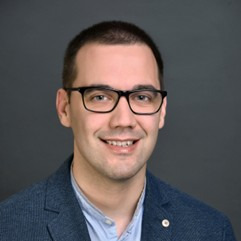
University of Szeged, Hungary;Dr. Márió Gajdács is currently a Senior Lecturer in the Department of Public Health, Albert Szent-Györgyi Faculty of Medicine at the University of Szeged. He received his pharmacy degree, Ph.D. (medical microbiology), board certification in “Pharmacology”, and “Non-clinical and clinical research” from the University of Szeged, and holds a Master in Public Health (MPH; specialization: epidemiology) and a Master of Healthcare Management from the University of Pécs. His research interests comprise the investigation of the influencing factors and facilitators of antimicrobial resistance (AMR) using epidemiological and social science methods; he is also interested in digital epidemiological/infodemiological studies, and other topics of public health importance. He published >180 publications in peer-reviewed journals.
Meet Our Speakers

Tel-Aviv University, Israel;Prof. Gabriel Chodick is a senior faculty member at Tel Aviv University. He heads the Health Management graduate track at the School of Public Health and is in charge of the Tel Aviv–AstraZeneca Beam Research Center. Prof. Chodick was a co-founder of the KSM Research Institute (Maccabitech) at Maccabi Healthcare Services (MHS). He served as a board member of the Health Care Systems Research Network (HCSRN), a national organization of integrated health systems, and led MHS’s scientific research. He has published approximately 500 research articles, primarily in epidemiology and real-world data analytics.

Dr. Samah Hayek
Tel-Aviv University, Israel;Dr. Samah Hayek is a senior lecturer in a tenure track position at the Department of Epidemiology and Preventive Medicine, School of Public Health, Faculty of Medical and Health Sciences, Tel Aviv University. Throughout her extensive academic tenure and research journey, she has cultivated a diverse array of multidisciplinary skills as an epidemiologist, biostatistician, and public health researcher. Focused on leveraging observational and clinical data, her work aims to furnish clinicians and healthcare professionals with tailored treatment guidelines for cancer patients, with a special emphasis on mitigating treatment toxicity through individualized medicine for cancer survivors. Recognizing the profound impact of understanding the genotype–phenotype relationship, she endeavors to enhance the overall health and longevity of cancer survivors. Her academic journey commenced with a Bachelor's degree in Statistics and Sociology from the University of Haifa, Israel, followed by a Master's degree in Epidemiology from the University of Haifa's School of Public Health. Her master's thesis, exploring second primary neoplasms among childhood cancer survivors, was subsequently published in Cancer Epidemiology. This scholarly pursuit led her to pursue a doctoral degree in public health with a focus on epidemiology at the University of Kentucky, generously funded by the Fulbright program. Post-doctorally, she embarked on a two-year tenure as a program evaluation fellow at the Centers for Disease Control and Prevention in Atlanta, GA. Subsequently, she undertook post-doctoral training at St. Jude Children’s Research Hospital, where her research focused on unraveling the complex interplay between cancer and aging phenotypes among adult survivors of childhood cancer. Since 2020, she has served as a senior researcher at the Clalit Research Institute, where she assumed a role as a principal investigator and collaborated on diverse research projects.
In this section, you will find the recordings of this webinar to watch, re-watch and share with your colleagues!
"Paradigm Shift in the Public Health Surveillance of Cancer: Traditional and Innovative Approaches"
As Chair of the first Epidemiologia webinar, I would like to extend my heartfelt gratitude to our distinguished speakers, active participants, and the MDPI organizing team for making this event a resounding success. It has been a special honour that the inaugrual webinar organized for the journal was associated with our topic of interest.
Our discussions highlighted the rapidly changing landscape of cancer epidemiology and global cancer control, emphasizing how traditional surveillance systems may be meaningfully enhanced by cutting-edge digital, infodemiological, and real-world evidence approaches.
The webinar showcased three highly complementary perspectives on these shifting paradigms:
- The use of digital public Health and infodemiology: In my own presentation, we explored how leveraging population-level digital behavioral signals (such as online search and information-seeking trends) can provide real-time public health insights to assess the effectiveness of, and shape targeted cancer-related health promotion initiatives.
- Modernizing traditional registries: Prof. Dr. Gabriel Chodick demonstrated the vital role of national cancer registry data, specifically looking at its clinical utility in assessing breast cancer family history among young women.
- Real-world evidence (RWE) in survivorship: Dr. Samah Hayek illustrated how big data can be translated into better, long-term survivorship outcomes, focusing on the highly vulnerable childhood, adolescent, and young adult (CAYA) cancer survivor demographics.
The Q&A sessions following the presentations underscored a shared vision among global public health professionals: to create more responsive, equitable, and patient-centered cancer surveillance strategies that integrate classical registry data with modern digital insights.
I strongly encourage all attendees and researchers in this field to contribute their original research, reviews, and perspectives to our accompanying Special Issue in Epidemiologia, "Paradigm Shift in the Public Health Surveillance of Cancer: Traditional and Innovative Approaches" (open for submissions until February 15, 2027). Your valuable contributions will help continue the crucial dialogue initated during this webinar.
Thank you once again to the inspiring speakers for their presentations, and everyone who joined us and contributed to this inspiring scientific exchange.
Dr. Márió Gajdács
Webinar Chair
Albert Szent-Györgyi Faculty of Medicine, University of Szeged, Hungary
Paradigm Shift in the Public Health Surveillance of Cancer: Traditional and Innovative Approaches
Edited by Márió Gajdács and Irena Ilic
Deadline for manuscript submissions: 15 February 2027
Submit to Epidemiologia