

Genes 2023 - Single-Cell Genomics Moving Forward
the chairs
Dear Colleagues,
On behalf of the Organizing Committee, it is our pleasure to invite scientists, academicians, young researchers and students from all over the world to attend in person and present their research at the International Conference “Single Cell Genomics Moving Forward” which will be held as a three-day event in Barcelona, Spain, from 29 to 31 March 2023.
The Conference is initiated and sponsored by the journal Genes (Impact Factor 4.141) with the goal of establishing a regular event to provide a venue for initiating collaborations, and discuss the latest achievements and challenges in single cell biology. Importantly, we hope to inspire young scientists to join this emerging and exciting field.
We are inviting researchers, experts, students, as well as innovative businesses in any aspect of Single Cell Multi-Omics Technologies and Analyses, Artificial Intelligence in Single Cell Genomics and Spatial Genomics and Transcriptomics to attend and present their research and products. It is only through an exchange of the widest variety of research that we can offer the best forward solutions in this challenging field. Furthermore, all presenters at the conference will be encouraged to submit a full manuscript of their presentation for consideration for publication in a Special Issue of Genes.
We look forward to meeting you and discussing your exciting single cell research in the beautiful city of Barcelona!
Professor J. Peter W. Young
Conference Secretariat
Mr. Iñigo Aristizabal
Ms. Paula Navarro
Dr. Ana Sanchis
Mr. Pablo Velázquez
Email: genesconf@mdpi.com
Meet Our Chairs

Emeritus Professor of Molecular Ecology, Department of Biology, University of York, UK;https://pure.york.ac.uk/portal/en/researchers/peter-young(b5846b99-dfe1-4561-9334-2b5490ebad15.html
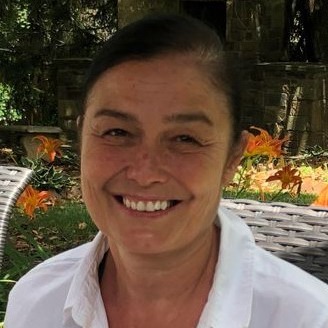
Department of Biochemistry and Molecular Medicine, George Washington University, Washington, USA;I completed my PhD in Human Genomics in Medical University of Sofia, Bulgaria. After my postdoctoral training in Cancer Genomics (NICHD, NIH, Bethesda, MD, USA), where I led the effort for the identification of new genes responsible for human genetic disorders, in September 2013 I joined the George Washington University, as a Co-Director of the McCormick Genomic and Proteomic Center (MGPC) at the School of Medicine and Health Sciences. In this position, I focused on developing novel methods to analyze functional genetic variants through integrating layers of genomic information. In the last several months I focused my research on single cell RNA sequencing (scRNA-seq). Working on scRNA-seq data, I am particularly interested in developing novel approaches to assess genetic variation, splicing and posttranscriptional modifications, and to inter-connect them with gene expression and other phenotype features. I have over 25 year of experience with both wet and dry lab genetic approaches and technologies, including design and development of new methods and analyses.
Important Dates
20 Jan
2023
3 Feb
2023
17 Feb
2023
29 Mar
2023
Meet Our Speakers

Prof. Oliver Stegle
Head, Division Computational Genomics and Systems Genetics, German Cancer Research Center (DKFZ), Germany;

Department of Statistics, Division of Biostatistics, School of Public Health University of California, Berkeley, USA;Sandrine Dudoit is Professor and Chair of the Department of Statistics and Professor in the Division of Biostatistics, School of Public, at the University of California, Berkeley. Professor Dudoit's methodological research interests regard high-dimensional inference and include exploratory data analysis (EDA), visualization, loss-based estimation with cross-validation (e.g., density estimation, classification, regression, model selection), and multiple hypothesis testing. Much of her methodological work is motivated by statistical inference questions arising in biological research and, in particular, the design and analysis of high-throughput microarray and sequencing gene expression experiments, e.g., single-cell transcriptome sequencing (RNA-Seq) for discovering novel cell types and for the study of stem cell differentiation. She is a founding core developer of the Bioconductor Project (http://www.bioconductor.org), an open-source and open-development software project for the analysis of biomedical and genomic data. Professor Dudoit is a co-author of the book Multiple Testing Procedures with Applications to Genomics (2008) and a co-editor of the book Bioinformatics and Computational Biology Solutions Using R and Bioconductor (2005). She was named Fellow of the American Statistical Association in 2010, Elected Member of the International Statistical Institute in 2014, and Fellow of the Institute of Mathematical Statistics in 2021. Professor Dudoit obtained a Bachelor's degree (1992) and a Master's degree (1994) in Mathematics from Carleton University, Ottawa, Canada. She first came to UC Berkeley as a graduate student and earned a PhD degree in 1999 from the Department of Statistic. She was a postdoctoral fellow at the Mathematical Sciences Research Institute (MSRI), Berkeley and in the laboratory of Professor Patrick O. Brown, Department of Biochemistry, Stanford University (1999–2001).
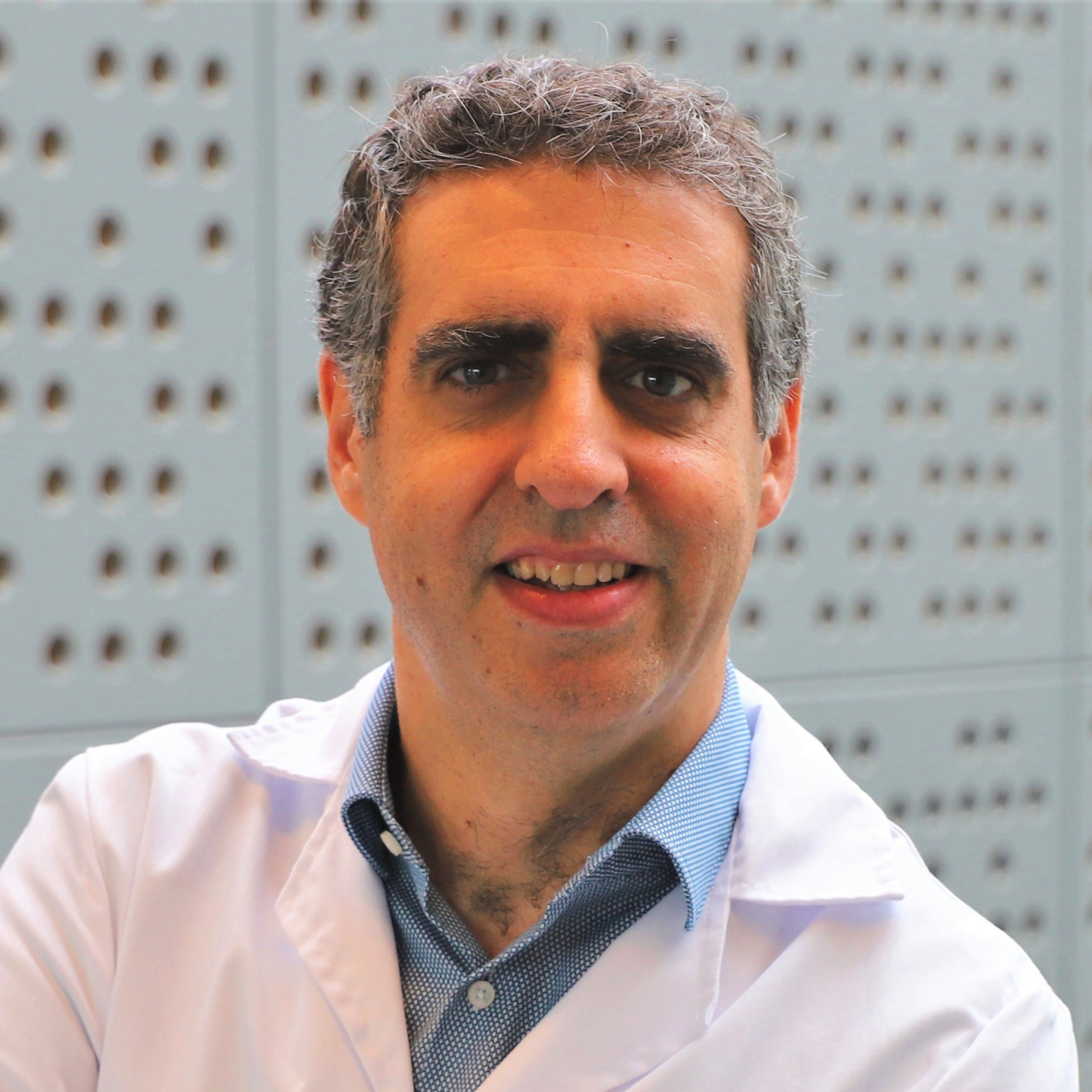
Josep Carreras Leukemia Research Institute, Badalona, Barcelona, Spain;Manel Esteller (Sant Boi de Llobregat, Barcelona, Catalonia, Spain, 1968) graduated in Medicine from the Universidad de Barcelona in 1992, where he also obtained his Ph.D. degree specialising in molecular genetics of endometrial carcinoma, in 1996. He was an Invited Researcher at the School of Biological and Medical Sciences at the University of St. Andrews, (Scotland, UK) during which time his research interests focused on the molecular genetics of inherited breast cancer. From 1997 to 2001, Esteller was a Postdoctoral Fellow and a Research Associate at the Johns Hopkins University and School of Medicine, (Baltimore, USA) where he studied DNA methylation and human cancer. His work was decisive in establishing promoter hypermethylation of tumour suppressor genes as a common hallmark of all human tumours. From October 2001 to September 2008 Manel Esteller was the Leader of the CNIO Cancer Epigenetics Laboratory, where his principal area of research were the alterations in DNA methylation, histone modifications and chromatin in human cancer. Since October 2008 until May 2019, Dr Esteller was the Director of the Cancer Epigenetics and Biology Program (PEBC) in Barcelona. He is the Director of the Josep Carreras Leukaemia Research Institute (IJC), Chairman of Genetics in the School of Medicine of the University of Barcelona, and an ICREA Research Professor. His current research is devoted to the establishment of the epigenome and epitranscriptome maps of normal and transformed cells, and the development of new epigenetic drugs for cancer therapy. Website: http://www.carrerasresearch.org/en






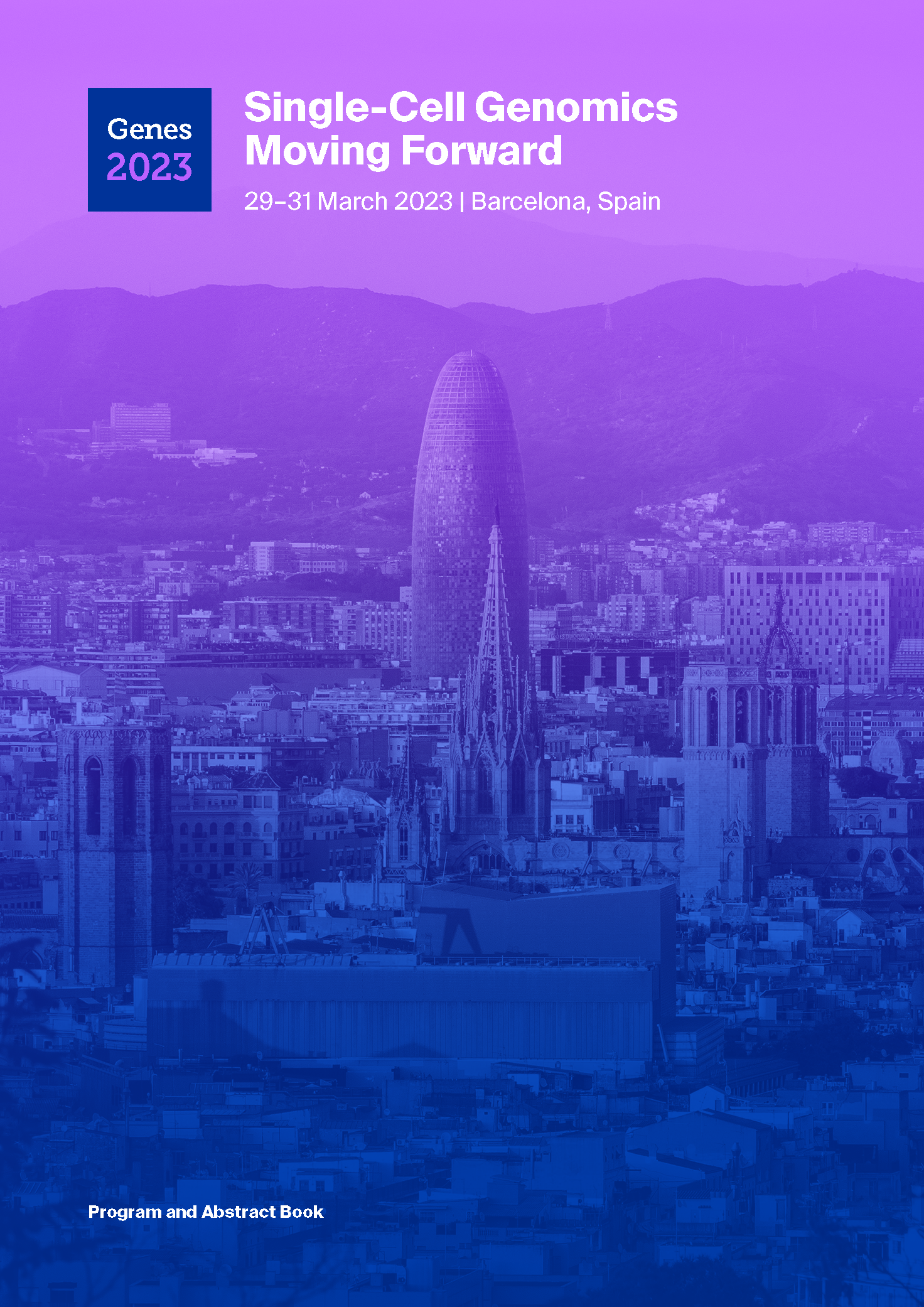
Please find below the Genes 2023 Conference Book, including all abstracts (last update 17 March 2023). Click on the cover image to download it:

Wednesday 29 March, 20:00h
40 EUR per person
We invite you to join us at the Conference Dinner at Abrassame, a cutting-edge restaurant specialised in Mediterranean cuisine which, in addition to its location at the pictouresque terrace of Arenas de Barcelona, will make of your evening at the restaurant an experience to remember.
The dinner will be at an additional cost of 40 EUR and will need to be booked separately in an independent registration. Please register and pay for it here before 19 March 2023 and save your seat. You are welcome to bring any accompanying persons by booking their seats. Please note that registrations onsite will not be permitted.