The 5th International Electronic Conference on Cancers
The IECC 2026 conference closed.
The Best Oral Presentation Awards and Best Poster Awards of IECC 2026 have been evaluated. Please refer to the Winner Announcement.
You can directly download your electronic Certificate of Attendance HERE.
Click HERE for the abstract book.
Click HERE for the poster gallery.
Accepted abstracts are eligible for publication in a Special Issue of Cancers (ISSN: 2072-6694, Impact Factor 4.4), with a 20% discount on the publication fee.
Click HERE for more details.
the chair
Laboratory of Cancer Stem Cell Engineering, Okayama University, Okayama, Japan
More News about MDPI Conferences



Meet Our Chair
Laboratory of Cancer Stem Cell Engineering, Faculty of Interdisciplinary Science and Engineering in Health Systems, Okayama University, Okayama, Japan <a href="https://okayama.elsevierpure.com/en/persons/masaharu-seno">Website</a>;Masaharu Seno graduated Osaka university in Japan and awarded Bachelor of Engineering in 1981. He worked for Takeda Chemical Industries, Ltd., Osaka, Japan as a Staff Scientist from 1981 to 1992. In this period, he was awarded Ph.D. on the thesis of fibroblast growth factor from Osaka University. Then, he moved to the Faculty of Engineering, Okayama University, Okayama, Japan engaged in protein engineering, nano-biotechnology and stem cell engineering including cancer stem cells from 1992 to 2022. From 1995 to 1996 and from 2000 to 2001, he stayed National Cancer Institute, NIH in the US as a guest scientist. Notably, he converted induced pluripotent stem cells into cancer stem cells in 2012 for the first time in the world. He was awarded Professor Emeritus from Okayama University in 2022 and is currently a professor of cancer stem cell engineering in the Faculty of Interdisciplinary Science and Engineering in Health Systems at the same university since 2022.
Important Dates
15 Mar
2026
12 Apr
2026
7 Jun
2026
Meet Our Speakers
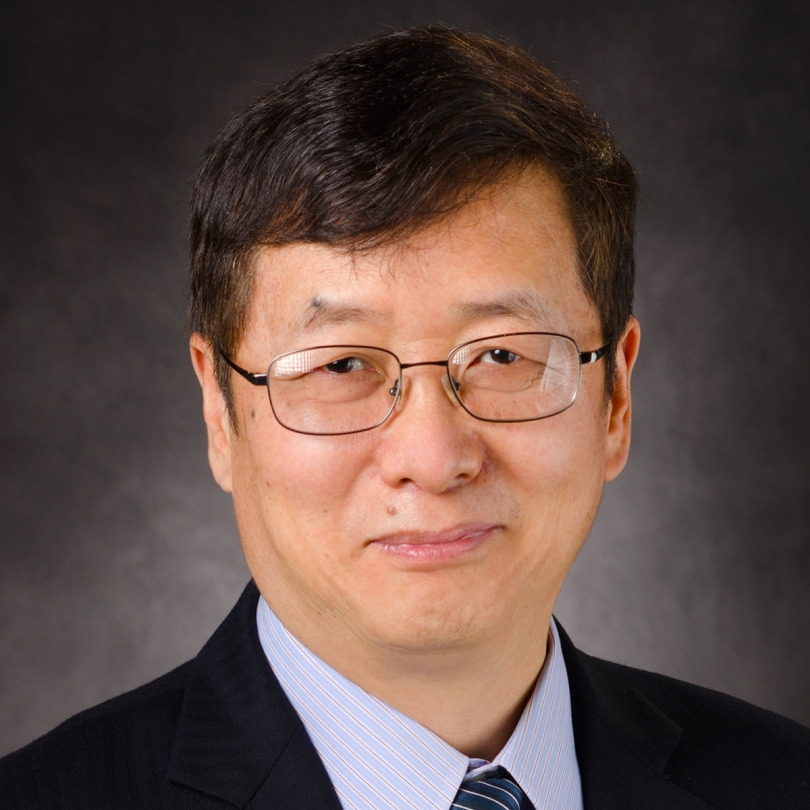
Department of Anatomic Pathology, The University of Texas MD Anderson Cancer Center, Houston, TX,USA;Dr. Jinsong Liu received his PhD in Biochemistry from Case Western Reserve University and completed postdoctoral training at the Howard Hughes Medical Institute and the University of Michigan, followed by a pathology residency and surgical pathology fellowship at New York University. He joined MD Anderson Cancer Center in 1999. Over the past 26 years, Dr. Liu has been an active member of MD Anderson's world-renowned gynecologic diagnostic pathology team. He has authored more than 300 scientific publications in high-impact journals. Dr. Liu's laboratory made the unexpected discovery that polyploid giant cancer cells (PGCCs) — historically considered non-dividing or senescent — can dedifferentiate into blastomere-like pluripotent stem cell-like states, recapitulating early embryonic programs to generate drug-resistant and metastatic progeny. He chaired the inaugural International Conference on Polyploid Giant Cancer Cells in 2024, marking the formal establishment of this emerging field. His work provides a new conceptual framework for understanding cancer origin, therapeutic resistance, and their connections to fundamental developmental processes.
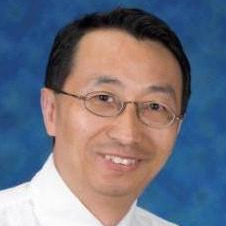
Center for Molecular Medicine and Genetics, Wayne State University School of Medicine, Detroit, MI,USA;Henry H.Q. Heng, PhD Professor of Molecular Medicine and Genetics and of Pathology Center for Molecular Medicine and Genetics, Wayne State University School of Medicine, Detroit, MI Dr. Heng received his PhD in Medical Genetics from the University of Toronto's Hospital for Sick Children, mentored by Dr. Lap-Chee Tsui, and completed postdoctoral training in chromosomal biology under Dr. Peter Moens at York University before joining Wayne State University School of Medicine in 1999. Over more than two decades of watching cancer evolution in action — tracing karyotype dynamics, transcriptomes, and phenotypes longitudinally through phase transitions — Dr. Heng developed the Genome Architecture Theory (GAT), a new information- and genome-based conceptual framework that fundamentally challenges the gene-centric paradigm of cancer research and evolutionary biology. Key contributions include the discovery of genome chaos, fuzzy inheritance, and two-phased cancer evolution — comprising a punctuated macroevolutionary phase dominated by genome chaos and a gradual microevolutionary phase dominated by gene mutation — a pattern commonly detected across all key transitions of cancer evolution, including transformation, metastasis, and drug resistance. Central to GAT is the concept of karyotype coding: the order of genes and genetic elements on chromosomes within the 3D genome constitutes a new layer of key genomic information, and system inheritance — defined by genome topology — represents the true blueprint of biological systems that organizes gene interaction networks. Dr. Heng's books, Genome Chaos: Rethinking Genetics, Evolution, and Molecular Medicine (Academic Press, 2019; 2nd ed. 2025) and Debating Cancer: The Paradox in Cancer Research, have attracted wide attention across the fields of cancer biology and evolutionary theory. He has authored over 200 peer-reviewed publications and serves on the editorial boards of seven international journals.






Ms. Ann Li
Mr. Russell Wang
Ms. Chloe Lv
Email: iecc2026@mdpi.com
For inquiries regarding submissions and sponsorship opportunities, please feel free to contact us.