The 5th International Electronic Conference on Forests
Forests at the Crossroads: Integrating Ecology, Technological Innovation, and Governance
The IECF 2026 conference closed.
The Best Oral Presentation Awards and Best Poster Awards of IECF 2026 will be announced soon.
You can directly download your electronic Certificate of Attendance HERE.
Accepted abstracts are eligible for publication in a Special Issue of Forests (ISSN: 1999-4907; IF: 3.1), with a 20% discount on the publication fee.
the chairs
We are pleased to extend a warm and heartfelt welcome to each of you on behalf of the organizing committee of the 5th International Electronic Conference on Forests—Forests at the Crossroads: Integrating Ecology, Technological Innovation, and Governance, which will be hosted online and promoted by the open access MDPI journal Forests (ISSN: 1999-4907; IF: 3.1).
The aim of this gathering is to bring together academics, practitioners, and innovators whose works shape the future of forest science. Participants come from a wide range of institutions and professional backgrounds across the globe, each contributing valuable experiences, perspectives, and insights that reflect the complexity and diversity of our planet’s forests.
Throughout the conference, we aim to cover—among others—the following topics:
S1. Forest Ecology and Sustainable Management;
S2. Forest Biodiversity, Ecosystem Services, and Earth Observations;
S3. Wood Science, Production Chains, Fuelwood and Trade;
S4. Forest Inventory, Modeling and Remote Sensing;
S5. Wildfires and Other Forest Disturbances;
S6. Forest Ecophysiology, Genetics and Molecular Biology.
Once again, welcome to IECF 2026. We look forward to a stimulating and rewarding experience.
Download the conference flyer and share it with your colleagues!
Kind regards,
Dr. Mark Vanderwel, University of Regina, Canada
Dr. Nikolay S. Strigul, Washington State University Vancouver, USA
Chairs of the 5th International Electronic Conference on Forests



Flyers
- 25CONF-IECF 2026-flyer A5-web-1.pdf
Meet Our Chairs
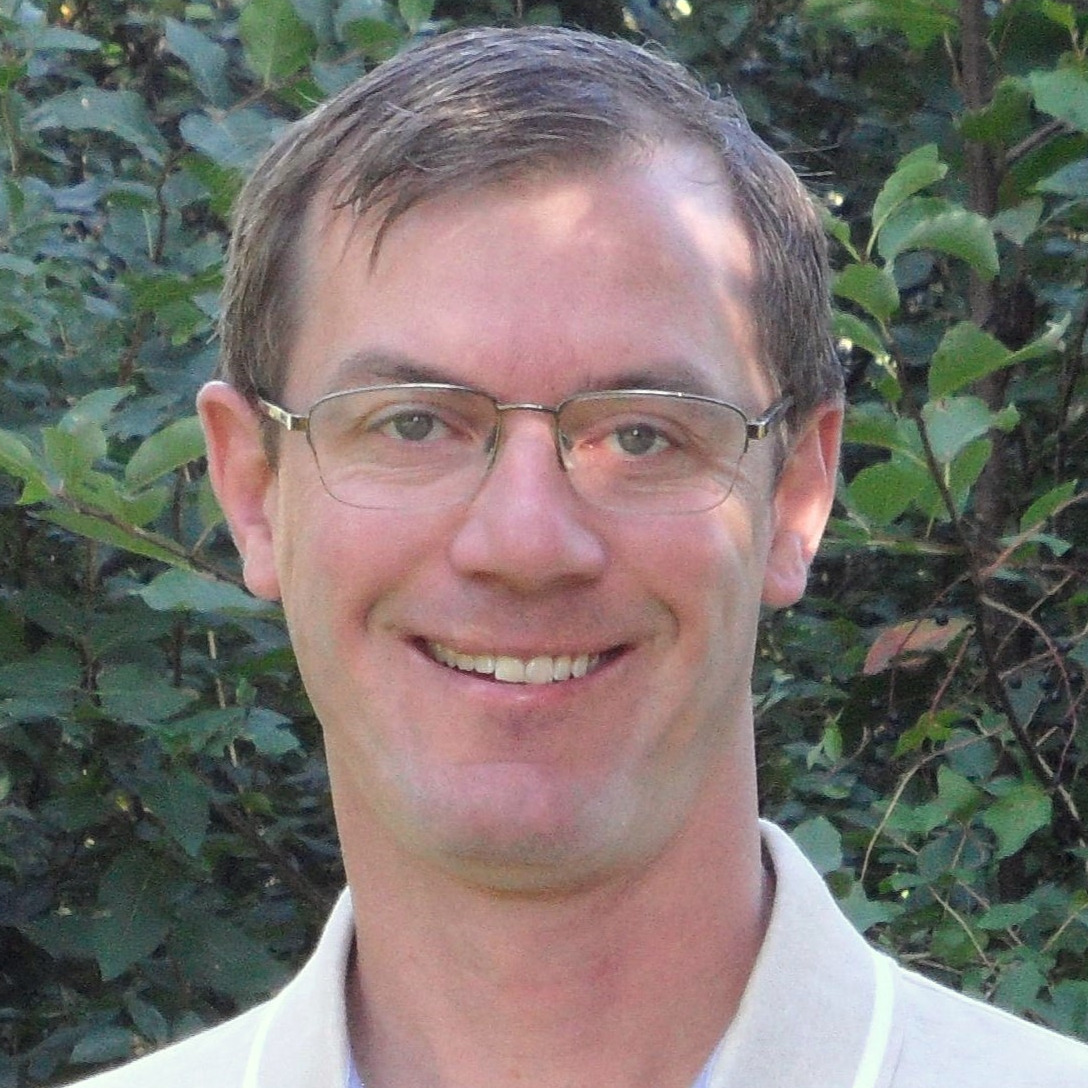
Department of Biology, University of Regina, Regina, Canada;Mark Vanderwel holds a Ph.D. in Forestry from the University of Toronto and is currently Associate Professor at the University of Regina. His research in forest ecology focuses on how tree-level demographic processes interact with disturbance to create changing patterns of structure, biomass, and diversity within forest stands and landscapes. By understanding how tree growth, mortality, and recruitment are controlled by different environmental factors, he seeks to learn how processes such as climate change and disturbance affect the broader condition of forest ecosystems over time.

Department of Mathematics and Statistics, College of Arts and Sciences, Washington State University Vancouver, Vancouver, USA;Dr Nikolay Strigul is an Associate Professor of Applied Mathematics at WSU Vancouver. He has previously held research and faculty positions at Stevens Institute of Technology and Princeton University. His research centers on mathematical modeling of forest dynamics, with the goal of understanding and predicting the impacts of environmental stressors and land-use practices. He integrates mathematical and statistical methodologies with experimental studies and remote sensing technologies to advance our understanding of biological phenomena across multiple scales. His research interests include forest modeling, environmental science, remote sensing, applied mathematics and statistics, complex adaptive systems, as well as data-intensive and individual-based models.
Important Dates
22 Jun
2026
22 Jul
2026
10 Aug
2026
20 Aug
2026
9 Sep
2026
9 Sep
2026
Meet Our Speakers

Catalan Institution for Research and Advanced Studies, the Centre for Ecological Research and Forestry Applications, Barcelona, Spain;The University of Edinburgh, Edinburgh, UK;Maurizio Mencuccini is a plant and ecosystem ecologist studying how woody plants regulate structure and physiology to withstand extreme events such as droughts and heat waves. His research spans Mediterranean ecosystems and the Neotropics, advancing understanding of how plants control water use across space and time, and how acclimation and phenotypic plasticity shape stress responses. He has also highlighted the roles of tree size and ageing in forest physiology. In climate-change research, he examined how nitrogen and sulphur deposition influences the carbon cycle in boreal and temperate forests. He has worked closely with the UK forestry sector on regional modelling of forest growth and carbon sequestration, combining process-based models with Bayesian data assimilation and LiDAR remote sensing. After a joint PhD at the Universities of Edinburgh and Florence and a postdoc at Cornell (USA), he spent many years at Edinburgh. He is now an ICREA Research Professor at CREAF (Barcelona) and remains Honorary Professor of Forest Science at Edinburgh. He has co-supervised 31 PhD students and 20 postdocs, published 300+ papers, and is a Highly Cited Researcher.
Department of Environmental, Biological and Pharmaceutical, Sciences and Technologies, University of Campania "L. Vanvitelli", Caserta, Italy;Dr. Giovanna Battipaglia is a forest ecologist, with research specialization in ecophysiology, and dendroecology. She is currently Full Professor in Forest Ecology at the University of Campania Luigi Vanvitelli. In 2005 she got her PhD in « Implementation and application of isotopic methodologies in environmental science research ». She has been working in several International institutes during her carrier, such as Center of Bio-Archeology and Ecology (CBAE- F), the Swiss Federal Research Institute (WSL - CH), The University of Amsterdam (UVA, NL), the Max Planck Institute for Biogeochemistry (MPI, G) and the Paul Scherrer Institute (PSI, CH). She has long expertise in ecosystem carbon dynamics and in using stable isotopes (with conventional and laser technologies) as a tracer for physical and biological processes. Her activity has been mainly devoted to understanding the responses of terrestrial ecosystems i.e., forest, grassland and cropland, to climatic conditions and management regimes.
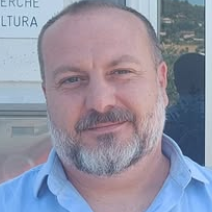
Forest Modelling Laboratory, Institute for Agriculture and Forestry Systems in the Mediterranean, National Research Council of Italy (CNR–ISAFOM), Perugia, Italy;Alessio Collalti is a Senior Researcher at the National Research Council of Italy (CNR) and Head of the Forest Modelling Lab. His research focuses on the development and application of process-based models to investigate forest ecosystem functioning under changing environmental conditions. He works on integrating field observations, including eddy covariance data, with modelling approaches to improve the representation of forest dynamics, carbon cycling, and responses to climate change and management. Alessio has contributed to several international research projects and scientific assessments, with the aim of advancing predictive tools to support climate change mitigation and adaptation in forest ecosystems.
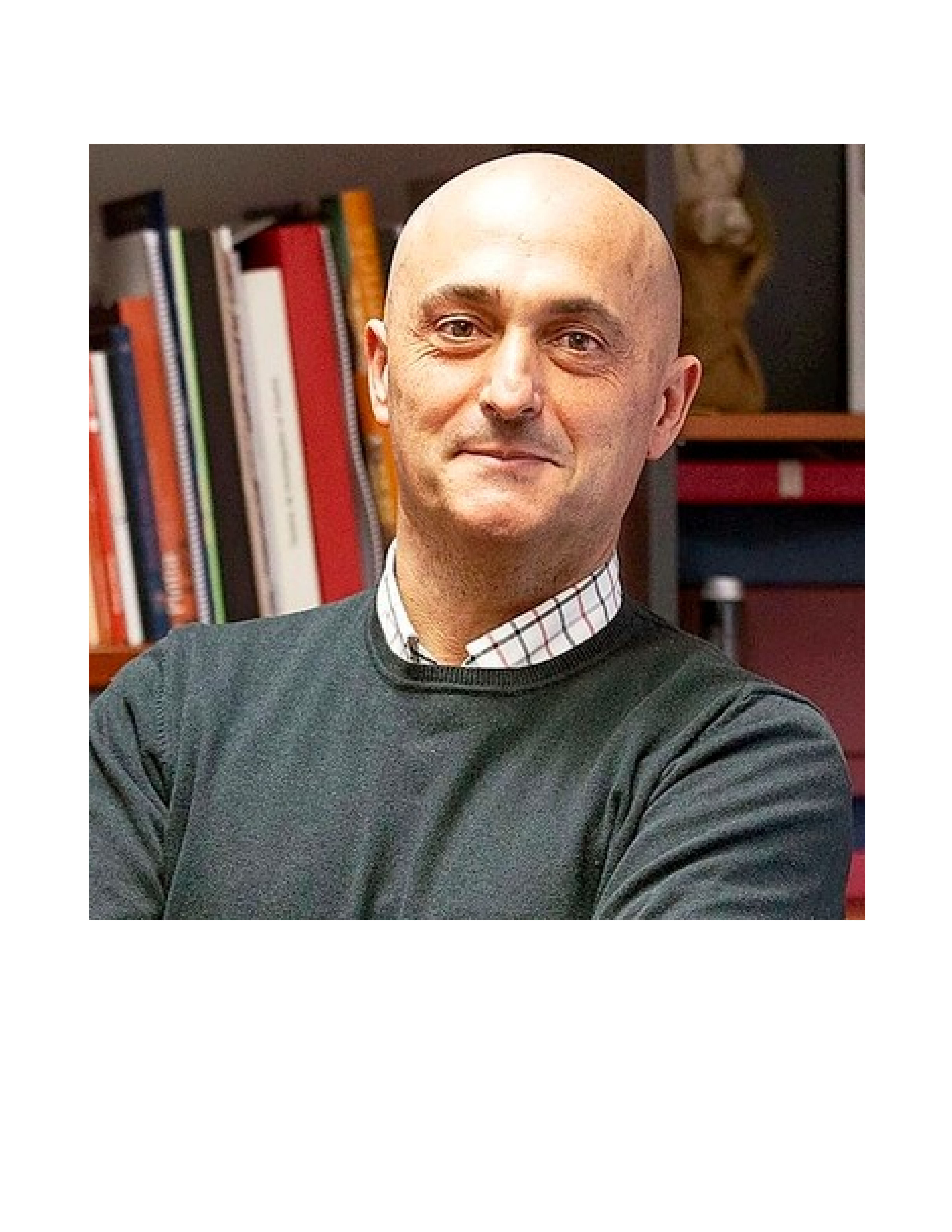
Sustainable Forest Management Research Institute, the University of Valladolid, Palencia, Spain;Julio Javier Diez Casero is a Chair Professor of Forest Pathology at the University of Valladolid (Spain) since 2010. He obtained his degree in Biological Sciences from the University of Salamanca and completed his PhD at the School of Forest Engineers of the Polytechnic University of Madrid. His research focuses on the diagnosis, characterization, and control of forest pathogens. His scientific work has been developed not only in Spain but also in several international research centers, including the ARC–Long Ashton Research Station (UK), the Laurentian Forestry Centre (Canada), and the University of California, Davis (USA). He has an extensive scientific record, having edited 13 books and published 186 articles in peer-reviewed journals, including papers in high-impact journals such as Nature. He has also authored 17 book chapters and presented more than 200 contributions at scientific conferences. Professor Diez has supervised 20 completed PhD theses, with additional theses currently in progress, as well as more than 100 MSc theses. Many of these works have received awards from scientific societies. He has participated in 28 research projects, including eight international projects, coordinating several of them and securing more than €5 million in research funding. He has held numerous international leadership roles in scientific organizations and networks, particularly within IUFRO and several COST Actions. Currently, he directs the Global Change and Forest Diseases Research Group at the University of Valladolid, coordinates the Consolidated Research Unit on Forest Pathology of Castilla y León, and chairs the One Health UVa–IDForest Chair.





Ms. Ann Li
Ms. Riley Liu
Ms. Vivien Zhang
Email: iecf2026@mdpi.com
For inquiries regarding submissions and sponsorship opportunities, please feel free to contact us.