IJNS Journal Club | Celebrating International Neonatal Screening Day 2026
the chair
The International Society for Neonatal Screening (ISNS) has provided neonatal screening guidelines for many years and here presents the renewed 2025 General Guidelines for Neonatal Bloodspot Screening. They are intended to provide a framework for screening programs to develop specific policies around all aspects of the newborn screening system, offering the basic set of items for consideration. These guidelines provide trusted anchors to build, expand, or maintain robustly organized neonatal or newborn screening (NBS) programs and a checklist to evaluate and improve the essential elements of those programs. For starting or developing programs, it is a set of elements for which provisions need to be in place and a checklist of items that the screening program should at a minimum have provisions for. These guidelines are meant to be a starting point for interactive discussion, to further improve this document and expand where necessary.
In this webinar, Prof. Dianne Webster will introduce the guidelines and indicate why it is important to have them and how they can be used.
Prior to that, Dr. Peter Schielen will elaborate on some of the basic principles and thinking that underly the guidelines, elaborating on the Wilson and Jungner Principles as an ethical framework and ‘Screening as a system’.
Thereafter, both speakers would like to engage in discussion with the audience, to elaborate on opinions, items that the ISNS still needs to cover and ideas to work on for the future. The ISNS is looking forward to engaging with you.
Date: 23 June 2026
Time: 9:00 am CEST | 3:00 pm CST (Asia) | 5:00 pm AEST
Webinar ID: 884 1105 0833
Webinar Secretariat: journal.webinar@mdpi.com
Meet Our Chair
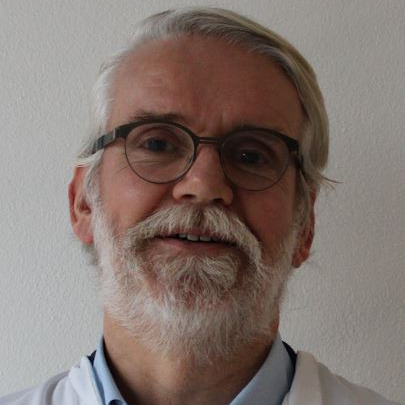
Department of Newborn Screening, MVZ SYNLAB Weiden, Weiden, Germany;Department of Clinical Biochemistry, Technical University of Deggendorf, Deggendorf, Germany;After studying Chemistry at the University of Bonn (Germany), Dr Fingerhut specialized in biochemistry under Prof. Konrad Sandhoff, with a focus on lysosomal storage disorders. He obtained his PhD from the University of Würzburg (Germany) for research on peroxisomal disorders, especially on Refsum Disease, under Prof. Ernst Conzelmann. Afterwards, he headed the newborn screening and metabolic laboratory at the University Children’s Hospital, Hamburg Eppendorf, from 1995 to 1999. From 1999 to 2008 he invented expanded newborn screening by tandem mass spectrometry in Munich, together with Prof. Roscher and Prof. Olgemöller. In 2008, he switched to the University Children´s Hospital Zurich (Switzerland), where he also expanded screening by tandem mass spectrometry, but also invented screening for cystic fibrosis (CF) and severe combined immunodeficiency (SCID). In 2021 he went back to Germany, where he is now the Director of the newborn screening laboratory at SYNLAB MVZ Weiden, and is Associate Professor for clinical biochemistry at the Technical University Deggendorf (Germany). Dr Fingerhut has authored over 100 peer-reviewed papers in scientific journals and several book chapters, for example the 2nd edition of the Physician´s Guide to the Diagnosis, Treatment, and Follow-Up of Inherited Metabolic Diseases (Springer, eds. Nenad Blau et al.). He received several poster prizes, and was awarded the Guthrie Award by the International Society for Neonatal Screening in 2023. Dr Fingerhut is also the founder and Editor-in-Chief of the International Journal of Neonatal Screening since 2015, and it has become one of the top journals in this field, with an impact factor of 4.0 and a citescore of 6.7. He serves as reviewer and scientific board member for several journals, reviewer for the German Akkreditation Body (DAkkS) for newborn screening and clinical chemistry. He is also a member of several scientific societies: ISNS, SSIEM, DGNS, GfAS, the Clinical Laboratory Standards Institute (CLSI), and a member of the CLSI Expert Panel on Newborn Screening.
Meet Our Speakers
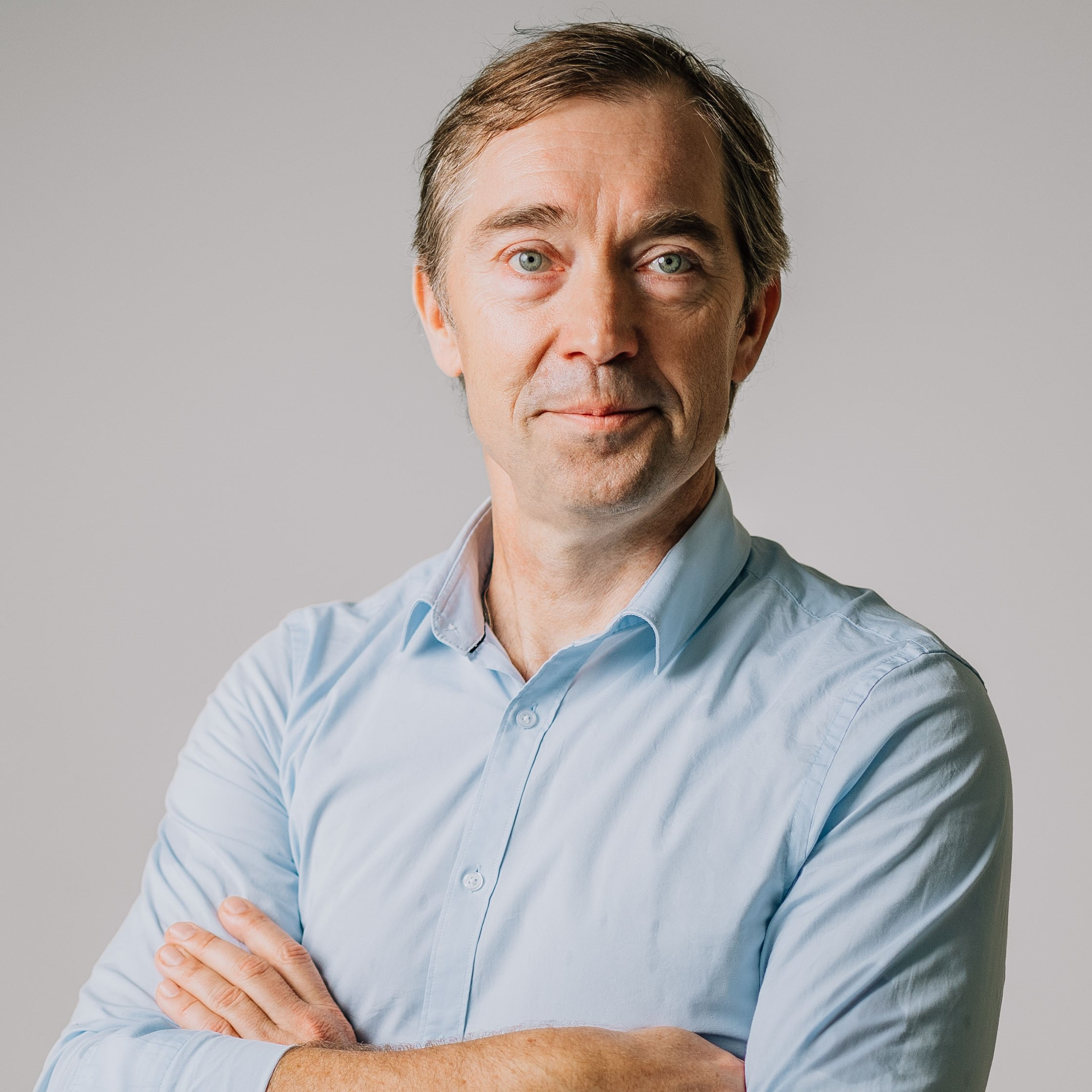
Office of the International Society for Neonatal Screening, The Netherlands;Dr. Schielen is a senior scientist at the National Institute of Public Health and the Environment, Centre for Population Screening, in Bilthoven, the Netherlands (RIVM). He earned his PhD from Utrecht University in the Netherlands. He has a background in prenatal screening for Down’s syndrome and adverse pregnancy outcomes and neonatal screening for metabolic and other disorders, and was head of the reference laboratory for pre- and neonatal screening at RIVM until 2020. Since 2020, he has been the quality assurance and science coordinator for a programme focusing on breast, cervical, and colon cancer screening in the Caribbean part of the Netherlands. Implementing screening programmes in a setting with limited resources brings together his passion for screening and global health, and contributes to more equity in public health worldwide, with responsible choices to make the programmes accessible for all, respecting local values, local circumstances, and proper monitoring and evaluation. To establish this, he is partly seconded to the Julius Centre of the Utrecht University Medical Centre, the Netherlands. In another capacity, he is also the manager of the International Society of Neonatal Screening (ISNS). The ISNS, with more than 500 professional members globally, invests in screening programme support in LMIC countries. For the ISNS, he is involved in activities to establish more equity in neonatal screening not only in European states, but also globally.
National Newborn Metabolic Screening Programme, LabPlus, Auckland City Hospital, New Zealand;Liggins Institute, University of Auckland, New Zealand;Professor Dianne Webster received her PhD from the University of London (UK, 1981) on aspects of the inborn error of metabolism hereditary orotic aciduria. She has been involved in newborn screening since 1986, and served as the Director of the New Zealand Newborn Metabolic Screening Programme since 1991. She is an honorary Professor at the Liggins Institute of the University of Auckland School of Medicine. She has served in various capacities in several professional societies, notably the ISNS (in which she currently serves as an Asia Pacific representative and Vice President), but also the Human Genetics Society of Australasia and the Clinical and laboratory Standards Institute. She has been involved in the organisation of many meetings, and has been invited as a plenary speaker many times. Her areas of interest in newborn bloodspot screening are programme evaluation (adding and removing disorders), disorder definition and counting, guideline development, and supporting fledgling newborn screening programmes.
In this section, you'll find the webinar recording. Share it with your colleagues!
| Speaker | Presentation Title | Time in CEST | Time in AEST |
|---|---|---|---|
| Dr. Ralph Fingerhut | Chair Introduction | 9:00–9:10 am | 5:00–5:10 pm |
| Dr. Peter C. J. I. Schielen | Wilson and Jungner Principles as an Ethical Framework and ‘Screening as a System’ | 9:10–9:35 am | 5:10–5:35 pm |
| Prof. Dr. Dianne Webster | ISNS General Guidelines for Neonatal Bloodspot Screening 2025 | 9:35–10:00 am | 5:35–6:00 pm |
| Q&A | 10:00–10:20 am | 6:00–6:20 pm | |
| Dr. Ralph Fingerhut | Closing of Webinar | 10:20–10:30 am | 6:20–6:30 pm |
"Historical Appreciation of World Health Organization’s Public Health Paper-34: Principles and Practice of Screening for Disease, by Max Wilson and Gunnar Jungner"
by Peter C. J. I. Schielen
Int. J. Neonatal Screen. 2025, 11(3), 56; https://doi.org/10.3390/ijns11030056
"ISNS General Guidelines for Neonatal Bloodspot Screening 2025"
by Dianne Webster, Amy Gaviglio, Aysha Habib Khan, Mei Baker, David Cheillan, Layachi Chabraoui, Ghassan Abdoh, Juan Cabello, Roberto Giugliani, Dimitris Platis, Jan Østrup, R. Rodney Howell, Peter C. J. I. Schielen and James R. Bonham
Int. J. Neonatal Screen. 2025, 11(2), 45; https://doi.org/10.3390/ijns11020045
https://www.mdpi.com/2409-515X/11/2/45?webinar_id=217&_utm_from=40a9ea54e2