The 2nd International Online Conference on Mathematics and Applications
ICMMP 2026: The 1st International Conference on Modern Mathematical Physics
30 October–3 November 2026, Hangzhou, China
We are excited to announce that our first in-person event, 2027 International Conference on Modern Trends in Mathematical Sciences (ICMTMS 2027), will be held in Bucharest, Romania from 29 June to 2 July 2027.
 Conference Session Topics:
S1. Algebra, Geometry, Topology, and Logic with Applications;
S2. Mathematical Analysis;
S3. Statistics and Operational Research;
S4. Mechanics and Mathematical Physics;
S5. Mathematics, Computer Science, and Artificial Intelligence;
S6. Applied Mathematics.
Submit your abstract by 26 February 2027 HERE.
Register by 17 April 2027 to secure your early-bird discount: https://sciforum.net/registration/ICMTMS2027/tickets.
For more information, please visit the ICMTMS 2027 website HERE.
the chairs
-
Algebra, Geometry, Topology, and Logic with Applications: This session delves into the core areas of algebra, number theory, differential geometry, complex geometry, mathematical logic, cryptography, and topology, as well as their connections with other scientific and technological domains.
-
Mathematical Analysis: This session encompasses research in real and complex analysis, differential equations (both ordinary and partial), evolution equations, dynamical systems, functional analysis, calculus of variations, and harmonic analysis with wavelet with applications in biology, finance, fluid mechanics, etc.
-
Statistics and Operational Research: This session covers recent advances in the theory of probability and statistics, data analysis, operations research, and their applications in many disciplines. It is dedicated to the latest advancements in theoretical research and their various applications.
-
Applied Mathematics: This session focuses on developing and applying computational techniques to solve complex scientific problems across multiple disciplines. This includes numerical linear algebra, numerical, numerical approximation, computational geometry, and numerical solutions of differential equations, integral equations, and inverse problems.
-
Control Theory and Mechanics: Submissions reporting novel mathematical methods and computational techniques for control and mechanics issues are welcome for this session. Topics include, but are not limited to, robust control theory, predictive control, nonlinear control, adaptive control, optimal control theory in mechanical systems, stability analysis, mathematics of multibody dynamics, control-oriented parameter identification, multiscale mechanical systems, mechanical contact problems, topology optimization, etc.
-
Mathematics, Computer Science and Artificial Intelligence: This session aims to showcase the latest research results in the evolving intersection of mathematics, computer science, and artificial intelligence (AI). It places a particular emphasis on the mathematical foundations of AI, such as neural network theory, optimization algorithms for AI, and probability theory in machine learning. Additionally, papers that describe the real-world applications of AI while highlighting the underlying mathematical principles are highly encouraged.
De Montfort University, UK
Prof. Dr. Ivanka Stamova
University of Texas at San Antonio, USA
Prof. Dr. Tadashi Dohi
Hiroshima University, Japan
Chairs of the 2nd International Online Conference on Mathematics and Applications
Follow the conference organizer on Social Media



Meet Our Chairs
Institute of Artificial Intelligence, Faculty of Computing, Engineering and Media, De Montfort University, Leicester, UK;Francisco Chiclana is with the Institute of Artificial Intelligence (IAI), Faculty of Computing, Engineering and Media, De Montfort University, Leicester, UK (chiclana@dmu.ac.uk) and with the Andalusian Research Institute in Data Science and Computational Intelligence, Dept. of Computer Science and AI, University of Granada, 18071 Granada, Spain. Francisco Chiclana received the BSc and PhD in Mathematics from the University of Granada, Spain, in 1989 and 2000, respectively. He is a Professor of Computational Intelligence and Decision Making with the School of Computer Science and Informatics, Faculty of Computing, Engineering and Media, De Montfort University, Leicester, U.K. He is an Associate Editor and a Guest Editor for several ISI-indexed journals such as IEEE Transactions on Systems, Man, and Cybernetics: Systems, Information Sciences, Applied Soft Computing, and Knowledge-Based Systems. He has organized and chaired special sessions/workshops at many major international conferences in research areas such as fuzzy preference modelling, decision support systems, consensus, recommender systems, social networks, rationality/consistency, aggregation, and sentiment analysis. He is currently a Highly Cited Researcher in Computer Sciences (according to Essential Science Indicators by Clarivate Analytics).
Department of Mathematics, University of Texas at San Antonio, San Antonio, USA;Ivanka Stamova received her Ph.D. degree in Mathematics from the Higher Accreditation Commission of Bulgaria in 1996. In 2010 she was awarded a D.Sc. degree in Mathematical Modeling and Applied Mathematics from the Higher Accreditation Commission of Bulgaria in recognition of a substantial and sustained contribution to scientific knowledge beyond that required for a Ph.D. degree. Dr. Stamova has many years of teaching experience at the university level, including at the Technical University of Sofia (Bulgaria) and Burgas Free University (Bulgaria). Due to her reputation in both teaching and research, Dr. Stamova has been invited to give many serial lectures to graduate students and junior researchers in different universities internationally, including the Technical University at Kemnitz (Germany); Virjie University of Amsterdam (Netherlands); ETH in Zurich (Switzerland); Marmara University (Turkey); and ISAS Trieste (Italy). She also served as a Dean of Research in the Faculty of Engineering and Computer Sciences at the Burgas Free University (2003-2008). She is the author of numerous books and articles on nonlinear analysis, stability, and control of nonlinear systems, including the books Stability Analysis of Impulsive Functional Differential Equations (Walter de Gruyter, Berlin, 2009); Applied Impulsive Mathematical Models (Springer, Berlin, 2016); and Functional and Impulsive Differential Equations of Fractional Order: Qualitative Analysis and Applications (CRC Press, Boca Raton, 2017). Her current research interests include the qualitative analysis of nonlinear dynamical systems, nonlinear observer design, and impulsive control and applications. Dr. Stamova is a member of the editorial boards of several internationally recognized journals in Pure and Applied Mathematics and an invited speaker at numerous research conferences and seminars. She is also a member of the American Mathematical Society, Association for Woman in Mathematics, and International Society of Difference Equations.
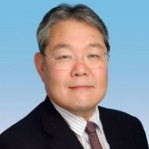
Graduate School of Advanced Science and Engineering, School of Informatics and Data Sciences, Hiroshima University, Higashihiroshima, Japan;Tadashi Dohi received BE and ME degrees and a PhD degree in Engineering from Hiroshima University, Japan, in 1989,1991, and 1995, respectively. Since 2002, he has been working as a full Professor at Hiroshima University. In 1992 and 2000, he was a Visiting Researcher in the Faculty of Commerce and Business Administration, University of British Columbia, Canada, and the Hudson School of Engineering, Duke University, USA, on leave of absence from Hiroshima University. He has been appointed as a Vice Dean of the School of Informatics and Data Science, and as a full Professor at the Graduate School of Advanced Science and Engineering. His research areas include reliability engineering, software reliability and dependable computing. He was the President of the Reliability Engineering Association of Japan (REAJ) in 2018–2019. He is a regular member of ORSJ, IEICE, IPSJ, REAJ, and IEEE. He also serves as an Associate Editor of IEEE Transactions on Reliability, among other publications.
Important Dates
24 Feb
2026
24 Mar
2026
5 Jun
2026
Meet Our Speakers
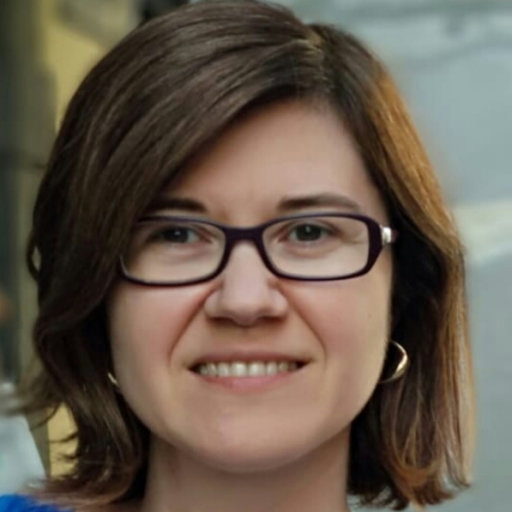
Centre for Information Technologies and Applied Mathematics, University of Nova Gorica, Nova Gorica, Slovenia;Irina Cristea received her PhD degree in Mathematics from the University Ovidius of Constanta, Romania. She concluded her postdoctoral studies at the University of Udine, Italy. She currently works as an Associate Professor at the University of Nova Gorica, Slovenia, where she leads the Centre of Information Technologies and Applied Mathematics. Her research interests are mainly related to the theory of hypercompositional algebra, having published more than 80 articles in journals indexed by Scopus or the Web of Science and co-authored one book, entitled “Fuzzy Algebraic Hyperstructures: An Introduction", published by Springer in 2015. Over the past 4 years, she has acted as the Chief Editor for the Italian Journal of Pure and Applied Mathematics, the Associate Editor of Mathematics (published by MDPI), Heliyon Mathematics (published by Cell press), and seven other international journals. She is also a Guest Editor for several Special Issues related to algebraic structures and graph theory.
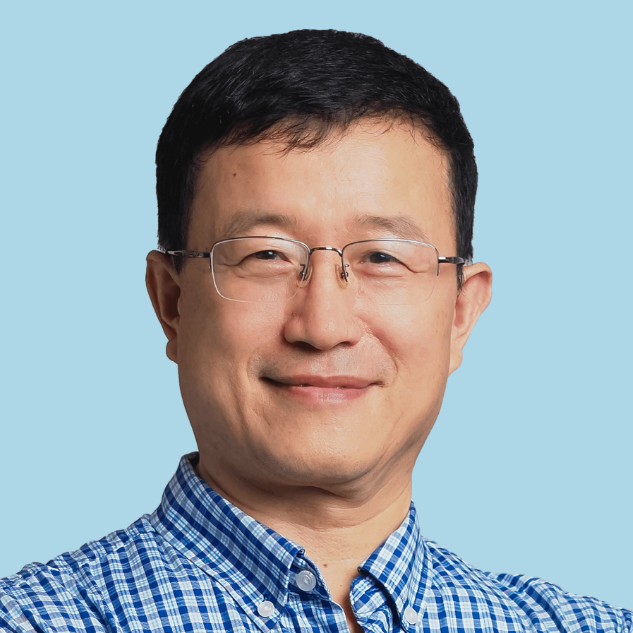
Department of Mathematics, Shanghai University, Shanghai, China;Qing-Wen Wang is a professor at Shanghai University, China. He received his Ph.D. in Pure Mathematics from University of Science and Technology of China. Dr. Wang has published over 200 research articles in the fields of linear and multilinear algebra, operator algebra and quantum computing, along with 6 books from Scientific Press and Higher Education Press. His research has been sponsored by the NWO of the Netherlands and the National Natural Science Foundation of China, etc. Prof. Wang has been awarded the title of Shanghai Leading Talent since 2012, Weichang Distinguished Professor since 2020. Prof. Wang was awarded the "Shanghai Model Teacher for Imparting Knowledge and Educating People" in 2025. In 2024, Prof. Wang was honored as a National Distinguished Teacher, and Director of the Qing-Wen Wang Model Worker Innovation Studio in the Shanghai Education System, respectively. He has won several awards, including the second prize of the National Teaching Achievement Award in 2023, the first prize of the Shanghai Teaching Achievement Award 3 times, the second prize of the Shanghai Natural Science Award in 2023, the second prize of the Guangxi Natural Science Award, and the first Wu Xinghua Prize in Mathematics in 2020, respectively. Prof. Wang was selected as a top global scientist in mathematics (2022-2025) and listed among the World's Top 2% Scientists (1960-2025) by Stanford University and Elsevier. He has also been named a Chinese Highly Cited Researcher by Elsevier for ten consecutive years (2014-2024). Since 2018, he has served as the president of the Chinese Higher Education Association’s Specialized Committee for Education Mathematics.

Institute of Mathematics, University of Aberdeen, Scotland, UK;I was born in Warrington, England. My B.Sc. and PhD degrees were at the University of Newcastle on Tyne, England. I then had a postdoctoral fellowship at Newcastle and then was appointed to a position at Aberdeen University in 1973. I became professor there in 1996. I was head of department from 1992-1995 and in 1995 I was elected Fellow of the Royal Society of Edinburgh. In 2011 I became Emeritus Professor of Mathematics in Aberdeen. My main interests are in classical general relativity and differential geometry and I have published over 200 papers and written two books in this area. I have delivered about 230 invited talks at overseas institutions in Europe, North and South America, Australia, Asia and the Middle East. I have supervised twenty PhD students, all successfully.
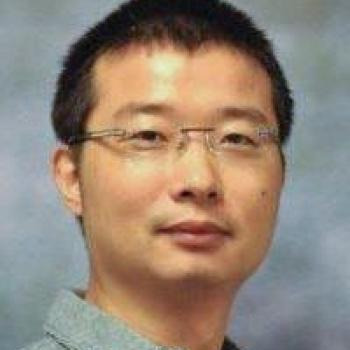
Department of Mathematics, Iowa State University, Iowa, USA;Dr. Songting Luo is a professor in the Department of Mathematics at Iowa State University, USA. His research is in the areas of mathematical modeling, numerical analysis, scientific computating and machine learning, especially for problems and applications related to waves, optics and quantum mechanics. Dr. Luo’s research has been supported through fundings mainly from National Science Foundation and Simons Foundation.

Department of Applied Mathematics and Modeling, University of Plovdiv, Plovdiv, Bulgaria;Dr. Snezhana Hristova is a Professor at the Department of Applied Mathematics and Modeling, Plovdiv University "Paisii Hilendarski". She previously served as an Associate Professor at the Department of Mathematics & Computer Science, Denison University, Granville, USA. Furthermore, she serves as an Editorial Board Member in the Mathematics journal. Her Skills and Expertise include Boundary Value Problems, Difference Equations, Functional Differential Equations, Differential Equations, and Stability.

Department of Mathematics and Applications "R.Caccioppoli", University of Naples Federico II, Naples, Italy;Flavia Giannetti is Associate Professor of Mathematical Analysis at the Department of Mathematics and Applications "R.Caccioppoli" of University of Naples Federico II. She earned her degree in Mathematics in 1996 and her PhD in 2002, becoming Associate Professor in 2018. Her research focuses on the Calculus of Variations and the Regularity results for elliptic and parabolic partial differential equations. She has conducted research at several international institutions, including École Polytechnique Fédérale de Lausanne, University of Warsaw, University of Tokyo, and Syracuse University. She is the author of more than 50 scientific publications and has led and participated in numerous national and international research projects.
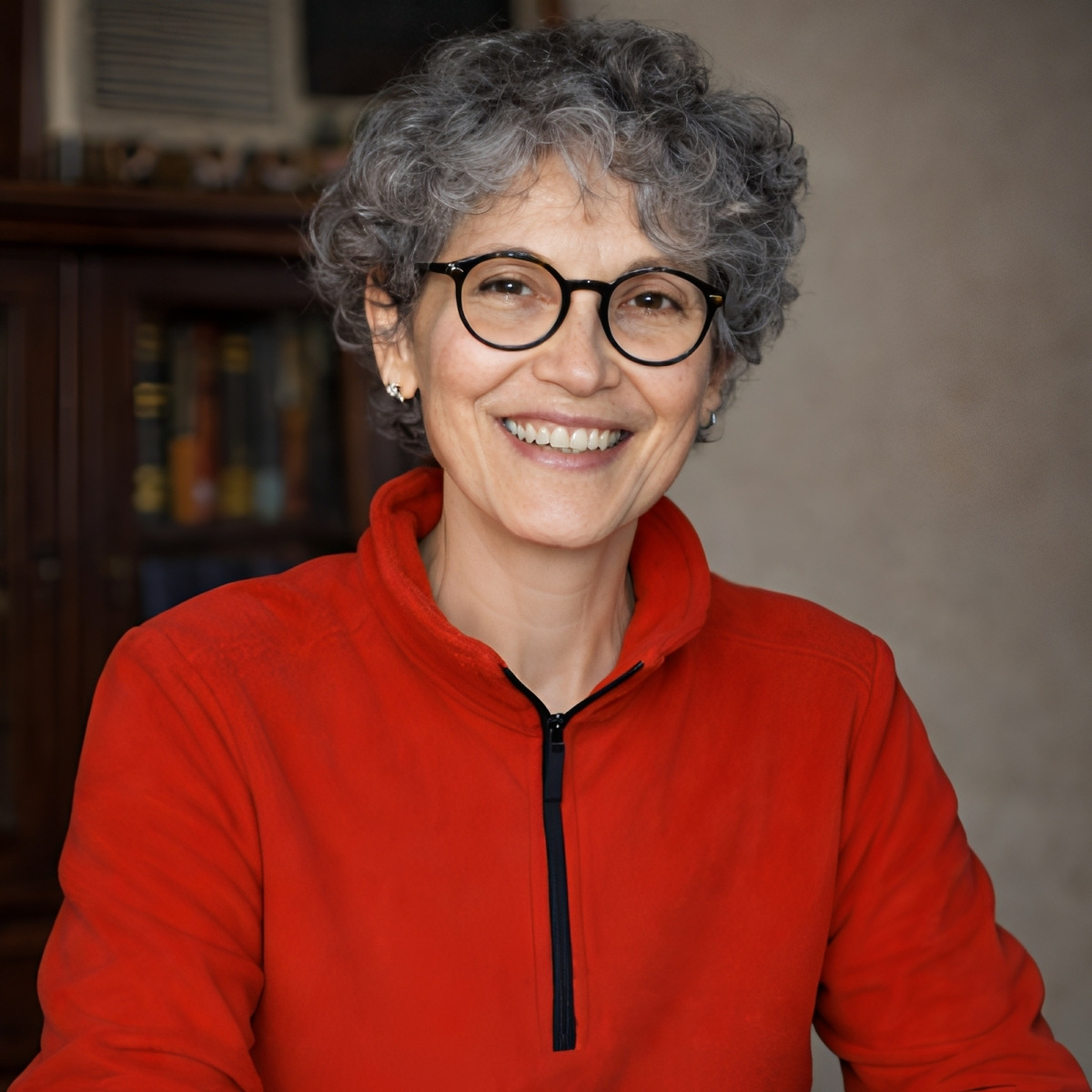
Department of Mathematics, University of Torino, Torino, Italy;Elvira Di Nardo is Associate Professor of Probability and Mathematical Statistics at the Department of Mathematics of the University of Turin. Her research lies at the intersection of probability theory, stochastic processes, and mathematical statistics, with a particular focus on symbolic and algebraic methods applied to probabilistic and statistical problems. Her work includes the development and application of symbolic calculus techniques—such as umbral methods—to the study of cumulants, moments, k-statistics, and multivariate distributions. She has contributed to the analysis of stochastic models, including first-passage time problems and time-to-event analysis, as well as to the combinatorial structures underlying probabilistic quantities.
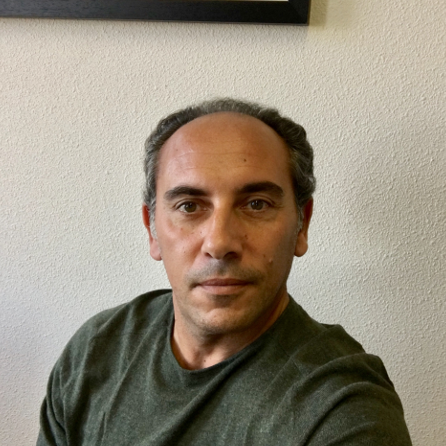
Department of Statistics and Operations Research, University of Murcia, Murcia, Spain;Full Professor of Statistics and Operations Research at the University of Murcia, with expertise in stochastic orders, dependence modeling, and statistical inference. Experienced researcher with numerous international publications and active projects bridging theory and applications. Passionate educator in Data Science and Statistical Inference, integrating real-world datasets into teaching.

Department of Business and Law, University of Milano-Bicocca, Milan, Italy;Mauro Passacantando is an Associate Professor of Operations Research at the University of Milano-Bicocca, Italy. He received the M.S. and Ph.D. degrees in Mathematics from the University of Pisa (Italy). He has been an Assistant Professor and then an Associate Professor of Operations Research at the University of Pisa from 2002 to 2022. His research is mainly devoted to equilibrium problems and game theory. In recent years, his work has also focused on warehouse management and green logistics problems. He has published a monograph and more than 90 peer-reviewed papers in international journals, book chapters, and conference proceedings.
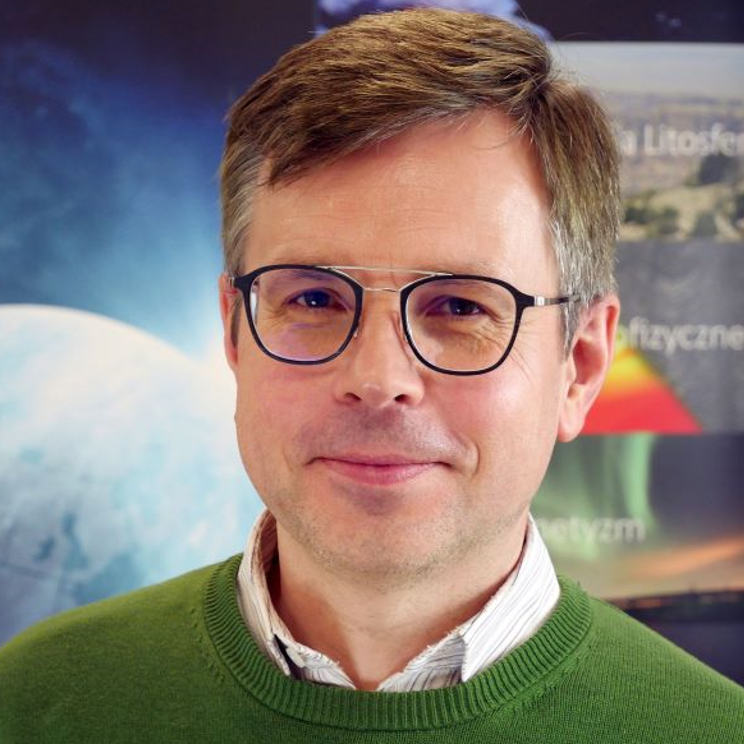
Institute of Geophysics, Polish Academy of Sciences, Warszawa, Poland;Prof. Mariusz Białecki’s scientific interests include complex systems, deterministic and stochastic cellular automata, discrete integrable systems, and the mathematical modeling of various physical and geophysical phenomena. In his research, he combines the perspectives of a physicist (PhD in Physics, University of Warsaw, 2004), a mathematician (JSPS Postdoctoral Fellowship, Graduate School of Mathematical Sciences, The University of Tokyo, 2005–2007), and a geophysicist (habilitation in Geophysics, Institute of Geophysics, Polish Academy of Sciences, 2013).
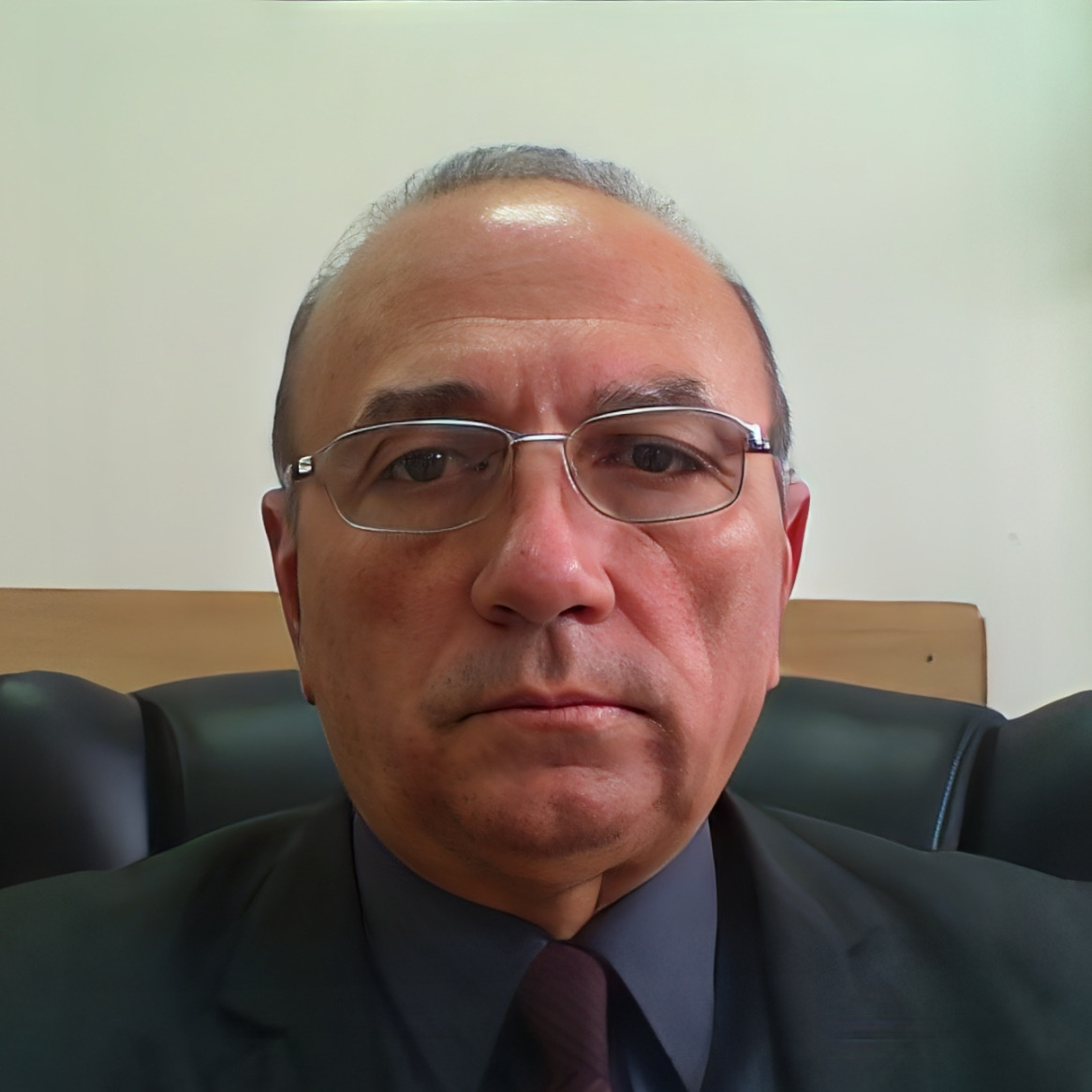
Institute of Information and Communication Technologies, Bulgarian Academy of Sciences, Sofia, Bulgaria;Svetozar Margenov is a professor of Computational Mathematics. He graduated from Sofia University “St. Kliment Ohridski” and earned both, his PhD and Doctor of Science degrees form the Bulgarian Academy of Sciences (BAS). The main scientific achievements of prof. Margenov are in the area of numerical methods for partial differential equations, the numerical solution of fractional diffusion problems, and multilevel iterative methods for solving ill-conditioned large-scale linear systems. He has published over 200 scientific papers and two monographs. Currently, he serves as a director of the Institute of Information and Communication Technologies at BAS and heads the Department of Scientific Computing.
Higher Technical School of Architecture, University of Seville, Sevilla, Spain;Holds a Ph.D. in Architecture from the University of Seville (Spain), where he is a tenured Professor of Architectural Composition and Environmentally Oriented Projects. Graduate in Oriental Studies and Japanese Language. He speaks more than ten languages, including Chinese and Arabic. He has travelled extensively in Asia, completing a significant research project on bioclimatic architecture. He served as a Research Fellow for the Japan Foundation at Kobe Design University (2004). He has worked in European Research Projects and in cooperation projects with South America. As academic of Fine Arts, he has taught at different universities for over 20 years, in the five continents, and published over 100 academic papers.
Department of Electrical Engineering , University of Malta, Msida, Malta; Department of Marine Engineering, Vietnam Maritime University, Haiphong, Vietnam;Dr Tran is a Researcher at Department of Electrical Engineering, University of Malta, Malta. He was a Postdoctoral researcher at Department of Naval Architecture and Ocean Engineering, Seoul National University (SNU), Seoul, South Korea (October, 2022 – October, 2023). He is an Assistant Professor (Lecturer) at Department of Marine Engineering, Vietnam Maritime University, Haiphong City, Vietnam. He is an Honorary Professor at School of Computing Science and Engineering, Galgotias University, India and an Honorary Adjunct Professor at School of Computer Science and Engineering, Lovely Professional University (LPU), India. Additionally, he is an Adjunct Faculty at SIMATS Engineering, Saveetha Institute of Medical and Technical Sciences, Tamilnadu, India. He received B.Eng and M.Sc at Vietnam Maritime University, Vietnam in 2011 and 2014, respectively. He got Ph.D. Degree at Wuhan University of Technology, Wuhan, China in 2018. He is an Editor/Guest Editor for the reputation journals indexed in SCI/SCIE such as Environment, Development and Sustainability, IET Intelligent Transport System, International Journal of Distributed Sensor Networks, Sustainable Computing: Informatics and Systems, International Journal of Renewable Energy Technology, International Journal of Energy Optimization and Engineering, IEEE Internet of Things Magazine, Mathematics. In 2015, he had been awarded the Chinese Government Scholarship (CSC) for the full funding of Doctor of Philosophy (PhD) program in China. In 2019, He had been awarded the NEPTUNE prize for the outstanding researchers by Vietnam Maritime University, In 2022, he is one of five outstanding scientists in Vietnam to be nominated for Ta Quang Buu prize by the National Foundation for Science & Technology Development (NAFOSTED). Additionally, he had been selected and awarded the full scholarship for the Postdoctoral Fellowship Program of National Research Foundation (NRF) for Foreign Researchers by the Government of South Korea.
Department of Computational Sciences and Artificial Intelligence, West University of Timisoara, Timisoara, Romania;Darian Onchis has been a full professor at the West University of Timișoara since 2023. He holds a PhD title since 2006, awarded by the West University of Timisoara, Romania and University of Seville, Spain. In 2014, he successfully defended his habilitation thesis in applied mathematics at the Aix-Marseille University in France and became PhD advisor and independent researcher. In 2022, he successfully defended his second habilitation, this time in computer science, at the West University of Timișoara. From 2015 until 2018, he led a large research project won by competition at the University of Vienna, Austria. Currently, he is the leader of TRAIN (Timișoara Research in Artificial Intelligence Network) and the creator of XAION, an independent platform dedicated to explainable artificial intelligence competitions. Over the course of his career, Darian has authored more than 90 scientific publications, including his doctoral dissertation and two habilitation theses.

Institute of Industrial Robotics and Computer Science CSIC, Polytechnic University of Catalonia, Barcelona, Spain;Fernando E. Serrano received his BEng from the Central American Technical University (UNITEC) in Tegucigalpa, Honduras in 2003 and M. Sc. in Electrical Engineering from Florida International University in Miami, FL, USA in 2007. He is an author of some publications and presentations in journals, book chapters and conference and he is actually collaborating as a researcher with professors from Egypt, Spain, Honduras, El Salvador and Mexico. His research area are the control of complex systems, specifically and adaptive control. Actually he is working and collaborating as an associated researcher with the Institute of Energy Research (Instituto de Investigación en Energía) at Universidad Nacional Autónoma de Honduras (UNAH) in Tegucigalpa, Honduras. Besides, He is currently a Phd. Student in automatic control at the Universitad Politécnica de Cataluña Barcelona, Spain.

Department of Mathematical Sciences, University of Memphis, Tennessee, USA;George A. Anastassiou was born in Athens, Greece in 1952. He received his B.SC degree in Mathematics from Athens University, Greece in 1975. He received his Diploma in Operations Research from Southampton University, UK in 1976. He also received his MA in Mathematics from University of Rochester, USA in 1981. He was awarded his Ph. D in Mathematics from University of Rochester, USA in 1984. During 1984-86 he served as a visiting assistant professor at the University of Rhode Island, USA. Since 1986 till 2024, he had been a faculty member at the University of Memphis, USA. He had been a full Professor of Mathematics since 1994. Since August 2024 is a Professor Emeritus. His research area is “Computational Analysis” in the very broad sense. He has published over 750 research articles in international mathematical journals and over 58-monographs, proceedings and textbooks in well-known publishing houses. Several awards have been awarded to George Anastassiou. In 2007 he received the Honorary Doctoral Degree from University of Oradea, Romania. He is associate editor in over 93 international mathematical journals and had been editor in-chief in 3 journals, most notably in the well-known “Journal of Computational Analysis and Applications”. G. ANASTASSIOU ON THE TOP 2% IN RESEARCHGATE.NET: https://www.researchgate.net/profile/George-Anastassiou/stats G. ANASTASSIOU ON THE WORLD’S TOP2%: https://www.memphis.edu/mediaroom/releases/2023/december/uofm-research-top-2-percent-stanford-elsevier.php
Best Oral Presentation Awards
Authors: Alejandro Fructuoso-Bonet, Jesús Rodríguez López, Óscar Valero Sierra
ID: sciforum-170601
Title: TOPOLOGICAL PRESERVATION BY QUASI-PSEUDOMETRIC AGGREGATION FUNCTIONS
Link: https://sciforum.net/paper/view/31420
Authors: Enrico Talotti
ID: sciforum-174318
Title: Classification of Finite Preordered Semigroups via Group Action induced by Pushforward
Link: sciforum.net/paper/view/31717
Authors: Meriem Benaouad
ID: sciforum-174040
Title: Energy-Optimal Control of Singular Continuous-Time Linear Systems Using the Weierstrass–Kronecker Decomposition
Link: https://sciforum.net/paper/view/31393
Best Poster Award
Authors: Chalani Nawanjana Dalugama, Thanuka Hansameenu Wijenayaka Pathiranage
ID: sciforum-171642
Title: Optimal Control Strategies for Predator–Prey Systems with Bang–Bang and Quadratic Control Terms.
Link: https://sciforum.net/paper/view/31388








Conference Closed and Winner Announcement
On behalf of the conference organizing committee, we would like to express our appreciation to all the participants for their contributions.
The Best Oral Presentation Awards and Best Poster Awards of IOCMA 2026 will be announced soon.
You can directly download your electronic Certificate of Attendance HERE.
Click HERE for the abstract book.
Click HERE for the poster gallery.
Accepted abstracts are eligible for publication in a Special Issue published in Mathematics (ISSN: 2227-7390, IF: 2.2, CITESCORE: 5.4), with a 20% discount on the publication fee.
Click HERE for more details about Publication Opportunities.
Ms. Ann Li
Ms. Elara Liu
Email: iocma2026@mdpi.com
For inquiries regarding submissions and sponsorship opportunities, please feel free to contact us.