Please login first

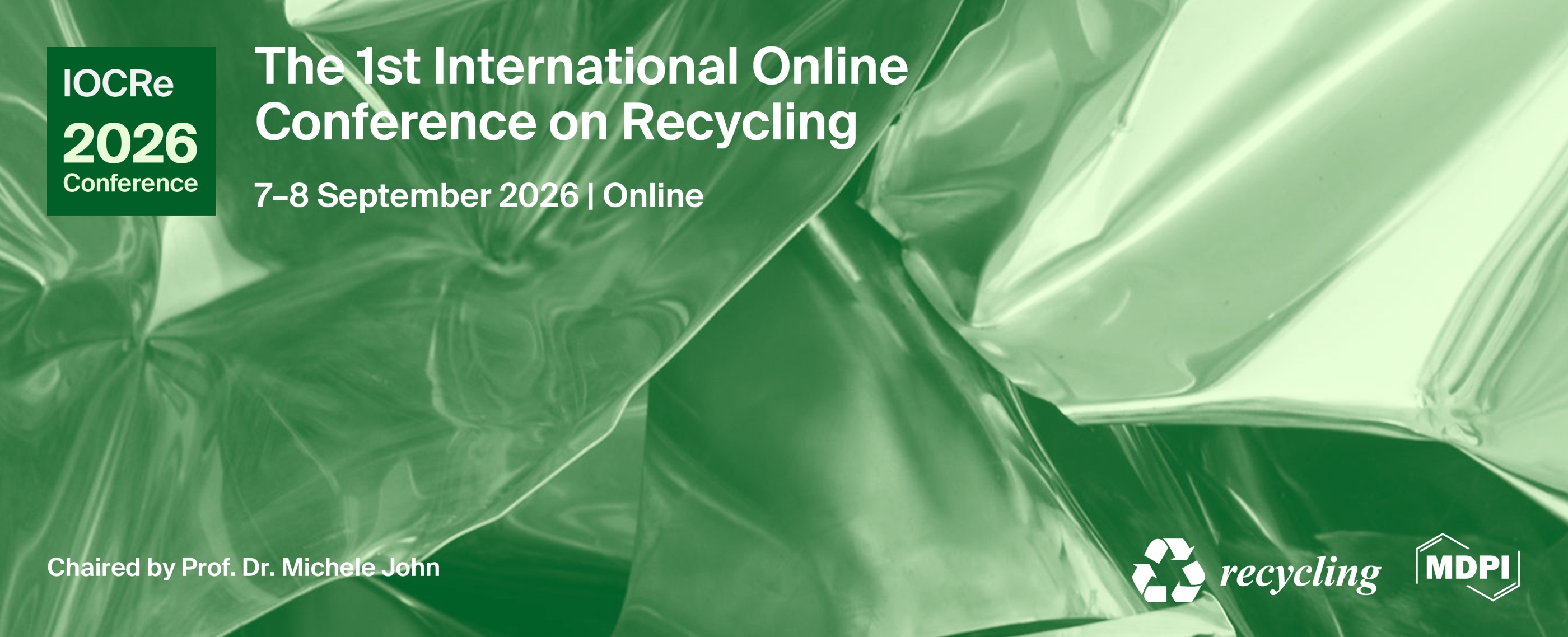
The 1st International Online Conference on Recycling

7–8 September 2026
Event's Timezone: Central European Summer Time
Abstract Submission Deadline
8 May 2026
Abstract Acceptance Notification
17 June 2026

Registration Deadline
1 September 2026

Resource Recycling, Circular Economy, Waste Processing Technologies, Waste Utilization
Bookmark
Bookmark event Remove event from bookmarks
Add this event to bookmarks
Event Registration Contact Us

The IOCRe2026 is Now OPEN for Abstract Submission and Registration.

Instructions for authors are available online.
Submit your abstracts HERE.

For any inquiries, please contact us at iocre2026@mdpi.com.

Welcome from the Chair

Dear researchers,

We are delighted to invite you to the upcoming conference the 1st International Online Conference on Recycling (IOCRe2026), organized by the MDPI journal Recycling (ISSN: 2313-4321; Impact Factor: 4.6; CITESCORE: 8.9).

This online conference will take place from the 7—8 September, 2026, addressing key sustainability, recycling, and resource recovery challenges. The event will focus on a broad range of topics, including resource recycling, waste management strategies, the circular economy, industrial symbiosis, sustainable materials, and policy frameworks towards a zero-waste future, among others.

The IOCRe 2026 conference offers a prestigious international platform for researchers, policymakers, and industry leaders. Here, you will have the invaluable opportunity to engage with cutting-edge research, share insights with leading experts, and contribute to shaping sustainable recycling practices and circular material recovery systems for the future. The goal is not only to respond to today’s complex challenges but also to proactively design systems that are adaptable, inclusive, and capable of driving long-term environmental and economic transformation.

One of the most significant advantages of this fully virtual conference format is the ease of participation—no travel is required, and scholars can join us from anywhere in the world. The event will feature live presentations, interactive Q&A sessions, and a virtual poster gallery, encouraging open dialogue and dynamic interaction among participants

The conference will be structured around several key thematic sessions:
1. Advances in Recycling Technologies
2. Circular Economy and Policy Innovations towards Improved Resource Recovery
3. Plastic and Composite Waste Recycling
4. Metal, Battery, and E-Waste Recycling
5. Challenges and Opportunities in Construction and Demolition Waste

We warmly invite you to submit your abstract and join this exciting global exchange. All abstracts will be peer-reviewed by the scientific committee and presented on the conference website. Participation is free of charge, and outstanding contributions will be eligible for conference awards. In addition, extended versions of the presented work (4–8 pages) may be published free of charge in the Environmental and Earth Sciences Proceedings, and authors will receive a 20% discount for submitting full-length papers to the Recycling Special Issue.

I look forward to your participation and the engaging discussions that will shape the future of recycling.

Kind regards,
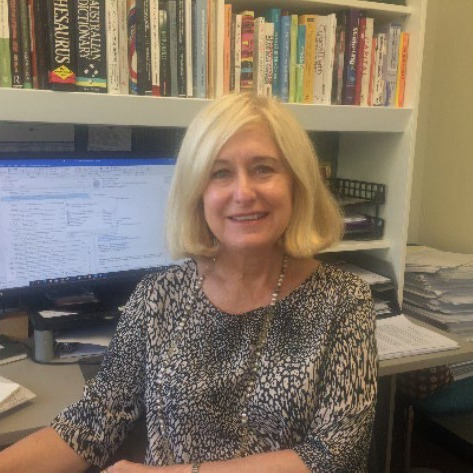
Prof. Dr. Michele John
Chair of IOCRe 2026
Editor-in-Chief Recycling
Sustainable Engineering Group, Curtin University, Australia


More News about MDPI Conferences
https://x.com/JRFM_MDPI x.com

Event Chair

Sustainable Engineering Group, Curtin University, Perth, Australia

Introduction
Bio
Professor Michele John is the Professor of Sustainability and Director of the Sustainable Engineering Group (SEG), Curtin University, Perth, Western Australia. Her teaching and research encompass a wide spectrum of disciplines, including life cycle engineering, environmental impact assessment, climate change, eco-efficient production, industrial symbiosis, waste management, and sustainability education. She has published two books on sustainability education, ‘Engineering Education for Sustainable Development’ (Biswas and John 2022) and the ‘The Routledge Handbook on Global Sustainability Knowledge and Thinking in the 21st Century’ (Open Access John, M. Editor. 2025). https://www.taylorfrancis.com/books/oa-edit/10.4324/9781003171577/routledge-handbook-global-sustainability-education-thinking-21st-century-michele-john Michele has been the founding Editor-in-Chief of the Recycling journal since 2014. Michele’s research interests include sustainable industrial production, sustainability assessment and measurement, corporate stewardship values, sustainability governance models, and sustainability education development. Michele’s teaching and supervision programs are committed to the development of multi- and trans-disciplinary sustainability education and the development of a sustainability leadership ethos and accountability.

Session Chairs

Dr. Reyes Garcia

Built Environment & Sustainability Research Cluster, School of Engineering, University of Warwick, Coventry, UK

Introduction
Bio
Dr Reyes Garcia has 25+ years of research/consultancy experience in the fields of sustainable concretes, the use of recycled/waste materials in construction, and FRP composites. He has been involved in the management and coordination of multi-partner EU and UKRI-funded projects in excess of GBP 5M. He has published 100+ articles, papers and book chapters. He regularly reviews research grant proposals for national/international research councils in Europe, Asia, and Latin America, as well as manuscripts for 25+ international journals. He is Associate Editor of ICE’s journal Proceedings of the ICE - Structures and Buildings. He has been a committee member, and a keynote speaker and chair in various international conferences in Latin America and Asia.

Assoc. Prof. Ana Paula Paiva

Structural Chemistry Center, Institute of Molecular Sciences, Department of Chemistry and Biochemistry, Faculty of Sciences, University of Lisbon, Lisbon, Portugal

Introduction
Bio
Ana Paula Paiva is an Associate Professor with Habilitation at the University of Lisbon, in Portugal. Her main research interests are on the investigation of the hydrometallurgical recovery of platinum-group metals from end-of-life devices, particularly on the development of novel solvent extraction systems aiming to efficiently and selectively recover Pd(II) and Pt(IV) from spent automotive and petrochemical catalysts’ aqueous leaching solutions.

Assoc. Prof. Helena Maria Vieira Monteiro Soares

LAQV/REQUIMTE – Associated Laboratory for Green Chemistry, Faculty of Engineering, University of Porto (FEUP), Porto, Portugal

Introduction
Bio
Helena M.V.M. Soares is an Associate Professor with Habilitation at the Faculty of Engineering of the University of Porto (FEUP) and a researcher at LAQV/REQUIMTE. With a Ph.D. in Chemistry and a Habilitation in Environmental Engineering, she leads groundbreaking work in urban mining, developing sustainable technologies for recovering strategic and critical metals from secondary sources, including e waste, end of life batteries, and autocatalysts. She has authored over 100 ISI indexed publications, holds a European patent in e waste gold recycling, and has coordinated multiple national projects in metal recovery and circular resource management. Helena Soares has received an innovation award for her work in e waste recycling and actively contributes to international scientific committees and evaluation panels.

Prof. Dr. Eric Van Hullebusch

Biogeochemistry of Engineered Ecosystems, Institut de Physique du Globe de Paris, Paris, France

Introduction
Bio
Eric D. van Hullebusch is a Full Professor of Biogeochemistry of Engineered Ecosystems at the Institut de Physique du Globe de Paris and Université Paris Cité. He holds a PhD in Aquatic Chemistry and Microbiology from Université de Limoges. His research concentrates on environmental biotechnologies, especially bio-hydrometallurgical recovery of critical metals from waste streams, the biogeochemistry of metals and metalloids, and the remediation of contaminated soils and wastewaters.

Prof. Dr. Paschalis Alexandridis

Department of Chemical and Biological Engineering, University at Buffalo, The State University of New York (SUNY), New York, USA

Introduction
Bio
.

Prof. Dr. Huijuan Dong

School of Environmental Science and Engineering, Shanghai Jiao Tong University, Shanghai, China

Introduction
Bio
Huijuan Dong is a Tenured Professor and doctoral supervisor from the School of Environmental Science and Engineering at Shanghai Jiao Tong University, China. She has been awarded by the Shanghai Oriental Talent Young Scholars Program. Her research interests include low-carbon cities, solid waste recycling, circular economy and industrial ecology, and resource and environmental management policies. She is an expert in the Global Climate Innovation Coalition and Chemicals as well as the Waste Environmental Management of the Basel Convention Regional Centre for Asia and the Pacific. She is also a committee member of the China Society of Environmental Sciences, China Society of Natural Resources, and China Systems Engineering Society. She has presided over 10 projects/subprojects funded by the National Natural Science Foundation of China, Chinese Ministry of Science and Technology, and Shanghai Natural Science Foundation.

Event Committee

Petru Poni Institute of Macromolecular Chemistry, Iasi, Romania

Introduction
Research Keywords
durable multifunctional coatings and innovative surface engineering strategies; sustainable polymer material, materials for environmental applications obtained via circular eco-technologies, plastic and composite waste recycling

Associate Professor of Sanitary–Environmental Engineering, Department of Industrial Engineering (DIIn), University of Salerno, Fisciano, Italy

Introduction
Research Keywords
Circular economy and resource recovery, Waste management and recycling systems, Sustainable packaging and material recovery, Environmental sustainability and policy, Life Cycle Assessment (LCA), Environmental education and science communication

Mineral and Energy Economy Research Institute Polish Academy of Sciences and AGH University of Krakow, Krakow, Poland

Introduction
Research Keywords
economics, circular economy, eco-innovation in industry, and corporate social responsibility (CSR)

School of Management, Guangzhou Univeristy, Guangdong, China

Introduction
Research Keywords
Construction and demolition waste management, Sustainable development

Department of Engineering, University of Palermo, Palermo, Italy National Interuniversity Consortium of Materials Science and Technology (INSTM), Florence, Italy

Introduction
Research Keywords
Mechanical Recycling, Chemical recycling, Recycling of polymer blends, Recycling of thermoplastic and thermosetting composites, Recycling of multilayer films

ISISE, ARISE, Department of Civil Engineering, Guimarães, University of Minho, Portugal

Introduction
Research Keywords
Circular Economy; Sustainable Construction; Sustainability Assessment; Life cycle Assessment; Construction Technology; Nature-based Solutions

CSIRO Mineral Resources, Waterford, Australia

Introduction
Research Keywords
Metal recycling; Critical and strategic metals; Hydrometallurgy and resource recovery

Institute of Material Technology, Poznan University of Technology, Piotrowo 3, 61-138 Poznań, Poland

Introduction
Research Keywords
Waste management; Polymer composites; Wood-polymer composites; Recycling; Circular Economy; Biomass

Department of Industrial Engineering, University of Salerno, Fisciano, Italy

Introduction
Research Keywords
technologies for waste recycling and valorisation, recycling of end-of-life materials, valorisation of industrial and agri-food residues, energy recovery from waste, the management of contaminated waste streams, and sustainability assessment of processes

College of Environment, Hohai University, Nanjing, China

Introduction
Research Keywords
Organic wastes valorization; Bio-based recycling; and Value-added products from waste streams

Bio and Circular Economy, Tampere University, Tampere , Finland

Introduction
Research Keywords
Advanced biomass & waste biorefinery, Sewage sludge management, Resource recycling, Catalytic processing, thermochemical conversion

Environmental Processes Laboratory (LAPAM), Chemical Engineering Department, Federal University of Santa Maria (UFSM), Santa Maria, Brazil

Introduction
Research Keywords
REEE Recycling, Leaching, Solvent extraction, Adsorption, Mechanical Processing

Universidad Pablo de Olavide, Seville, Spain

Introduction
Research Keywords
Wastewater regeneration, Recycling technologies, resource recovery, waste valorization, circular economy, chemical recycling, advanced separation, secondary raw materials, life cycle assessment

Centre for Territory, Environment and Construction (CTAC), University of Minho, Guimarães, Portugal

Introduction
Research Keywords
Alkali-activated materials, recycled aggregates; carbon sequestration; LCA

Division of Sustainable Resources Engineering, Hokkaido University, Sapporo, Japan

Introduction
Research Keywords
E-waste recycling, Physical Separation, Hydrometallurgy

Registration


The registration for IOCRe2026 will be free of charge! The registration includes attendance to all conference sessions.

If you are registering several people under the same registration, please do not use the same email address for each person, please provide their individual university email addresses.

Please note that the submission and registration involve two separate parts. Only scholars who have registered will receive an access link to the conference live streaming.
The deadline for registration is 1 September 2026.

Instructions for Authors

Procedure for Submission

IOCRe2026 will accept abstracts only. The accepted abstracts will be available online on Sciforum.net during and after the conference.

Important Deadline
1. Deadline for abstract submission: 8 May 2026.
2. Abstract acceptance notification: 17 June 2026.

Please note:
An abstract acceptance email only confirms that your abstract has been accepted. Oral presentation invitations are determined separately by the conference chairs, and you will receive an additional email with the presentation result.

Abstract Submission
If you do not have an account, please register at www.sciforum.net. After logging in, submit your abstract using the “Submit Abstract” button on the conference homepage. No template is required.

Abstract Requirements
1. Types of Submissions
- Accepted: Original research abstracts; systematic reviews or meta-analyses abstracts(must comply with PRISMA 2020).
- Not accepted: Narrative, scoping, comparative, perspective, opinion, or essay-style reviews
2. Content Requirements
- Length: 200–300 words
- Structure: Introduction, Methods, Results, Conclusions
- Language: Clear, publication-ready English
- Originality: Must be original and unpublished; previously published abstracts will not be considered
3. Authorship
- The submitting author must ensure all co-authors approve the content.
- Authors may submit multiple abstracts, but only one abstract per author may be selected for an oral presentation.

Presentation Requirements
1. Each abstract must designate one presenter. To change the presenter, please contact us after you receive the oral presentation invitation.
2. Only live presentations are accepted.
3. Presenters who do not attend the live session will not be eligible for awards or presentation certificates.

Oral Presentation and Slides Preparation

The slot for the oral presentation is 15 mins. We advise that your presentation lasts for a maximum of 12 mins, leaving at least 3 mins for the Q&A session.

Authors are encouraged to prepare presentations using PowerPoint or equivalent software for online display alongside their abstract. If provided, slides will be presented directly on the conference website via the Sciforum.net slide viewer and should be prepared in the same format as a traditional conference presentation of research results. All slides must be converted to PDF format prior to submission to ensure accurate online display.

Each presentation should:
- Communicate the research question or objective, methodology, key results, and scientific novelty;
- Use a clear and logical structure, typically Introduction-Methods-Results&Discussion structure (IMRaD) or a field-appropriate alternative;
- Emphasize the relevance of the work;
- Support key findings with clear figures or tables where appropriate;
- Conclude with a critical interpretation of the results and their impact.

Poster Gallery Display
To recognize the research contributions of participants, we are very pleased to announce that all participants with accepted submissions have the opportunity to upload and display their research in the form of a poster at the Poster Gallery on the conference website.

You can upload your poster in pdf version in the "My submission" section. Simply select the correct conference and submission, then click the upload button. The poster gallery would be ‘LIVE’ throughout and available for viewing during and permanently after the event!

Posters should be designed to allow independent understanding of the research and clearly present the essential elements of the study.

Each poster should include:
- Title, authors, affiliations, and contact details (clearly displayed at the top);
- Brief introduction outlining the research objective;
- Concise methodology summary;
- Main results, supported by clear, well-labeled figures or tables where appropriate;
- Short conclusion summarizing key findings and their relevance.

Technical specifications:
Dimensions (cm): 84.1 × 118.9 (A0 - portrait)
Resolution:300 dpi
Pixel size (portrait, 300 dpi):9933 × 14043 px
Minimum font size:≥24

The poster template can be downloaded HERE. We will reach out to you closer to the dates of the conference with more information.
Note: The uploaded poster may be used as provided and serves as a reference. However, as long as the technical specifications are followed, scholars are welcome to use any poster template of their choice.

Potential Conflicts of Interest

It is the author's responsibility to identify and declare any personal circumstances or interests that may be perceived as inappropriately influencing the representation or interpretation of technical research. If there is no conflict, please state "The authors declare no conflicts of interest". This should be conveyed in a separate "Conflict of Interest" statement preceding the "Acknowledgments" and "References" sections at the end of the manuscript. Any financial support for the study must be fully disclosed in the "Acknowledgments" section.

Copyright

MDPI, the publisher of the Sciforum.net platform, is an open access publisher. We believe authors should retain the copyright of their scholarly works. Hence, by submitting an abstract to this conference, you retain the copyright to the work, but you grant MDPI the non-exclusive right to publish this abstract online on the Sciforum.net platform. This means you can easily submit your full paper (with the abstract) to any scientific journal at a later stage and transfer the copyright to its publisher if required.

Publication Opportunity

1. Recycling Journal Publication
Participants in this conference are cordially invited to contribute a full manuscript to the conference's Special Issue, published in Recycling (ISSN: 2313-4321, Impact Factor: 4.6), with a 20% discount on the publication fee. Please note, if you have IOAP/association discounts, conference discounts will be combined with IOAP/association discounts. Conference discounts cannot be combined with reviewer vouchers. All submitted papers will undergo MDPI’s standard peer-review procedure. The abstracts should be cited and noted on the first page of the paper.

2. Proceeding Paper Publication
A proceeding paper is considered an extended version of the abstract, providing a more comprehensive account of the research findings. Authors of accepted abstracts are highly encouraged to submit an extended proceeding paper (ideally 4-8 pages in length) for the conference's dedicated proceedings volume in the Environmental and Earth Sciences Proceedings (ISSN: 3042-5743) for free, please submit it after the conference. An example of a proceeding paper can be found here.

Proceedings submission deadline: 23 October 2026. (45 days after the conference)

Please click HERE to submit your proceeding paper to the Environmental and Earth Sciences Proceedings, and be sure to disclose the conference information in your cover letter or mention the conference name in your submission.
IOCRe_proceeding_paper-template.dot

Publication Notice: Proceedings papers will undergo peer-review procedure. Acceptance at the conference does not ensure final publication.

Event Awards

To acknowledge the support of the conference's esteemed authors and recognize their outstanding scientific accomplishments, we are pleased to announce the establishment of the Best Oral Presentation Award and Best Poster Award. In addition, the conference will also present a Best Paper Award.

The Awards
Best Oral Presentation and Best Poster Awards

Number of Awards Available: 5

1. Best Oral Presentation Award
Eligibility: Open to all authors selected as oral speakers who have delivered their presentation. Failure to present, delegation of the presentation to another person, or use of AI-generated voice or similar substitutes will result in disqualification.
Criteria: Evaluation considers scientific rigor (clear, literature-supported research question or hypothesis, appropriate methodology, robust analysis and critical discussion of the results), IMRaD/field-appropriate structure, clarity of presented data (clear, well-labeled figures and tables), presentation skills and audience engagement, demonstrated scientific novelty and impact.
Prize: An award of CHF 200 and a certificate in recognition of your outstanding contribution.

2. Best Poster Awards
Eligibility: Open to all authors who have presented their work through posters. Failure to present, delegation of the presentation to another person, or use of AI-generated voice or similar substitutes will result in disqualification.
Criteria: Evaluation considers scientific rigor (clear, literature-supported research question or hypothesis, appropriate methodology, robust analysis, and critical discussion of the results), IMRaD/field-appropriate structure enabling independent understanding, clarity of presented data (clear, well-labeled figures and tables), presentation skills (if orally presented), demonstrated scientific novelty and impact.
Prize: An award of CHF 200 and a certificate in recognition of your outstanding contribution.
Best Paper Award

Number of Awards Available: 1

Eligibility: Open to all authors who submit a full paper to the conference’s Special Issue.

Criteria: Papers will be evaluated based on scientific quality, originality, clarity of content, and overall impact.
Prize: The winner will receive a full waiver of the Article Processing Charge (APC) for publication in the Recycling journal.

Winner Announcement: The award winners will be evaluated and selected by the scientific committee after the conference. Results will be announced on the website, and all winners will be individually contacted via email.

Sponsors and Partners

Organizers


Partnering Societies


Media Partners

Conference Secretariat

Ms. Munin Laodumrongkul
Ms. Coco Hou
Email: iocre2026@mdpi.com

For inquiries regarding submissions and sponsorship opportunities, please feel free to contact us.
Top