Insects Webinar | Celebration of the 9th World Bee Day
the chair
3rd Insects Webinar
Celebration of the 9th World Bee Day
Welcome to the celebration of the 9th World Bee Day, a webinar dedicated to honoring the remarkable world of bees and their vital contributions to our ecosystems and global food security. Today, we gather experts, practitioners, and enthusiasts from diverse fields to explore key topics ranging from bee health, conservation, and disease management to pollination ecology and beekeeping culture.
Now bee populations face unprecedented challenges, including habitat degradation, pesticide exposure, climate change, and the spread of pests and pathogens. This webinar aims to highlight ongoing conservation efforts, deepen our understanding of bee biology and colony health, and share the latest scientific advances in managing diseases and pollination services. Together, we celebrate the resilience of bees, and recognize their profound ecological value. Join us in appreciating the tiny heroes who sustain our planet—our bees.
Date: 20 May 2026
Time: 1:00 pm CEST | 7:00 am EDT | 7:00 pm CST Asia
Webinar ID: 865 2551 2599
Webinar Secretariat: journal.webinar@mdpi.com
Meet Our Chair

Institute of Apicultural Research, Chinese Academy of Agricultural Sciences, Beijing, China;As a leading scientist at the Apicultural Research Institute of the Chinese Academy of Agricultural Sciences, Professor Jianke Li obtained a Ph.D. degree from Zhejiang University in China. He is also a scientist on the state key project of the earmarked fund for the Modern Agro-Industry Technology System in China. His major research focuses on beekeeping technology and honeybee biology. He is now acting as an international convenor of royal jelly working group under ISO. More than 100 papers have been published in high-ranking international journals such as eLife, Molecular Cellular Proteomics, and Molecular Ecology. Based on the data from the core collection of the Web of Science, he is the most prolific author in the area of royal jelly research. He is also a reviewer for the Journal of Proteome Research, Journal of Proteomics, etc. “Revealing the mechanism of the high yield and biochemical characteristics of royal jelly” was awarded the second prize for scientific and technological achievements by the Beijing Municipal Science and Technology Commission. He guide about 50 graduate students including more than international ones.
Meet Our Speakers

National Reference Laboratory for Honey Bee Health, Istituto Zooprofilattico Sperimentale delle Venezie, Italy;Dr. Franco Mutinelli directs the strategic operative project “protection of animals used for scientific purposes” and the Department SCS3—Specialist Diagnostics, Histopathology and Sanitary Entomology (2003) of Istituto Zooprofilattico Sperimentale delle Venezie. He is also the Director of the National Reference Centre for Beekeeping (2003), the National Reference Laboratory for Bee Diseases (2018), the FAO Reference Centre for Apiculture: Health, Biosecurity and AMR (in co-sharing with IZSLT) (2019), and the Head of the Regional Centre for Beekeeping in Veneto (1995). Since June 2021, he has been the Director of the National Reference Centre for Assisted Interventions with Animals. He graduated in Veterinary Medicine in 1983 at the University of Bologna, followed by the European College of Veterinary Pathologists in 1998, and in 2006 the Executive Master in Management for Healthcare Companies (EMMAS V, Bocconi University). He has several collaborations in national and international research projects. He participated as a speaker and tutor in the Better Training for Safer Food (BTSF) events “Animal Health of Bees” (2010–2017), Live Animals “Import Control of Bees and Bumblebees” (2017–2023) and “Companion Animals Movement” (2017–2019); he also participated in TAIEX events (2018–2025) in Giordan, Northern Cyprus and Egypt related to the protection and improvement of the health of bees and the production of the bee and the beehive. He is also a member of the EU Expert Group for Bee Diseases.
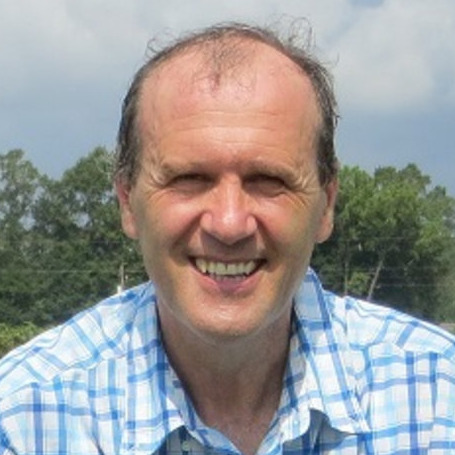
Faculty of Agriculture and Life Sciences, University of Maribor, Slovenia;Aleš Gregorc is a researcher and teacher of Apiculture at the University of Maribor, Faculty of Agriculture and Life Sciences (Slovenia). He was awarded his degree in veterinary medicine by the Veterinary Faculty of the University of Ljubljana, Slovenia and MSc by the Veterinary Faculty of the University of Zagreb, Croatia and completed my PhD at the Veterinary Faculty of the University of Ljubljana. He performed research at Cardiff University (UK) and worked four years at the Florida State Uni. and at the Mississippi State Uni. (US). Since 2018 he has been employed by the University of Maribor as bee researcher and professor of Apiculture. During his carrier, he also worked as official advisor for honey bee diseases and have been keeping bees for about 40 years as a beekeeper in family operation. Aleš Gregorc is a researcher specializing in honey bee biology and health, with a focus on understanding the factors that influence bee vitality and colony resilience. His work contributes to improving scientific knowledge of honey bee physiology, disease dynamics, and environmental stressors, supporting sustainable beekeeping. He is committed to bridging research and practice to address current challenges facing honey bees.

Dr. Katrina Klett
Natural Resource Science and Management, University of Minnesota, USA;Katrina Klett is from a migratory beekeeping family in the United States. Growing up, she was involved in honey production in the north and queen breeding in the south. After leaving home, she worked globally on other beekeeping crews before shifting focus to beekeeping for rural development. She is the co-founder of Elevated Honey Co., a honey company in Yunnan, China. Katrina studied chemical ecology and honey bee pheromonal communication at the Chinese Academy of Sciences in Kunming, Yunnan, China. She completed her PhD at the University of Minnesota, studying honey bee nutritional physiology and land use decisions. She is planning to start post doctoral research at Southern Cross University in New South Wales, Australia.


In this section, you will find the recordings of this webinar to watch, re-watch and share with your colleagues!
During the webinar celebrating the 9th World Bee Day on May 20, three keynote speakers from Italy, Slovenia, and the USA gave talks regarding the unprecedented challenges faced by bee populations. The topic covers a wide range of science, including how to control and monitor honey mites and produce resistant honeybee queens, as well as the molecular bridge between landscape use and bee health. The event expands the new understanding of bee biology and colony health, which is potentially important for bee health, conservation, and disease management in pollination ecology and beekeeping technology.
Impact of Environmental Factors and Management Practices on Bee Health - 2nd Edition
Guest Editors: Prof. Dr. Ivana Tlak Gajger and Dr. Franco Mutinelli
Deadline for manuscript submissions: 30 June 2026
Recent Advances in Bee Parasite, Pathogen, and Predator Interactions
Guest Editor: Dr. Angélique Vétillard
Deadline for manuscript submissions: 10 July 2026
Losses, Health and Wellbeing of Honey Bees Across the World
Guest Editor: Dr. Alison Gray
Deadline for manuscript submissions: 31 July 2026
"Enhanced Honey Bee Colony Strength and Economic Returns from Fall and Winter Feeding with a Complete Pollen-Replacing Feed"
by Kelly Kulhanek, Jan Bogaert, Anne Marie Fauvel, Brandon Hopkins and Thierry Bogaert
Insects, 2026, 17(3), 243
"An Overview of the Nutritional Requirements of Honey Bees (Apis mellifera Linnaeus, 1758)"
by Leticia S. Ansaloni, Janja Kristl, Caio E. C. Domingues and Aleš Gregorc
Insects, 2025, 16(1), 97
"Assessment of Lambda-Cyhalothrin and Spinetoram Toxicity and Their Effects on the Activities of Antioxidant Enzymes and Acetylcholinesterase in Honey Bee (Apis mellifera) Larvae"
by Ji-Yeong Choi, Kyongmi Chon, Juyeong Kim, Bala Murali Krishna Vasamsetti , Bo-Seon Kim, Chang-Young Yoon, Sojeong Hwang, Kyeong-Hun Park and Ji-Hoon Lee
Insects, 2024, 15(8), 587