

Land Webinar | Urban Micro-Segregation: Taking Segregation Analysis at the Micro Level
the chairs
Urban micro-segregation, which refers to small-scale segregation below the scale of the neighborhood, is an emerging topic in urban research and poses new questions for segregation studies:
-
It examines the multiple forms of urban micro-segregation in different urban contexts across the world.
-
It investigates the mechanisms that produce urban micro-segregation and the trends in their reproduction.
-
It evaluates the importance of urban micro-segregation for social reproduction in terms of its impact on social inequalities and discrimination.
Emerging research on urban micro-segregation provides a deeper analysis of the function of social (and/or ethno-racial) mixing and separation below the neighborhood level, promoting discussion of the effective relationship between social and spatial distance and its impact on social reproduction. This leads to a better understanding of different types of social mixes and their characteristics, which must be addressed to facilitate urban policies promoting social integration and cohesion.
This webinar is a follow-up of the edited volume Vertical Cities (Edward Elgar, 2022) and a Special Issue of Land, “Urban Micro-Segregation”. It gathers evidence on micro-segregation forms from diverse metropolitan contexts across the planet and explores how social reproduction and urban micro-segregation are shaped by global and local forces.
Date: 28 April 2026
Time: 4:00 pm (CEST) | 10:00 am (EDT)
Webinar ID: 834 7378 2639
Webinar Secretariat: journal.webinar@mdpi.com
Meet Our Chairs
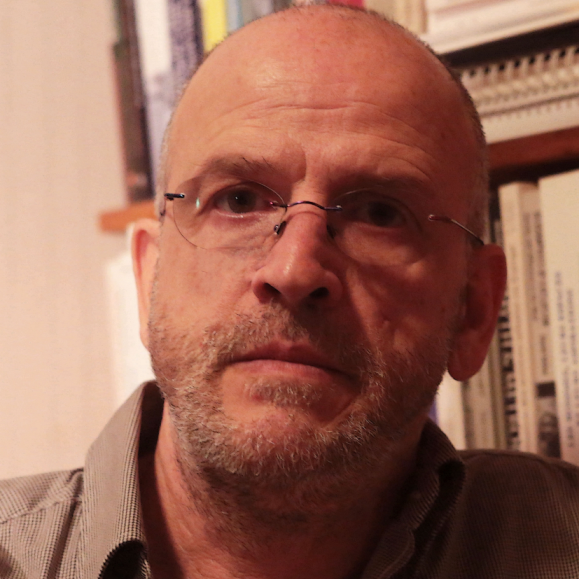
National Centre for Social Research & Harokopio University, Greece;Professor Emeritus of Social Geography at the Department of Geography, Harokopio University. Directed the Institute of Urban and Rural Sociology at the National Centre for Social Research (EKKE) in Athens (2001-2012) and Professor at the Department of Planning, University of Thessaly (1991-2009). Also served as Secretary General for Research & Technology of Greece (2015-2016). Visiting professor at the Institut d’études politiques in Paris (2006 & 2014) and invited for lectures at many universities in Europe, North and South America, East Asia and Australia. His research and published work is related to changing urban social structures, housing, segregation and gentrification.

Wuhan University, China;Sainan Lin is a Professor and Associate Chair of the Department of Urban and Rural Planning at the School of Urban Design, Wuhan University, People’s Republic of China, and is currently a visiting scholar at Cornell University. She received her Ph.D. from the University of Massachusetts Amherst. She serves as an Associate Editor of the Journal of Rural Studies and a board member of Growth and Change. She sits on several academic committees, including the Young Geographers Committee and the Cultural Geographers Committee of the Geographical Society of China. Her research examines migration, residential mobility, social integration, and urban governance in China. She is the principal investigator of three projects funded by the National Natural Science Foundation of China. She has published more than 60 articles in leading academic journals, as well as two books.

Brown University, USA;John Logan is Professor of Sociology at Brown University. He is co-author with Harvey Molotch of Urban Fortunes: The Political Economy of Place. Much of his research has focused on residential segregation, including recent studies that use georeferenced historical census microdata to study residential patterns at the scale of buildings and street segments.
Meet Our Speakers

Malmö university, Sweden;
Prof. Christine Lelévrier
Université Paris-Est-Créteil, France;Christine Lelévrier is an urban sociologist. Her research interests include segregation and ethnic minorities, residential mobility and regeneration policies in large housing estates in Europe (Sweden, Denmark, Germany and UK). Over the past ten years, she has conducted several research projects on the trajectories of forced relocated people and then, on socio-urban change in renewed neighbourhoods. She has also been involved in a European project on diversity “divercities, governing urban diversity” (2013-2017). Her recent research has also been focused on the reception policies and experiences of migrants in medium-sized cities, and since 2025 on micro-gentrification in the railway stations’ neigbhourhoods around the “Grand Paris”.She has conducted comparative European research on regeneration projects in France and Sweden and since 2026, on mixed-tenure large housing estates in London.
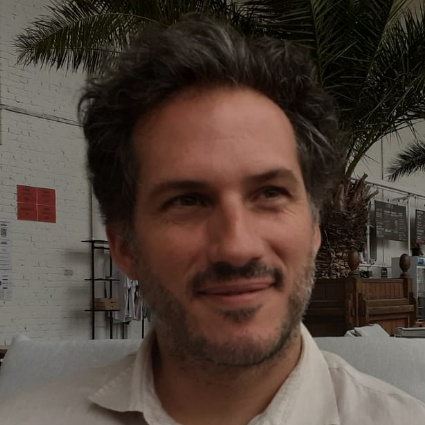
Université Polytechnique Hauts de France, France;Thomas Pfirsch is associate professor in geography at the Université Polytechnique Hauts de France (UPHF, Valenciennes), and a member of the Géographie-Cités lab (CNRS). His research deals with urban and social geography, particularly in Italian and Southern European cities. His work focuses on privileged spaces and mobilities, and on family geographies. He recently published Familles sans frontières ? Le cas des nouvelles migrations italiennes à Paris (ENS Editions, 2025).

Austrian Academy of Sciences, Austria;Robert Musil studied geography and history at the University of Vienna and finished his PhD at the University Innsbruck in 2005. His cumulative habilitation work in the field of human geography was approved in 2015 at the University of Vienna. Since 2001, Robert Musil has been a researcher at the Institute for Urban and Regional Research (ISR); between 2007 and 2009 he was post-doc assistant at the University of Salzburg, and between 2014 and 2016 he was visiting professor for economic geography at the University of Vienna. Robert Musil has led the research group „Innovation and Urban Economy“ since 2016 and since January 1, 2026, he has been appointet director of the ISR. His research interests lie at the juncture of economic and urban geography, including the areas of housing-market research, spatial innovation, and comparative urban research. His current methodology includes small-scale analyses at the level of individual buildings and building complexes, as well as the geostatical analysis on the individual scale.

Austrian Academy of Sciences, Austria;Jiannis Kaucic holds a master’s degree in Geography from the University of Vienna (2012) and was scientific staff at the Austrian Institute for Spatial Planning (2012-2017), as well as university assistant at the Department of Geography and Regional Research at the University of Vienna (2017-2022). Since May 2022, Jiannis Kaučić is working as scientific staff at the Institute for Urban and Regional Research (ISR). His research focuses on explaining spatial patterns and mechanisms of socioeconomic inequality, as well as on the impact of urban and regional development processes on society. His ongoing dissertation examines the influence of regional housing market segmentation on residential segregation in small and medium-sized towns.


8th Land Webinar
Urban Micro-Segregation: Taking Segregation Analysis at the Micro Level
In this section, you will find the recordings of this webinar to watch, re-watch and share with your colleagues!
Edited by Thomas Maloutas, Sainan Lin and John Logan
https://www.mdpi.com/journal/land/special_issues/938S2A99L1?webinar_id=134&_utm_from=4d2ea095d2
Urban Micro-Segregation: Taking Segregation Analysis at the Micro Level
Authors: Thomas Maloutas, Sainan Lin and John R. Logan
https://www.mdpi.com/2073-445X/14/2/255?webinar_id=134&_utm_from=b9f0eb51a1
Housing Market Segmentation as a Driver of Urban Micro-Segregation? An In-Depth Analysis of Two Viennese Districts
Authors: Robert Musil and Jiannis Kaucic
https://www.mdpi.com/2073-445X/13/9/1507?webinar_id=134&_utm_from=6c6f513a11
Controlling the Proximity of the Poor: Patterns of Micro-Segregation in Naples’ Upper-Class Areas
Author: Thomas Pfirsch
https://www.mdpi.com/2073-445X/12/11/2005?webinar_id=134&_utm_from=b0a53ba2a0
Imposing ‘Enclosed Communities’? Urban Gating of Large Housing Estates in Sweden and France
Authors: Karin Grundström and Christine Lelévrier
https://www.mdpi.com/2073-445X/12/8/1535?webinar_id=134&_utm_from=ed11b2defd