
MDPI International Day of Clean Air Webinar 2023
Meet Our Speakers
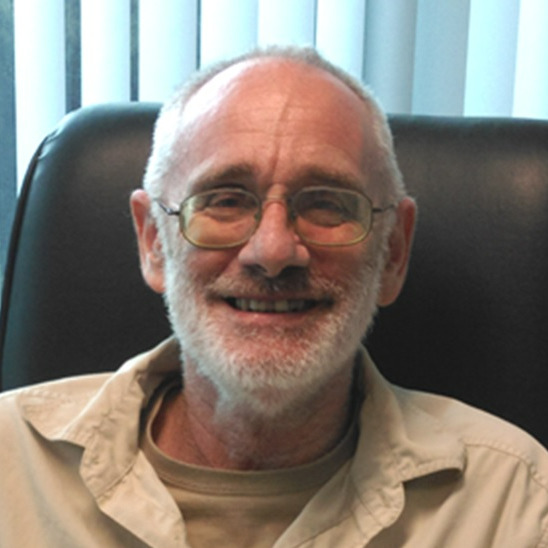
National Sun Yat-Sen University, Taiwan;Prof. Peter Brimblecombe was born in Australia and went to university in New Zealand completing a PhD atmospheric chemistry. He spent four decades at the University of East Anglia studying long-term changes in urban air pollution and climate as it affects health and buildings, producing books such as The Big Smoke. In recent years he has worked at City University of Hong Kong and National Sun Yat-Sen University in Taiwan.
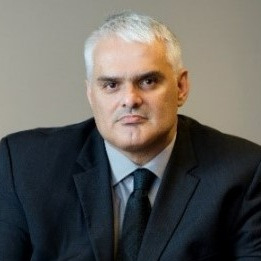
City University of New York, US;Professor Kavouras’ research lies on the interface of chemical and health sciences to understand the coupling of atmospheric pollution and human health including the role of climate change. His research focuses on particulate matter sources and composition, development of aerosol characterization technologies, wildfires smoke emissions, geospatial, receptor and inverse modeling, and cardiovascular morbidity and mortality. He has developed novel analytical protocols, geospatial analysis methods and state-of-the-art instrumentation. He co-authored more than 75 publications including one in Nature. His research has been funded by the US Environmental Protection Agency (EPA), National Science Foundation (NSF), National Institute for Occupational Safety and Health (NIOSH), and regional air quality and public health departments. He has served on review panels for the NSF, NIEHS, NOAA, EPA, and the US National Academies of Sciences. Dr. Kavouras has held faculty positions at the Desert Research Institute at the University of Arkansas for Medical Sciences and was the graduate program director at the University of Alabama in Birmingham. He was also the environmental health coordinator for the longitudinal children study in France. He teaches courses on exposure sciences, environmental chemistry and climate change. He has mentored more than 10 doctoral, graduate and undergraduate students.

Joint Institute for Nuclear Research, Russia;Marina Vladimirovna Frontasyeva, Associate Professor, PhD in Physics and Mathematical Sciences, Professor of RAE of RF, is a graduate of the Department of Theoretical and Experimental Nuclear Physics, Physical faculty, Saratov State University. Since 1977 she has been working in the Frank Laboratory of Neutron Physics in the field of instrumental neutron activation analysis (INAA) at radioanalytical complex REGATA at the reactor IBR-2 designed for studies in the Life Sciences and Material Science. In 1997 she was elected to the International Committee on Activation Analysis (ICAA). Since 1997 till 2019 she was the Head of the Department of NAA and Applied Research at FLNP JINR combining her activities with lecturing on nuclear methods for studying the environment at the Department of Chemistry of the International University of Nature, Society and Man of Dubna. In 2019 she has become Director Advisor on Applied Research an Innovations. She is leader of numerous international projects co-ordinated by the International Atomic Energy Agency (IAEA, Vienna) and by the European Union Frame programmes. Since 2014 until 2023 she was a Coordinator of the UNECE ICP Vegetation (moss surveys). M.V. Frontasyeva is known for her research in air pollution, extra-terrestrial materials, medicinal plants, environmental samples (soil, vegetation including algae), medicinal aspects of occupational health and multi-element analysis of different organs of animals (mussels, mice, ground squirrels) and humans (bones, muscles, liver, brain, serum blood, etc), in biotechnology of nanoparticles using algae. M.V. Frontasyeva is the author and co-author of more than 550 scientific publications in refereed journals, 25 books and two patents of the Russian Federation (https://www.researchgate.net/profile/Marina_Frontasyeva/research).



MDPI would like to invite all experts recognized in their fields to attend the MDPI International Day of Clean Air Webinar 2023. The aim of this webinar is to encourage scientists to come together, take action, and raise awareness as to how the exchange of findings facilitates efforts to raise awareness of air pollution.
Given the transboundary nature of air pollution, all stakeholders have a responsibility to protect the earth’s atmosphere and ensure healthy air for all. Working together, across borders and boundaries, between sectors and beyond silos, will help reduce air pollution, leverage finance and investments towards air quality measures and solutions, and provide many benefits.
The webinar aims to encourage connections and collaboration among air pollution researchers and the international open access community to share and discuss their research findings. We are very much looking forward to seeing you at the MDPI International Day of Clean Air Webinar 2023.
Webinar Secretariat: journal.webinar@mdpi.com
Recording: