
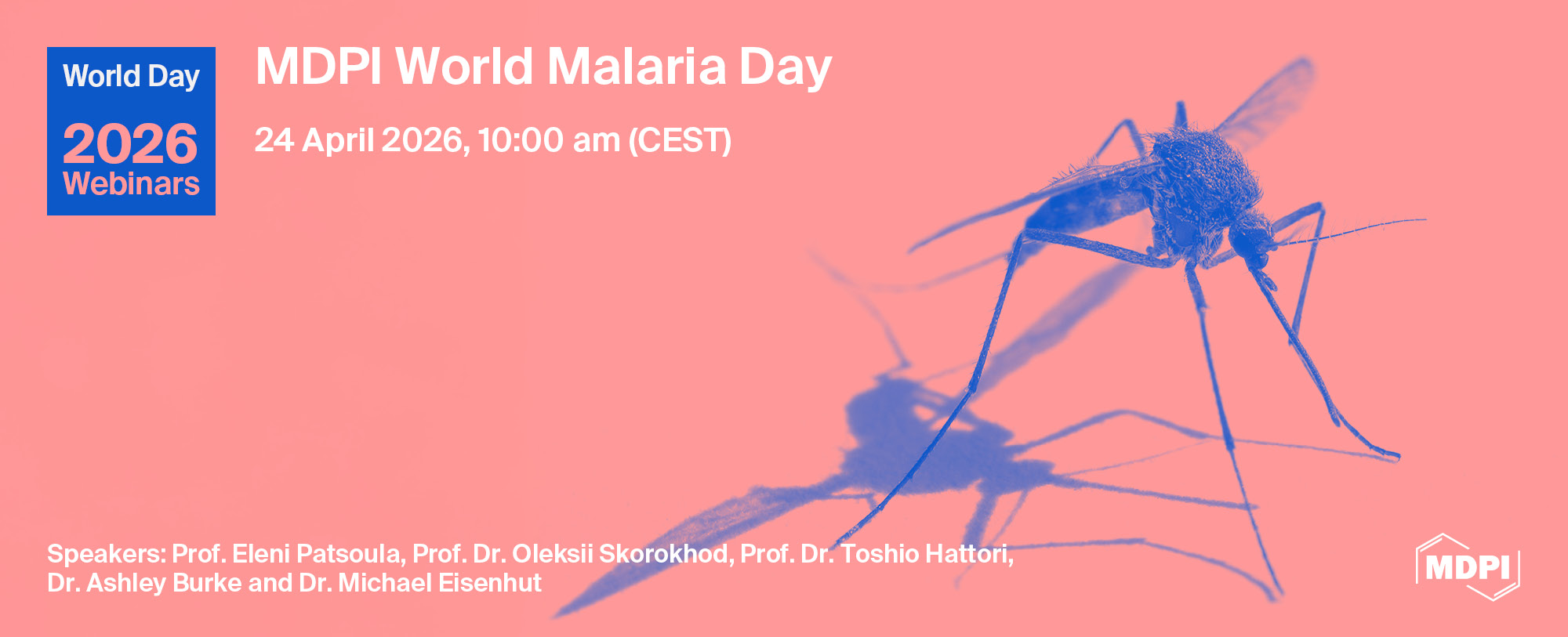
MDPI World Malaria Day Webinar
the chair
MDPI World Malaria Day Webinar 2026
MDPI is excited to announce a special webinar in celebration of World Malaria Day on 24 April 2026. This event will promote public understanding of malaria diagnosis and prevention, as well as highlight the development of pioneering technologies that have made malaria elimination possible.
Date: 24 April 2026
Time: 10:00 am CEST | 4:00 pm CST Asia
Webinar ID: 847 7074 5022
Webinar Secretariat: journal.webinar@mdpi.com
Meet Our Chair
'%3e%3cpath%20d='M12.6647%2010.9104C12.4176%2010.325%2012.0589%209.7933%2011.6088%209.34485C11.16%208.89511%2010.6283%208.53653%2010.0432%208.28891C10.038%208.28629%2010.0327%208.28498%2010.0275%208.28236C10.8437%207.69282%2011.3743%206.73252%2011.3743%205.64907C11.3743%203.85423%209.92005%202.40002%208.12522%202.40002C6.33038%202.40002%204.87618%203.85423%204.87618%205.64907C4.87618%206.73252%205.40677%207.69282%206.22296%208.28367C6.21772%208.28629%206.21248%208.2876%206.20724%208.29022C5.62031%208.53783%205.09365%208.89287%204.64167%209.34616C4.19192%209.79496%203.83334%2010.3266%203.58573%2010.9117C3.34247%2011.4846%203.21128%2012.0987%203.19925%2012.721C3.1989%2012.735%203.20135%2012.7489%203.20646%2012.7619C3.21157%2012.7749%203.21924%2012.7868%203.22901%2012.7968C3.23877%2012.8068%203.25045%2012.8148%203.26334%2012.8202C3.27623%2012.8256%203.29007%2012.8284%203.30406%2012.8284H4.09012C4.14776%2012.8284%204.19362%2012.7825%204.19493%2012.7262C4.22113%2011.7148%204.62726%2010.7676%205.34519%2010.0497C6.08802%209.30686%207.07452%208.89811%208.12522%208.89811C9.17592%208.89811%2010.1624%209.30686%2010.9052%2010.0497C11.6232%2010.7676%2012.0293%2011.7148%2012.0555%2012.7262C12.0568%2012.7839%2012.1027%2012.8284%2012.1603%2012.8284H12.9464C12.9604%2012.8284%2012.9742%2012.8256%2012.9871%2012.8202C13%2012.8148%2013.0117%2012.8068%2013.0214%2012.7968C13.0312%2012.7868%2013.0389%2012.7749%2013.044%2012.7619C13.0491%2012.7489%2013.0515%2012.735%2013.0512%2012.721C13.0381%2012.0947%2012.9084%2011.4856%2012.6647%2010.9104ZM8.12522%207.90243C7.52388%207.90243%206.95792%207.66793%206.53214%207.24215C6.10636%206.81636%205.87185%206.2504%205.87185%205.64907C5.87185%205.04773%206.10636%204.48177%206.53214%204.05599C6.95792%203.63021%207.52388%203.3957%208.12522%203.3957C8.72655%203.3957%209.29252%203.63021%209.7183%204.05599C10.1441%204.48177%2010.3786%205.04773%2010.3786%205.64907C10.3786%206.2504%2010.1441%206.81636%209.7183%207.24215C9.29252%207.66793%208.72655%207.90243%208.12522%207.90243Z'%20fill='%235D1EE1'/%3e%3c/g%3e%3c/svg%3e)
MDPI;
Meet Our Speakers

School of Public Health, University of West Attica, Athens, Greece;Prof. Eleni Patsoula is a Professor of Public Health Parasitology, Entomology, and Tropical Diseases in the Department of Public Health Policy, at the University of West Attica in Athens, Greece. She serves as Head of the National Malaria Reference Center in Greece and is the Scientific Responsible of the Unit for Surveillance of Parasitic and Tropical Diseases and Unit of Medical Entomology for the Laboratory of Surveillance of Infectious Diseases.She maintains the positions of Director of the Division of Infectious, Parasitic Diseases and Zoonoses and Director of Laboratory of Surveillance of Infectious Diseases of the Department of Public Health Policy. An active academic, she teaches across postgraduate and undergraduate programs, supervises MSc and PhD research, and has published over 70 scientific papers with more than 100 conference presentations.

Department of Life Sciences and Systems Biology, University of Turin, Italy;Oleksii Skorokhod is a biomedical scientist who specialises in oxidative stress and host-pathogen interactions, and redox biology in infectious diseases, particularly malaria. His work has significantly contributed to understanding how malaria-derived hemozoin and lipid peroxidation products, such as 4-hydroxynonenal, modulate immune cell function and contribute to disease pathogenesis, including immunosuppression and anemia. Skorokhod has explored molecular mechanisms underlying parasite–host interactions, demonstrating how oxidative damage affects erythrocytes, monocytes, and dendritic cells. His studies have elucidated the role of post-translational protein modifications and cytochrome P450 enzymes in malaria and other vector-borne diseases, linking redox processes to immune regulation and metabolic pathways. Beyond malaria research, his work extends to antimicrobial strategies and nanomedicine, including the development of lipid-based nanocarriers and modulation of antimicrobial peptide activity. His recent publications highlight advances in drug delivery systems, oxidative stress-related toxicity, and structural modifications of proteins under pathological conditions. Through his interdisciplinary approach combining biochemistry, molecular biology, and immunology, Skorokhod has contributed to both fundamental knowledge and translational applications in infectious disease research and therapeutic development.

Director, Roken Akanpe Nursing Home, Kurashiki, Okayama, Japan;Dr. Toshio Hattori is a distinguished medical researcher and academic with extensive experience in public health and infectious diseases. He currently serves as Director of Roken Akanpe Nursing Home in Kurashiki, Japan, Visiting Professor at the Shizuoka Graduate University of Public Health, and Editor-in-Chief of Reports (MDPI). He is also Professor Emeritus at Tohoku University, where he previously held key leadership roles, including Dean of Human Security. Over his long academic career, he has held faculty positions at Kyoto University, Kumamoto University, and Kibi International University. Dr. Hattori has contributed significantly to global health through international collaborations and has published over 300 scientific works. He holds an MD and PhD from Kyoto University and has received multiple awards recognizing his contributions to medical science and education.
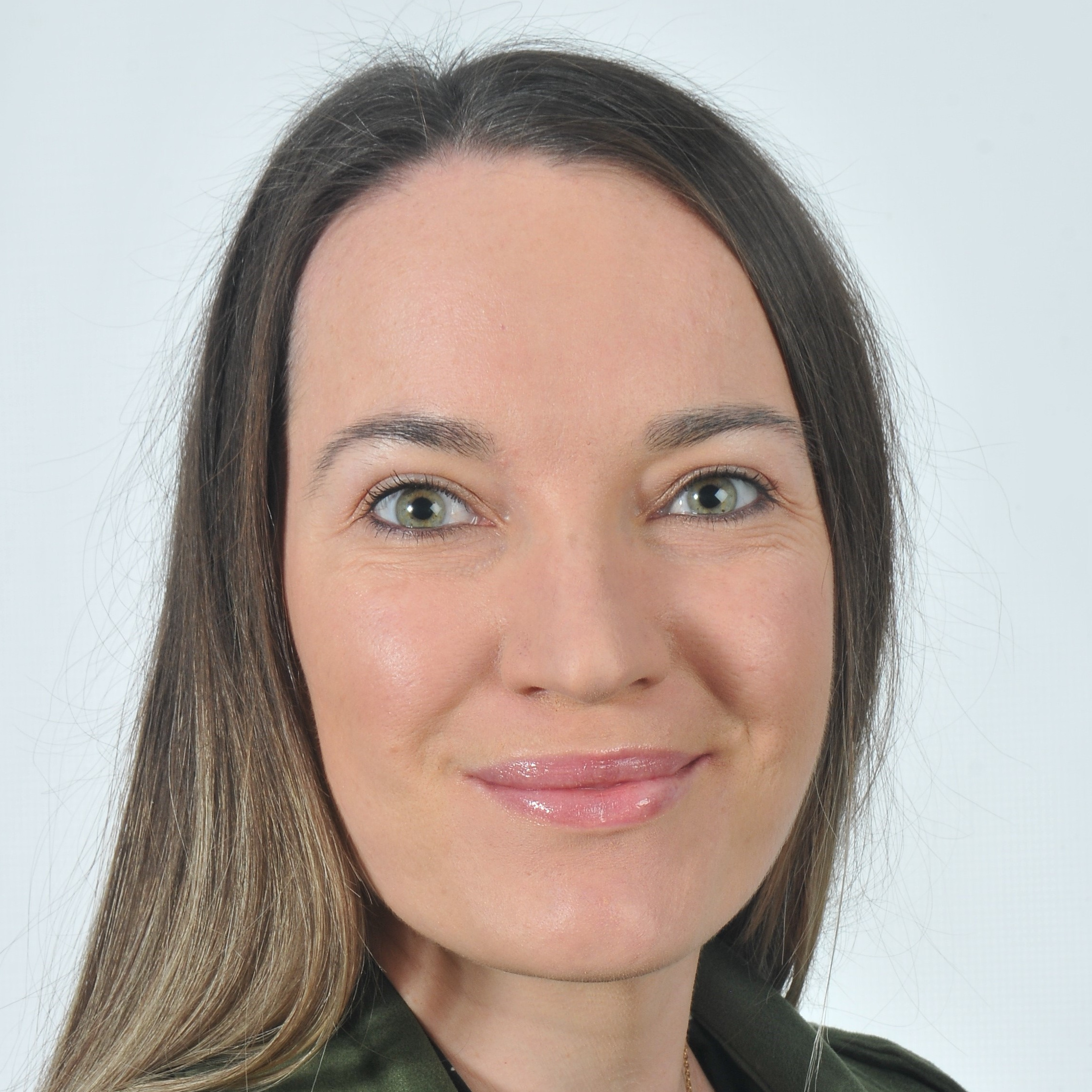
School of Health Systems and Public Health, University of Pretoria Institute for Sustainable Malaria Control (UP ISMC), South Africa;Dr Ashley Burke is an entomologist with over a decade of research experience focused on malaria vector mosquitoes and their role in disease transmission across sub-Saharan Africa. Her work centres on developing and evaluating innovative vector control tools that complement existing interventions. She believes that a deep understanding of mosquito biology, behaviour, and insecticide resistance is key to refining strategies for more effective malaria control and moving closer to elimination. Dr Burke’s research spans mosquito surveillance, seasonal physiology, parasite incrimination of overlooked vectors, insecticide resistance monitoring, and novel interventions such as endectocides. As a member of the Executive Committee of the Entomological Society of Southern Africa, she actively promotes entomology through outreach and mentorship, inspiring young scientists to pursue careers in vector biology and public health.

Editor, Cochrane Collaboration, UK;Dr. med. Michael Eisenhut has been an editor of the Cochrane Collaboration since 2007. The Cochrane Collaboration produces systematic reviews of the highest quality which have informed national and international guidelines for many conditions across medical specialties including treatment and prevention of malaria and form the basis of guidelines of the World Health Organisation. He is the author of many systematic reviews with high international impact in the field of malaria management informing WHO policies. He is expert advisor for the National Institute of Health and Care Excellence of the United Kingdom. He is a consultant paediatrician working for the Bedfordshire Hospitals NHS Foundation Trust in the United Kingdom. Due to his outstanding contributions, he was made a Fellow of the Royal College of Paediatrics and Child Health and a Fellow of the Royal College of Physicians. His area of clinical practice includes treating children with infectious diseases in dedicated clinics and on the ward.














In this section, you will find the recordings of this webinar to watch, re-watch and share with your colleagues!
Microorganisms
"Advances in Microparasite Research"
Guest Editors: Dr. Sofia Nolasco and Dr. Inês L. S. Delgado
Deadline for manuscript submissions: 31 July 2026
Pathogens
"Malaria in a Changing World"
Guest Editors: Dr. Harry Tagbor and Dr. Luiz Shozo Ozaki
Deadline for manuscript submissions: 20 August 2026
International Journal of Molecular Sciences (IJMS)
"Genetic and Molecular Research on the Malaria Parasite"
Guest Editors: Prof. Dr. Hajime Hisaeda and Dr. Takashi Imai
Deadline for manuscript submissions: 20 September 2026
TropicalMed
"Advances in Tools for Battling Malaria"
Guest Editors: Dr. Wenn-Chyau Lee and Dr. Meng Yee Lai
Deadline for manuscript submissions: 31 December 2026
Vaccines
"Recent Advances in Malaria Vaccine Development—2nd Edition"
Guest Editors: Dr. Ahmad Rushdi Shakri and Dr. Dipak Raj
Deadline for manuscript submissions: 31 December 2026
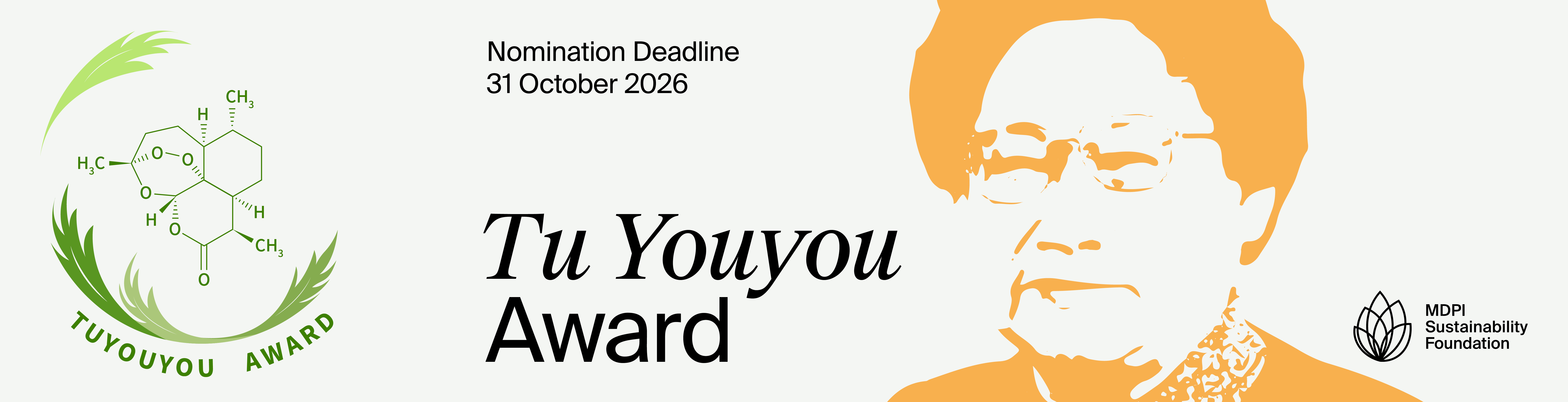
To honor Professor Tu Youyou's remarkable contributions to human health and build upon her achievements, MDPI established the Tu Youyou Award in 2016. This award aims to acknowledge exceptional scholars committed to the research fields of natural product chemistry and medicinal chemistry.
Prize:
- CHF 100,000 (to be divided equally should multiple recipients be awarded).
- An award medal and a certificate.
Nomination Deadline: 31 October 2026
For further information, please visit the Tu Youyou Award website (https://tuyouyouprize.org/).
For any inquiries, please contact the Tu Youyou Award Team at tuyouyouaward@mdpi.com.