

Molecules Webinar | Advanced Interfaces in Energy Storage Devices: From Computational Insights to Experimental Innovations
the chair
Molecules Webinar
Advanced Interfaces in Energy Storage Devices: From Computational Insights to Experimental Innovations
Advances in energy storage technologies increasingly hinge on our ability to understand and engineer complex interfaces that govern performance, stability, and lifetime. This webinar brings together leading perspectives that bridge atomistic modeling, mesoscale characterization, and experimental design, highlighting how multi-physics insights can unravel degradation phenomena and guide the development of next-generation materials. By integrating computational predictions with cutting-edge experimental techniques, we aim to illuminate the mechanisms that emerge across scales and drive innovation in battery systems and beyond.
The program features a diverse set of contributions, from multi-physics analyses that shed light on non-linear degradation behavior in lithium-ion systems, to state-of-the-art 3D electron diffraction and advanced STEM tomography approaches capable of capturing structural evolution in real time. We also explore how molecular-level understanding can inform the design of functional interfaces, spanning applications from complex fluid systems to graphene-based materials. Together, these talks provide a cohesive view of how interdisciplinary approaches are reshaping the landscape of energy storage research.
Dr. Diego Eduardo Galvez Aranda
Texas A&M University, Chemical Engineering Department
Date: 28 April 2026
Time: 9:30am - 12:00pm CDT
Webinar ID: 825 7519 6512
Meet Our Chair

Chemical Engineering Department, Texas A&M University, Texas;Dr. Galvez holds an international academic background spanning Peru, the United States, and France. He earned his PhD in Electrical Engineering from Texas A&M University. He then completed postdoctoral training at LRCS (Laboratoire de Réactivité et de Chimie des Solides) in France and currently serve as a postdoctoral researcher in the Chemical Engineering Department at Texas A&M. His expertise centers on atomistic simulations of electrode–electrolyte interfaces, computational materials science, and machine learning–driven predictive modeling. His work integrates physics-based simulations with data-driven approaches to understand and accelerate the design of advanced materials, particularly for energy and electrochemical systems.
Meet Our Speakers
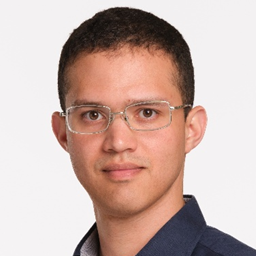
Dr. Matheus Leal de Souza
Department of Mechanical Engineering, Imperial College London, United Kingdom;Matheus is a research associate at the Imperial College London, in the group of Prof. Gregory Offer and Dr Monica Marinescu. He holds a PhD in Chemistry and Electrochemistry of the Solids, working in the LRCS (Amiens France) on electrochemical techniques to track degradation mechanisms in Li-Ion Batteries, notably degradation modes analysis and distribution of relaxation times. In his current post, he’s been designing cycling experiments in cylindrical cells under different types of cooling and protocols to understand their influence on degradation. He has also included micro-computed tomography, scanning electron microscope and cell teardown to complement the degradation study, focused on understanding the appearance of knees in capacity fade.

Physics, University of Antwerp, Belgium;Joke Hadermann is full professor at the University of Antwerp, within the laboratory EMAT, Electron Microscopy for Materials Science. While first focused on atomic resolution imaging and spectroscopy, Joke drifted via precession electron diffraction to 3D ED. Currently, she is focused on combining 3D ED with different in situ experiments and on optimizing the new technique of 4D-STEM tomography to be able to determine the crystal structure of each phase in multiphased materials as from single crystal data. For performing this research, she was awarded a prestigious Advanced ERC Grant, REACT. Further, her research involves the structure determination of a wide variety of inorganic

Prof. Dr. Payam Kaghazchi
Associate Professor, University of Twente, the Netherlands and FZ Jülich, Germany;Payam Kaghazchi studied Physics at the Free University of Berlin and received his doctorate there in 2009. He conducted his doctoral research at the theory department of Fritz Haber Institute with a DAAD scholarship. After two years working as a research assistant at the University of Ulm, he received a grant from the German Ministry of Education and. Research to establish an independent junior research group at University of Ulm and later at Free University until 2018. Since then, he is the head of modeling team at the institute of IEK-1 in Jülich Research Center in Germany. He has been recently appointed as a tenure track associate professor in the IMS department of University of Twente. His research has focused on developing and applying quantum-mechanics-based computational approaches to simulate anddesign materials for energy storage and conversion systems. He has published over 100 articles in peer-reviewed scientific journals (including Advanced Energy Materials, Energy & Environmental Science, Materials Today, and Nature Energy).

Dr. Samuel Bertolini
Université Catholique de Louvain, Louvain-la-Neuve, Belgium;Dr. Samuel Bertolini is a Brazilian-born computational chemist currently working as a postdoctoral researcher at Université Catholique de Louvain (Belgium), where he applies ReaxFF simulations to study protein fragmentation under argon cluster collisions. And the principal investigation of the battery project is based on fluorinated polymers used as active cathode materials. He earned his PhD in Materials Science at Chemical Engineering from Texas A&M University (USA), focusing on lithium-sulfur battery interfaces. His research uses ab initio methods, molecular dynamics, and machine learning, with applications in electrochemistry, catalysis, and energy storage. Samuel has held postdoctoral positions at Universität Ulm (Germany) and worked in industrial R&D at ArcelorMittal and Aperam. He is the author of over sixteen peer-reviewed publications and has received prestigious fellowships, including the Science without Borders, Young Researcher at Rio de Janeiro, and POLiS Cluster of Excellence awards.


Summary from the Chair
This webinar highlights how computational modeling and advanced experimental techniques are advancing our understanding of the interfaces and material structures applied in energy storage systems. The scholarly talks focus on how multi-scale approaches help to reveal degradation mechanisms, structural evolution, and performance limitations in energy storage devices.
Topics covered include atomistic simulations, real-time 3D electron diffraction, STEM tomography, and molecular-level interface design for emerging materials such as graphene-based systems. Together, the presentations showcase how interdisciplinary research is driving innovation in next-generation energy storage technologies.
The full recording can be found below. In order to learn about future webinars, you can sign up to our newsletter by clicking “Subscribe” at the top of the page.
Aspecial issue of Molecules (ISSN 1420-3049). This special issue belongs to the section "Materials Chemistry".
Guest edited by Dr. Diego E. Galvez-Aranda
Deadline for manuscript submissions: 30 November 2026