Nutrients Webinar | What is New on Vitamin D: Implications for Daily Clinical Practice
the chair
5th Nutrients Webinar
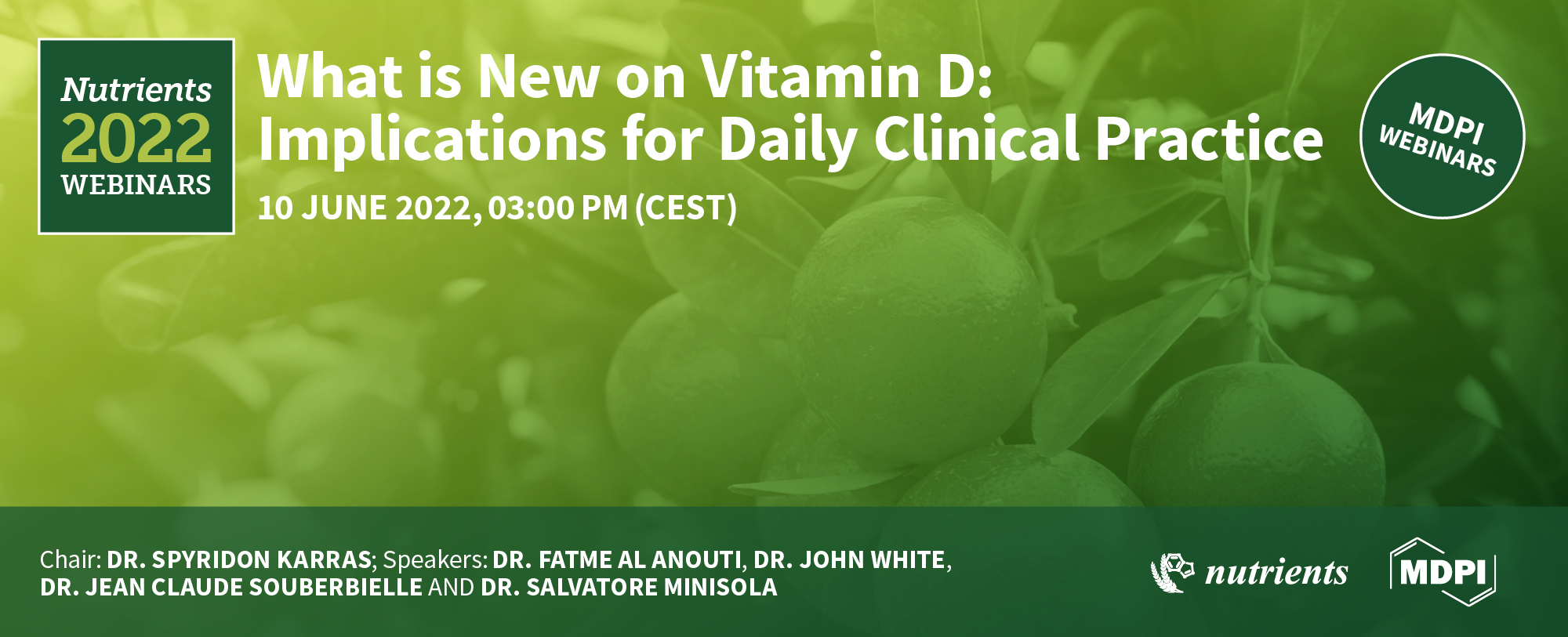
What is New on Vitamin D: Implications for Daily Clinical Practice
In the last two decades, vitamin D has been the focus of tremendous ongoing scientific research. Its primogenetic undisputed role in bone mineralization has been expanded to a strikingly disparate amalgamation of transparent scientific cases and observational studies, randomized controlled trials of doubtful design, and sporadically personal aphorisms and dogma. This phenomenon configures a burgeoning scientific field in which substantial controversy is inevitably reflected in daily clinical practice, resulting in a precarious interpretation of available results, lifestyle-affected vitamin D supplementation in vitamin-D-sufficient populations, and ineffective dosing and time regimens.
In this context, somewhere in between the dipole of inordinate enthusiasm and critical opposition, the vast majority of healthcare providers worldwide, involved in some part of the developed vitamin D daily agenda, postulate a sound individualized scientific approach unbiased from quandaries, oriented to improve long-term health outcomes and patient quality of life beyond the platonic caves of available knowledge in the field.
This webinar on vitamin D aims to draw attention to all current conflicting aspects of vitamin D research, including the following:
- What is new on Vitamin D and COVID-19?
- Results from the VITAL study: The changing spectrum of extraskeletal benefits of vitamin D in autoimmune diseases.
- Calcifediol for the treatment of hypovitaminosis D: Clinical perspectives.
- New data on dosing regimens (VIDA trial): Should monthly dosing be excluded from chronic vitamin D supplementation?
These hot topics are discussed by top-class international experts in the field, having devoted several years to vitamin D research. We hope for this webinar to shed some light on the ongoing controversy of the vitamin D “friendly” perspective versus vitamin D skepticism, with a discourse on clinical implications and physicians’ daily decision making, into the beginning of the new decade.
Date: 10 June 2022
Time: 3:00 pm CEST | 9:00 am EDT | 9:00 pm CST Asia
Webinar ID: 892 9491 0373
Webinar Secretariat: nutrients.webinar@mdpi.com
Meet Our Speaker
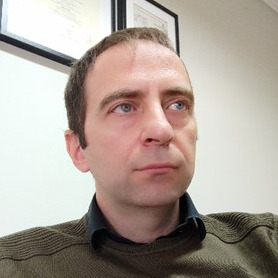
National Scholarship Foundation, Thessaloniki, Greece;Spyridon Karras was born in Thessaloniki and graduated from the Medical School of the Aristotle University of Thessaloniki. He acquired his specialization in Endocrinology in 2010. His PhD thesis (completed in 2015) focused on the pleiotropic effects of vitamin D during pregnancy. This research endeavor led to the development of several worldwide collaborations in the field of vitamin D research and was the initial basis for the foundation of the Mediterranean vitamin D experts meeting. He has published more than 120 full papers in peer-reviewed international journals, with the vast majority relating to extraskeletal vitamin D behaviors. According to Expertscape and other ranking sites, he ranks in the top 20 positions in the field worldwide. He is a regular reviewer of more than 100 international journals and has been a lecturer in national and international meetings in the field, receiving several awards for his research activities. His current position is as a postdoctoral researcher in the National Scholarship Foundation of Greece.

On Friday, 10 June 2022, MDPI and the Journal Nutrients organized the 5th webinar on Nutrients, entitled "What is New on Vitamin D: Implications for Daily Clinical Practice".
The introduction was held by the Chair of the webinar, Dr. Spyridon Karras, a postdoctoral researcher at the National Scholarship Foundation of Greece. His PhD thesis (completed in 2015) focused on the pleiotropic effects of vitamin D during pregnancy. This research endeavor led to the development of several worldwide collaborations in the field of vitamin D research and was the initial basis for the foundation of the Mediterranean vitamin D experts meeting.
The first speaker to kick off this webinar was Dr. Fatme Al Anouti from the Zayed University in Abu Dhabi, United Arab Emirates. She is a vitamin D research expert, whose research has triggered awareness and significant action to reduce the prevalence of vitamin D deficiency among the UAE population in the Middle East through publishing clinical guidelines for vitamin D in the country, apart from public seminars and screening campaigns. Her presentation was entitled "What is New on Vitamin D and COVID-19?".
The second presentation with the title "Results from VITAL Study: The Changing Spectrum of Extraskeletal Benefits of Vitamin D in Autoimmune Diseases" was held by Dr. John White from the McGill University in Montreal, QC, Canada. His laboratory has long studied the mechanisms and physiological consequences of the regulation of gene transcription through the use of nuclear receptors, in particular the vitamin D receptor (VDR). Since the early 2000s, the lab’s work has increasingly focused on the nonclassical physiological actions of vitamin D, most notably its role in immune system regulation.
Dr. Jean Claude Souberbielle, a now-retired ex-chief of the hormonology laboratory in the Necker-Enfants Maladies University Hospital (Paris Descartes University) in Paris, France was the third speaker, and his presentation was entitled "Calcifediol for the Treatment of Hypovitaminosis D: Clinical Perspectives". He has been involved in vitamin D research for 30 years, and whilst not exclusively, he has had special interest in regards to its application to disorders of the calcium–phosphate–PTH axis, as well as to bone and kidney diseases. Additionally, he has published papers concerning the relationship between vitamin D and various conditions such as pregnancy, multiple sclerosis, prostate cancer, renal transplantation, HIV infection, etc.
The fourth and last presentation with the title "New Data on Dosing Regimens (VIDA Trial): Should Monthly Dosing be Excluded from Chronic Vitamin D Supplementation?" was held by Dr. Salvatore Minisola from the Internal Medicine Department of Clinical, Internal, Anesthesiological and Cardiological Sciences at the "Sapienza" University of Rome in Italy. His special area of interest and expertise are clinical investigation of metabolic bone diseases, most notably osteoporosis and primary hyperparathyroidism, and disorders of phosphate metabolism, with particular interest in tumor-induced osteomalacia.
The presentations were followed by a Q&A and a discussion, moderated by the Chair. The webinar was offered via Zoom and required registration to attend. The full recording can be found here on Sciforum website. In order to stay updated on the next webinars on Nutrients, be sure to sign up for our newsletter by clicking on “Subscribe” at the top of the page.
A topical collection in Nutrients (ISSN 2072-6643). This collection belongs to the section "Micronutrients and Human Health".
Collection Editor: Dr. Spyridon N. Karras