Plants Webinar | Issue Cover Authors of 2025
the chair
1st Plants Webinar
Issue Cover Authors of 2025
Dear Colleagues,
I am pleased to invite you to the Plants Journal Issue Cover Webinar, which will be held online from 13:20 to 15:00 EDT/19:20 to 21:00 CEST on April 23, 2026.
This special webinar is dedicated to celebrating the outstanding research papers featured on the Issue Cover in 2025. Since its inception, our journal has been committed to publishing cutting-edge studies in plant science, and the Issue Cover articles represent the most visually compelling and scientifically significant works we have showcased.
Issue Cover articles are selected for their scientific breakthroughs, originality, and potential for high impact in their respective fields. The selected studies cover a wide range of topics within plant science, including plant development and regeneration mechanisms, molecular responses to environmental stress, protein complex functionality, and advanced omics applications.
In this webinar, we will explore the featured studies in greater depth and hear presentations from the corresponding authors on their latest research achievements. We look forward to your participation in this celebration of scientific excellence.
Prof. Dr. Dilantha Fernando
Editor-in-Chief, Plants
Date: Thursday, 23 April 2026
Time: 13:20 to 15:00 EDT | 19:20 to 21:00 CEST
Webinar ID: 822 0866 9962
Webinar Secretariat: journal.webinar@mdpi.com
Meet Our Chair

Department of Plant Science, University of Manitoba, Canada;Dr. Dilantha Fernando is a professor, plant pathologist, and Dean in the Department of Plant Science at the University of Manitoba. He is an internationally renowned researcher of host–pathogen interactions (i.e., canola–blackleg, canola–Verticillium, canola–Sclerotinia, wheat–fusarium head blight) specializing in the epidemiology and spread of pathogens on canola and cereals (9186 citations; H-Index of 51; i-10-Index of 147; 203 publications), and his core research area is the establishment of sustainable agricultural systems through disease management. Dr. Fernando studies host–pathogen interactions at the field and molecular levels using traditional and advanced (omics) methods, and has been associated with the naming of R-genes in canola, as well as the introduction of a new disease management strategy in Canada. He has trained 15 PhD students and 17 Master’s students, who have graduated and found employment in academia, industry, and government research institutions. Dr. Fernando is a frequent keynote and plenary speaker at conferences and grower meetings and sits on several national and international boards. In 2024, he was named a Fellow of the Canadian Phytopathological Society (CPS). In 2023, Dr. Fernando received the Lifetime Achievement Award for Excellence in Agricultural and Environmental Sustainability, and in 2022, he was named a Fellow of the Asian PGPR Society. In 2021, he received the Merit Award for Excellence in Research and Service from the University of Manitoba, and in 2020, the 2020 CPS Outstanding Research Award. In 2019, he was named a Fellow of the American Phytopathological Society (APS), USA, and in 2019, he received the highest award for excellence in research on plant growth-promoting rhizobacteria (PGPR). Dr. Fernando is the founding editor-in-chief of "Plants" (MDPI) and sits on several other editorial boards around the world.
Meet Our Speakers
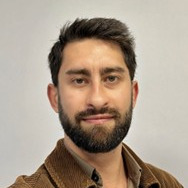
Institute of Bioscience and Biotechnology of Aix-Marseille (BIAM);Commissariat à l'Energie Atomique et aux Energies Alternatives (CEA), France;Ivan Aleksieienko is currently a postdoctoral researcher within the European PHENET project at the Biotechnology and Bioscience Institute of Aix-Marseille University, where he earned his PhD in Ecology in 2025 as part of the RESTORE project. In his doctoral work, he investigated the impact of climate change on microbial diversity in Mediterranean forest ecosystems and developed nature-based solutions for forest restoration. In his current postdoctoral research within the PHENET project, Ivan is developing and applying machine learning techniques to identify drought legacy effects on forest microbiomes and to predict future climate impacts on microbial community structure and function. This work aims to integrate advanced computational approaches with microbial ecology to enhance predictive capacity for ecosystem responses under global change scenarios.
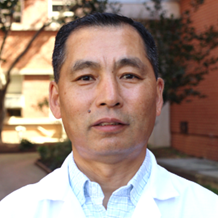
Department of Horticultural Sciences, North Carolina State University, USA;Dr. Kedong Da is the Director of the Plant Transformation Laboratory at North Carolina State University and has over 30 years of experience in plant tissue culture, regeneration, genetic transformation, genome editing, and molecular biology across Asia, Europe, and North America. His research focuses on competent cell induction for efficient plant regeneration, gene transformation and editing, and advanced plant tissue culture systems, including somatic embryogenesis. Dr. Da has successfully optimized plant transformation platforms for a wide range of species, including apple, strawberry, orchid, rose, sweet potatoes, watermelon, cucumber, and the bioenergy grasses Tripidium and Miscanthus. His information and details of his research can be found at https://cals.ncsu.edu/horticultural-science/people/kda and https://go.ncsu.edu/ptl
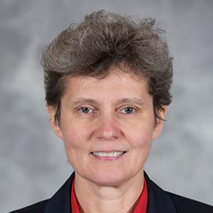
Roy J Carver Department of Biochemistry, Biophysics and Molecular Biology, Iowa State University, USA;Dr. Zabotina obtained her undergraduate and graduate degrees in Russia. She has held postdoctoral positions at Wageningen Agricultural University in the Netherlands, at the University of Rome “La Sapienza” in Italy, and at the University of California, Riverside, USA. In 2008, she accepted the position of Assistant Professor at Iowa State University and was later promoted to full professor. Throughout her career, Dr. Zabotina has been involved in research on various aspects of plant cell wall polysaccharides, including structural characterization, biosynthesis and degradation, and cell wall-mediated stress responses. Currently, her lab focuses on the functional and structural organization of enzymes that synthesize xyloglucan and on cell wall modifications and signaling pathways induced by these modifications during biotic stress responses.
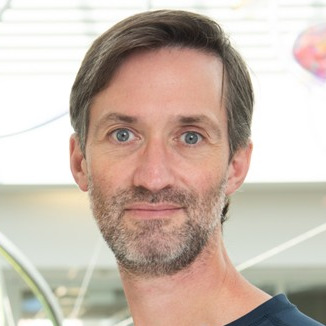
Dr. Marc Libault
Division of Plant Science & Technology;Christopher S. Bond Life Sciences Center;Interdisciplinary Plant Group;University of Missouri-Columbia, USA;Dr. Marc Libault is a Professor in the Division of Plant Science and Technology at the University of Missouri-Columbia (USA). He received his Ph.D. degree in 2004 from the University of Paris-Saclay in Plant Cellular and Molecular Biology. In 2005, he joined the University of Missouri-Columbia as a postdoctoral associate to study the symbiotic interaction between soybean roots and nitrogen-fixing bacteria. In 2011, as a faculty member at the University of Oklahoma, Dr. Libault developed a systems biology approach for root hair cells, the first cells infected by Rhizobia in legume plants. In 2018, he joined the University of Nebraska–Lincoln and pioneered the field of plant single-nucleus technologies to analyze differential use of genomic information across plant cells. As a faculty member at the University of Missouri-Columbia, he is expanding the use of plant single-nucleus biology to study the symbiosis between legumes and nitrogen-fixing bacteria.
In this section, you will find the recording of this webinar. Re-watch and share with your colleagues!
In this webinar, we explored the featured studies in greater depth and heard presentations from the corresponding authors on their latest research achievements.
"Soil-Gradient-Derived Bacterial Synthetic Communities Enhance Drought Tolerance in Quercus pubescens and Sorbus domestica Seedlings"
Authored by Dr. Ivan Aleksieienko, Dr. Mariana Fernandes Hertel, Dr. Jérôme Reilhan, Dr. Marie de Castro, Dr. Bertrand Légeret, Dr. Halley Caixeta Oliveira, Dr. Ilja M. Reiter, and Dr. Catherine Santaella.
Edited by Dr. James Bunce and Dr. Mohammad G. Mostofa.
"Multiprotein Complexes of Plant Glycosyltransferases Involved in Their Function and Trafficking"
Authored by Dr. Ning Zhang, Dr. Jordan D. Julian, and Prof. Olga A. Zabotina.
Edited by Prof. Nathalie Leborgne-Castel.
"Overcoming Recalcitrance: A Review of Regeneration Methods and Challenges in Roses"
Authored by Dr. Anna Nelson, Dr. Thomas Ranney, Dr. Wusheng Liu, Prof. Dr. Tim Kelliher, Dr. Hui Duan, and Dr. Kedong Da.
Edited by Dr. Adriana Basile.
"Single-Cell Omics in Legumes: Research Trends and Applications"
Authored by Dr. Yaohua Li, Sabbir Hossain, M.D., and Dr. Marc Libault.
Edited by Prof. Koji Murai.