

Processes Webinar | Large-scale, rapid food parameters determination using spectroscopic technologies
the chair
7th Processes Webinar
Large-scale, rapid food parameters determination using spectroscopic technologies
The food industry is looking for new techniques that allow rapid and large-scale determination of food quality parameters for application in automation control systems in industrial processes, as these automated systems facilitate real-time data collection. Among these techniques, instrumental methods based on molecular or vibrational spectroscopy stand out. The use of infrared spectra, either with spectrometers or with imaging systems, is suitable for in-line, on-line, or at-line analysis at different industrial process locations. In this webinar, we will have the honour of having a senior researcher and two junior researchers, all three experts in the field. First, Prof. Dr. Chao-Hui Feng will talk about the use of hyperspectral imaging and terahertz spectroscopy for food quality determination. Next, Mr. Fangchen Ding will talk about the non-invasive prediction of quality traits in packaged mango using near-infrared spectroscopy. Finally, Mr. Changzhou Zuo will elaborate on the previous topic, and explain how near-infrared spectroscopy can detect infected mango tissues, to be specific, how spectroscopic properties of pulp tissue could be utilized to detect infected mango. I hope that all attendees will enjoy and benefit from this webinar.
Date: 25 June 2025
Time: 12:00 pm CEST | 6:00 pm CST Asia | 7:00 pm JST
Webinar ID: 893 7340 0802
Webinar Secretariat: journal.webinar@mdpi.com
Meet Our Chair
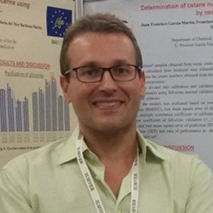
Department of Chemical Engineering, University of Seville, Spain;Professor Juan Francisco García Martín’s thesis (University of Jaén) was awarded two Spanish Research Environment Prizes. Afterwards, Professor García Martín took postdoctoral positions at the University of Granada, University College Dublin, and Spanish National Research Council. Additionally, he completed research stays at the Universities Paul Sabatier Toulouse III and Claude Bernard Lyon I. He was also a lecturer at the Spanish Universities of Jaén, Granada, and Málaga. Currently, his research interests focus on the use of by-products in the food industry and food quality. Since 2016, he has been an associate professor at the University of Seville. In addition, Professor García Martín is the head of the Research Group ‘Obtaining Biofuels’ (AGR-155, Andalusia Government, Spain) and he is in the top 2% of the most cited scientists in the high scientific impact list published annually by Stanford University.
Meet Our Speakers

1. School of Regional Innovation and Social Design Engineering, Faculty of Engineering, Kitami Institute of Technology, Hokkaido, Japan 2. RIKEN Centre for Advanced Photonics, RIKEN, Sendai, Japan;Prof. Dr. Feng is an experienced researcher who has worked in Ireland, China, Spain, and Japan. She is an associate professor at the Kitami Institute of Technology and a visiting researcher at the RIKEN Centre for Advanced Photonics. Her research interest lies in the frontier of meat science and food technology and are targeted on the development of food technology to exploit new foodstuffs and improve food quality and rapidly detect food safety. Up to now, she has published three book chapters and 52 journal papers, including 48 SCI papers in leading inter- and multi-disciplinary journals (newest total impact factor: 312.111, h index = 22). She was also invited to join the Reviewer Board in Foods (the Year 2022 impact factor: 5.2), the Guest Associate Editor for Journal Frontiers in Plant Science (The year 2022 impact factor: 5.6), Foods (The year 2022 impact factor: 5.2), Frontiers in Nutrition (The year 2022 impact factor: 5), Sustainability (The year 2022 impact factor: 3.9), Antioxidants (The year 2022 impact factor: 7.0), and the Editor for the Nova publication “The Book of Flavonoids”. She has also received 47 awards, 12 patents, and secured 29 competitive research fund awards (total >70 million JPY), including “Leading Initiative for Excellent Young Researchers (LEADER) from the Ministry of Education, Culture, Sports, Science and Technology (MEXT)”, “JSPS Grant-in-Aid for Early-Career Scientists” and so on.
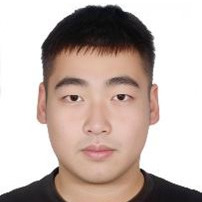
Department of Chemical Engineering, University of Seville, Spain.;Mr. Ding received his master's degree from Nanjing Agricultural University (China) and was awarded a full PhD scholarship by the China Scholarship Council in 2023. He is currently a second-year doctoral student at the University of Seville (Spain), under the supervision of Professor Juan Francisco García Martín. His research focuses on optical food analysis and chemometrics. He has published eight scientific papers in leading international journals, including Biosensors and Bioelectronics, Food Research International, and Journal of Food Engineering, among other peer-reviewed journals.

Mr. Changzhou Zuo
College of Food Science and Technology, Nanjing Agricultural University, China; Department of Biosystems (BIOSYST), KU Leuven, Belgium;Mr. Zuo is currently a fourth-year PhD candidate at Nanjing Agricultural University (China) and is conducting a research stay at the Division of MeBioS, KU Leuven (Belgium), as a visiting doctoral student. His research focuses on the optical characterization of mangoes for quality monitoring using Vis/NIR spectroscopy. He has published fifteen scientific papers in leading international journals, including Postharvest Biology and Technology, Foods, Food Chemistry, Food Research International, International Journal of Food Microbiology, Journal of Food Engineering, among others.
During the webinar, Prof. Dr. Chao-Hui Feng emphasized the need to broaden the applications of hyperspectral imaging and the potential application of terahertz spectroscopy to food. In addition, Professor Feng provided two examples of her own research, namely identifying naringin and hesperidin from waste orange peels by terahertz spectroscopy and evaluating the pH in sausages stuffed in modified casings with orange extracts by hyperspectral imaging. Afterwards, Mr. Fangchen Ding discussed the significant challenges that near-infrared spectroscopy faces in assessing the internal quality of packaged mangoes due to spectral interferences from packaging materials such as paper bags, PVC, PE, and EPE. To address this, Mr. Ding demonstrated how advanced strategies combining deep learning models, Gaussian spatial filtering, spectral preprocessing, and variable selection have been effective in mitigating interferences, concluding that these approaches significantly enhance the prediction accuracy of firmness, dry matter, soluble solids, and titratable acidity characteristics using near-infrared spectroscopy.
The webinar was hosted via Zoom and required registration to attend. The full recording can be found below. In order to learn about future webinars, you can sign up to our newsletter by clicking “Subscribe” at the top of the page.
Evaluation and Utilization of Antioxidant Activity in Food Products
Edited by Prof. Dr. Grzegorz Bartosz and Prof. Dr. Izabela Sadowska-Bartosz
Deadline for manuscript submissions: 10 August 2025
Research on Green Processing and Testing Technologies for Food and Beverages
Edited by Dr. Konstantina Tsikrika and Dr. Pol Giménez Gil
Deadline for manuscript submissions: 15 August 2025
Recent Advances in Food Fermentation Technology
Edited by Dr. Wendy Franco and Dr. Alejandra Urtubia
Deadline for manuscript submissions: 31 August 2025
Development of Innovative Processes in Food Engineering
Edited by Prof. Dr. Jung-Feng Hsieh and Dr. Jooyeoun Jung
Deadline for manuscript submissions: 15 September 2025
Processes in Agri-Food Technology
Edited by Prof. Dr. Jingfeng Huang
Deadline for manuscript submissions: 15 September 2025
Food Processing and Ingredient Analysis
Edited by Dr. Suphat Phongthai, Dr. Saroat Rawdkuen and Dr. Lovedeep Kaur
Deadline for manuscript submissions: 31 October 2025
Research and Optimization of Food Processing Technology
Edited by Dr. José Agustín Tapia Hernández and Dr. Francisco Rodríguez-Félix
Deadline for manuscript submissions: 20 November 2025