
Symmetry Webinar | Relativity Based on Symmetry
the chair
17th Symmetry Webinar
Relativity Based on Symmetry
Dear all,
In this webinar, we will present a new, unified theory, which properly describes the relativistic motion of both massive and massless objects under the influence of electromagnetic and gravitational fields. The theory is based on Riemann's idea that "force equals geometry." The geometry is defined by a simple and geometric universal scaling function, derived from the symmetries of the problem. With respect to this geometry, the motion of objects is by the shortest path, which satisfies the Euler-Lagrange equations. The equation of motion for a single-source field reveals the way in which fields from several sources may be combined. This provides a tool to handle problems that have no solution in the standard GR model. The equation of motion in a gravitational field identifies a "far" gravitational field that produces gravitational waves. The form of these waves is in agreement with observations. Moreover, we have new predictions for the observation of the same wave with different detectors. We believe that the existence of the far gravitational field will have important implications in cosmology.
Date: 6 December 2023Time: 2:00 pm CET | 8:00 am EST | 9:00 pm CST Asia
Webinar ID: 891 6703 1025
Webinar Secretariat: journal.webinar@mdpi.com
Meet Our Chair
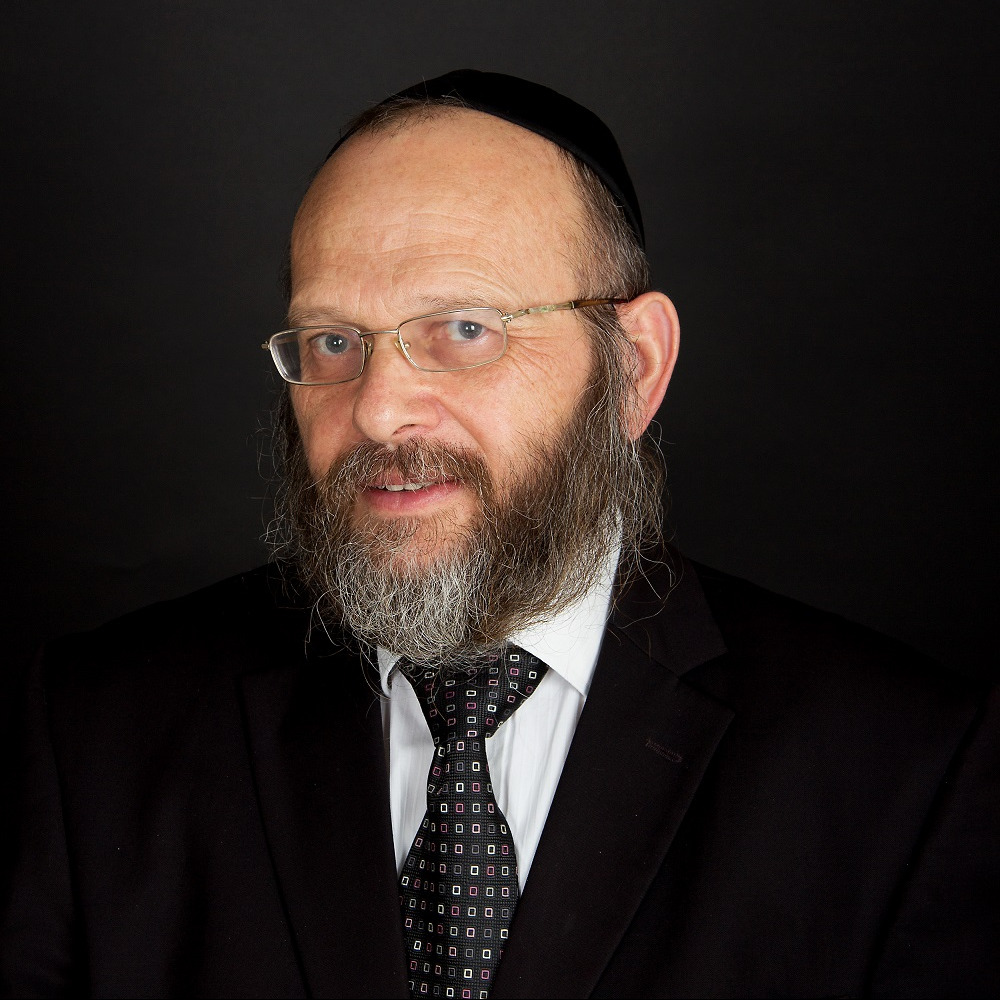
Departments of Physics and Mathematics, Extended Relativity Research Center, Jerusalem College of Technology, Jerusalem, Israel;Prof. Yaakov Friedman of the Jerusalem College of Technology—Lev Academic Center was born in Munkatch, USSR. Upon completing high school, he studied at the Faculty of Mathematics and Mechanics of Moscow University, which he graduated from in 1971. Just after graduation, he with his family moved to Israel. He received his Ph. D. at Tel-Aviv University in Mathematics followed by 8 years at University of California Los Angeles and Irvine. Since that time, he has been affiliated with the Jerusalem College of Technology as Lecturer, Rector, Vice-President for research and Head of Research. He initiated and was R&D director of several high-tech start-ups and companies. His research is in pure and applied mathematics, theoretical and applied statistics, theoretical physics and, recently, experimental physics. His current research interest is the development and testing of a new extension of Einstein's Relativity. This theory already unifies electromagnetism, gravity and optics and has the potential to give new insight into the quantum region.
Meet Our Speakers
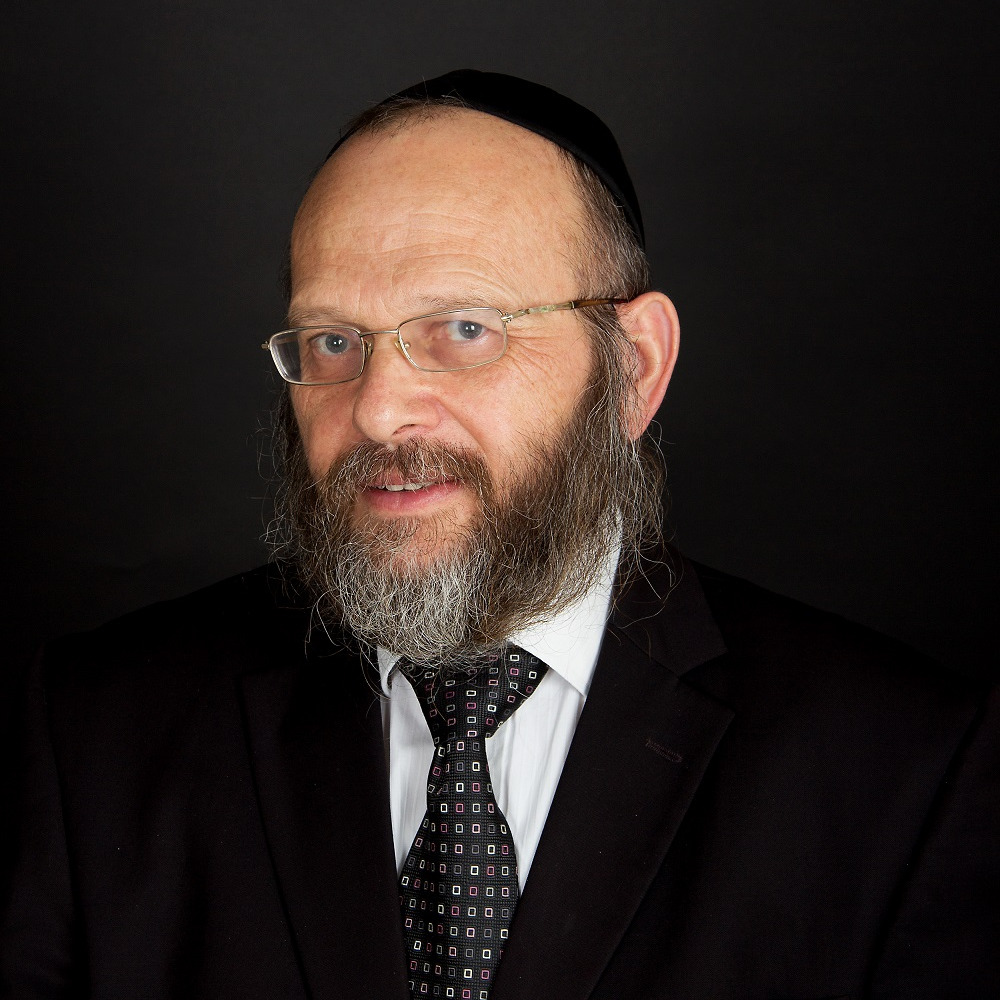
Departments of Physics and Mathematics, Extended Relativity Research Center, Jerusalem College of Technology, Jerusalem, Israel;Prof. Yaakov Friedman of the Jerusalem College of Technology—Lev Academic Center was born in Munkatch, USSR. Upon completing high school, he studied at the Faculty of Mathematics and Mechanics of Moscow University, which he graduated from in 1971. Just after graduation, he with his family moved to Israel. He received his Ph. D. at Tel-Aviv University in Mathematics followed by 8 years at University of California Los Angeles and Irvine. Since that time, he has been affiliated with the Jerusalem College of Technology as Lecturer, Rector, Vice-President for research and Head of Research. He initiated and was R&D director of several high-tech start-ups and companies. His research is in pure and applied mathematics, theoretical and applied statistics, theoretical physics and, recently, experimental physics. His current research interest is the development and testing of a new extension of Einstein's Relativity. This theory already unifies electromagnetism, gravity and optics and has the potential to give new insight into the quantum region.

Departments of Mathematics, Extended Relativity Research Center, Jerusalem College of Technology, Jerusalem, Israel;Dr. Tzvi Scarr of the Jerusalem College of Technology (JCT)—Lev Academic Center was born in Portsmouth, Virginia, USA. In 1985, he received his B.A. in Mathematics and Philosophy from the University of Tennessee at Chattanooga, graduating magna cum laude with Honors in Philosophy. He received his Master's in Mathematics from the University of California, Berkeley in 1989, specializing in set theory of the reals. His Ph.D. thesis on the compactifications of G-spaces was carried out under the supervision of Professor Hillel Furstenberg at Bar Ilan University, Ramat Gan, ISRAEL. Dr. Scarr began teaching and carrying out research at JCT in 1997. He assisted in the writing of Yaakov Friedman's first book, Physical Applications of Homogeneous Balls. The two then collaborated on several papers on covariant uniform acceleration. Dr. Scarr's research interests include mathematical models of physics, relativistic rotations, and extended relativity. He is a coauthor, with Yaakov Friedman, of A Novel to Relativistic Dynamics: Integrating Gravity, Electromagnetism and Optics, Fundamental Theories of Physics 210 (2023), published by Springer Nature.


Summary from the Chair
A new, unified theory providing a proper description of the relativistic motion of objects under the influence of electromagnetic and gravitational fields is presented. The theory views force as the geometry of the objects spacetime described by a “local scaling function” determined from the retarded potentials of the fields. The theory passes all the known tests of general relativity and provides new predictions for gravitational waves.
In this section, you will find the recordings of this webinar to watch, re-watch and share with your colleagues!