Symmetry Webinar | Shedding Light on Emergence of the Nucleon Resonance Structure from QCD in Experiments with Electromagnetic Probes
the chair
20th Symmetry Webinar
Shedding Light on Emergence of the Nucleon Resonance Structure from QCD in Experiments with Electromagnetic Probes
Dear Colleagues,
Thank you very much for joining us and for sharing such a broad spectrum of ideas on how we can advance our understanding of strong interactions in the regime of large QCD running coupling— the so‑called strong QCD regime—through studies of nucleon resonance (N*) structure. Experiments at high‑luminosity facilities equipped with large‑acceptance detectors have opened new opportunities to explore N* structure by determining N* electroexcitation amplitudes from exclusive meson‑electroproduction data. Extensive research efforts during the 6-GeV era with the CLAS detector at Jefferson Lab (JLab) have provided most of the world’s data on exclusive meson electroproduction in the resonance region. These efforts have enabled the determination of N* electroexcitation amplitudes for most resonances up to a mass of 1.8 GeV for photon virtualities of Q² < 5.0 GeV². This important body of work will be discussed in the talk by Prof. R. W. Gothe. At present, the CLAS12 detector at JLab, operating with an electron‑beam energy of 11 GeV, is the only facility capable of extending measurements of the evolution of N* electroexcitation amplitudes up to Q² ≈ 10 GeV². The status of N* structure studies in this new 12-GeV era—and prospects beyond this era—will be reviewed in the talk by Dr. D. S. Carman.
The observed Q² evolution of N* electroexcitation amplitudes provides a unique window into many facets of strong interaction dynamics, particularly the transition from the perturbative to strongly coupled regimes, as reflected in the generation of N* states with different masses, spin–parity quantum numbers, and structural features. Within QCD‑rooted continuum Schwinger methods (CSM), analyses of these amplitudes have demonstrated a powerful capability to reveal the underlying strong‑QCD dynamics responsible for the emergence of ~98% of hadron mass. The remarkable progress achieved in understanding the emergence of hadron mass and N* structure within CSM will be discussed in the talk by Prof. C. D. Roberts.
Future high‑luminosity, large‑acceptance facilities with 22 GeV electron beams will offer unique capabilities to investigate the full distance–scale range governing the emergence of hadron mass and internal structure. The success of this ambitious scientific program will rely critically on synergy between experiment, phenomenology, and QCD‑connected hadron‑structure theory. We hope this webinar will help strengthen those synergistic efforts. Finally, participants are invited to contribute to a Topic Issue of Symmetry dedicated to the outcomes of this webinar. Details of this Special Issue and of the journal Symmetry will be presented by Ms. Isabella Theodora Toth. The audience is warmly encouraged to contribute.
Date: 28 July 2026
Time: 2:00 pm CEST | 8:00 am EDT | 8:00 pm CST (Asia)
Webinar ID: 890 3654 6859
Webinar Secretariat: journal.webinar@mdpi.com
Meet Our Chair
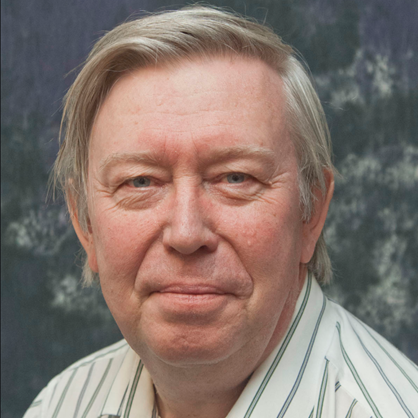
University of South Carolina, USA;Thomas Jefferson National Accelerator Facility, USA;Victor Mokeev attended the Physics Department at Lomonosov Moscow State University (Russia) and graduated with honors in 1978 with a Master of Science degree and with a Ph.D. in Nuclear Physics in 1981. He was awarded the Doctor of Science degree from the Russian Federation Government in 2009. Victor joined Jefferson Lab in 2003 as a Staff Scientist. He developed the only available approach for the extraction of γvpN* electrocouplings from exclusive π+π-p electroproduction data off protons, which in combination with analysis of πN electroproduction, allowed for the extraction of the electrocouplings for most excited states of the nucleon in the mass range < 1.8 GeV and for Q2 < 5 GeV2. Analysis of these results within Continuum Schwinger Methods (CSMs) has demonstrated promising opportunities for gaining insight into the emergence of hadron mass (EHM). New opportunities have become available in addressing quark–hadron duality by employing the experimental results on N* electrocouplings. The combined studies of π+π-p photo- and electroproduction data allowed for the discovery of the new N'(1720)3/2+ baryon state, currently the only known new baryon state for which information on the internal structure has become available. Victor is the spokesperson for several experiments on N* spectrum and structure studies using the CLAS12 detector. Victor served on the editorial board for the 2013 review paper "Studies of Nucleon Resonance Structure in Exclusive Meson Electroproduction", chaired the editorial board for the 2020 review paper "Strong QCD from Hadron Structure Experiments", and served on several organizing committees for international workshops on N* Physics.
Important Dates
28 Jul
2026
Meet Our Speakers
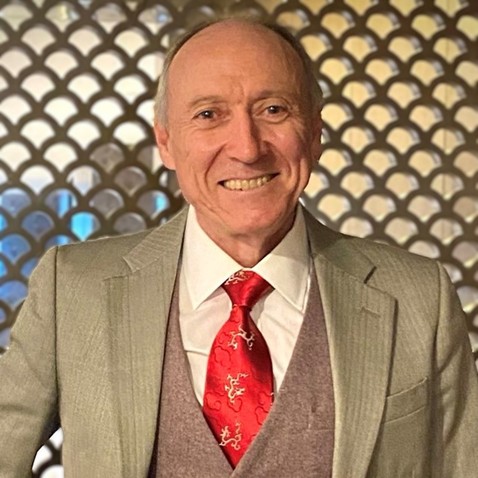
Institute for Non Perturbative Physics, Nanjing University, China;Craig Roberts joined Nanjing University in 2019. For the thirty years before that, he was a member of the Physics Division at Argonne National Laboratory, serving as Group Leader/Theory from 2001 to 2017. Roberts conducts a broad-ranging research program, pursuing the development of novel theoretical approaches to strong-coupling quantum field theory. He has particular expertise in theoretical hadron particle physics. In this area, he is a well-known practitioner of continuum Schwinger function methods (CSMs) and has been instrumental in taking the framework from a formal theoretical approach into a quantitative, predictive tool that is capable of providing deep insights into hadron structure. Roberts has held numerous visiting and joint appointments at research centres and universities worldwide. Amongst other recognitions he was elected to APS Fellowship in 2001; won the Friedrich Wilhelm Bessel Research Award of the Alexander von Humboldt Foundation in 2003; was selected as an International Fellow of Germany's Helmholtz Association in 2012; awarded the University of Chicago/Argonne LLC Board of Governors Distinguished Performance Award in 2014; presented with the Jiangsu Province Friendship Award in 2024, for “… his great contribution to higher education and talent training in Jiangsu Province”; and, in 2025, a Doctoratum Honoris Causa, by Universidad de Huelva, Spain, for “… his prestigious and influential career as a leading and highly cited researcher in the field of high-energy nuclear and particle physics”.
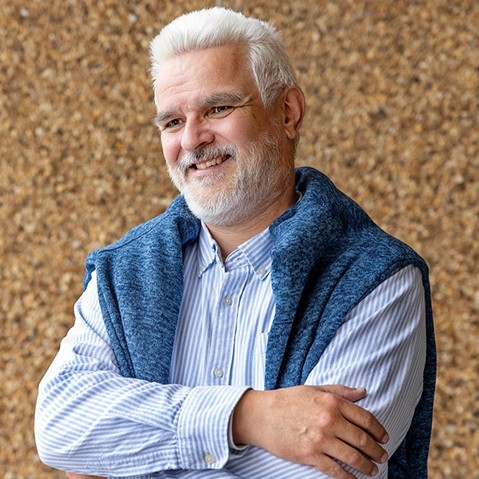
Prof. Dr. Ralf W. Gothe
Department of Physics and Astronomy, University of South Carolina, USA;Ralf Gothe attended the Johannes-Gutenberg University of Mainz, Germany, where he received his Master of Science in 1987 and completed his Ph.D. in Physics on Studies of Coherent and Incoherent Photoproduction of Neutral Pions in 12C and in 13C in 1990. At the Rheinische-Friedrich-Wilhelms University of Bonn, Germany, he transitioned first from a postdoctoral research associate to an Assistant Professor and Experiment Leader of the ELAN Collaboration at the electron accelerator ELSA in 1991 and then to an Associate Professor position in 1998 after he received his Venia Legendi in Physics, and his Habilitation-Thesis on Studies of the Electro-Induced N→∆ Transition was accepted. In 2002, he moved from Bonn to Columbia, SC, where he was hired at the University of South Carolina as an Associate Professor and promoted to full Professor in 2005. He has been a Member of the German National Merit Foundation since 1983, and has since received numerous research and teaching awards, and, in 2014, became an Honors College Faculty Fellow and later a Pearce Fellow. His research interests focus on how hadron structure and mass emerge from QCD. He is continuously pushing measurements on the four-momentum dependence of various nucleon electroexcitations to uniquely address these questions. In this role, his group has built baseline equipment for CLAS12, analyzed single- and double-pion electroproduction data off free and bound nucleons, and most recently extracted first double-pion electroproduction cross sections from CLAS12 data. He has been a major advisor to 39 Ph.D. or terminal degree candidates and 17 postdoctoral fellows, has published more than 320 refereed journal articles, and has given more than 170 invited talks.
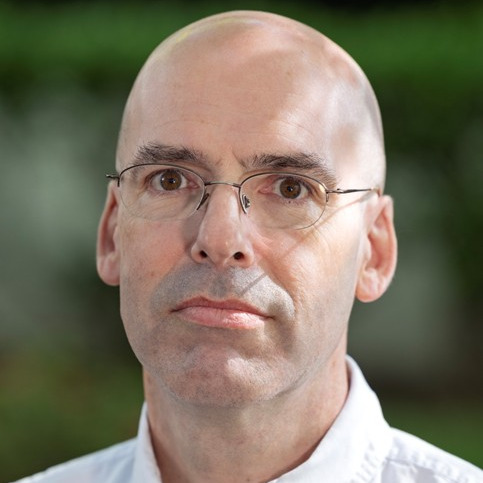
Thomas Jefferson National Accelerator Facility, USA;Daniel S. Carman received his B.S. in physics in 1988 from Rensselaer Polytechnic Institute. He attended graduate school at Indiana University and completed his Ph.D. in 1995 on studies of N-N quasifree scattering at the Indiana University Cyclotron Facility. From 1995 to 1999, he was a postdoctoral research associate in the Medium Energy Group at Carnegie Mellon University, where he focused on studies of hypernuclei at the AGS at Brookhaven National Laboratory and began his involvement at Jefferson Laboratory working on the CLAS drift chamber system in Hall B. During this time, he developed a research program primarily focusing on studies of the structure of excited nucleon states using strangeness electroproduction. In 1999, he joined the faculty in the Physics Department at Ohio University, where his research program focused on work in both Hall B and Hall D at the Jefferson Lab. He was supported by research grants from the National Science Foundation and was awarded tenure in 2004. In 2006, he joined the Hall B staff and is currently a senior staff scientist. He serves as the Group Leader for the Hall B Time-of-Flight systems and chairs the Calibration Group. He has continued to expand his physics interests in the study of the spectrum and structure of the excited states of the nucleon, now using the new CLAS12 spectrometer in Hall B. He is an author of nearly 300 papers in refereed journals. He has written several review articles on nucleon resonance electroexcitation and has served as the organizer of multiple international physics workshops and conferences. He served on the Hall D Collaboration Board from 2005 to 2006 and on the JLab User's Group Board of Directors in 2010-2011.


| Speaker | Presentation Title | Time in CEST | Time in EDT |
|---|---|---|---|
| Prof. Dr. Victor I. Mokeev | Chair Introduction | 2:00–2:25 pm | 8:00–8:25 am |
| Prof. Dr. Craig D. Roberts | Insight into the Emergence of Hadron Mass and Structure from N* Electroexcitation Studies | 2:25–3:00 pm | 8:25–9:00 am |
| Prof. Dr. Craig D. Roberts | Q&A | 3:00–3:05 pm | 9:00–9:05 am |
| Prof. Dr. Ralf W. Gothe | Nucleon Resonance Structure in Exclusive Meson Electroproduction Experiments: From Strong to Perturbative QCD Regimes | 3:05–3:40 pm | 9:05–9:40 am |
| Prof. Dr. Ralf W. Gothe | Q&A | 3:40–3:45 pm | 9:40–9:45 am |
| Dr. Daniel S. Carman | Studies of Nucleon Resonances at JLab in the 12 GeV Era and Beyond | 3:45–4:20 pm | 9:45–10:20 am |
| Dr. Daniel S. Carman | Q&A | 4:20–4:25 pm | 10:20–10:25 am |
| Ms. Isabella Theodora Toth | Symmetry Journal and Special Issue Introduction | 4:25–4:35 pm | 10:25–10:35 am |
| Prof. Dr. Victor I. Mokeev | General Discussion and Q&A | 4:35–5:05 pm | 10:35–11:05 am |
| Prof. Dr. Victor I. Mokeev | Closing of Webinar | 5:05–5:10 pm | 11:05–11:10 am |
"https://www.mdpi.com/journal/symmetry/topical_collections/67E84K92L5?webinar_id=218&_utm_from=3591e00bb3https://www.mdpi.com/journal/symmetry/topical_collections/67E84K92L5?webinar_id=218&_utm_from=3591e00bb3Emergence of Hadron Mass from Experiments at High Luminosity Facilities"
Collection Editors: Prof. Dr. Victor I. Mokeev, Prof. Dr. Craig D. Roberts, Dr. Daniel S. Carman
