Water Webinar | Extreme Storms, Floods, and Climate Change: Recent Advances and Interdisciplinarity
the chair
5th Water Webinar
Extreme Storms, Floods, and Climate Change: Recent Advances and Interdisciplinarity
Storms and floods are among the most devastating water-related hazards and are those primarily responsible for the loss of human life and destruction of the natural and man-made environment. Global climate change affects the frequency and severity of extreme hydro-meteorological events, such as storms and floods. Indeed, the impacts of global climate change on these events have become evident in recent years as storms and floods with unprecedented intensity and duration have been witnessed around the world. It is necessary to develop better models for these events and methodologies to address them based on an interdisciplinary approach and the cooperation of various specialists, such as meteorologists, hydrologists, engineers, and planners. Changes in event characteristics as well as changes in vulnerability and exposure are among the other factors determining the risks for infrastructure and society posed by these hydro-meteorological events and the development of suitable adaptation measures. This webinar will address these issues in a more focused way. Two contributions will be presented on (1) the changes in storm and flood risk and (2) flash floods’ development and changes in the Mediterranean region.
Date: 27 March 2024 at 4.00 p.m. CET | 11:00 a.m. EDT | 11:00 p.m. CST Asia
Webinar ID: 850 7530 2093
Webinar Secretariat: journal.webinar@mdpi.com
Meet Our Chair
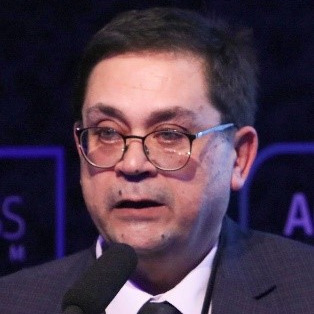
Department of Rural and Surveying Engineering, Aristotle University of Thessaloniki, Thessaloniki, Greece;Prof. Dr. Athanasios Loukas is a Professor of Engineering Hydrology—Management and Development of Water Resources, the Head of the Transportation and Hydraulic Engineering Department, the Director of the “Hydraulic Works and Environmental Management” Lab, and the Director of the Master program “Water Resources” in the School of Rural and Surveying Engineering, at the Aristotle University of Thessaloniki (2018–today). Previously, he was affiliated with the University of Thessaly where he served as a Professor, the Head of the Department of Civil Engineering (2008–2012), the Dean of the Faculty of Engineering (2015–2018), the Laboratory Director, and the Director of an international Master program (2010–2018). His research and activity focus on hydrology, hydrological hazards and risks (droughts and floods), climate change impacts, and water resources management, fields in which he has more than 400 scientific cited international journal publications, conference proceedings publications, books, and technical reports. He has coordinated and participated in numerous national and international research programs. Besides his research activity, he carries out strong outreach activities and acts as the mentor of a high number of post-graduate and Ph.D. students. He has received, during his academic studies and carrier, numerous fellowships, prizes, and awards, such as the Fulbright Research Scholarship in 2013. He is listed in the top world-wide 2% of the most influential scientists (according to his publications and the citations to his publications for his carrier period up until 2022) by Stanford University (2023). His is a visiting professor in U.S.A. and European universities.
Meet Our Speakers
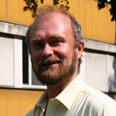
Institut fuer Meteorologie, Freie Universitaet Berlin, Berlin, Germany;Prof. Uwe Ulbrich is the Head of the working group "Climate Diagnostics and Extreme Meteorological Events", the aim of which is to conduct research for a better understanding of physical processes in the atmosphere. The diagnostic research conducted by this group is principally concerned with the following: • Variability in the climate (timescale of up to 200 years), with large-scale patterns (i.e., North Atlantic Oscillation NAO) and cyclones (identification, tracks, conditions for growing, effects, and impacts). • The occurrence of meteorological extremes and their conditions. • The consequences of meteorological extremes. • Changes concerning anthropogenic climate change. • Projects based on observational plus re-analysis data and numerical simulations (global and local climate models). Comparing studies on climate models and observational climate data guide researchers to a validation and better understanding and interpretation of the models. The outcomes of these climate models are presented to special users. So, the interdisciplinary work of scientists with users outside of meteorology allows for a higher level of identification with relevant events and their underlying physical processes.
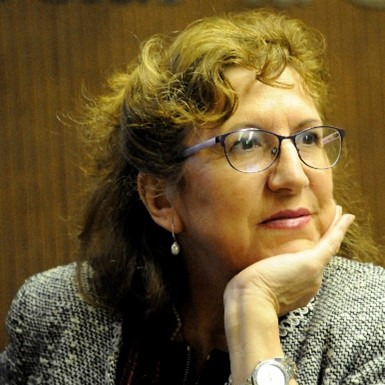
Department of Applied Physics, Universitat de Barcelona, Barcelona, Spain;Prof. Dr. María Carmen Llasat is a Full Professor of Atmospheric Physics at the University of Barcelona (UB) and the Coordinator of the Group of Meteorology. Her research and activity focus on climate change, hydrometeorological hazards and their societal impact, as well as climate change adaptation, fields in which she has more than 200 scientific publications. She has led more than 50 projects, a great number of which were financed by the European Commission. She was the Chair of the IWG on Natural Hazards of EGU, the Co-Founder of the journal NHESS, and the Coordinator of societal impact research groups in the international programs supported by WMO, MEDEX, and HYMEX, in addition to being part of their steering committees. She has been a member of the Advisory Council for Sustainable Development of the Government of Catalonia, which has awarded her with the Saint George Cross. She is a member of the steering committee of MedECC that received the North-South Prize 2020 from the Council of Europe for their contribution in the first Mediterranean Assessment Report, and she is co-coordinating the Special Report on Coastal Risks in Mediterranean Areas. She is an Honorary Diplomate of EAWRES.

The 5th Water webinar titled “Extreme storms, floods and climate change: Recent advances and interdisciplinarity” took place on Wednesday, 27 March 2024. The webinar included two talks by Prof. Uwe Ulbrich on the changes in storm and flood risks due to climate change and by Prof. Maria del Carmen Llasat Botija on flash flood development and the changes in the Mediterranean region. Both talks stressed the need for interdisciplinary cooperation and the involvement of society and stakeholders in the study, management, and policy development of extreme events. The attendance of the webinar was satisfactory, and most importantly, the geographical coverage of the attendees was very far-reaching. The two talks instigated questions answered by the invited speakers and a fruitful discussion was carried out at the end of the webinar. In summary, the webinar was a well-organized and successful event.
The webinar was hosted via Zoom and required registration to attend. The full recording can be found below. In order to learn about future webinars, you can sign up for our newsletter by clicking “Subscribe” at the top of the page.