Event submissions
Published
This submission belongs to the session S3. Animal Taxonomy of the event The 1st International Online Conference on Taxonomy
Published date
01 Dec, 2025
Academic Editor
'%3e%3cpath%20d='M12.6657%2010.9104C12.4185%2010.325%2012.0599%209.79327%2011.6097%209.34482C11.1609%208.89508%2010.6293%208.5365%2010.0442%208.28888C10.0389%208.28626%2010.0337%208.28495%2010.0285%208.28233C10.8446%207.69279%2011.3752%206.73249%2011.3752%205.64904C11.3752%203.8542%209.92103%202.39999%208.1262%202.39999C6.33136%202.39999%204.87715%203.8542%204.87715%205.64904C4.87715%206.73249%205.40774%207.69279%206.22393%208.28364C6.21869%208.28626%206.21345%208.28757%206.20821%208.29019C5.62129%208.5378%205.09463%208.89284%204.64265%209.34613C4.1929%209.79493%203.83432%2010.3266%203.58671%2010.9117C3.34345%2011.4845%203.21226%2012.0987%203.20023%2012.7209C3.19988%2012.7349%203.20233%2012.7488%203.20744%2012.7619C3.21255%2012.7749%203.22022%2012.7867%203.22998%2012.7968C3.23975%2012.8068%203.25142%2012.8147%203.26431%2012.8202C3.2772%2012.8256%203.29105%2012.8284%203.30504%2012.8284H4.09109C4.14874%2012.8284%204.19459%2012.7825%204.1959%2012.7262C4.2221%2011.7148%204.62823%2010.7676%205.34617%2010.0497C6.08899%209.30683%207.0755%208.89808%208.1262%208.89808C9.17689%208.89808%2010.1634%209.30683%2010.9062%2010.0497C11.6242%2010.7676%2012.0303%2011.7148%2012.0565%2012.7262C12.0578%2012.7838%2012.1037%2012.8284%2012.1613%2012.8284H12.9474C12.9613%2012.8284%2012.9752%2012.8256%2012.9881%2012.8202C13.001%2012.8147%2013.0126%2012.8068%2013.0224%2012.7968C13.0322%2012.7867%2013.0398%2012.7749%2013.0449%2012.7619C13.0501%2012.7488%2013.0525%2012.7349%2013.0522%2012.7209C13.0391%2012.0947%2012.9094%2011.4855%2012.6657%2010.9104ZM8.1262%207.9024C7.52486%207.9024%206.9589%207.6679%206.53312%207.24211C6.10733%206.81633%205.87283%206.25037%205.87283%205.64904C5.87283%205.0477%206.10733%204.48174%206.53312%204.05596C6.9589%203.63018%207.52486%203.39567%208.1262%203.39567C8.72753%203.39567%209.29349%203.63018%209.71927%204.05596C10.1451%204.48174%2010.3796%205.0477%2010.3796%205.64904C10.3796%206.25037%2010.1451%206.81633%209.71927%207.24211C9.29349%207.6679%208.72753%207.9024%208.1262%207.9024Z'%20fill='%235D1EE1'/%3e%3c/g%3e%3c/svg%3e) Mathias Harzhauser
Mathias HarzhauserCitation
Glória Maria Cardoso Lacerda, João Antonio de Araujo-Filho, Samuel Cardozo Ribeiro, Felipe Bisaggio Pereira, Redescription and first molecular characterization of Spauligodon oxkutzcabiensis (Chitwood, 1938) from lizards in Brazil, in Proceedings of The 1st International Online Conference on Taxonomy, 3 December–4 December 2025, MDPI: Basel, Switzerland
Share
Email
Facebook
Twitter
LinkedIn
Redescription and first molecular characterization of Spauligodon oxkutzcabiensis (Chitwood, 1938) from lizards in Brazil
'%3e%3cpath%20d='M12.6647%2010.9104C12.4176%2010.325%2012.0589%209.7933%2011.6088%209.34485C11.16%208.89511%2010.6283%208.53653%2010.0432%208.28891C10.038%208.28629%2010.0327%208.28498%2010.0275%208.28236C10.8437%207.69282%2011.3743%206.73252%2011.3743%205.64907C11.3743%203.85423%209.92005%202.40002%208.12522%202.40002C6.33038%202.40002%204.87618%203.85423%204.87618%205.64907C4.87618%206.73252%205.40677%207.69282%206.22296%208.28367C6.21772%208.28629%206.21248%208.2876%206.20724%208.29022C5.62031%208.53783%205.09365%208.89287%204.64167%209.34616C4.19192%209.79496%203.83334%2010.3266%203.58573%2010.9117C3.34247%2011.4846%203.21128%2012.0987%203.19925%2012.721C3.1989%2012.735%203.20135%2012.7489%203.20646%2012.7619C3.21157%2012.7749%203.21924%2012.7868%203.22901%2012.7968C3.23877%2012.8068%203.25045%2012.8148%203.26334%2012.8202C3.27623%2012.8256%203.29007%2012.8284%203.30406%2012.8284H4.09012C4.14776%2012.8284%204.19362%2012.7825%204.19493%2012.7262C4.22113%2011.7148%204.62726%2010.7676%205.34519%2010.0497C6.08802%209.30686%207.07452%208.89811%208.12522%208.89811C9.17592%208.89811%2010.1624%209.30686%2010.9052%2010.0497C11.6232%2010.7676%2012.0293%2011.7148%2012.0555%2012.7262C12.0568%2012.7839%2012.1027%2012.8284%2012.1603%2012.8284H12.9464C12.9604%2012.8284%2012.9742%2012.8256%2012.9871%2012.8202C13%2012.8148%2013.0117%2012.8068%2013.0214%2012.7968C13.0312%2012.7868%2013.0389%2012.7749%2013.044%2012.7619C13.0491%2012.7489%2013.0515%2012.735%2013.0512%2012.721C13.0381%2012.0947%2012.9084%2011.4856%2012.6647%2010.9104ZM8.12522%207.90243C7.52388%207.90243%206.95792%207.66793%206.53214%207.24215C6.10636%206.81636%205.87185%206.2504%205.87185%205.64907C5.87185%205.04773%206.10636%204.48177%206.53214%204.05599C6.95792%203.63021%207.52388%203.3957%208.12522%203.3957C8.72655%203.3957%209.29252%203.63021%209.7183%204.05599C10.1441%204.48177%2010.3786%205.04773%2010.3786%205.64907C10.3786%206.2504%2010.1441%206.81636%209.7183%207.24215C9.29252%207.66793%208.72655%207.90243%208.12522%207.90243Z'%20fill='%235D1EE1'/%3e%3c/g%3e%3c/svg%3e)
Glória Maria Cardoso Lacerda 1
João Antonio de Araujo-Filho 2
Samuel Cardozo Ribeiro 3
Felipe Bisaggio Pereira 4
1. Postgraduate Program in Parasitology, Institute of Biological Sciences, Department of Parasitology, Federal University of Minas Gerais, Pampulha Campus, Belo Horizonte, CEP 31270-901, Brazil, Brazil
2. Center for Biological and Health Sciences, Regional University of Cariri, Campos Sales, CEP 63150-000, Brazil, Brazil
3. Laboratory of Biology and Ecology of Wild Animals, Institute for Educator Training, Federal University of Cariri, Brejo Santo, CEP 63260-000, Brazil, Brazil
4. Helminth Ecology and Taxonomy Laboratory, Department of Parasitology, Institute of Biological Sciences, Federal University of Minas Gerais, Pampulha Campus, Belo Horizonte, CEP 31270-901, Brazil, Brazil
Abstract
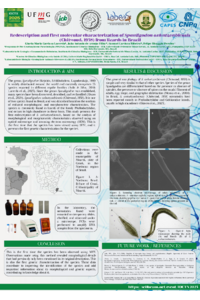
The genus Spauligodon Skrjabin, Schikhobalova, Lagodovskaja, 1960 has a wide global distribution and comprises 52 species, of which 12 are reported in the Neotropical Region, parasitizing mostly reptiles. In Brazil, there are records of only one species, namely Spauligodon oxkutzcabiensis (Chitwood, 1938), which is an abundant parasite in lizards of the family Phyllodactylidae. The original description of S. oxkutzcabiensis was based on the analysis of a restricted set of morphological and morphometric characteristics, with limited taxonomic detail. This study provides a detailed redescription of S. oxkutzcabiensis, including the first observations using scanning electron microscopy (SEM), as well as the first genetic characterization of the species. During a parasitological survey carried out in May 2024, in the municipality of Mauriti, State of Ceará, Brazil, specimens of Spauliodon were found in the intestine of Phyllopezus periosus (Squamata: Phyllodactylidae). The nematodes were identified as S. oxkutzcabiensis based on the presence of well-developed lateral wings in males, three pairs of papillae in the posterior region, with the last pair not supported by the caudal wing, and the presence and number of spines on the tail of female specimens. The nematodes were characterized morphologically by light microscopy and SEM. The parasites were also subjected to molecular analysis, with the amplification and sequencing of partial fragments of the 18S and 28S rDNA genes. Based on the analysis, it was possible to provide a more comprehensive morphological description, such as the location of the nerve ring, males with a tripartite lateral wing in the region where it begins in the esophagus, and females with an elongated muscular ovijector, characteristics not observed before. This improves the specific diagnosis of S. oxkutzcabiensis (Chitwood, 1938), which was supplemented by molecular data, contributing to knowledge about species variability and the general taxonomy of members of the genus Spauligodon in the Neotropical region.
Keywords
Helminth parasites
Phyllodactylidae
Integrative taxonomy
Neotropical region
Poster
Redescription and first molecular characterization of Spauligodon oxkutzcabiensis from lizards in Brazil_Gloria_Lacerda.pdf
Twenty years of taxonomic and ecological research on African marine benthos
Immature morphotaxonomy of Culicoides jacobsoni Macfie, Culicoides thurmanae Wirth and Hubert, and Culicoides oxystoma Kieffer (Diptera: Ceratopogonidae)