Event submissions
Published
This submission belongs to the session S1. Applied Biosciences and Bioengineering of the event The 6th International Electronic Conference on Applied Sciences
Published date
03 Dec, 2025
Academic Editor
'%3e%3cpath%20d='M12.6657%2010.9104C12.4185%2010.325%2012.0599%209.79327%2011.6097%209.34482C11.1609%208.89508%2010.6293%208.5365%2010.0442%208.28888C10.0389%208.28626%2010.0337%208.28495%2010.0285%208.28233C10.8446%207.69279%2011.3752%206.73249%2011.3752%205.64904C11.3752%203.8542%209.92103%202.39999%208.1262%202.39999C6.33136%202.39999%204.87715%203.8542%204.87715%205.64904C4.87715%206.73249%205.40774%207.69279%206.22393%208.28364C6.21869%208.28626%206.21345%208.28757%206.20821%208.29019C5.62129%208.5378%205.09463%208.89284%204.64265%209.34613C4.1929%209.79493%203.83432%2010.3266%203.58671%2010.9117C3.34345%2011.4845%203.21226%2012.0987%203.20023%2012.7209C3.19988%2012.7349%203.20233%2012.7488%203.20744%2012.7619C3.21255%2012.7749%203.22022%2012.7867%203.22998%2012.7968C3.23975%2012.8068%203.25142%2012.8147%203.26431%2012.8202C3.2772%2012.8256%203.29105%2012.8284%203.30504%2012.8284H4.09109C4.14874%2012.8284%204.19459%2012.7825%204.1959%2012.7262C4.2221%2011.7148%204.62823%2010.7676%205.34617%2010.0497C6.08899%209.30683%207.0755%208.89808%208.1262%208.89808C9.17689%208.89808%2010.1634%209.30683%2010.9062%2010.0497C11.6242%2010.7676%2012.0303%2011.7148%2012.0565%2012.7262C12.0578%2012.7838%2012.1037%2012.8284%2012.1613%2012.8284H12.9474C12.9613%2012.8284%2012.9752%2012.8256%2012.9881%2012.8202C13.001%2012.8147%2013.0126%2012.8068%2013.0224%2012.7968C13.0322%2012.7867%2013.0398%2012.7749%2013.0449%2012.7619C13.0501%2012.7488%2013.0525%2012.7349%2013.0522%2012.7209C13.0391%2012.0947%2012.9094%2011.4855%2012.6657%2010.9104ZM8.1262%207.9024C7.52486%207.9024%206.9589%207.6679%206.53312%207.24211C6.10733%206.81633%205.87283%206.25037%205.87283%205.64904C5.87283%205.0477%206.10733%204.48174%206.53312%204.05596C6.9589%203.63018%207.52486%203.39567%208.1262%203.39567C8.72753%203.39567%209.29349%203.63018%209.71927%204.05596C10.1451%204.48174%2010.3796%205.0477%2010.3796%205.64904C10.3796%206.25037%2010.1451%206.81633%209.71927%207.24211C9.29349%207.6679%208.72753%207.9024%208.1262%207.9024Z'%20fill='%235D1EE1'/%3e%3c/g%3e%3c/svg%3e) Roger Narayan
Roger NarayanCitation
Martina Toldo, Golnar Eftekhari, Eugenio Refrigeri, Stefano Toldo, Jazmin Kelly, Concentration-dependent anti-inflammatory effects of dimethyl sulfoxide in macrophages in vitro, in Proceedings of The 6th International Electronic Conference on Applied Sciences, 9 December–11 December 2025, MDPI: Basel, Switzerland
Share
Email
Facebook
Twitter
LinkedIn
Concentration-dependent anti-inflammatory effects of dimethyl sulfoxide in macrophages in vitro
'%3e%3cpath%20d='M12.6647%2010.9104C12.4176%2010.325%2012.0589%209.7933%2011.6088%209.34485C11.16%208.89511%2010.6283%208.53653%2010.0432%208.28891C10.038%208.28629%2010.0327%208.28498%2010.0275%208.28236C10.8437%207.69282%2011.3743%206.73252%2011.3743%205.64907C11.3743%203.85423%209.92005%202.40002%208.12522%202.40002C6.33038%202.40002%204.87618%203.85423%204.87618%205.64907C4.87618%206.73252%205.40677%207.69282%206.22296%208.28367C6.21772%208.28629%206.21248%208.2876%206.20724%208.29022C5.62031%208.53783%205.09365%208.89287%204.64167%209.34616C4.19192%209.79496%203.83334%2010.3266%203.58573%2010.9117C3.34247%2011.4846%203.21128%2012.0987%203.19925%2012.721C3.1989%2012.735%203.20135%2012.7489%203.20646%2012.7619C3.21157%2012.7749%203.21924%2012.7868%203.22901%2012.7968C3.23877%2012.8068%203.25045%2012.8148%203.26334%2012.8202C3.27623%2012.8256%203.29007%2012.8284%203.30406%2012.8284H4.09012C4.14776%2012.8284%204.19362%2012.7825%204.19493%2012.7262C4.22113%2011.7148%204.62726%2010.7676%205.34519%2010.0497C6.08802%209.30686%207.07452%208.89811%208.12522%208.89811C9.17592%208.89811%2010.1624%209.30686%2010.9052%2010.0497C11.6232%2010.7676%2012.0293%2011.7148%2012.0555%2012.7262C12.0568%2012.7839%2012.1027%2012.8284%2012.1603%2012.8284H12.9464C12.9604%2012.8284%2012.9742%2012.8256%2012.9871%2012.8202C13%2012.8148%2013.0117%2012.8068%2013.0214%2012.7968C13.0312%2012.7868%2013.0389%2012.7749%2013.044%2012.7619C13.0491%2012.7489%2013.0515%2012.735%2013.0512%2012.721C13.0381%2012.0947%2012.9084%2011.4856%2012.6647%2010.9104ZM8.12522%207.90243C7.52388%207.90243%206.95792%207.66793%206.53214%207.24215C6.10636%206.81636%205.87185%206.2504%205.87185%205.64907C5.87185%205.04773%206.10636%204.48177%206.53214%204.05599C6.95792%203.63021%207.52388%203.3957%208.12522%203.3957C8.72655%203.3957%209.29252%203.63021%209.7183%204.05599C10.1441%204.48177%2010.3786%205.04773%2010.3786%205.64907C10.3786%206.2504%2010.1441%206.81636%209.7183%207.24215C9.29252%207.66793%208.72655%207.90243%208.12522%207.90243Z'%20fill='%235D1EE1'/%3e%3c/g%3e%3c/svg%3e)
Martina Toldo 1
Eugenio Refrigeri 1,2
Golnar Eftekhari 3

Stefano Toldo 3
Jazmin Kelly 3
1. Robert M. Berne Cardiovascular Research Center, University of Virginia, Charlottesville, VA 22903, USA, Italy
2. Unit of Cardiovascular Science Department of Medicine, Campus Bio-Medico University, Via Alvaro del Portillo, 200, 00128 Rome, Italy
3. Robert M. Berne Cardiovascular Research Center, University of Virginia, Charlottesville, VA 22903, USA, USA
Abstract
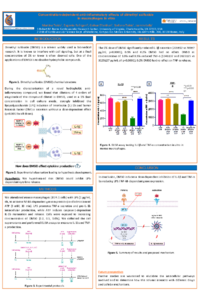
Introduction. Dimethyl sulfoxide (DMSO) is a solvent widely used in biomedical research. It is known to interfere with cell signaling, but at a final concentration of 1% or lower is often deemed safe. One of the applications of DMSO is to dissolve hydrophobic compounds. During the characterization of a novel hydrophobic anti-inflammatory compound, we found that dilutions of 4 orders of magnitude of the compound diluted in DMSO, used at a 1% final concentration in cell culture media, strongly inhibited the lipopolysaccharide (LPS) induction of Interleukin (IL)-1b and Tumor Necrosis Factor (TNF)-a secretion without a dose-dependent effect (p<0.001 for all doses).
Hypothesis. We hypothesized that DMSO could inhibit LPS-dependent cytokine release.
Methods. We stimulated mouse macrophages (J774.1 cells) with LPS (1 µg/ml, 6h, to activate NF-kB-dependent gene expression) and administered ATP (5 mM, 30 min). LPS promotes TNF-a secretion and pro-IL-1b intracellular production, while ATP induces caspase-1-dependent IL-1 b maturation and release. Cells were exposed to increasing concentrations of DMSO (0.2, 0.5, 1.0%). We collected the cell supernatants and performed ELISA assays to measure IL-1b and TNF-a production.
Results. The 1% dose of DMSO significantly reduced IL-1β secretion (205±12 vs 709±7 pg/ml; p<0.0001); 0.5% and 0.2% DMSO had no effect. DMSO at concentrations of 1.0% and 0.5% reduced TNF-α (1348±37 and 2672±25 vs 3125±27 pg/ml; all p<0.0001); 0.2% DMSO had no effect on TNF-α release.
Conclusion. DMSO induces a dose-dependent inhibition of IL-1β and TNF-α by reducing LPS/NF-kB-dependent gene expression.
Keywords
inflammation
Dimethyl sulfoxide
Poster
DMSO poster ASEC 2025 - pdf rev.pdf
Treatment performance of nanoclay-assisted biochar (NAB) adsorption process for fluoride-polluted groundwater remediation
A Study on Manufacturing of an Axial-Flow Impeller with Multi-Material Blades of Inconel 718 and SST 316L by Wire Arc Additive Manufacturing