Event submissions
EventsThe 5th International Electronic Conference on Brain Sciences & 1st International Electronic Conference on Neurosciences
Published
This submission belongs to the session S1. Neurodegenerative Diseases of the event The 5th International Electronic Conference on Brain Sciences & 1st International Electronic Conference on Neurosciences
Published date
04 Mar, 2026
Academic Editor
'%3e%3cpath%20d='M12.6657%2010.9104C12.4185%2010.325%2012.0599%209.79327%2011.6097%209.34482C11.1609%208.89508%2010.6293%208.5365%2010.0442%208.28888C10.0389%208.28626%2010.0337%208.28495%2010.0285%208.28233C10.8446%207.69279%2011.3752%206.73249%2011.3752%205.64904C11.3752%203.8542%209.92103%202.39999%208.1262%202.39999C6.33136%202.39999%204.87715%203.8542%204.87715%205.64904C4.87715%206.73249%205.40774%207.69279%206.22393%208.28364C6.21869%208.28626%206.21345%208.28757%206.20821%208.29019C5.62129%208.5378%205.09463%208.89284%204.64265%209.34613C4.1929%209.79493%203.83432%2010.3266%203.58671%2010.9117C3.34345%2011.4845%203.21226%2012.0987%203.20023%2012.7209C3.19988%2012.7349%203.20233%2012.7488%203.20744%2012.7619C3.21255%2012.7749%203.22022%2012.7867%203.22998%2012.7968C3.23975%2012.8068%203.25142%2012.8147%203.26431%2012.8202C3.2772%2012.8256%203.29105%2012.8284%203.30504%2012.8284H4.09109C4.14874%2012.8284%204.19459%2012.7825%204.1959%2012.7262C4.2221%2011.7148%204.62823%2010.7676%205.34617%2010.0497C6.08899%209.30683%207.0755%208.89808%208.1262%208.89808C9.17689%208.89808%2010.1634%209.30683%2010.9062%2010.0497C11.6242%2010.7676%2012.0303%2011.7148%2012.0565%2012.7262C12.0578%2012.7838%2012.1037%2012.8284%2012.1613%2012.8284H12.9474C12.9613%2012.8284%2012.9752%2012.8256%2012.9881%2012.8202C13.001%2012.8147%2013.0126%2012.8068%2013.0224%2012.7968C13.0322%2012.7867%2013.0398%2012.7749%2013.0449%2012.7619C13.0501%2012.7488%2013.0525%2012.7349%2013.0522%2012.7209C13.0391%2012.0947%2012.9094%2011.4855%2012.6657%2010.9104ZM8.1262%207.9024C7.52486%207.9024%206.9589%207.6679%206.53312%207.24211C6.10733%206.81633%205.87283%206.25037%205.87283%205.64904C5.87283%205.0477%206.10733%204.48174%206.53312%204.05596C6.9589%203.63018%207.52486%203.39567%208.1262%203.39567C8.72753%203.39567%209.29349%203.63018%209.71927%204.05596C10.1451%204.48174%2010.3796%205.0477%2010.3796%205.64904C10.3796%206.25037%2010.1451%206.81633%209.71927%207.24211C9.29349%207.6679%208.72753%207.9024%208.1262%207.9024Z'%20fill='%235D1EE1'/%3e%3c/g%3e%3c/svg%3e) Grazyna Lietzau
Grazyna LietzauCitation
Adaeze Ngozi Adebesin, Esther Ayomide Ambali, Abayomi Mayowa Ajayi, ANTIOXIDANT EFFECT OF HIBISCUS SABDARIFFA AQUEOUS EXTRACT IN MICE BRAINS EXPOSED TO MONOSODIUM GLUTAMATE- INDUCED ALTERATIONS IN MICE, in Proceedings of The 5th International Electronic Conference on Brain Sciences & 1st International Electronic Conference on Neurosciences, 9 March–11 March 2026, MDPI: Basel, Switzerland
Share
Email
Facebook
Twitter
LinkedIn
ANTIOXIDANT EFFECT OF HIBISCUS SABDARIFFA AQUEOUS EXTRACT IN MICE BRAINS EXPOSED TO MONOSODIUM GLUTAMATE- INDUCED ALTERATIONS IN MICE
'%3e%3cpath%20d='M12.6647%2010.9104C12.4176%2010.325%2012.0589%209.7933%2011.6088%209.34485C11.16%208.89511%2010.6283%208.53653%2010.0432%208.28891C10.038%208.28629%2010.0327%208.28498%2010.0275%208.28236C10.8437%207.69282%2011.3743%206.73252%2011.3743%205.64907C11.3743%203.85423%209.92005%202.40002%208.12522%202.40002C6.33038%202.40002%204.87618%203.85423%204.87618%205.64907C4.87618%206.73252%205.40677%207.69282%206.22296%208.28367C6.21772%208.28629%206.21248%208.2876%206.20724%208.29022C5.62031%208.53783%205.09365%208.89287%204.64167%209.34616C4.19192%209.79496%203.83334%2010.3266%203.58573%2010.9117C3.34247%2011.4846%203.21128%2012.0987%203.19925%2012.721C3.1989%2012.735%203.20135%2012.7489%203.20646%2012.7619C3.21157%2012.7749%203.21924%2012.7868%203.22901%2012.7968C3.23877%2012.8068%203.25045%2012.8148%203.26334%2012.8202C3.27623%2012.8256%203.29007%2012.8284%203.30406%2012.8284H4.09012C4.14776%2012.8284%204.19362%2012.7825%204.19493%2012.7262C4.22113%2011.7148%204.62726%2010.7676%205.34519%2010.0497C6.08802%209.30686%207.07452%208.89811%208.12522%208.89811C9.17592%208.89811%2010.1624%209.30686%2010.9052%2010.0497C11.6232%2010.7676%2012.0293%2011.7148%2012.0555%2012.7262C12.0568%2012.7839%2012.1027%2012.8284%2012.1603%2012.8284H12.9464C12.9604%2012.8284%2012.9742%2012.8256%2012.9871%2012.8202C13%2012.8148%2013.0117%2012.8068%2013.0214%2012.7968C13.0312%2012.7868%2013.0389%2012.7749%2013.044%2012.7619C13.0491%2012.7489%2013.0515%2012.735%2013.0512%2012.721C13.0381%2012.0947%2012.9084%2011.4856%2012.6647%2010.9104ZM8.12522%207.90243C7.52388%207.90243%206.95792%207.66793%206.53214%207.24215C6.10636%206.81636%205.87185%206.2504%205.87185%205.64907C5.87185%205.04773%206.10636%204.48177%206.53214%204.05599C6.95792%203.63021%207.52388%203.3957%208.12522%203.3957C8.72655%203.3957%209.29252%203.63021%209.7183%204.05599C10.1441%204.48177%2010.3786%205.04773%2010.3786%205.64907C10.3786%206.2504%2010.1441%206.81636%209.7183%207.24215C9.29252%207.66793%208.72655%207.90243%208.12522%207.90243Z'%20fill='%235D1EE1'/%3e%3c/g%3e%3c/svg%3e)
Adaeze Ngozi Adebesin 1
Esther Ayomide Ambali 1
Abayomi Mayowa Ajayi 2
1. Department of Pharmacology and Therapeutics, Olabisi Onabanjo University, Ogun State, Nigeria., Nigeria
2. Department of Pharmacology and Therapeutics, University of Ibadan, Ibadan, Nigeria, Nigeria
Abstract
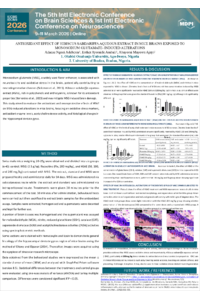
Introduction: Monosodium glutamate (MSG), a widely used flavor enhancer, is associated with neurotoxicity and oxidative stress in the brain. Hibiscus sabdariffa aqueous extract (HSAE), rich in polyphenols and anthocyanins, is known for its antioxidant properties and may mitigate MSG-induced brain damage. Nothing has been done previouisly on effect of HSAE on MSG-induced toxicity hence, the reason for this study which is also a part of a depression study.
Objectives: This study aimed to evaluate the antioxidant and neuroprotective effects of HSAE on MSG-induced alterations in mice brains, focusing on oxidative stress markers, antioxidant enzyme levels, acetylcholinesterase activity, and histological changes in the hippocampal dentate gyrus.
Methodology: Male Swiss mice of ages between 8 to 10 weeks were used and divided into six groups (n=6): control, MSG (2.5 g/kg), fluoxetine (Flx as standard from previous literature reviews, 20 mg/kg), and HSAE (50, 100, and 200 mg/kg) co-treated with MSG.
The extract, standard and MSG were prepared freshly and administered daily for 14 days. MSG was administered via subcutaneous route while the extract and standard was administered via intraperitoneal route. 30 minutes after administration, behavioural tests were carried out then sacrificed to extract brain samples used for the antioxidant assays. Samples were extracted, homogenised and supernatants were decanted and kept for further use. The supernatant was assayed for malondialdehyde (MDA), nitrite, reduced glutathione (GSH), catalase (CAT), superoxide dismutase (SOD) and acetylcholinesterase activities (AchE) activities using spectrophotometric methods. Histological analysis of the dentate gyrus was performed to assess neuronal damage.
Results: MSG significantly increased MDA, nitrites, and acetylcholinesterase levels while reducing GSH, CAT, and SOD levels, indicating oxidative stress and cholinergic disruption. HSAE (100 and 200 mg/kg) and Fluoxetine significantly reversed MDA, nitrites, and acetylcholinesterase elevations. HSAE (200 mg/kg) and Fluoxetine significantly restored GSH. CAT and SOD levels were also improved, with HSAE (200 mg/kg) showing CAT levels comparable to Fluoxetine. Histological analysis revealed MSG-induced degeneration in the dentate gyrus, with HSAE (200 mg/kg) and Fluoxetine showing significant restoration of neuronal architecture.
Conclusion: HSAE, particularly at 200 mg/kg, exhibits potent antioxidant and neuroprotective effects against MSG-induced neurotoxicity by reducing oxidative stress, enhancing antioxidant defenses, and preserving neuronal structure, comparable to fluoxetine. These findings suggest HSAE’s potential as a therapeutic agent for oxidative stress-related neurodegenerative conditions.
This study is part of a depression study that is ongoing as well.
Keywords
Hibiscus sabdariffa
monosodium glutamate
oxidative stress
neuroprotection
dentate gyrus.
Poster
sciforum-164325 iecbs poster.pdf
Omega-3 Supplementation Improves Cortico-Limbic Neuroplasticity and Reduces Amyloid-Related Pathology
Bleomycin hydrolase deficiency and Homocysteine metabolism promote ER Stress, UPR dysregulation and apoptosis in mouse neuroblastoma N2a-APPSwe cells