Event submissions
Published
This submission belongs to the session S1. Theoretical Contributions and Measurement of Intelligence of the event The 1st International Online Conference on Human Intelligence
Published date
20 Mar, 2026
Academic Editor
'%3e%3cpath%20d='M12.6657%2010.9104C12.4185%2010.325%2012.0599%209.79327%2011.6097%209.34482C11.1609%208.89508%2010.6293%208.5365%2010.0442%208.28888C10.0389%208.28626%2010.0337%208.28495%2010.0285%208.28233C10.8446%207.69279%2011.3752%206.73249%2011.3752%205.64904C11.3752%203.8542%209.92103%202.39999%208.1262%202.39999C6.33136%202.39999%204.87715%203.8542%204.87715%205.64904C4.87715%206.73249%205.40774%207.69279%206.22393%208.28364C6.21869%208.28626%206.21345%208.28757%206.20821%208.29019C5.62129%208.5378%205.09463%208.89284%204.64265%209.34613C4.1929%209.79493%203.83432%2010.3266%203.58671%2010.9117C3.34345%2011.4845%203.21226%2012.0987%203.20023%2012.7209C3.19988%2012.7349%203.20233%2012.7488%203.20744%2012.7619C3.21255%2012.7749%203.22022%2012.7867%203.22998%2012.7968C3.23975%2012.8068%203.25142%2012.8147%203.26431%2012.8202C3.2772%2012.8256%203.29105%2012.8284%203.30504%2012.8284H4.09109C4.14874%2012.8284%204.19459%2012.7825%204.1959%2012.7262C4.2221%2011.7148%204.62823%2010.7676%205.34617%2010.0497C6.08899%209.30683%207.0755%208.89808%208.1262%208.89808C9.17689%208.89808%2010.1634%209.30683%2010.9062%2010.0497C11.6242%2010.7676%2012.0303%2011.7148%2012.0565%2012.7262C12.0578%2012.7838%2012.1037%2012.8284%2012.1613%2012.8284H12.9474C12.9613%2012.8284%2012.9752%2012.8256%2012.9881%2012.8202C13.001%2012.8147%2013.0126%2012.8068%2013.0224%2012.7968C13.0322%2012.7867%2013.0398%2012.7749%2013.0449%2012.7619C13.0501%2012.7488%2013.0525%2012.7349%2013.0522%2012.7209C13.0391%2012.0947%2012.9094%2011.4855%2012.6657%2010.9104ZM8.1262%207.9024C7.52486%207.9024%206.9589%207.6679%206.53312%207.24211C6.10733%206.81633%205.87283%206.25037%205.87283%205.64904C5.87283%205.0477%206.10733%204.48174%206.53312%204.05596C6.9589%203.63018%207.52486%203.39567%208.1262%203.39567C8.72753%203.39567%209.29349%203.63018%209.71927%204.05596C10.1451%204.48174%2010.3796%205.0477%2010.3796%205.64904C10.3796%206.25037%2010.1451%206.81633%209.71927%207.24211C9.29349%207.6679%208.72753%207.9024%208.1262%207.9024Z'%20fill='%235D1EE1'/%3e%3c/g%3e%3c/svg%3e) Damian Birney
Damian BirneyCitation
Rossina Gitto, Fabian Homberg, Reconceptualizing High-Potential Talent: A Multidimensional Intelligence Framework for Leadership in Global Organizations, in Proceedings of The 1st International Online Conference on Human Intelligence, 25 March–26 March 2026, MDPI: Basel, Switzerland
Share
Email
Facebook
Twitter
LinkedIn
Reconceptualizing High-Potential Talent: A Multidimensional Intelligence Framework for Leadership in Global Organizations

Rossina Gitto 1
'%3e%3cpath%20d='M12.6647%2010.9104C12.4176%2010.325%2012.0589%209.7933%2011.6088%209.34485C11.16%208.89511%2010.6283%208.53653%2010.0432%208.28891C10.038%208.28629%2010.0327%208.28498%2010.0275%208.28236C10.8437%207.69282%2011.3743%206.73252%2011.3743%205.64907C11.3743%203.85423%209.92005%202.40002%208.12522%202.40002C6.33038%202.40002%204.87618%203.85423%204.87618%205.64907C4.87618%206.73252%205.40677%207.69282%206.22296%208.28367C6.21772%208.28629%206.21248%208.2876%206.20724%208.29022C5.62031%208.53783%205.09365%208.89287%204.64167%209.34616C4.19192%209.79496%203.83334%2010.3266%203.58573%2010.9117C3.34247%2011.4846%203.21128%2012.0987%203.19925%2012.721C3.1989%2012.735%203.20135%2012.7489%203.20646%2012.7619C3.21157%2012.7749%203.21924%2012.7868%203.22901%2012.7968C3.23877%2012.8068%203.25045%2012.8148%203.26334%2012.8202C3.27623%2012.8256%203.29007%2012.8284%203.30406%2012.8284H4.09012C4.14776%2012.8284%204.19362%2012.7825%204.19493%2012.7262C4.22113%2011.7148%204.62726%2010.7676%205.34519%2010.0497C6.08802%209.30686%207.07452%208.89811%208.12522%208.89811C9.17592%208.89811%2010.1624%209.30686%2010.9052%2010.0497C11.6232%2010.7676%2012.0293%2011.7148%2012.0555%2012.7262C12.0568%2012.7839%2012.1027%2012.8284%2012.1603%2012.8284H12.9464C12.9604%2012.8284%2012.9742%2012.8256%2012.9871%2012.8202C13%2012.8148%2013.0117%2012.8068%2013.0214%2012.7968C13.0312%2012.7868%2013.0389%2012.7749%2013.044%2012.7619C13.0491%2012.7489%2013.0515%2012.735%2013.0512%2012.721C13.0381%2012.0947%2012.9084%2011.4856%2012.6647%2010.9104ZM8.12522%207.90243C7.52388%207.90243%206.95792%207.66793%206.53214%207.24215C6.10636%206.81636%205.87185%206.2504%205.87185%205.64907C5.87185%205.04773%206.10636%204.48177%206.53214%204.05599C6.95792%203.63021%207.52388%203.3957%208.12522%203.3957C8.72655%203.3957%209.29252%203.63021%209.7183%204.05599C10.1441%204.48177%2010.3786%205.04773%2010.3786%205.64907C10.3786%206.2504%2010.1441%206.81636%209.7183%207.24215C9.29252%207.66793%208.72655%207.90243%208.12522%207.90243Z'%20fill='%235D1EE1'/%3e%3c/g%3e%3c/svg%3e)
Fabian Homberg 1
1. Department of Business & Management, LUISS Guido Carli University, Rome, 00197, Italy, Italy
Abstract
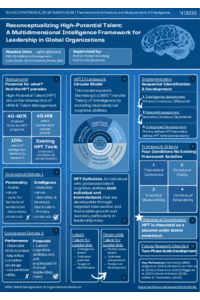
The identification and development of high-potential talent constitutes a cornerstone of organizational success, yet evidence-based pathways for realizing this objective remain insufficiently articulated in the scientific literature. Traditional talent identification is often driven by biased assumptions, including the confusion of high performance with high potential (Chamorro-Premuzic, 2019; Kehoe, Collings, & Cascio, 2023; Mahadi, Thangaraj, Baskaran, & Mahadi, 2019; Schleu et al., 2024), the equation of confidence with competence (Anderson & Kilduff, 2009; Belotelova & Martin, 2025; Chamorro-Premuzic, 2019; Stewart et al., 2000), and the belief that dysfunctional personality traits are effective leadership qualities (Brunell et al., 2008; Diller et al., 2021). Corporate scandals (e.g., Weissner, 2024; Nossiter, 2019; Mollan, 2024) illustrate the severe consequences of inadequate leadership assessment and advancement, often revealing a critical lack of interrelational abilities among organizational leaders (McCallum & O’Connell, 2009). Existing frameworks frequently oversimplify cognitive abilities and fail to capture the complex nature of human potential due to conceptual limitations, for instance, the conflation of personality and intelligence (Church & Silzer, 2014; Hyde et al., 2020). This research aims to advance Talent Management by conceptualizing high-potential talent through a clear theoretical lens and offering a unique definition (Gallardo-Gallardo et al., 2013; Tansley, 2011). Building on Sternberg’s (1985) Triarchic Theory of Intelligence, the proposed model introduces a two-tiered triarchic framework. It integrates Individual Cognitive Abilities (analytical, practical, and creative intelligence) with Interrelational Cognitive Abilities (social, emotional, and cultural intelligence) in the cognitive evaluation of employees with global leadership potential. This enhanced categorization highlights interrelational qualities, as effective leadership is inherently tied to followership (Stern, 2021). High-potential talent is thus defined as an individual within an organization who possesses the cognitive abilities, both individual and interrelational, to grow and succeed, particularly in leadership. This framework addresses shortcomings in Talent Management and lays the groundwork for subsequent scale development and empirical testing.
Keywords
high-potential talent
human intelligence framework
leadership development
corporate leadership
talent management
Poster
IOCHI Conference Poster - Reconceptualizing HPT - Gitto, Rossina.pdf
Global Trends in Cognitive Measurement: A Bibliometric Analysis
Attentional Fragmentation and Instructional Design in Onlife Classrooms