Event submissions
Published
This submission belongs to the session S2. Patient-Centered Care—Optimizing Care Pathways through Engagement and Outcome Measurement of the event The 1st International Online Conference on Healthcare
Published date
20 Mar, 2026
Academic Editor
'%3e%3cpath%20d='M12.6657%2010.9104C12.4185%2010.325%2012.0599%209.79327%2011.6097%209.34482C11.1609%208.89508%2010.6293%208.5365%2010.0442%208.28888C10.0389%208.28626%2010.0337%208.28495%2010.0285%208.28233C10.8446%207.69279%2011.3752%206.73249%2011.3752%205.64904C11.3752%203.8542%209.92103%202.39999%208.1262%202.39999C6.33136%202.39999%204.87715%203.8542%204.87715%205.64904C4.87715%206.73249%205.40774%207.69279%206.22393%208.28364C6.21869%208.28626%206.21345%208.28757%206.20821%208.29019C5.62129%208.5378%205.09463%208.89284%204.64265%209.34613C4.1929%209.79493%203.83432%2010.3266%203.58671%2010.9117C3.34345%2011.4845%203.21226%2012.0987%203.20023%2012.7209C3.19988%2012.7349%203.20233%2012.7488%203.20744%2012.7619C3.21255%2012.7749%203.22022%2012.7867%203.22998%2012.7968C3.23975%2012.8068%203.25142%2012.8147%203.26431%2012.8202C3.2772%2012.8256%203.29105%2012.8284%203.30504%2012.8284H4.09109C4.14874%2012.8284%204.19459%2012.7825%204.1959%2012.7262C4.2221%2011.7148%204.62823%2010.7676%205.34617%2010.0497C6.08899%209.30683%207.0755%208.89808%208.1262%208.89808C9.17689%208.89808%2010.1634%209.30683%2010.9062%2010.0497C11.6242%2010.7676%2012.0303%2011.7148%2012.0565%2012.7262C12.0578%2012.7838%2012.1037%2012.8284%2012.1613%2012.8284H12.9474C12.9613%2012.8284%2012.9752%2012.8256%2012.9881%2012.8202C13.001%2012.8147%2013.0126%2012.8068%2013.0224%2012.7968C13.0322%2012.7867%2013.0398%2012.7749%2013.0449%2012.7619C13.0501%2012.7488%2013.0525%2012.7349%2013.0522%2012.7209C13.0391%2012.0947%2012.9094%2011.4855%2012.6657%2010.9104ZM8.1262%207.9024C7.52486%207.9024%206.9589%207.6679%206.53312%207.24211C6.10733%206.81633%205.87283%206.25037%205.87283%205.64904C5.87283%205.0477%206.10733%204.48174%206.53312%204.05596C6.9589%203.63018%207.52486%203.39567%208.1262%203.39567C8.72753%203.39567%209.29349%203.63018%209.71927%204.05596C10.1451%204.48174%2010.3796%205.0477%2010.3796%205.64904C10.3796%206.25037%2010.1451%206.81633%209.71927%207.24211C9.29349%207.6679%208.72753%207.9024%208.1262%207.9024Z'%20fill='%235D1EE1'/%3e%3c/g%3e%3c/svg%3e) Lorraine Evangelista
Lorraine EvangelistaCitation
Ellen Michelle Schellhase, Monica L Miller, Mia Yates, Michelle Sullivan, When Patients Say No: Understanding Habitual Enoxaparin Refusal and Its Impact on Care, in Proceedings of The 1st International Online Conference on Healthcare, 25 March–26 March 2026, MDPI: Basel, Switzerland
Share
Email
Facebook
Twitter
LinkedIn
When Patients Say No: Understanding Habitual Enoxaparin Refusal and Its Impact on Care
'%3e%3cpath%20d='M12.6647%2010.9104C12.4176%2010.325%2012.0589%209.7933%2011.6088%209.34485C11.16%208.89511%2010.6283%208.53653%2010.0432%208.28891C10.038%208.28629%2010.0327%208.28498%2010.0275%208.28236C10.8437%207.69282%2011.3743%206.73252%2011.3743%205.64907C11.3743%203.85423%209.92005%202.40002%208.12522%202.40002C6.33038%202.40002%204.87618%203.85423%204.87618%205.64907C4.87618%206.73252%205.40677%207.69282%206.22296%208.28367C6.21772%208.28629%206.21248%208.2876%206.20724%208.29022C5.62031%208.53783%205.09365%208.89287%204.64167%209.34616C4.19192%209.79496%203.83334%2010.3266%203.58573%2010.9117C3.34247%2011.4846%203.21128%2012.0987%203.19925%2012.721C3.1989%2012.735%203.20135%2012.7489%203.20646%2012.7619C3.21157%2012.7749%203.21924%2012.7868%203.22901%2012.7968C3.23877%2012.8068%203.25045%2012.8148%203.26334%2012.8202C3.27623%2012.8256%203.29007%2012.8284%203.30406%2012.8284H4.09012C4.14776%2012.8284%204.19362%2012.7825%204.19493%2012.7262C4.22113%2011.7148%204.62726%2010.7676%205.34519%2010.0497C6.08802%209.30686%207.07452%208.89811%208.12522%208.89811C9.17592%208.89811%2010.1624%209.30686%2010.9052%2010.0497C11.6232%2010.7676%2012.0293%2011.7148%2012.0555%2012.7262C12.0568%2012.7839%2012.1027%2012.8284%2012.1603%2012.8284H12.9464C12.9604%2012.8284%2012.9742%2012.8256%2012.9871%2012.8202C13%2012.8148%2013.0117%2012.8068%2013.0214%2012.7968C13.0312%2012.7868%2013.0389%2012.7749%2013.044%2012.7619C13.0491%2012.7489%2013.0515%2012.735%2013.0512%2012.721C13.0381%2012.0947%2012.9084%2011.4856%2012.6647%2010.9104ZM8.12522%207.90243C7.52388%207.90243%206.95792%207.66793%206.53214%207.24215C6.10636%206.81636%205.87185%206.2504%205.87185%205.64907C5.87185%205.04773%206.10636%204.48177%206.53214%204.05599C6.95792%203.63021%207.52388%203.3957%208.12522%203.3957C8.72655%203.3957%209.29252%203.63021%209.7183%204.05599C10.1441%204.48177%2010.3786%205.04773%2010.3786%205.64907C10.3786%206.2504%2010.1441%206.81636%209.7183%207.24215C9.29252%207.66793%208.72655%207.90243%208.12522%207.90243Z'%20fill='%235D1EE1'/%3e%3c/g%3e%3c/svg%3e)
Mia Yates 1
Ellen Michelle Schellhase 2
Monica L Miller 1
Michelle Sullivan 3
1. College of Pharmacy, Purdue University, West Lafayette, Indiana, 47906, USA, USA
2. Department of Pharmacy Practice, Purdue University, West Lafayette, Indiana 47906, USA, USA
3. Pharmacy, St. Bartholomew’s / Barts Health, London, UK, UK
Abstract
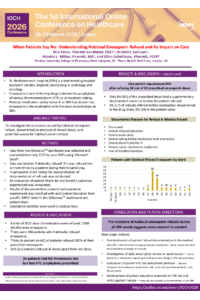
Introduction: Previous research at St Bartholomew’s Hospital (SBH) has demonstrated a need for identifying systems of improvement to address missed or delayed enoxaparin doses. The purpose of this study was to investigate documentation practices, underlying causes, and associated patient outcomes related to habitual enoxaparin refusal, with a focus on improving prescribing processes and understanding the impact on patient-centered care.
Methods: Data from the QlikSense® dashboard were evaluated from July 2023 to June 2025, based on the date a medication was first prescribed. Out of the total 3,757 habitually refused medications, enoxaparin accounted for 1,304 (35%). A companion drug chart review of the enoxaparin habitually refused medications was completed to evaluate standardisation of enoxaparin refusal documentation along with an evaluation of patient charts for any harmful outcomes.
Results: A total of 166 patients were identified as having habitually refused enoxaparin during their hospital stay. These refusals accounted for 50% of prescribed doses for this patient population. Only 6% of refused enoxaparin doses had a documented reason for patient refusal; with 4% being documented within drug charts and 2% documented in patient notes. There were 60 (36%) patients who refused all prescribed doses. There were 36 (22%) patients prescribed prophylaxis with enoxaparin despite having no documented thrombosis risk. One patient experienced deep vein thrombosis after rejecting 18 of 22 (82%) prescribed daily doses.
Conclusions: The incidence of habitual enoxaparin refusals across all SBH wards suggests more research is needed regarding standardisation of patient refusal documentation, investigation of daily prescription review on ward rounds, evaluation of current Venous Thromboembolism Risk (VTE) Assessment protocol, and development of patient education materials surrounding VTE risk and anticoagulant therapy. This research demonstrates the utility of medication safety dashboards in identifying missed dose trends and informing targeted interventions to optimise patient care and outcomes.
Keywords
medication adherence
patient-centered care
medication errors
venous thromboembolism
Poster
IOCH YATES Enoxaparin Missed Doses Poster 2026.pdf
Smart Infusion Pumps and Clinical Data: Evaluating Medication Errors to Improve Patient Safety
Beyond Barriers: Access to Mental Health Services for Cultural Minorities