Event submissions
Published
This submission belongs to the session S6. Health Psychology of the event The 1st International Online Conference on Behavioral Sciences
Published date
27 Mar, 2026
Academic Editor
'%3e%3cpath%20d='M12.6657%2010.9104C12.4185%2010.325%2012.0599%209.79327%2011.6097%209.34482C11.1609%208.89508%2010.6293%208.5365%2010.0442%208.28888C10.0389%208.28626%2010.0337%208.28495%2010.0285%208.28233C10.8446%207.69279%2011.3752%206.73249%2011.3752%205.64904C11.3752%203.8542%209.92103%202.39999%208.1262%202.39999C6.33136%202.39999%204.87715%203.8542%204.87715%205.64904C4.87715%206.73249%205.40774%207.69279%206.22393%208.28364C6.21869%208.28626%206.21345%208.28757%206.20821%208.29019C5.62129%208.5378%205.09463%208.89284%204.64265%209.34613C4.1929%209.79493%203.83432%2010.3266%203.58671%2010.9117C3.34345%2011.4845%203.21226%2012.0987%203.20023%2012.7209C3.19988%2012.7349%203.20233%2012.7488%203.20744%2012.7619C3.21255%2012.7749%203.22022%2012.7867%203.22998%2012.7968C3.23975%2012.8068%203.25142%2012.8147%203.26431%2012.8202C3.2772%2012.8256%203.29105%2012.8284%203.30504%2012.8284H4.09109C4.14874%2012.8284%204.19459%2012.7825%204.1959%2012.7262C4.2221%2011.7148%204.62823%2010.7676%205.34617%2010.0497C6.08899%209.30683%207.0755%208.89808%208.1262%208.89808C9.17689%208.89808%2010.1634%209.30683%2010.9062%2010.0497C11.6242%2010.7676%2012.0303%2011.7148%2012.0565%2012.7262C12.0578%2012.7838%2012.1037%2012.8284%2012.1613%2012.8284H12.9474C12.9613%2012.8284%2012.9752%2012.8256%2012.9881%2012.8202C13.001%2012.8147%2013.0126%2012.8068%2013.0224%2012.7968C13.0322%2012.7867%2013.0398%2012.7749%2013.0449%2012.7619C13.0501%2012.7488%2013.0525%2012.7349%2013.0522%2012.7209C13.0391%2012.0947%2012.9094%2011.4855%2012.6657%2010.9104ZM8.1262%207.9024C7.52486%207.9024%206.9589%207.6679%206.53312%207.24211C6.10733%206.81633%205.87283%206.25037%205.87283%205.64904C5.87283%205.0477%206.10733%204.48174%206.53312%204.05596C6.9589%203.63018%207.52486%203.39567%208.1262%203.39567C8.72753%203.39567%209.29349%203.63018%209.71927%204.05596C10.1451%204.48174%2010.3796%205.0477%2010.3796%205.64904C10.3796%206.25037%2010.1451%206.81633%209.71927%207.24211C9.29349%207.6679%208.72753%207.9024%208.1262%207.9024Z'%20fill='%235D1EE1'/%3e%3c/g%3e%3c/svg%3e) Andrew Soundy
Andrew SoundyCitation
Lidia Amaro Díaz, Gustavo A. Reyes del Paso, Casandra I. Montoro Aguilar, Fibromyalgia and emotional vulnerability: exploring the roles of psychological inflexibility and anxiety sensitivity, in Proceedings of The 1st International Online Conference on Behavioral Sciences, 1 April–3 April 2026, MDPI: Basel, Switzerland
Share
Email
Facebook
Twitter
LinkedIn
Fibromyalgia and emotional vulnerability: exploring the roles of psychological inflexibility and anxiety sensitivity
'%3e%3cpath%20d='M12.6647%2010.9104C12.4176%2010.325%2012.0589%209.7933%2011.6088%209.34485C11.16%208.89511%2010.6283%208.53653%2010.0432%208.28891C10.038%208.28629%2010.0327%208.28498%2010.0275%208.28236C10.8437%207.69282%2011.3743%206.73252%2011.3743%205.64907C11.3743%203.85423%209.92005%202.40002%208.12522%202.40002C6.33038%202.40002%204.87618%203.85423%204.87618%205.64907C4.87618%206.73252%205.40677%207.69282%206.22296%208.28367C6.21772%208.28629%206.21248%208.2876%206.20724%208.29022C5.62031%208.53783%205.09365%208.89287%204.64167%209.34616C4.19192%209.79496%203.83334%2010.3266%203.58573%2010.9117C3.34247%2011.4846%203.21128%2012.0987%203.19925%2012.721C3.1989%2012.735%203.20135%2012.7489%203.20646%2012.7619C3.21157%2012.7749%203.21924%2012.7868%203.22901%2012.7968C3.23877%2012.8068%203.25045%2012.8148%203.26334%2012.8202C3.27623%2012.8256%203.29007%2012.8284%203.30406%2012.8284H4.09012C4.14776%2012.8284%204.19362%2012.7825%204.19493%2012.7262C4.22113%2011.7148%204.62726%2010.7676%205.34519%2010.0497C6.08802%209.30686%207.07452%208.89811%208.12522%208.89811C9.17592%208.89811%2010.1624%209.30686%2010.9052%2010.0497C11.6232%2010.7676%2012.0293%2011.7148%2012.0555%2012.7262C12.0568%2012.7839%2012.1027%2012.8284%2012.1603%2012.8284H12.9464C12.9604%2012.8284%2012.9742%2012.8256%2012.9871%2012.8202C13%2012.8148%2013.0117%2012.8068%2013.0214%2012.7968C13.0312%2012.7868%2013.0389%2012.7749%2013.044%2012.7619C13.0491%2012.7489%2013.0515%2012.735%2013.0512%2012.721C13.0381%2012.0947%2012.9084%2011.4856%2012.6647%2010.9104ZM8.12522%207.90243C7.52388%207.90243%206.95792%207.66793%206.53214%207.24215C6.10636%206.81636%205.87185%206.2504%205.87185%205.64907C5.87185%205.04773%206.10636%204.48177%206.53214%204.05599C6.95792%203.63021%207.52388%203.3957%208.12522%203.3957C8.72655%203.3957%209.29252%203.63021%209.7183%204.05599C10.1441%204.48177%2010.3786%205.04773%2010.3786%205.64907C10.3786%206.2504%2010.1441%206.81636%209.7183%207.24215C9.29252%207.66793%208.72655%207.90243%208.12522%207.90243Z'%20fill='%235D1EE1'/%3e%3c/g%3e%3c/svg%3e)
Lidia Amaro Díaz 1
Gustavo A. Reyes del Paso 1
Casandra I. Montoro Aguilar 1
1. Department of Psychology, University of Jaén, 23009 Jaén, Spain
Abstract
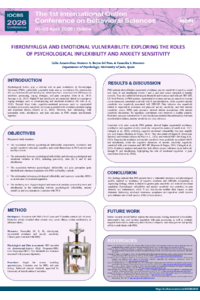
This study examined the influence of psychological inflexibility (experiential avoidance) and anxiety sensitivity on psychological and personality variables associated with fibromyalgia syndrome (FMS), as well as on pain perception and heart rate variability (HRV), an indicator of emotional regulation. Thirty-eight FMS patients and thirty-seven healthy controls completed assessments of experiential avoidance, anxiety sensitivity (physical, cognitive, and social), alexithymia, and Eysenck’s personality traits (neuroticism, extraversion, psychoticism) in a single session. Therefore, pain perception was evaluated using pressure algometry and the McGill Pain Questionnaire (MPQ), and HRV was recorded via electrocardiogram. FMS patients showed higher experiential avoidance and greater anxiety sensitivity. They also exhibited higher neuroticism and more difficulties identifying and expressing emotions. Additionally, they demonstrated lower pain thresholds and tolerance compared to controls. HRV values were also lower in the FMS group, indicating a reduced physiological capacity for emotional regulation. In FMS patients, greater experiential avoidance was associated with higher neuroticism and alexithymia, as well as lower pain tolerance. Regarding anxiety sensitivity—particularly its cognitive dimension—higher levels were linked to greater alexithymia, lower HRV, and reduced pain tolerance. In healthy controls, although experiential avoidance showed some associations with alexithymia and neuroticism, it was not related to pain perception or HRV. Psychological and emotional variables, particularly neuroticism, mediated the relationship between experiential avoidance and anxiety sensitivity (predictors) and pain tolerance (outcome). Overall, the findings indicate that FMS patients display a more vulnerable emotional and physiological profile, characterized by heightened pain sensitivity and reduced emotional regulation capacity. Psychological inflexibility and anxiety sensitivity may play a significant role in the maintenance and intensity of pain in FMS, although their impact on pain appears to be largely driven by their association with neuroticism as the key mediating factor.
Keywords
fibromyalgia syndrome
psychological inflexibility
anxiety sensitivity
pain perception
neuroticism
heart rate variability.
Poster
SCIFORUM 160813_LAD.pdf
Democratizing Urban Well-being: Virtual Biophilic Interventions Mitigate Socioeconomic Disparities in Environmental Perception and Affect
Emotional Writing Therapy: Effects on Fibromyalgia Symptoms