Entropy Webinar | Information Theory and Data Compression
the chair
5th Webinar on Entropy
Information Theory and Data Compression
Data compression has long been a central meeting point between information theory, algorithms, and practical systems. This seminar explores several emerging directions in compression, spanning information theoretic limits, schemes implementable under computational constraints, and the rapidly evolving field of learned compression. The first talk revisits the foundational Kraft inequality through the lens of finite-state encoders, developing generalized forms that shed light on the structural constraints imposed by finite-memory coding systems. The second talk examines how neural compression can serve not only as a tool for compact representation, but also a framework for information-theoretically sound inference and denoising under model uncertainty. The final talk surveys the state of learned compression, tracing landmark developments over the past decade, highlighting real-world deployments, and identifying the barriers left to overcome before learned compressors can be deployed at scale.
Date: 27 May 2026
Time: 07:00 pm CEST | 1:00 pm EDT
Webinar ID: 835 4868 9492
Event Secretariat: journal.webinar@mdpi.com
Meet Our Chair
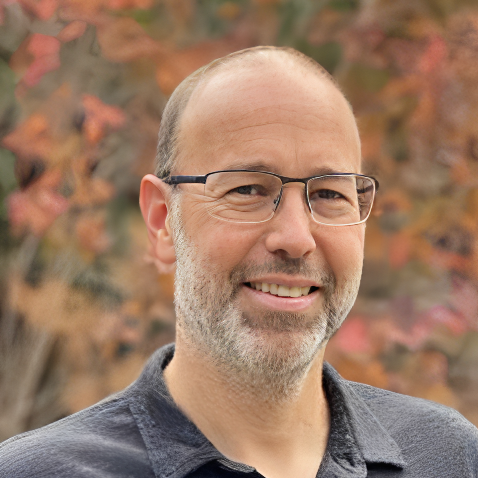
Department of Electrical Engineering, Stanford University, USA;Tsachy Weissman is the Robert and Barbara Kleist Professor of Electrical Engineering at Stanford, where he has been since 2003, researching and teaching the science of information, with applications spanning genomics, neuroscience, and technology. He has been serving on editorial boards for scientific journals, technical advisory boards in industry, and as founding director of the Stanford Compression Forum. His recent projects include the SHTEM science and humanities summer internship program for high schoolers, Stagecast, a low-latency video platform allowing actors and musicians to perform together in real-time while geographically distributed, and the Starling Lab for authentication of digital content. An IEEE Fellow, he has received multiple awards for his research and teaching, including best paper awards from the IEEE Information Theory and Communications societies, while his students received best student-authored paper awards at the top conferences of their areas of scholarship. His students have become faculty at top institutions, industry leaders, and serial entrepreneurs. He has played key roles in the formation of companies and the development of technology powering Guardant Health's blood tests for early detection of cancer, Amazon's storage and machine learning, Google's search, HP's printing, Ford's streaming of self-driving footage, Siemens' streaming of sensor data, Apple's image and video compression, and Yahoo's bidding platform, among others. His favorite gig to date was advising the HBO show “Silicon Valley”.
In this section, you will find the recordings of this webinar to watch, re-watch and share with your colleagues!
Meet Our Speakers
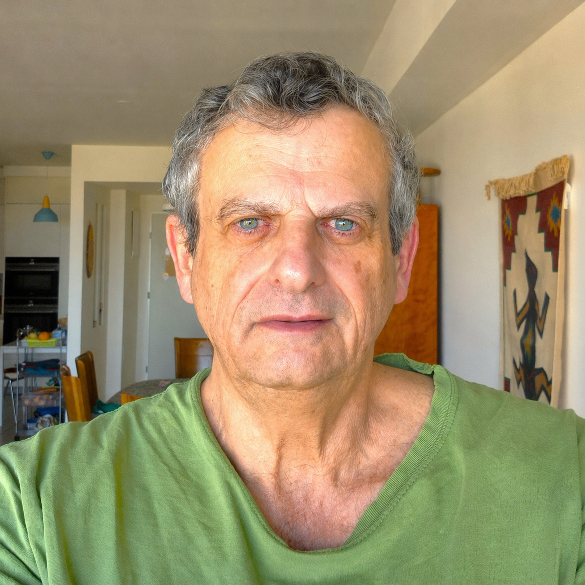
The Viterbi Faculty of ECE, Technion – Israel Institute of Technology, Israel;Neri Merhav received the B.Sc., M.Sc., and D.Sc. degrees from the Technion in 1982, 1985, and 1988, respectively, all in electrical engineering. During 1988-1990 he was with AT\&T Bell Laboratories, Murray Hill, NJ, USA. Since 1990 he has been with the Electrical and Computer Engineering Department of the Technion, where he was a professor until September 2025. Since October 2025, he has been an Emeritus Professor. His research interests include information theory, statistical communications, and statistical signal processing. Merhav was a co-recipient of the 1993 Paper Award of the IEEE Information Theory Society, and he has been a Fellow of the IEEE since 1999. He also received the 1994 American Technion Society Award for Academic Excellence and the 2004 Technion Henry Taub Prize for Excellence in Research. More recently, he was a co-recipient of the Best Paper Award of the 2015 IEEE Workshop on Information Forensics and Security (WIFS 2015). During 1996-1999 he served as an Associate Editor for Source Coding to the IEEE Transactions on Information Theory, and during 2017-2020 -- as an Associate Editor for Shannon Theory in the same journal. He also served as a co-chairperson of the Program Committee of the 2001 IEEE International Symposium on Information Theory. Since 2004, he also served on the Editorial Board of Foundations and Trends in Communications and Information Theory.
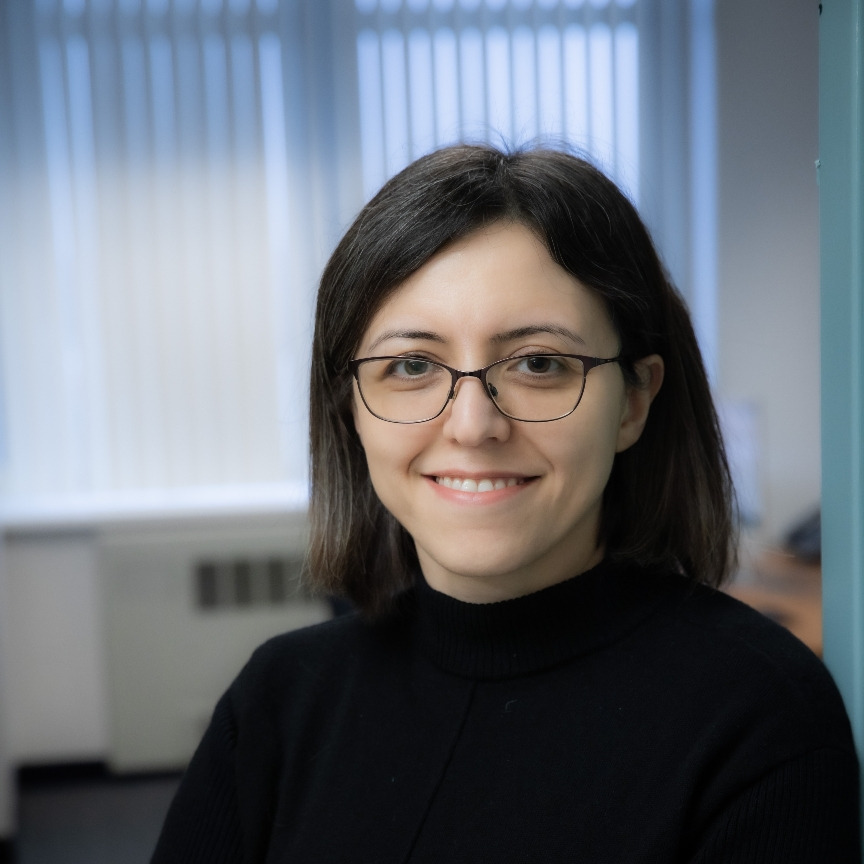
Electrical and Computer Engineering, Rutgers University, USA;Shirin Jalali is an Associate Professor in the Department of Electrical and Computer Engineering at Rutgers University. Prior to joining Rutgers in 2022, she was a Research Scientist at the AI Lab at Nokia Bell Labs. She has also held positions as a Research Scholar at Princeton University and as a Faculty Fellow at NYU Tandon School of Engineering. She received her B.Sc. in Electrical Engineering from Sharif University of Technology, and her M.Sc. in Statistics and Ph.D. in Electrical Engineering from Stanford University. Her research lies at the intersection of information theory, statistical signal processing, and machine learning, with a current focus on developing principled solutions for imaging inverse problems.
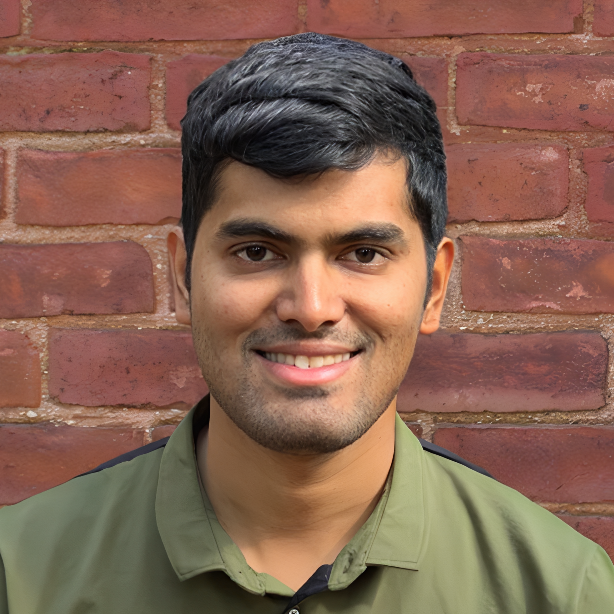
Dr. Kedar Tatwawadi
Apple Inc., USA;Kedar Tatwawadi is a ML Research Scientist at Apple. He leads a team of researchers who work on various problems related to ML-based image/video compression, enhancement and generation. Previously he completed his PhD under the guidance of Dr. Tsachy Weissman, and was a ML Researcher at WaveOne Inc, which specialized in ML-based video compression. His research interests lie at the intersection of machine learning and information theory, with a particular emphasis on data compression and statistical inference. His work bridges theory and practice, contributing to both foundational research and real-world systems.
Information Theory and Data Compression
Edited by Prof. Dr. Tsachy Weissman