1st International Electronic Conference on Horticulturae
the chairs
The global pandemic has forced us to restrain traveling but we do not want to stop communicating our progress in horticultural science, and this conference will be a great opportunity for it. Global warming and climate change, including increasing temperatures and water shortages, are bringing about major shifts in our food system, which will lead to modifications in most of the current food production strategies to keep both human and planetary health. The Sustainable Development Goals address the global challenges we face, including making the food system more productive, environmentally sustainable and resilient. In this context, producers of horticultural crops are continually developing new innovative horticultural systems and techniques with the aim of achieving more sustainable and efficient production to overcome specific cultivation limitations, to reduce any related environmental impacts, including those related to climate change, and to adjust to new market requirements. It is for this reason that it is necessary to update our scientific knowledge of horticultural science.
The conference will include several special sections which embrace the most important research opportunities in Horticultural Science. Topics of interest include but are not limited to:
- The hidden potential of urban horticulture
- Organic horticulture
- New trends on medicinal, herbs, and specialty crops
- Propagation and seeds in the globalized world
- How to increase plant nutrition with no negative effect on environment
- Outreach, Extension, and Education on horticulture advances
- Advances in fruit production systems
- Advances in vegetable production systems
- Postharvest Challenges and Technologies
- Overcoming abiotic and biotic stress
- Managing new plant pest and diseases
We hope in this conference you can show and exchange your most recent research work, ideas and innovations, in a virtual scenario, which do bring us many of the same benefits plus some that physical events cannot deliver (absence of registration fees and travel costs, time consuming, comfort and well-being…). Even more, your presentation will be accessible to hundreds of researchers around the world.
As this conference is hosted by MDPI, all accepted extended abstracts will be published as one dedicated volume in MDPI Biology and Life Sciences Forum (ISSN: 2673-9976 , https://www.mdpi.com/journal/blsf). After the conference, the Conference Committee will recommend manuscripts that may be included for publication in one Special Issue in /Horticulturae/.
Prof. Dr. Juan A. Fernández, Technical University of Cartagena, Cartagena Spain
Prof. Dr. José Antonio Pascual, CEBAS-CSIC, Murcia Spain
Prof. Dr. Yuyang Zhang, Huazhong Agricultural University, Wuhan China
Meet Our Chairs
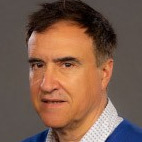
Prof. Dr. Juan A. Fernández is Vegetable Crops Professor at the Technical University of Cartagena Department of Agricultural Engineering, Universidad Politécnica de Cartagena, Spain;He has been working from the beginning of his research activity on the introduction and development of techniques for the production of new horticultural and ornamental species. Currently, he has focused his research activities on the innovative horticulture practices for sustainable and efficient vegetable crops production and on the recovery and molecular characterization of neglected crops. He is currently an Editorial Board member of the Agronomy and Horticulturae journals and Guest Editor in several Special Issues of both journals. He has organized four prestigious international congresses under the auspices of the International Society for Horticultural Science (ISHS). His research work is notable for his numerous publications, with more than 130 articles in journals indexed in the SCOPUS database.

Senior Researcher at CSIC, Micronadir CEO and previously CEO of Microgaia Biotech. CEBAS-CSIC, Group of Soil Enzimology and Biorremediation and Organic Wastes, Campus de Espinardo;Design of composting processes related to specific functionalities such as biopesticide, biostimulants and / or biofertilizer improvement; by the selection of specific suitable raw materials and through the isolation and inoculation of beneficial microorganisms related to the above functionalities has been his main research topic. Horticulture crop effect by using functional compost, as organic amendment or soilless growing media constituive, have been also deeply study. The use of molecular techniques such as real-time PCR techniques, digital PCR and currently through massive sequencing (NGS) are one of the relevant techniques that have been used for studying rizosphere interaction. From his research, more than 80 publication in the Science Citation Index demonstrates his relevant contribution to understand the important effect of organic matter on crops under mediterranean conditions (http://orcid.org/0000-0001-7485-1092). He has participated in more than 100 international congress, been organizer of some international and national congress, supervising 8 PhD thesis with a total cites (Google Scholar) of 5456. His citation average in the last five years has been 507. His Total Google Scholar H index has been 40 and for the last 5 years has been 31.
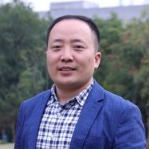
Key Laboratory of Horticultural Plant Biology, Ministry of Education, Huazhong Agricultural University, Wuhan 430070, China;Horticultural products differ from cereal crops in that horticultural products provide more secondary metabolites and antioxidants that are beneficial for human health. He has been working from the beginning of his research activity on mining of the genes for important horticultural traits in tomato. With increasing consumer demands for taste, nutrition, and healthy antioxidant from horticultural product, he with his colleagues uses GWAS to identify the genes responsible for fruit nutrition (vitamin C), flavor (malate, sugar), and carotenoid. Currently, he has focused his research activities on gene underlying the fruit taste and nutrition and development of gene markers for molecular breeding of tomato. He is currently an Editorial Board member of the Horticulturae journal and Guest Editor in two Special Issues of the journal. He has organized two international symposiums on horticultural plant biology. His research work is notable for his numerous publications, with more than 100 journal articles and book chapters.
Important Dates
18 Dec
2021
14 Jan
2022
14 Feb
2022
Meet Our Speakers
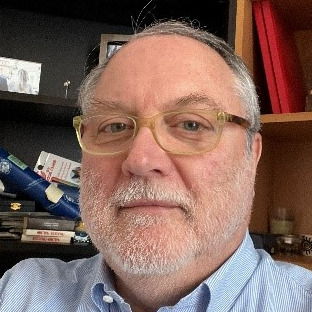
Department of Biological and Environmental Sciences and Technologies (DiSTeBA) Università del Salento, Lecce, Italy;Degree in Agricultural Science with top score, Ph.D. in Crop and Fruit Trees Science (curriculum Propagation), University of Pisa. Post Doc in Japan (twice) in the National Institute for Basic Biology (NIBB), Okazaki, in the lab directed by Prof. M. Nishimura, and at The University of Edinburgh, Scotland, UK, in the Dr. S.M. Smith's lab. Chair Professor of Plant Physiology at the University of Salento, Lecce, Italy from November 1st, 2002. Member of the Editorial board of Biology and Plants; from January 2022 Editor in Chief of Horticulturae. Author of over 100 scientific publications. Main scientific interests: enzymes of the glyoxylate cycle; intracellular localization of aconitase isoforms; carbohydrates and control of gene expression; genetics of plant species such as olive trees and wheat; Xylella fastidiosa as olive tree pest and selection of tolerant olive varieties; heavy metal uptake and translocation in plants; plant phenolic compounds and volatiles.
Department of Agriculture, Food and Environment, University of Pisa, Via del Borghetto 80, 56124 Pisa, Italy;PhD on horticulture, associate Professor of Vegetable and ornamental crops Department of Agriculture, Food and Environment (DAFE)- University of Pisa from 2017. My main research activity is related on soilless crops, irrigation and fertilisation automation systems, food quality and biofortification of vegetable crops, development of Decision Support System for increase the water and nutrient use efficiency. I had created with some colleagues some software to increase the water nutrient efficiency (CAL-FERT and GREEN-FERT), to promote the soilless culture technique (Hydrotools), some of these in 5 different languages (Nutrient Solution Calculator and Fertilizer calculator). I was the scientific responsible of some national and regional research projects. I got 90 peer review publications, with an h-index =20, and total number of citations of 1045. More information on: Orcid ID: 0000-0001-9994-763X Researchgate ID: https://www.researchgate.net/profile/Luca_Incrocci Scopus Author ID: 57201973756
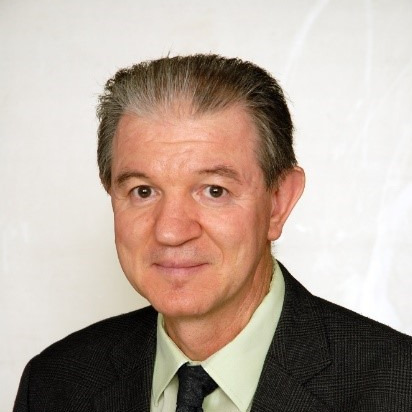
Department of Crop Science, Agricultural University of Athens Iera Odos 75, 11855 Athens, Greece;Dimitrios Savvas was born in Ioannina, Greece in 1961. He was awarded a Diploma in Agriculture from the Agricultural University of Athens (AUA) in 1985 and a Ph.D. degree from the University of Bonn, Germany, in 1992. From 1996 to 2006 he was affiliated with the Technological Educational Institution of Epirus. Since 2006 he is a Professor at the Department of Crop Science of the Agricultural University of Athens. Since October 2016 he is the Director of the Laboratory of Vegetable Production and, since September 2019, he is the Dean of the Faculty of Plant Sciences. He specializes in soilless culture, plant nutrition, water management, and applied stress physiology with emphasis on salinity and greenhouse crops. He has published over 110 papers in refereed international scientific journals and many other papers in congress proceedings (Acta Hort.) and as book chapters. He has an h-index of 26 in Scopus and 1980 hetero-citations of his publications (updated December 2021). According to the bibliographic classification of Baas J, Boyack K, Ioannidis JPA. (2021): Updated science-wide author databases of standardized citation indicators” conducted by Stanford University for Elsevier (https://elsevier.digitalcommonsdata.com/datasets/btchxktzyw/3), Professor Savvas ranks within the top 2% of scientists worldwide in his scientific field. He has been involved in many EU research projects, either as coordinator or as a member of the research team. In the last 5 years, in addition to several national research projects, he has been the coordinator of the AUA team in the European research projects LEGUME FUTURES (FP7, coordinator for AUA), EUROLEGUME (FP7, coordinator for AUA), TOMRES (HORIZON2020), TRUE (HORIZON2020) and VEGADAPT (PRIMA) and member of the research team in the H2020 Project RADIANT. A detailed CV of Dimitrios Savvas is accessible at: http://www.ekk.aua.gr/index.php?sec=members&item=4&doc=2).
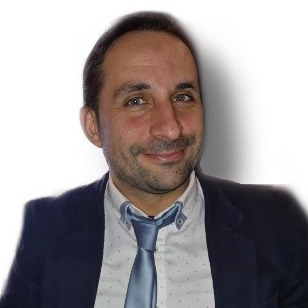
Department of Agricultural, Food and Environmental Sciences (DSA3) – University of Perugia;EDUCATION 2011 Graduated in Agricultural Science with full marks and honours. 2017 PhD graduation. RESEARCH ACTIVITIES From 2021 Fixed term researcher at Department of Agricultural, Food and Environmental Sciences UNIPG PUBLICATIONS Research activity, documented by about 90 papers (ORCID ID 0000-0001-6639-4637, Scopus 51 papers, 639 citations, h-index 18), published in international and national journals and books SCIENTIFIC TOPICS eco-physiology and efficiency of fruit tree species; impact of abiotic stresses on olive trees; valorization of olive-oil by-products; LCA and CO2 sequestration in olive tree groves; olive tree biofortification; micropropagation SOME OF THE SCIENTIFIC HONOURS 2018 - First award “Antico Fattore” – Accademia dei Georgofili Firenze for the paper “Long term amendment with fresh and composted solid olive mill waste on olive grove affects carbon sequestration by prunings, fruits and soil”. 2015 - First Young researcher award “Giornate Tecniche SOI 2015” for the paper “Substrati innovativi per l’allevamento dell’olivo in contentitore: effetti sull’attività vegetativa e sul microbiota del suolo”. 2013 - Special mention “Linfaˢ - Fondazione Italiana Accenture e Fondazione Collegio delle Università Milanesi - for the project "BIO-COMPOST". REFEREE/EDITOR FOR NATIONAL AND INTERNATIONAL RESEARCH PROJECTS AND JOURNALS Referee and Editor forseveral international scientific journals. CONGRESS AND MEETING ORGANIZATION/CHAIRMAN Organizer/chairman of national and international congress MEMBERSHIP OF SCIENTIFIC SOCIETIES Accademia Nazionale dell’Olivo e dell’Olio - Italian Horticultural Society (SOI) and International Society for Horticultural Science: ISHS

Department of Postharvest Science, Agricultural Research Organization (ARO), Volcani Center, 68 HaMakkabbim Road, P.O. Box 15159, Rishon LeZiyyon 7505101, Israe;Carmit Ziv completed her PhD. in Plant Protection at the Hebrew University of Jerusalem and continued as a Post-doctoral fellow at the Weizmann Institute of Science, Department of Plant and Environmental Sciences. Currently Dr. Ziv is a researcher at the Department of Postharvest Science, ARO and the head of the laboratory for Postharvest pathology of vegetables. Her research interest is Postharvest disease control of vegetables; Environment-friendly treatments to control postharvest fungal rot; Tolerant mechanisms of phytopathogenic fungi to low temperatures during cold storage. The effect of altered fruit composition during ripening on fungal pathogenicity; Lipid metabolism affecting the interactions between fruits and pathogenic fungi during storage. The effect of plant viruses on postharvest performance of vegetables.
University of Priština in Kosovska Mitrovica, Faculty of Agriculture, Serbia;Zoran S. Ilic was born in Kosovska Mitrovica (Serbia) 1963. He received his doctorate in 1993 from the Faculty of Agriculture in Novi Sad. He became a full professor at the Faculty of Agriculture in Prishtina at 2004. He has published 6 books and important chapters in 7 prominent scientific books and monographs of international importance. He has published over 270 scientific papers (34 of which are on the SCI list). He spent a long time in Israel on postdoctoral studies. He is a reviewer in 65 international journals. He is the mentor of 3 doctoral dissertations, 2 master's theses and a number of master's and diploma theses. He is a member of the commission for the defense of master's and doctoral dissertations in South Africa. He is married and the father of four children.
Laboratory of Vegetable Crops, School of Agriculture, Aristotle University of Thessaloniki, 54124 Thessaloniki, Greece;Associate Professor in the Department of Horticulture and Viticulture. He is specialized in issues related to plant physiology, postharvest physiology and handling of horticultural crops, innovative cultivation practices and technologies (grafting, hydroponics, PFAL, biostimulants) for vegetables production and seedlings quality. He has published several articles in peer reviewed journals, and he has participated in several national and EU research projects.

Plant Pathology, University of Udine, Italy;Alessandra Di Francesco completed her Ph.D. in Plant Pathology in 2015 at Bologna University with the thesis ‘Aureobasidium pullulans as biological control agent: modes of action’ and she was a post doc until 2021. Alessandra has 10 years of experience in academic research in plant pathology, postharvest diseases, and biological control methods, gaining experience in these sectors. She published 32 publications in SCI Journals (during 2014-2022), 25 as first author (588 citations; h index 13, based on Scopus) and two patents. Since 2022, Alessandra started to work as senior researcher in Plant pathology at Udine University.

The recordings of IECHo-2022 live sessions are available at:
https://iecho2022.sciforum.net/#recordings
The accepted proceedings papers will probably be published as one dedicated volume in MDPI Biology and Life Sciences Forum (ISSN: 2673-9976 , https://www.mdpi.com/journal/blsf). After the conference, the Conference Committee will recommend manuscripts that may be included for publication in one Special Issue in Horticulturae.
On behalf of the Organizing Committee, I would like to give you a warm welcome to the 1st International Electronic Conference on Horticulturae (IECHo2022). I am very pleased to hold this event which would not be possible without the collaboration of the other co-conveners, Prof. Dr. José Antonio Pascual and Prof. Dr. Yuyang Zhang, the members of the Conference Committee, the Invited Speakers, the Qualified Reviewers, and The Technical Secretariat.
This international symposium is an excellent opportunity to bring together researchers, academics, technicians, and other experts from the public and private sectors involved in the field of Horticultural Science. The symposium comprises two live sessions and special technical sessions, offering a high-quality interesting program with renowned keynote speakers. We hope you can show and exchange your most recent research work, ideas, and innovations, taking into account that after the conference, the Conference Committee will recommend manuscripts that may be included for publication in a Special Issue.
Welcome! You are invited to join in IECHo 2022 | Live Session.
It is totally free to attend. You only need to register for the live session you want to join in. Registrations with academic institutional email addresses will be prioritized. After registering, you will receive a confirmation email about joining the webinar. The number of participants to the live session is limited but the recording will be made available on Sciforum shortly afterwards.
IECHo 2022I Non-conventional approaches to maintain postharvest quality: 26/04/2022 16:00
IECHo 2022I Trends for future horticulture: 27/04/2022 16:00

Session 1. Non-Conventional Approaches to Maintain Postharvest Quality
Session 2. Trends for Future Horticulture
Ms. Canna Ren
Ms. Kira Yang
MDPI Branch Office, Beijing
E-Mail: iecho2022@mdpi.com
Sponsoring Opportunities
For information regarding sponsoring opportunities, please contact the conference secretariat.


