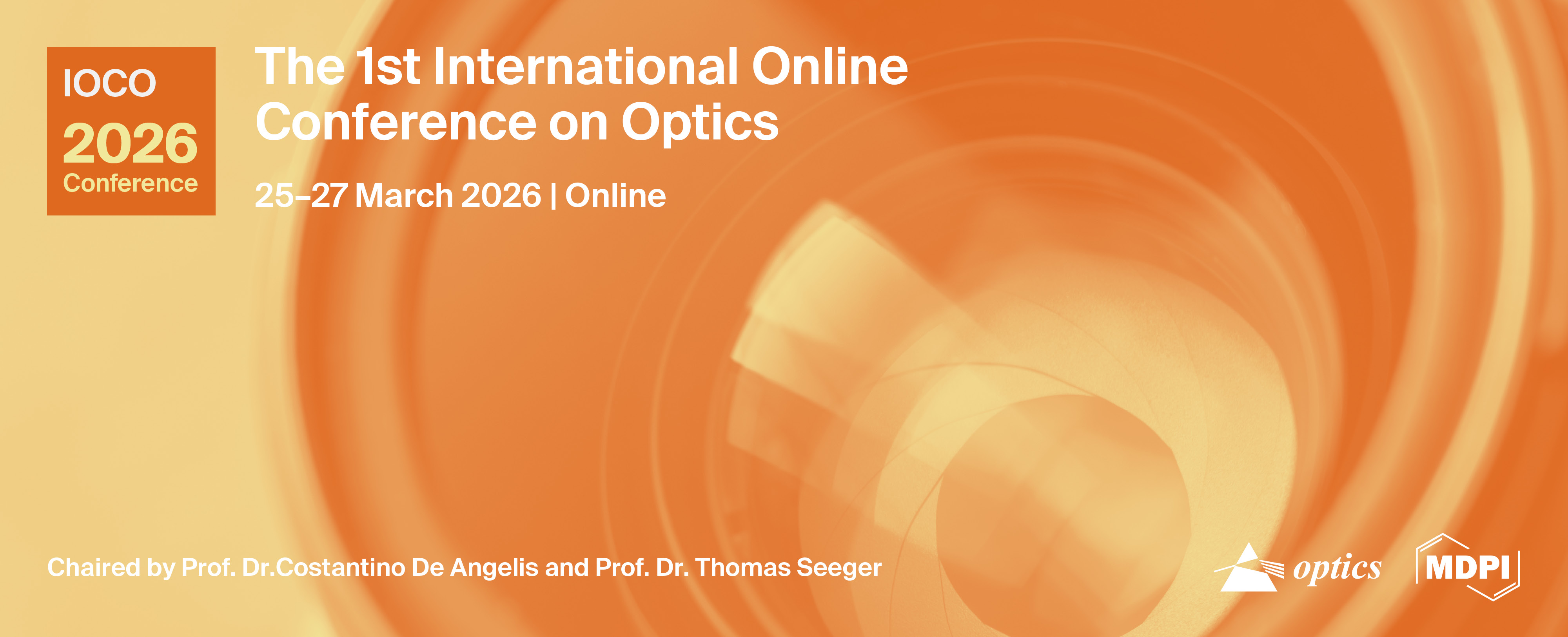
The 1st International Online Conference on Optics
Part of the International Online Conference on Optics series
25–27 March 2026
16 January 2026
10 February 2026
23 March 2026
Biomedical Optics, Photonics, Quantum Optics
- Go to the Sessions
- Event Details
IOCO2026 is FREE for Participation!
The Abstract Submission is now closed.
The Abstract Acceptance Notification will be sent by
10 February 2026.
Registration remains open until 23 March 2026.
Secure your spot by registering for free HERE.
Program Overview
| 25 March Morning |
26 March Morning |
27 March Morning |
S6. Quantum Optics |
S1. Biomedical Optics |
S4. Photonics and Optical Communications |
| BREAK | BREAK | BREAK |
| 25 March Afternoon |
26 March Afternoon |
27 March Afternoon |
| S5. Laser Sciences and Technology | S3. Geometrical Optics | S2. Optoelectronics & Optical Engineering |
Welcome from the Chairs
Dear Colleagues,
It is our great pleasure to invite you to join the 1st International Online Conference on Optics (IOCO 2026), which will be hosted online from 25 to 27 March 2026.
The conference serves as a premier platform for optics researchers and enthusiasts to share their latest findings, innovative ideas, and practical experiences in the fields of optics and photonics. IOCO 2026 will present the state of the art and exciting new developments in optics relating to the following topics:
S1. Biomedical Optics;
S2. Optoelectronics and Optical Engineering;
S3. Geometrical Optics;
S4. Photonics and Optical Communications;
S5. Laser Sciences and Technology;
S6. Quantum Optics;
IOCO 2026 will enable you to share and discuss your most recent research findings with the vibrant global community of scientists and engineers in the field.
IOCO 2026 will make your presentation accessible to hundreds of researchers worldwide, with the active engagement of the audience in question-and-answer sessions and discussion groups, which will take place online.
The conference committee will review the submitted abstracts. The authors of accepted contributions will have their work displayed in an abstract collection. Following the conference, outstanding contributions will be invited to be submitted as full-length papers for publication in Optics.
Chairs of IOCO 2026

Event Chairs
Department of Information Engineering, University of Brescia, Italy
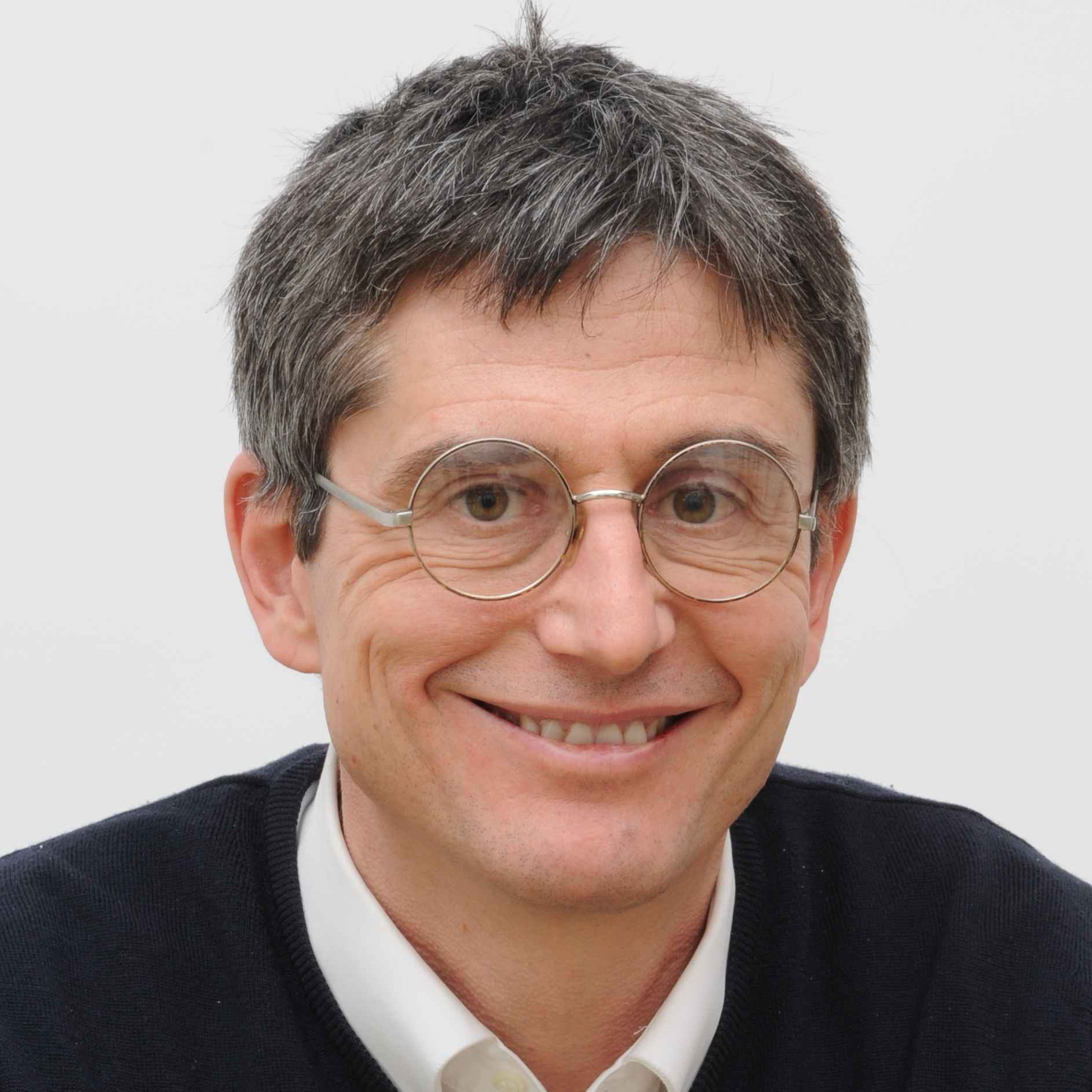
Costantino De Angelis received the Laurea degree (cum laude) in Electronic Engineering and the Ph.D. in Telecommunications from the University of Padova, in 1989 and 1993. Since 1998 Costantino De Angelis has been with the University of Brescia, where he is the head of the Photonics Group. Since 2004 Costantino De Angelis has been a full Professor of Electromagnetic Fields and he is an OSA Fellow. Since 2012, Costantino De Angelis has been in charge of the coordination of the research activities of the Department of Information Engineering. Since 2019 he has been Chair of the PhD program in Information Engineering at the University of Brescia.
Institut Fluid- und Thermodynamik, Lehrstuhl für Technische Thermodynamik, Universität Siegen, Paul-Bonatz-Straße 9-11, Germany
Thomas Seeger received the Diploma in Physics (Dipl.- Phys.) University-GHS-Essen, Department of Laser- and Plasmaphysics and the PhD (Dr.-Ing.) in Chemical Engineering in University of Erlangen Germany, in 1989 and 1994, respectively, and then In 2006 he was graduated the doctoral habilitation at the Technical Faculty of the University of Erlangen. In 1989-1994 he was the Research Scientist at the University of Bochum and University of Erlangen. In 1994 he was the Senior Researcher at the University of Erlangen. In 1996-2010 he was head of the group: Applied Spectroscopy at the University of Erlangen. Since 2010 he is Full Professor at the University of Siegen and head of the Institute of Engineering Thermodynamic at the University of Siegen. Research area and experience: Active in different areas of optical and laser diagnostics for more than 20 years with a strong expertise in the development and application of new laser diagnostic techniques as measurement tools for thermodynamics, fluid dynamics and particle and combustion technology. Worldwide leading expert in the application of laser scattering techniques (Mie, Rayleigh, Raman), of laser-induced fluorescence technique (LIF) and non linear optical measurement techniques like laser induced grating technique (LIG) and coherent anti-Stokes Raman spectroscopy (CARS) for the investigation of fluid phase systems and in particular of technical combustion processes.
Session Chairs
Prof. Dr. Giuseppe Trusso Sfrazzetto
Department of Chemical Science, University of Catania, Italy
Dr. Andrea Salamon
Istituto Nazionale di Fisica Nucleare, Sezione di Roma Tor Vergata, Italy
Dr. Jiahao Huo
School of Computer and Communication Engineering, University of Science and Technology Beijing,China
Dr. Francesco Chiavaioli
National Research Council of Italy (CNR-IFAC), Sesto Fiorentino, Italy
Prof. Dr. Yuriy Garbovskiy
Department of Physics and Engineering Physics, Central Connecticut State University, New Britain, USA
Dr. Davide Rocco
Department of Information Engineering, University of Brescia, Italy
Dr. Guido Toci
National Institute of Optics, National Research Council of Italy, Italy
Event Committee
Department: School of Optoelectronic Engineering, Changchun University of Science and Technology, China
Distinguished Professor Emeritus of Materials Science and Engineering at the University of California in Davis and Graduate Group Membership in Chemical Engineering and Mechanical Engineering, Davis, California, USA
Department of Environmental Engineering, University of Calabria, Rende, Italy
Tel Aviv University, Tel Aviv, Israel
Physics Department, Technion - Israel Institute of Technology, Haifa, Israel
Moscow Technical University of Communications and Informatics, Moscow, Russia
Department of Graphic Engineering, Design, and Projects, University of Jaén, Jaén, Spain
Department of Engineering, University of Naples “Parthenope”, Naples, Italy
Flavio Esposito is Assistant Professor (Tenure-track) of Electronics with the Department of Engineering of the University of Naples “Parthenope”. His research activity is focused on the design, simulation, fabrication, and characterization of novel fiber optic devices. His work currently involves the development and application of sensors for bio-chemical measurements, radiation exposed environments, environmental monitoring, and structural health monitoring. He received the outstanding reviewer award from Sensors (2019), IEEE Sensors Journal (2020) and IEEE Photonics Technology Letters (2023). He is an Editorial Board Member of Sensors, Photonics and Biosensors; he serves as an Associate Editor for IEEE Sensors Letters and IEEE Sensors Reviews.
School of Dental Technology, Taipei Medical University, Taipei, Taiwan
Optoelectronics Laboratory, Department of Electrical and Information Engineering, Polytechnic University of Bari, Bari, Italy
Department of Mechanical Engineering, National Chung Cheng University, Chiayi, Taiwan.
Professor of Electrical and Computer Engineering, Drexel University, Philadelphia, Pennsylvania, USA
Department of Physical Electronics, School of Electrical Engineering, Faculty of Engineering, Tel Aviv University, Tel Aviv, Israel
Department of Electrical and Computer Engineering , University of Victoria, Victoria, British Columbia, Canada
Huazhong University of Science and Technology, Wuhan, China
Aerospace Information Research Institute, Chinese Academy of Sciences, Beijing, China
Department of Electrical Engineering and Computer Science, University of Arkansas, Arkansas, USA
Institute of Modern Optics, Nankai University, Tianjin, China.
University of Electronic Science and Technology of China, Sichuan, China
Jieyun Wu received his B.S. degree from Nankai University in 2008 and his Ph.D. degreefrom the Technical Institute of Physics and Chemistry, Chinese Academy of Sciences, in2013. Since then, he has been with the School of Optoelectronic Science andEngineering at the University of Electronic Science and Technology of China, where hecurrently serves as an associate professor. His research focuses on hybrid photonicintegrated circuits for electro-optics and biochemical sensing. Dr. Wu has authoredover 70 peer-reviewed journal and conference papers, with total citations exceeding2,000 (Google Scholar, H-index: 23). He was selected as one of the 52 EmergingInvestigators in Journal of Materials Chemistry C for his contribution in opticalwaveguide materials and devices. He serves as an editor for the ESCI-indexed journalOptics, a young editorial board member of the ESCI-indexed journal Chip, and anassociate editor of the Journal of Optics and Photonics Research.
Department of Physics, Norwegian University of Science and Technology (NTNU), Trondheim, Norway
Department of Mechanical Engineering , University of North Texas, Texas, USA
Department of Chemistry and NanoScience Technology Center, University of Central Florida, Florida, USA
Department of Electronics, Telecommunications and Informatics (DETI), Institute of Telecommunications, University of Aveiro, Aveiro, Portugal
Italian Space Agency - Centro Spaziale G. Colombo Contrada Terlecchia, Matera, Italy
James C. Wyant College of Optical Sciences, University of Arizona, Arizona, USA
College of Natural and Applied Sciences, University of Alberta, Alberta, Canada
Shanghai Institute of Ceramics, Chinese Academy of Sciences, Shanghai, China
Department of Information Engineering, University of Brescia, Brescia, Italy.
National Research Council, Institute for Photonics and Nanotechnologies, Padova, Italy
Department of Electrical and Computer Engineering, University of California San Diego, California, USA
Instituto de Telecomunicações, University of Aveiro, Aveiro, Portugal
Institute of Applied Sciences and Intelligent Systems “Eduardo Caianiello” (ISASI) . National Research Council (CNR) of Italy, Florence, Italy
School of Optometry, University of Detroit Mercy, Michigan, USA
Department of Physics, Faculty of Sciences, University of Minia, Minia, Egypt
Dr. Mahmoud Hamdy Elshorbagy is a physicist specializing in photonics and nanophotonics, with a robust academic and research background spanning Egypt and Spain. He earned his Bachelor's degree in Physics from Minia University, Egypt,in 2007, followed by a Master's degree in Hybrid Solar Cells from the same institution in 2013. He completed his academic training with a Ph.D. in Physics from the prestigious Universidad Complutense de Madrid (UCM), Spain, in 2020.His primary research is focused on the development of high-efficiency photonic devices, leveraging resonant nanostructures and innovative light concentration strategies. Dr. Elshorbagy's expertise extends to the complementary fields of diffractive optics, energy harvesting,sensing devices, nanofabrication, and computational electromagnetism.Following his Ph.D., he deepened his research as a Postdoctoral Researcher at UCM's Faculty of Physics (2021-2022). His work in Spain also included roles as a Fellow with the Applied Optics Complutense Group (UCM) and the Displays and Photonic Applications Group at Universidad Carlos III de Madrid, and as a Researcher at the Escuela Politécnica Superior of Universidad Alcalá de Henares (UAH). He further contributed to academia as a Visiting Professor at the Faculty of Opticsand Optometry of UCM from 2023 to 2025.Currently, Dr. Elshorbagy serves as a Lecturer in the Physics Department at his alma mater, Minia University, where he continues his research and mentors the next generation of scientists.
Department of Photonics, Institute of Electro-Optical Engineering, National Yang Ming Chiao Tung University, Taipei, Taiwan
Keynote Speakers
Department of Information Engineering, University of Brescia, Brescia, Italy.
Opto-thermal tunability in phase-change metasurfaces
Marco Gandolfi is currently an Assistant Professor (RTDa) at Università degli Studi di Brescia. He obtained a Bachelor degree cum laude in Mathematics in 2011, a Bachelor degree cum laude in Physics in 2012, and a Master degree cum laude in Physics in 2014. He received his Ph.D. in Science, Physics at KU Leuven University, Belgium. The dissertation concerned the aspects of ultrafast thermomechanics at the nanoscale. The Ph.D. project was joined with Università Cattolica del Sacro Cuore, Brescia, Italy. During the Ph.D., he spent 9 months visiting the FemtoNanoOptics group, Université Lyon 1 (France), to work on a joint research project. He has been Postdoc Researcher at National Research Council, National Institute of Optics (CNR-INO) in Brescia, Italy, from December 2019 to January 2022. Dr. Gandolfi's current research interests cover the modeling and opto-thermo-mechanical simulations of photonic structures, metasurfaces and metalenses
Canada Research Chair in Liquid Crystals and Behavioral Biophotonics, Laval University, Quebec, Canada
Liquid Crystal Adaptive Biomedical Optics
Tigran Galstian (or Galstyan) started his studies at the Physics Department of Yerevan State University, Armenia (former Soviet Union). He received M.Sc. (Solid State Lasers) and Ph.D. degrees (Quantum Electronics) from the Special Department of Physics at Moscow Engineering Physics Institute, Russia. He spent several years as PostDoc researcher in Armenia and France and then moved to Canada where he is currently professor, head of the laboratory of Photonic Materials and Component at Université Laval (Quebec, Canada) as well as holder of Canada’s research chair in Liquid Crystals and Behavioral Biophotonics. His main research interests are in self-aligned molecular systems and their applications in electrooptic materials and in biology. His group is investigating the molecular self-organization mechanisms and their impact on key material properties as well as their influence on the behavior of light (focusing, divergence, color), molecules (diffusion of chiral “medical” molecules) and living microorganisms (bacteria). He has co-authored more than 850 scientific, technical and vulgarization communications, including more than 60 awarded patents. He is ranked (by Scholar GPS) in the top 0.2% of world scientists in the field of Liquid Crystals. He was the co-founder of high tech companies, Photintech (Quebec, Canada; commercializing “Electrically variable fiber optic components”); LensVector (San Jose, USA; commercializing “Electrically variable beam shaping components”); and PATQER (Quebec, Canada; commercializing “Polarization imaging devices”) where he is currently the CTO.
Department of Electronics, Telecommunications and Informatics (DETI), Institute of Telecommunications, University of Aveiro, Aveiro, Portugal
Optical Wireless Communications: Powering Ultra-High-Capacity Connectivity
Prof. Paulo Pereira Monteiro received his “Licenciatura” degree in Electronics and Telecommunications Engineering from the University of Aveiro in 1988, followed by an M.Sc. in Electronic Engineering from the University of Wales, UK, in 1990, and a Ph.D. in Electrical Engineering from the University of Aveiro in 1999. He is currently an Associate Professor at the University of Aveiro, research coordinator of Optical Communications Systems and Networking at the Instituto de Telecomunicações (IT), and director of the Electrical and Computer Engineering course at the University of Aveiro. From October 2002 to March 2007, he was Head of Research for Optical Networks at Siemens S.A., Portugal. He then worked at Nokia Siemens Networks (NSN) Portugal from April 2007 until May 2013, as a Research Manager. From 2016 until 2023, he was the Director and Scientific Committee member of the Doctoral Programme in Telecommunications MAP-tele. His main research interests include optical communication networks, microwave photonics, and electronic subsystems. He has successfully tutored and co-tutored more than 18 PhDs and participated in more than 28 projects (national and international). He has authored/co-authored more than 19 patent applications, over 160 papers in journals, and 300 conference contributions.

School of Physics, Georgia Institute of Technology, Atlanta, GA, USA
Measuring Everything You've Always Wanted to Know About a Light Pulse
Rick Trebino was born in Boston on January 18, 1954. He was quite poor as a child, but, on scholarships, he earned his high-school degree from Phillips Academy in Andover, Massachusetts, his B.A. from Harvard in 1977, and his Ph.D. from Stanford in 1983. Shortly afterward, while at Sandia National Laboratories in Livermore, California, he i-vented Frequency-Resolved Optical Gating (FROG), the first technique for the complete measurement of an ultrashort laser pulse in time, solving this long-standing famous problem in the field of ultrafast optics and advancing pulse measurement from blurry black-and-white snapshots to high-resolution full-color displays. In 1998, he accepted a Chair at Georgia Tech, where he extended humankind’s measure-ment capability to the complete spatiotemporal electromagnetic field of even highly complex ultrashort pulses. He currently also develops more advanced approaches to optics and physics education, doing for lectures what Gutenberg did for books. He’s received numerous prestigious awards, including 2024’s R.W. Wood Prize and several for his pioneering contributions to optics and physics education, and is a Fellow of four scientific societies. He was recently ranked by ScholarGPS in the top 0.1% of all scientists and #1 of all 19,000 ultrashort-laser-pulse scientists worldwide. He freely provides his elegant, entertaining, and fully narrated multimedia entire-course video lectures to the world via his web site to encourage the creation of free high-quality video lectures in academia in general.
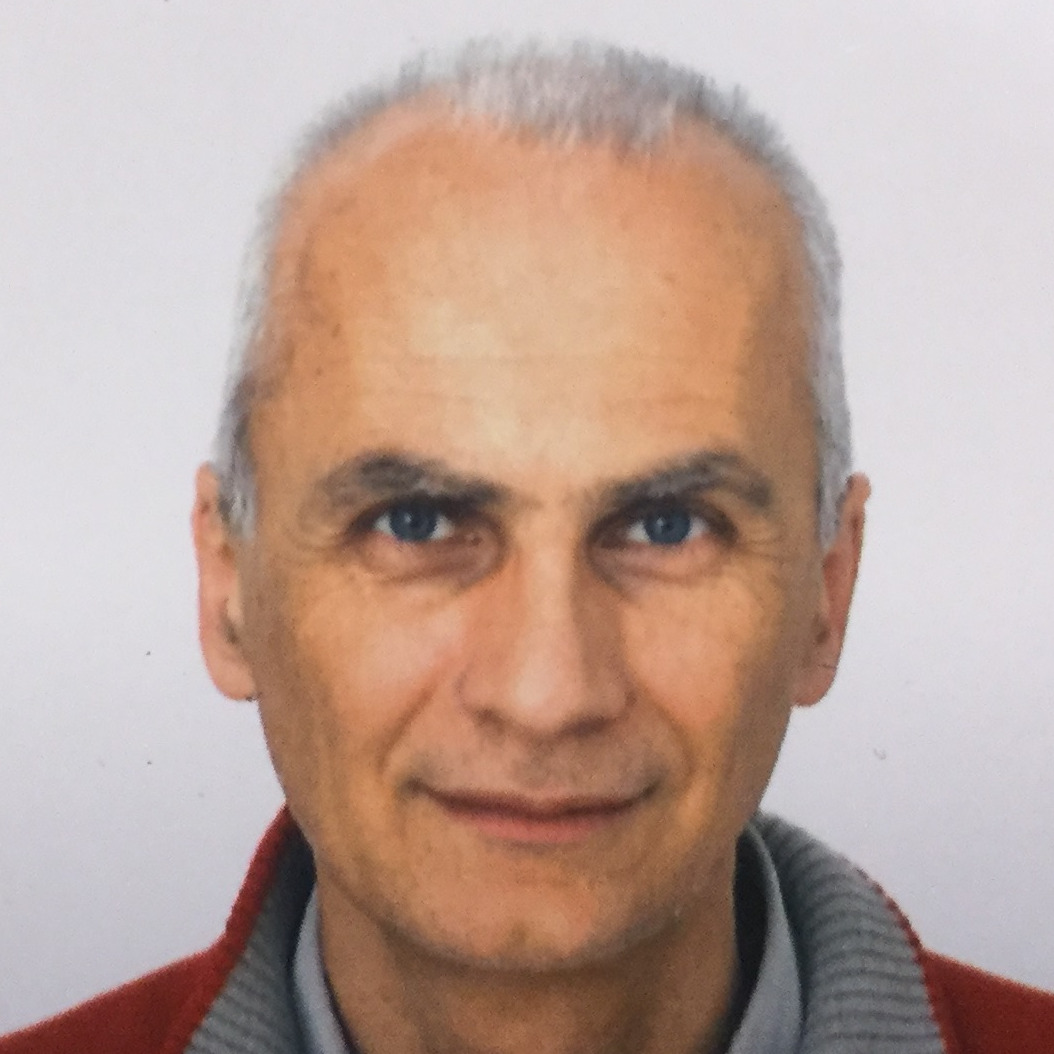
National Research Council, Institute for Photonics and Nanotechnologies, Padova, Italy
Raman Spectroscopy for Gas Detection: Applications to Energy and Agrifood
Luca Poletto is Research Director at CNR-Institute of Photonics and Nanotechnologies (CNR-IFN) and the Head of the CNR-IFN Research Division of Padova. After the graduation in Electronic Engineering cum laude at the University of Padova, Italy, he achieved the PhD title in Electronic Engineering from the same university in 1997. He has been research staff member of the National Institute for the Physics of Matter since 1999. From 2009 to 2016, he has been also Adjunct Professor of “Optical nanotechnologies” at University of Padova. Since 2019, he is Visiting Professor at the School of Electronics of Nanjing University (China). His main scientific interests are the development of spectroscopic instruments for the extreme-ultraviolet and soft X-ray spectral regions for laboratory and space applications, the generation and applications of ultrashort femtosecond and attosecond pulses in the extreme ultraviolet, the development of instrumentation for free-electron laser radiation and the applications of techniques related to applied optics, mainly laser spectroscopy for gas detection.

Institute of Applied Physics “N. Carrara” (IFAC), National Research Council (CNR), Florence, Italy
A Systematic Investigation of the Energy-Transfer Mechanisms in Dy:Lu3Al5O12 Ceramics Co-doped with Tb3+ for Developing Yellow Lasers
Angela Pirri is a Senior Researcher at the Institute of Applied Physics of the National Research Council (IFAC-CNR) in Florence. She holds an M.S. in Physics from the University of Pisa and a Ph.D. in Experimental Physics from the University of Siena. Her international experience includes a Marie Curie Fellowship at Vrije Universiteit Amsterdam and visiting scientist positions at ETH Zurich and Université Paris Diderot. Her research focuses on solid-state lasers, transparent polycrystalline ceramics, and non-linear optics. An Adjunct Professor at the University of Florence, she also serves as a certified project manager (ISIPM). Beyond laser physics, she is actively engaged in developing civilian drone applications and smart-capsule technologies for medical transport.

Invited Speakers
Department of Engineering , University of Campania Luigi Vanvitelli, Naples, Italy
Optics and Chemistry in Sensing: Polymer Imprinting as an Innovative Strategy for Sensitive Optical Waveguides
Rosalba Pitruzzella has a PhD in Industrial and Information Engineering from the University of Campania Luigi Vanvitelli, where she currently conducts research. She obtained a master’s degree in Chemistry and Pharmaceutical Technologies from the University of Naples Federico II in 2022. Her current research focuses on the development and characterisation of optical biosensors and optical-chemical sensors for environmental, food, biomedical, security, and biodefence applications.
Optical-chemical Sensors; Optical Biosensors; Molecularly Imprinted Polymers; Aptasensors
Biomedical Science, Technologies, and Nanobiotechnology Lab, IRCCS Istituto Ortopedico Rizzoli, 40136 Bologna, Italy
A Single-Device Approach to Multiplexed Health Monitoring Using Fluorescent Array Sensors
Physics Division, School of Science and Technology, University of Camerino, Camerino, Italy
Quantum noise limited transducers for quantum networks
Italian Space Agency - Centro Spaziale Giuseppe Colombo Contrada Terlecchia, Matera, Italy
Quantum inspired imaging and spectroscopy
Luigi Santamaria Amato after the master degree and PhD in Physics was postdoctoral researcher at University Milano Bicocca and Institute of Complex Systems in Rome. In 2012 joined Italian Institute of Optics (INO-CNR) as temporary researcher where he worked on high resolution spectroscopy for fundamental physics tests. From 2017 he is permanent researcher at Italian Space Agency where he works on several projects of optical metrology and quantum optics. He is author of more than 60 papers on peer-reviewed journals and is responsible of several projects on optical spectroscopy and quantum optics.
Department of Electrical and Computer Engineering , University of Victoria, Victoria, British Columbia, Canada
Intelligent Computing and Silicon Photonics
Dr. Meisam Abdollahi is an Embedded Hardware Designer at Barco Visual Solutions Inc. and an Adjunct Professor in the Department of Electrical and Computer Engineering at the University of Victoria, Canada. He holds a Postdoc form the University of Victoria and his Ph.D. in Computer Engineering (Computer Architecture) from the University of Tehran, and has over a decade of experience spanning academia and industry. His research interests include optical/electrical Network-on-Chip architectures, applied machine learning, large language models, embedded system design, and 5G and beyond mobile networks. He has authored more than 40 peer-reviewed journal and conference papers in leading venues such as ACM TECS, Elsevier JPDC, and IEEE/ACM workshops, and has served as a reviewer for numerous IEEE, Elsevier, Springer, and MDPI journals. Prior to his current roles, Meisam served as a faculty member and Dean of the Computer Engineering Department at Iran University of Science and Technology, Iran, where he taught and supervised students at the B.Sc., M.Sc., and Ph.D. levels. He also brings applied industry experience in FPGA-based video streaming design, hardware design & verification, and telecommunications R&D.
Mode asymmetry in magneto-plasmonic waveguides for integrated non-reciprocal devices
Giovanna Calò received the Master Degree in Electronic Engineering and the Ph.D. degree in Electromagnetism from the Polytechnic University of Bari, Bari, Italy, in 2002 and 2006, respectively. She is currently Associate Professor of Electromagnetic Fields at the Department of Electrical and Information Engineering, Polytechnic University of Bari, Italy. Her main research interests are computational electromagnetics, on-chip optical interconnections, integrated nanoantennas for wireless on-chip optical communications, photonic crystals, plasmonic nanostructures and components
Optical Quality Through Focus of Multifocal Contact Lenses used for Myopia Control
Department of Graphic Engineering, Design, and Projects, University of Jaén, Jaén, Spain
Angle-Dependent Glare Behavior in LED Luminaires: A Unified cosm Model for Urban Observers
Researcher on energy efficiency, renewable energies, gasification, sustainability, environmental impact, road lighting and engineering projects. Logistics and maintenance and storage processes. Warehouse. Project Direction and Management. BIM projects. Multidisciplinary researcher who focuses his research in the field of energy projects and systems, in the evaluation of renewable resources and in energy planning, executing projects related to systems, networks and smart cities (Smart Grid and Smart Cities), renewable energy, gasification , thermal and electrical use of biomass, as well as use of other sustainable energy resources. Universidad de Jaén: Jaén, Andalucia, ES | Profesor Doctor (Ingeniería Gráfica, Diseño y Proyectos) Employment Fuente: La Universidad de Jaén Fuente preferida Ayuntamiento de Fuengirola: Fuengirola, Málaga, ES 2000-02-06 hasta 2017-11-11 | Ingeniero (Infraestructuras (Currently on leave)) Employment Fuente: Hermoso-Orzáez, Manuel Jesús Fuente preferida Education and qualifications (2) Ordenar Agregar educación Universidad de Málaga: Málaga, España, ES 2011-09-15 hasta la fecha | Doctor Ingeniero (Ingenieria Gráfica, Diseño y Proyectos) Education Fuente: Hermoso-Orzáez, Manuel Jesús Fuente preferida Universidad de Jaén: Jaen, Andalucía, ES 1995-09-02 hasta 1998-06-01 | Ingeniero Técnico Industrial (Ingenieria) Education
Department of Environmental Engineering, University of Calabria, Rende, Italy
Variable-Angle Spectroscopic Ellipsometry for Optical Characterization of Advanced Materials
Dr. Grazia Giuseppina Politano is a postdoctoral researcher at the University of Calabria, Department of Environmental Engineering, focusing on light–matter interactions at the nanoscale for applications in solar membrane distillation. She earned her Master’s degree in Physics (cum laude) in 2016 and a PhD in Physical, Chemical and Materials Sciences and Technologies in 2021. Her research spans thin films, nanostructured materials, and advanced optical characterization techniques such as spectroscopic ellipsometry and Raman spectroscopy. Her multidisciplinary expertise bridges physics, chemistry, and materials science, covering topics from two-dimensional materials and nanophotonics to functional membranes for sustainable technologies. Dr. Politano has authored more than 30 scientific publications on thin films and nanostructured materials. She has also organized and coordinated international scientific webinars for the journals Crystals (MDPI) and Optics (MDPI), including the webinar “Thin Films and Spectroscopic Ellipsometry".Moreover, she has received prestigious recognitions at the European level, including the Horizon Europe Seal of Excellence, awarded to high-quality projects.
Registration
The registration for IOCO 2026 will be free of charge! The registration includes attendance to all conference sessions.
If you are registering several people under the same registration, please do not use the same email address for each person, but their individual university email addresses. Thank you for your understanding.
Please note that the submission and registration are two separate parts. Only scholars who registered can receive a link to access the conference live streaming. The deadline for registration is 23 March 2026.
Instructions for Authors
IOCO 2026 will accept abstracts only. The accepted abstracts will be available online on Sciforum.net during and after the conference.
Important Deadline
1. Deadline for abstract submission: 15 December 2025 16 January 2026
2. Announcement of oral and poster abstract results: 10 February 2026
Please note:
An abstract acceptance email only confirms that your abstract has been accepted. Oral or poster presentation invitations are determined separately by the conference chairs, and you will receive an additional email with the presentation result.
If you do not have an account, please register at www.sciforum.net. After logging in, submit your abstract using the "Submit Abstract" button on the conference homepage. No template is required.
Abstract Requirements
1. Types of Submissions
- Accepted: Original research abstracts; systematic reviews or meta-analyses abstracts (must comply with PRISMA 2020).
- Not accepted: Narrative, scoping, comparative, perspective, opinion, or essay-style reviews.
2. Content Requirements
- Length: 200-300 words
- Structure: Introduction, Methods, Results, Conclusions
- Language: Clear, publication-ready English
- Originality: Must be original and unpublished; previously published abstracts will not be considered
3. Authorship
- The submitting author must ensure all co-authors approve the content.
- Authors may submit multiple abstracts, but only one abstract per author may be selected for an oral presentation.
Presentation Requirements
1. Each abstract must designate one presenter. To change the presenter, please contact us after you receive the oral/poster presentation invitation.
2. Only live presentations are accepted.
3. Presenters who do not attend the live session will not be eligible for awards or presentation certificates.
- Size in pixel: 1080 width x 1536 height–portrait orientation.
- Size in cm: 38,1 width x 54,2 height–portrait orientation.
- Font size: ≥16.
- Examples of successful submissions can be viewed here at the following links: (1), (2), (3)
- You can use our free template to create your poster.
It is the author's responsibility to identify and declare any personal circumstances or interests that may be perceived as inappropriately influencing the representation or interpretation of clinical research. If there is no conflict, please state "The authors declare no conflicts of interest." This should be conveyed in a separate "Conflict of Interest" statement preceding the "Acknowledgments" and "References" sections at the end of the manuscript. Any financial support for the study must be fully disclosed in the "Acknowledgments" section.
MDPI, the publisher of the Sciforum.net platform, is an open access publisher. We believe authors should retain the copyright to their scholarly works. Hence, by submitting an abstract to this conference, you retain the copyright to the work, but you grant MDPI the non-exclusive right to publish this abstract online on the Sciforum.net platform. This means you can easily submit your full paper (with the abstract) to any scientific journal at a later stage and transfer the copyright to its publisher if required.
List of Authors (198)
Publication Opportunities
1. Optics Journal Publication
Participants in this conference are cordially invited to contribute a full manuscript to Optics (Impact Factor: 1.6 (2024); 5-Year Impact Factor: 1.5 (2024)), with a 20% discount on the publication fee. Please note, if you have IOAP/association discounts, conference discounts will be combined with IOAP/association discounts. Conference discounts cannot be combined with reviewer vouchers. All submitted papers will undergo MDPI’s standard peer-review procedure. The abstracts should be cited and noted on the first page of the paper.
2. Proceeding Paper Publication
All accepted abstracts will be published in the conference report of The 1st International Online Conference on Optics in the Physical Sciences Forum (ISSN: 2673-9984); authors of accepted abstracts are highly encouraged to submit an extended proceeding paper (ideally 4-8 pages in length) for free, please submit it to the same journal after the conference.
Proceedings submission deadline: 8 May 2026.
Please click HERE to submit your proceeding paper to the Physical Sciences Forum and be sure to disclose the conference information in your cover letter or mention the conference name in your submission.
proceeding_paper-template
Publication Notice: Conference report and proceedings papers will undergo peer-review procedure. Acceptance at the conference does not ensure final publication.
Event Awards

To acknowledge the support of the conference's esteemed authors and recognize their outstanding scientific accomplishments, we are pleased to announce that the conference will provide 6 awards including Best Oral Presentation Awards and Best Poster Awards.
The Awards
Number of Awards Available: 6
Eligibility: Open to all authors selected as oral speakers who have delivered their presentation. Failure to present, delegation of the presentation to another person, or use of AI-generated voice or similar substitutes will result in disqualification.
Criteria: Evaluation considers scientific rigor (clear, literature-supported research question or hypothesis, appropriate methodology, robust analysis and critical discussion of the results), IMRaD/field-appropriate structure, clarity of presented data (clear, well-labeled figures and tables), presentation skills and audience engagement, demonstrated scientific novelty and impact.
2. Best Poster Award
Eligibility: Open to all authors who have presented their work through posters. Failure to present, delegation of the presentation to another person, or use of AI-generated voice or similar substitutes will result in disqualification.
Criteria: Evaluation considers scientific rigor (clear, literature-supported research question or hypothesis, appropriate methodology, robust analysis, and critical discussion of the results), IMRaD/field-appropriate structure enabling independent understanding, clarity of presented data (clear, well-labeled figures and tables), presentation skills (if orally presented), demonstrated scientific novelty and impact.
Prize: An award of CHF 200 and a certificate in recognition of your outstanding contribution.
Winner Announcement: The award winners will be evaluated and selected by the scientific committee after the conference. Results will be announced on the website and all winners will be individually contacted via email.Sponsors and Partners
For information regarding sponsorship and exhibition opportunities, please click here.
Organizers
Media Partners
Recommended In-Person Conference
Connect with the optoelectronics, photonics and sensors community In-Person!
We are pleased to announce that the 3rd International Conference on AI Sensors and Transducers (AIS 2026) would be held in Jeju, Korea, from 2–7 August 2026.
Don't miss this chance to showcase your research at this global platform, where you have a chance to present your work to award-winning innovators and network with pioneering experts.

Conference Secretariat
Mr. Ionut Spatar
Email: ioco2026@mdpi.com
S1. Biomedical Optics
Session Chairs
Dr. Giuseppe Trusso Sfrazzetto, Department of Chemical Science, University of Catania, Italy
Dr. Francesco Chiavaioli, National Research Council of Italy (CNR-IFAC),Sesto Fiorentino, Italy
Show all accepted abstracts (8) Hide accepted abstracts (8)
List of Accepted Abstracts (8) Toggle list
S2. Optoelectronics & Optical Engineering
Session Chair
Prof. Dr. Yuriy Garbovskiy, Department of Physics and Engineering Physics, Central Connecticut State University, New Britain, USA
Show all accepted abstracts (18) Hide accepted abstracts (18)
List of Accepted Abstracts (18) Toggle list
S3. Geometrical Optics
Session Chair
Dr. Davide Rocco, Department of Information Engineering, University of Brescia, Italy
Show all accepted abstracts (2) Hide accepted abstracts (2)
List of Accepted Abstracts (2) Toggle list
S4. Photonics and Optical Communications
Session Chair
Dr. Jiahao Huo, School of Computer and Communication Engineering, University of Science and Technology Beijing, China
Show all accepted abstracts (9) Hide accepted abstracts (9)
List of Accepted Abstracts (9) Toggle list
S5. Laser Sciences and Technology
Session Chair
Dr. Guido Toci, National Institute of Optics, National Research Council of Italy, Italy
Show all accepted abstracts (3) Hide accepted abstracts (3)
List of Accepted Abstracts (3) Toggle list
S6. Quantum Optics
Session Chair
Dr. Andrea Salamon, Istituto Nazionale di Fisica Nucleare, Sezione di Roma Tor Vergata, 00133 Rome, Italy
Show all accepted abstracts (7) Hide accepted abstracts (7)
List of Accepted Abstracts (7) Toggle list