Event submissions
Published
This submission belongs to the session S4. Gels in Medicine, Regenerative Medicine, Pharmacy, and Personal Care Products of the event The 1st International Online Conference on Gels
Published date
28 Nov, 2025
Academic Editor
'%3e%3cpath%20d='M12.6657%2010.9104C12.4185%2010.325%2012.0599%209.79327%2011.6097%209.34482C11.1609%208.89508%2010.6293%208.5365%2010.0442%208.28888C10.0389%208.28626%2010.0337%208.28495%2010.0285%208.28233C10.8446%207.69279%2011.3752%206.73249%2011.3752%205.64904C11.3752%203.8542%209.92103%202.39999%208.1262%202.39999C6.33136%202.39999%204.87715%203.8542%204.87715%205.64904C4.87715%206.73249%205.40774%207.69279%206.22393%208.28364C6.21869%208.28626%206.21345%208.28757%206.20821%208.29019C5.62129%208.5378%205.09463%208.89284%204.64265%209.34613C4.1929%209.79493%203.83432%2010.3266%203.58671%2010.9117C3.34345%2011.4845%203.21226%2012.0987%203.20023%2012.7209C3.19988%2012.7349%203.20233%2012.7488%203.20744%2012.7619C3.21255%2012.7749%203.22022%2012.7867%203.22998%2012.7968C3.23975%2012.8068%203.25142%2012.8147%203.26431%2012.8202C3.2772%2012.8256%203.29105%2012.8284%203.30504%2012.8284H4.09109C4.14874%2012.8284%204.19459%2012.7825%204.1959%2012.7262C4.2221%2011.7148%204.62823%2010.7676%205.34617%2010.0497C6.08899%209.30683%207.0755%208.89808%208.1262%208.89808C9.17689%208.89808%2010.1634%209.30683%2010.9062%2010.0497C11.6242%2010.7676%2012.0303%2011.7148%2012.0565%2012.7262C12.0578%2012.7838%2012.1037%2012.8284%2012.1613%2012.8284H12.9474C12.9613%2012.8284%2012.9752%2012.8256%2012.9881%2012.8202C13.001%2012.8147%2013.0126%2012.8068%2013.0224%2012.7968C13.0322%2012.7867%2013.0398%2012.7749%2013.0449%2012.7619C13.0501%2012.7488%2013.0525%2012.7349%2013.0522%2012.7209C13.0391%2012.0947%2012.9094%2011.4855%2012.6657%2010.9104ZM8.1262%207.9024C7.52486%207.9024%206.9589%207.6679%206.53312%207.24211C6.10733%206.81633%205.87283%206.25037%205.87283%205.64904C5.87283%205.0477%206.10733%204.48174%206.53312%204.05596C6.9589%203.63018%207.52486%203.39567%208.1262%203.39567C8.72753%203.39567%209.29349%203.63018%209.71927%204.05596C10.1451%204.48174%2010.3796%205.0477%2010.3796%205.64904C10.3796%206.25037%2010.1451%206.81633%209.71927%207.24211C9.29349%207.6679%208.72753%207.9024%208.1262%207.9024Z'%20fill='%235D1EE1'/%3e%3c/g%3e%3c/svg%3e) Dirk Kuckling
Dirk KucklingCitation
Hirakjyoti Das, Pritam Kayal, The Creation of A Docetaxel-Loaded Hydrogel Nanosponge for the Treatment of Malignant Melanoma, in Proceedings of The 1st International Online Conference on Gels, 3 December–5 December 2025, MDPI: Basel, Switzerland
Share
Email
Facebook
Twitter
LinkedIn
The Creation of A Docetaxel-Loaded Hydrogel Nanosponge for the Treatment of Malignant Melanoma

Pritam Kayal 1
'%3e%3cpath%20d='M12.6647%2010.9104C12.4176%2010.325%2012.0589%209.7933%2011.6088%209.34485C11.16%208.89511%2010.6283%208.53653%2010.0432%208.28891C10.038%208.28629%2010.0327%208.28498%2010.0275%208.28236C10.8437%207.69282%2011.3743%206.73252%2011.3743%205.64907C11.3743%203.85423%209.92005%202.40002%208.12522%202.40002C6.33038%202.40002%204.87618%203.85423%204.87618%205.64907C4.87618%206.73252%205.40677%207.69282%206.22296%208.28367C6.21772%208.28629%206.21248%208.2876%206.20724%208.29022C5.62031%208.53783%205.09365%208.89287%204.64167%209.34616C4.19192%209.79496%203.83334%2010.3266%203.58573%2010.9117C3.34247%2011.4846%203.21128%2012.0987%203.19925%2012.721C3.1989%2012.735%203.20135%2012.7489%203.20646%2012.7619C3.21157%2012.7749%203.21924%2012.7868%203.22901%2012.7968C3.23877%2012.8068%203.25045%2012.8148%203.26334%2012.8202C3.27623%2012.8256%203.29007%2012.8284%203.30406%2012.8284H4.09012C4.14776%2012.8284%204.19362%2012.7825%204.19493%2012.7262C4.22113%2011.7148%204.62726%2010.7676%205.34519%2010.0497C6.08802%209.30686%207.07452%208.89811%208.12522%208.89811C9.17592%208.89811%2010.1624%209.30686%2010.9052%2010.0497C11.6232%2010.7676%2012.0293%2011.7148%2012.0555%2012.7262C12.0568%2012.7839%2012.1027%2012.8284%2012.1603%2012.8284H12.9464C12.9604%2012.8284%2012.9742%2012.8256%2012.9871%2012.8202C13%2012.8148%2013.0117%2012.8068%2013.0214%2012.7968C13.0312%2012.7868%2013.0389%2012.7749%2013.044%2012.7619C13.0491%2012.7489%2013.0515%2012.735%2013.0512%2012.721C13.0381%2012.0947%2012.9084%2011.4856%2012.6647%2010.9104ZM8.12522%207.90243C7.52388%207.90243%206.95792%207.66793%206.53214%207.24215C6.10636%206.81636%205.87185%206.2504%205.87185%205.64907C5.87185%205.04773%206.10636%204.48177%206.53214%204.05599C6.95792%203.63021%207.52388%203.3957%208.12522%203.3957C8.72655%203.3957%209.29252%203.63021%209.7183%204.05599C10.1441%204.48177%2010.3786%205.04773%2010.3786%205.64907C10.3786%206.2504%2010.1441%206.81636%209.7183%207.24215C9.29252%207.66793%208.72655%207.90243%208.12522%207.90243Z'%20fill='%235D1EE1'/%3e%3c/g%3e%3c/svg%3e)
Hirakjyoti Das 2
1. Department of Pharmaceutics, Bharat Pharmaceutical Technology, Amtali, Agartala, Tripura(w), India, India
2. Department of Pharmacology, Bharat Pharmaceutical Technology, Amtali, Agartala, Tripura(w), India, India
Abstract
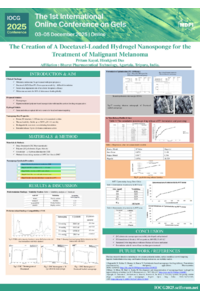
Introduction: The second most prevalent non-melanoma skin cancer in the world, squamous cell carcinoma, is mostly caused by exposure to UV light. Surgery, radiation, and chemotherapy are examples of current therapeutic modalities; these methods frequently have drawbacks in terms of toxicity and patient compliance. Poor solubility and absorption make the administration of curcumin, a natural substance with proven anticancer effects, a topical method. The purpose of this work is to describe a curcumin-loaded nanoemulsion gel technology for improved topical administration in the treatment of SCC.
Methods: The spontaneous emulsification process was used to create curcumin nanoemulsions. Surfactant and co-surfactant screening found appropriate emulsifying agents, and solubility tests were used to choose the best oil phase. Different ratios of oil-to-surfactant/co-surfactant were assessed. Particle size analysis, zeta potential measurement, thermodynamic stability testing, and polydispersity index calculation were performed on the chosen formulations. The carbopol gel matrix was filled with optimized nanoemulsions, which were then assessed for cytotoxicity using the MTT assay, in vitro drug release using Franz diffusion cells, drug content, entrapment efficiency, and physical properties.
Results: Capmul CMC was chosen as the oil phase since it showed the maximum amount of curcumin solubility (90±0.18 mg/mL). The surfactant was Tween 20, and the co-surfactant was PEG 400. F6 (oil/SCOS 1:6) and F8 (oil/SCOS 1:8) were two formulations that underwent optimization. With a globule size of 125.3 nm, a zeta potential of -18.3 mV, and a PDI of 0.310, F8 demonstrated exceptional qualities. For the F8 formulation, the nanoemulsion gel demonstrated 99% entrapment efficiency. According to in vitro release experiments, F8 released 59.41% more medication over a 24-hour period than F6, which released 66.11%. According to cytotoxicity testing, the F8 formulation's IC50 value was 59.63 µg/ml.
Conclusion: When compared to traditional therapies, the proposed curcumin nanoemulsion gel method effectively improved drug solubility and offered sustained release features appropriate for topical SCC treatment, including decreased systemic toxicity and improved patient compliance.
Keywords
Skin cancer
Curcumin
Surfactant
Emulsifying agent
thermodynamic
Poster
Submission ID sciforum-148246.pdf
Biopolymeric Hydrogel Platforms Integrated with Colorimetric Indicators for Sustainable Intelligent Packaging
Conductive Dual-Network Hydrogel for Flexible Sensing Motif