Event submissions
Published
This submission belongs to the session E. Virology in One Health of the event The 1st International Online Conference on Veterinary Sciences
Published date
28 Nov, 2025
Academic Editor
'%3e%3cpath%20d='M12.6657%2010.9104C12.4185%2010.325%2012.0599%209.79327%2011.6097%209.34482C11.1609%208.89508%2010.6293%208.5365%2010.0442%208.28888C10.0389%208.28626%2010.0337%208.28495%2010.0285%208.28233C10.8446%207.69279%2011.3752%206.73249%2011.3752%205.64904C11.3752%203.8542%209.92103%202.39999%208.1262%202.39999C6.33136%202.39999%204.87715%203.8542%204.87715%205.64904C4.87715%206.73249%205.40774%207.69279%206.22393%208.28364C6.21869%208.28626%206.21345%208.28757%206.20821%208.29019C5.62129%208.5378%205.09463%208.89284%204.64265%209.34613C4.1929%209.79493%203.83432%2010.3266%203.58671%2010.9117C3.34345%2011.4845%203.21226%2012.0987%203.20023%2012.7209C3.19988%2012.7349%203.20233%2012.7488%203.20744%2012.7619C3.21255%2012.7749%203.22022%2012.7867%203.22998%2012.7968C3.23975%2012.8068%203.25142%2012.8147%203.26431%2012.8202C3.2772%2012.8256%203.29105%2012.8284%203.30504%2012.8284H4.09109C4.14874%2012.8284%204.19459%2012.7825%204.1959%2012.7262C4.2221%2011.7148%204.62823%2010.7676%205.34617%2010.0497C6.08899%209.30683%207.0755%208.89808%208.1262%208.89808C9.17689%208.89808%2010.1634%209.30683%2010.9062%2010.0497C11.6242%2010.7676%2012.0303%2011.7148%2012.0565%2012.7262C12.0578%2012.7838%2012.1037%2012.8284%2012.1613%2012.8284H12.9474C12.9613%2012.8284%2012.9752%2012.8256%2012.9881%2012.8202C13.001%2012.8147%2013.0126%2012.8068%2013.0224%2012.7968C13.0322%2012.7867%2013.0398%2012.7749%2013.0449%2012.7619C13.0501%2012.7488%2013.0525%2012.7349%2013.0522%2012.7209C13.0391%2012.0947%2012.9094%2011.4855%2012.6657%2010.9104ZM8.1262%207.9024C7.52486%207.9024%206.9589%207.6679%206.53312%207.24211C6.10733%206.81633%205.87283%206.25037%205.87283%205.64904C5.87283%205.0477%206.10733%204.48174%206.53312%204.05596C6.9589%203.63018%207.52486%203.39567%208.1262%203.39567C8.72753%203.39567%209.29349%203.63018%209.71927%204.05596C10.1451%204.48174%2010.3796%205.0477%2010.3796%205.64904C10.3796%206.25037%2010.1451%206.81633%209.71927%207.24211C9.29349%207.6679%208.72753%207.9024%208.1262%207.9024Z'%20fill='%235D1EE1'/%3e%3c/g%3e%3c/svg%3e) Elsayed Mohammed Abdel Whab
Elsayed Mohammed Abdel WhabCitation
Arif Nur Muhammad Ansori, M. Ishrat Jahan, Toshiaki Inenaga, Sakurako Makimoto, Md. Belal Hossain, Yuka Matsuoka, Sharmin Nahar Sithi, Samiul Alam Rajib, Kenji Sugata, Kazuhiko Imakawa, Tomoko Kobayashi, Yorifumi Satou, Circulating Bovine Leukemia Virus Cell-Free DNA as a Promising Biomarker for Enzootic Bovine Leukosis, in Proceedings of The 1st International Online Conference on Veterinary Sciences, 3 December–5 December 2025, MDPI: Basel, Switzerland
Share
Email
Facebook
Twitter
LinkedIn
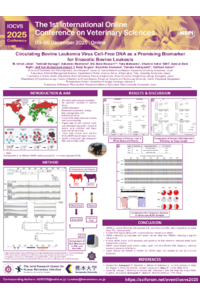
Circulating Bovine Leukemia Virus Cell-Free DNA as a Promising Biomarker for Enzootic Bovine Leukosis
'%3e%3cpath%20d='M12.6647%2010.9104C12.4176%2010.325%2012.0589%209.7933%2011.6088%209.34485C11.16%208.89511%2010.6283%208.53653%2010.0432%208.28891C10.038%208.28629%2010.0327%208.28498%2010.0275%208.28236C10.8437%207.69282%2011.3743%206.73252%2011.3743%205.64907C11.3743%203.85423%209.92005%202.40002%208.12522%202.40002C6.33038%202.40002%204.87618%203.85423%204.87618%205.64907C4.87618%206.73252%205.40677%207.69282%206.22296%208.28367C6.21772%208.28629%206.21248%208.2876%206.20724%208.29022C5.62031%208.53783%205.09365%208.89287%204.64167%209.34616C4.19192%209.79496%203.83334%2010.3266%203.58573%2010.9117C3.34247%2011.4846%203.21128%2012.0987%203.19925%2012.721C3.1989%2012.735%203.20135%2012.7489%203.20646%2012.7619C3.21157%2012.7749%203.21924%2012.7868%203.22901%2012.7968C3.23877%2012.8068%203.25045%2012.8148%203.26334%2012.8202C3.27623%2012.8256%203.29007%2012.8284%203.30406%2012.8284H4.09012C4.14776%2012.8284%204.19362%2012.7825%204.19493%2012.7262C4.22113%2011.7148%204.62726%2010.7676%205.34519%2010.0497C6.08802%209.30686%207.07452%208.89811%208.12522%208.89811C9.17592%208.89811%2010.1624%209.30686%2010.9052%2010.0497C11.6232%2010.7676%2012.0293%2011.7148%2012.0555%2012.7262C12.0568%2012.7839%2012.1027%2012.8284%2012.1603%2012.8284H12.9464C12.9604%2012.8284%2012.9742%2012.8256%2012.9871%2012.8202C13%2012.8148%2013.0117%2012.8068%2013.0214%2012.7968C13.0312%2012.7868%2013.0389%2012.7749%2013.044%2012.7619C13.0491%2012.7489%2013.0515%2012.735%2013.0512%2012.721C13.0381%2012.0947%2012.9084%2011.4856%2012.6647%2010.9104ZM8.12522%207.90243C7.52388%207.90243%206.95792%207.66793%206.53214%207.24215C6.10636%206.81636%205.87185%206.2504%205.87185%205.64907C5.87185%205.04773%206.10636%204.48177%206.53214%204.05599C6.95792%203.63021%207.52388%203.3957%208.12522%203.3957C8.72655%203.3957%209.29252%203.63021%209.7183%204.05599C10.1441%204.48177%2010.3786%205.04773%2010.3786%205.64907C10.3786%206.2504%2010.1441%206.81636%209.7183%207.24215C9.29252%207.66793%208.72655%207.90243%208.12522%207.90243Z'%20fill='%235D1EE1'/%3e%3c/g%3e%3c/svg%3e)
Arif Nur Muhammad Ansori 1,2
M. Ishrat Jahan 3
Toshiaki Inenaga 4
Sakurako Makimoto 5
Md. Belal Hossain 3,6
Yuka Matsuoka 3
Sharmin Nahar Sithi 3
Samiul Alam Rajib 3
Kenji Sugata 3
Kazuhiko Imakawa 7
Tomoko Kobayashi 5

Yorifumi Satou 3
1. Division of Genomics and Transcriptomics, Joint Research Center for Human Retrovirus Infection, Kumamoto University, Kumamoto, Japan, Indonesia
2. Postgraduate School, Universitas Airlangga, Surabaya, Indonesia
3. Division of Genomics and Transcriptomics, Joint Research Center for Human Retrovirus Infection, Kumamoto University, Kumamoto, Japan, Japan
4. Laboratory of Animal Management Science, Department of Animal Science, School of Agriculture, Tokai University, Kumamoto, Japan, Japan
5. Laboratory of Animal Health, Department of Animal Science, Faculty of Agriculture, Tokyo University of Agriculture, Atsugi, Kanagawa, Japan, Japan
6. Department of Food Microbiology, Faculty of Nutrition and Food Science, Patuakhali Science and Technology University, Dumki, Patuakhali, Bangladesh
7. Laboratory of Molecular Reproduction, Research, Institute of Agriculture, Tokai University, Kumamoto, Japan, Japan
Abstract
Early and precise identification of illnesses linked to the bovine leukemia virus (BLV) is crucial for maintaining food safety and efficient herd management in nations like Japan, where milk and beef are staples of diets. Enzootic bovine leukosis (EBL), a B-cell lymphoma caused by BLV, emerges in approximately 5% of infected cattle after a prolonged asymptomatic phase. However, current diagnostic tools, such as serological assays and PCR detection of proviral DNA from whole blood, often lack the sensitivity and specificity needed to distinguish EBL from non-EBL cases, especially in early clinical stages. This diagnostic gap emphasizes the need for reliable, non-invasive biomarkers that reflect disease progression with greater precision. Given the increased turnover of malignant cells in EBL, we investigated the potential of plasma-derived circulating cell-free DNA (cfDNA) as a novel biomarker. Proviral loads (PVL) in whole blood and plasma were quantified using qPCR targeting the BLV LTR and pol regions in cattle at different clinical stages. Although PVL in whole blood was generally higher in EBL cases, significant overlap with non-EBL animals limited its diagnostic reliability. In contrast, BLV-derived cfDNA in plasma was significantly elevated in clinically diagnosed EBL cattle and effectively distinguished between disease states. These findings highlight cfDNA as a promising tool for liquid biopsy-based approaches in veterinary virology, with the potential to enhance early diagnosis, surveillance, and control of BLV-associated malignancies in livestock populations.
Keywords
Bovine Leukosis Virus
Cell-Free DNA
Enzootic Bovine Leukosis
Liquid Biopsy
Retrovirus
Poster
sciforum-141978_Arif Ansori_MDPI.pdf
Biothermodynamics of virus–host interactions: The role of Gibbs energy in antigen-receptor binding and virus multiplication in host cells
Genetic variability of the Influenza A H5N1 virus