Event submissions
Published
This submission belongs to the session S1. Applied Biosciences and Bioengineering of the event The 6th International Electronic Conference on Applied Sciences
Published date
03 Dec, 2025
Academic Editor
'%3e%3cpath%20d='M12.6657%2010.9104C12.4185%2010.325%2012.0599%209.79327%2011.6097%209.34482C11.1609%208.89508%2010.6293%208.5365%2010.0442%208.28888C10.0389%208.28626%2010.0337%208.28495%2010.0285%208.28233C10.8446%207.69279%2011.3752%206.73249%2011.3752%205.64904C11.3752%203.8542%209.92103%202.39999%208.1262%202.39999C6.33136%202.39999%204.87715%203.8542%204.87715%205.64904C4.87715%206.73249%205.40774%207.69279%206.22393%208.28364C6.21869%208.28626%206.21345%208.28757%206.20821%208.29019C5.62129%208.5378%205.09463%208.89284%204.64265%209.34613C4.1929%209.79493%203.83432%2010.3266%203.58671%2010.9117C3.34345%2011.4845%203.21226%2012.0987%203.20023%2012.7209C3.19988%2012.7349%203.20233%2012.7488%203.20744%2012.7619C3.21255%2012.7749%203.22022%2012.7867%203.22998%2012.7968C3.23975%2012.8068%203.25142%2012.8147%203.26431%2012.8202C3.2772%2012.8256%203.29105%2012.8284%203.30504%2012.8284H4.09109C4.14874%2012.8284%204.19459%2012.7825%204.1959%2012.7262C4.2221%2011.7148%204.62823%2010.7676%205.34617%2010.0497C6.08899%209.30683%207.0755%208.89808%208.1262%208.89808C9.17689%208.89808%2010.1634%209.30683%2010.9062%2010.0497C11.6242%2010.7676%2012.0303%2011.7148%2012.0565%2012.7262C12.0578%2012.7838%2012.1037%2012.8284%2012.1613%2012.8284H12.9474C12.9613%2012.8284%2012.9752%2012.8256%2012.9881%2012.8202C13.001%2012.8147%2013.0126%2012.8068%2013.0224%2012.7968C13.0322%2012.7867%2013.0398%2012.7749%2013.0449%2012.7619C13.0501%2012.7488%2013.0525%2012.7349%2013.0522%2012.7209C13.0391%2012.0947%2012.9094%2011.4855%2012.6657%2010.9104ZM8.1262%207.9024C7.52486%207.9024%206.9589%207.6679%206.53312%207.24211C6.10733%206.81633%205.87283%206.25037%205.87283%205.64904C5.87283%205.0477%206.10733%204.48174%206.53312%204.05596C6.9589%203.63018%207.52486%203.39567%208.1262%203.39567C8.72753%203.39567%209.29349%203.63018%209.71927%204.05596C10.1451%204.48174%2010.3796%205.0477%2010.3796%205.64904C10.3796%206.25037%2010.1451%206.81633%209.71927%207.24211C9.29349%207.6679%208.72753%207.9024%208.1262%207.9024Z'%20fill='%235D1EE1'/%3e%3c/g%3e%3c/svg%3e) Roger Narayan
Roger NarayanCitation
Muhammad Abubakar, Malaika Zaheer, Muhammad Affan Akram, Muhammad Shaban, Toward Climate-Resilient Cotton: Molecular Drivers, Abscission Zone Dynamics, and Translational Breeding Strategies, in Proceedings of The 6th International Electronic Conference on Applied Sciences, 9 December–11 December 2025, MDPI: Basel, Switzerland
Share
Email
Facebook
Twitter
LinkedIn
Toward Climate-Resilient Cotton: Molecular Drivers, Abscission Zone Dynamics, and Translational Breeding Strategies
'%3e%3cpath%20d='M12.6647%2010.9104C12.4176%2010.325%2012.0589%209.7933%2011.6088%209.34485C11.16%208.89511%2010.6283%208.53653%2010.0432%208.28891C10.038%208.28629%2010.0327%208.28498%2010.0275%208.28236C10.8437%207.69282%2011.3743%206.73252%2011.3743%205.64907C11.3743%203.85423%209.92005%202.40002%208.12522%202.40002C6.33038%202.40002%204.87618%203.85423%204.87618%205.64907C4.87618%206.73252%205.40677%207.69282%206.22296%208.28367C6.21772%208.28629%206.21248%208.2876%206.20724%208.29022C5.62031%208.53783%205.09365%208.89287%204.64167%209.34616C4.19192%209.79496%203.83334%2010.3266%203.58573%2010.9117C3.34247%2011.4846%203.21128%2012.0987%203.19925%2012.721C3.1989%2012.735%203.20135%2012.7489%203.20646%2012.7619C3.21157%2012.7749%203.21924%2012.7868%203.22901%2012.7968C3.23877%2012.8068%203.25045%2012.8148%203.26334%2012.8202C3.27623%2012.8256%203.29007%2012.8284%203.30406%2012.8284H4.09012C4.14776%2012.8284%204.19362%2012.7825%204.19493%2012.7262C4.22113%2011.7148%204.62726%2010.7676%205.34519%2010.0497C6.08802%209.30686%207.07452%208.89811%208.12522%208.89811C9.17592%208.89811%2010.1624%209.30686%2010.9052%2010.0497C11.6232%2010.7676%2012.0293%2011.7148%2012.0555%2012.7262C12.0568%2012.7839%2012.1027%2012.8284%2012.1603%2012.8284H12.9464C12.9604%2012.8284%2012.9742%2012.8256%2012.9871%2012.8202C13%2012.8148%2013.0117%2012.8068%2013.0214%2012.7968C13.0312%2012.7868%2013.0389%2012.7749%2013.044%2012.7619C13.0491%2012.7489%2013.0515%2012.735%2013.0512%2012.721C13.0381%2012.0947%2012.9084%2011.4856%2012.6647%2010.9104ZM8.12522%207.90243C7.52388%207.90243%206.95792%207.66793%206.53214%207.24215C6.10636%206.81636%205.87185%206.2504%205.87185%205.64907C5.87185%205.04773%206.10636%204.48177%206.53214%204.05599C6.95792%203.63021%207.52388%203.3957%208.12522%203.3957C8.72655%203.3957%209.29252%203.63021%209.7183%204.05599C10.1441%204.48177%2010.3786%205.04773%2010.3786%205.64907C10.3786%206.2504%2010.1441%206.81636%209.7183%207.24215C9.29252%207.66793%208.72655%207.90243%208.12522%207.90243Z'%20fill='%235D1EE1'/%3e%3c/g%3e%3c/svg%3e)
Muhammad Abubakar 1
Malaika Zaheer 2

Muhammad Affan Akram 1
Muhammad Shaban 1
1. Department of Plant Breeding and Genetics, University of Agriculture, Faisalabad, Pakistan, Pakistan
2. Department of Agricultural Biotechnology, Faculty of Agriculture, Ondokuz Mayis University, Samsun, 55270, Turkey., Turkey (Türkiye)
Abstract
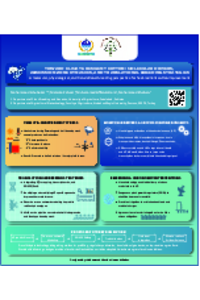
Climate-induced heat stress poses a critical threat to cotton (Gossypium spp.) productivity, especially during the flowering and boll development stages. Elevated temperatures exceeding 35°C disrupt key physiological processes, impair photosynthesis, and alter hormonal homeostasis, ultimately triggering premature boll abscission. Central to this process is the formation of the abscission zone (AZ), driven by the upregulation of ethylene and abscisic acid (ABA) biosynthetic genes, which antagonize auxin transport and compromise cell wall integrity. This disruption results in reduced boll retention and significant yield losses under heat-stressed conditions. This review synthesizes current advances in understanding the molecular and physiological mechanisms underlying heat-induced boll shedding. We highlight the roles of heat shock proteins (HSPs), stress-responsive transcription factors, reactive oxygen species (ROS) signaling, and hormone crosstalk in AZ regulation. Furthermore, we explore integrative breeding approaches combining quantitative trait loci (QTL) mapping, transcriptomics, and CRISPR/Cas9-based gene editing to enhance thermotolerance in cotton. Agronomic interventions—including exogenous application of plant growth regulators and precision irrigation techniques—are also examined as complementary strategies for mitigating heat stress effects. Emerging technologies, such as nanotechnology-enabled delivery systems for stress modulators, offer promising avenues for targeted intervention. Finally, we propose a research framework centered on AZ-specific gene expression profiling, gene–hormone interaction networks, and translational breeding pipelines. These multidisciplinary insights form a robust foundation for the development of climate-resilient cotton cultivars suited to increasingly extreme agro-climatic conditions.
Keywords
Boll shedding
heat stress
abscission zone (AZ)
ABA signaling
reactive oxygen species (ROS)
heat shock proteins (HSPs)
Poster
TOWARD CLIMATE-RESILIENT COTTON.pdf
Numerical Modeling of Polydopamine Nanoparticle-Enhanced Photothermal Therapy for the Treatment of Skin Cancer
Towards Predictive Models of Mechanical Properties in 3D-Printed Polymers: An Exploratory Study