Event submissions
Published
This submission belongs to the session S7. Food Science and Technology of the event The 6th International Electronic Conference on Applied Sciences
Published date
03 Dec, 2025
Academic Editor
'%3e%3cpath%20d='M12.6657%2010.9104C12.4185%2010.325%2012.0599%209.79327%2011.6097%209.34482C11.1609%208.89508%2010.6293%208.5365%2010.0442%208.28888C10.0389%208.28626%2010.0337%208.28495%2010.0285%208.28233C10.8446%207.69279%2011.3752%206.73249%2011.3752%205.64904C11.3752%203.8542%209.92103%202.39999%208.1262%202.39999C6.33136%202.39999%204.87715%203.8542%204.87715%205.64904C4.87715%206.73249%205.40774%207.69279%206.22393%208.28364C6.21869%208.28626%206.21345%208.28757%206.20821%208.29019C5.62129%208.5378%205.09463%208.89284%204.64265%209.34613C4.1929%209.79493%203.83432%2010.3266%203.58671%2010.9117C3.34345%2011.4845%203.21226%2012.0987%203.20023%2012.7209C3.19988%2012.7349%203.20233%2012.7488%203.20744%2012.7619C3.21255%2012.7749%203.22022%2012.7867%203.22998%2012.7968C3.23975%2012.8068%203.25142%2012.8147%203.26431%2012.8202C3.2772%2012.8256%203.29105%2012.8284%203.30504%2012.8284H4.09109C4.14874%2012.8284%204.19459%2012.7825%204.1959%2012.7262C4.2221%2011.7148%204.62823%2010.7676%205.34617%2010.0497C6.08899%209.30683%207.0755%208.89808%208.1262%208.89808C9.17689%208.89808%2010.1634%209.30683%2010.9062%2010.0497C11.6242%2010.7676%2012.0303%2011.7148%2012.0565%2012.7262C12.0578%2012.7838%2012.1037%2012.8284%2012.1613%2012.8284H12.9474C12.9613%2012.8284%2012.9752%2012.8256%2012.9881%2012.8202C13.001%2012.8147%2013.0126%2012.8068%2013.0224%2012.7968C13.0322%2012.7867%2013.0398%2012.7749%2013.0449%2012.7619C13.0501%2012.7488%2013.0525%2012.7349%2013.0522%2012.7209C13.0391%2012.0947%2012.9094%2011.4855%2012.6657%2010.9104ZM8.1262%207.9024C7.52486%207.9024%206.9589%207.6679%206.53312%207.24211C6.10733%206.81633%205.87283%206.25037%205.87283%205.64904C5.87283%205.0477%206.10733%204.48174%206.53312%204.05596C6.9589%203.63018%207.52486%203.39567%208.1262%203.39567C8.72753%203.39567%209.29349%203.63018%209.71927%204.05596C10.1451%204.48174%2010.3796%205.0477%2010.3796%205.64904C10.3796%206.25037%2010.1451%206.81633%209.71927%207.24211C9.29349%207.6679%208.72753%207.9024%208.1262%207.9024Z'%20fill='%235D1EE1'/%3e%3c/g%3e%3c/svg%3e) Antonios Koutelidakis
Antonios KoutelidakisCitation
Majdouline AZIZ, Othman EL FAQER, Zaynab OUADGHIRI, Maria TIJINI, Samira RAIS, El Mostafa Mtairag, Evaluation of the In Vitro Antioxidant and Anti inflammatory Potentials of Artemisia arborescens Aqueous and Hydro ethanolic Extracts : Insights from Moroccan Ethnopharmacology., in Proceedings of The 6th International Electronic Conference on Applied Sciences, 9 December–11 December 2025, MDPI: Basel, Switzerland
Share
Email
Facebook
Twitter
LinkedIn
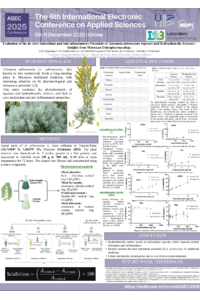
Evaluation of the In Vitro Antioxidant and Anti inflammatory Potentials of Artemisia arborescens Aqueous and Hydro ethanolic Extracts : Insights from Moroccan Ethnopharmacology.
'%3e%3cpath%20d='M12.6647%2010.9104C12.4176%2010.325%2012.0589%209.7933%2011.6088%209.34485C11.16%208.89511%2010.6283%208.53653%2010.0432%208.28891C10.038%208.28629%2010.0327%208.28498%2010.0275%208.28236C10.8437%207.69282%2011.3743%206.73252%2011.3743%205.64907C11.3743%203.85423%209.92005%202.40002%208.12522%202.40002C6.33038%202.40002%204.87618%203.85423%204.87618%205.64907C4.87618%206.73252%205.40677%207.69282%206.22296%208.28367C6.21772%208.28629%206.21248%208.2876%206.20724%208.29022C5.62031%208.53783%205.09365%208.89287%204.64167%209.34616C4.19192%209.79496%203.83334%2010.3266%203.58573%2010.9117C3.34247%2011.4846%203.21128%2012.0987%203.19925%2012.721C3.1989%2012.735%203.20135%2012.7489%203.20646%2012.7619C3.21157%2012.7749%203.21924%2012.7868%203.22901%2012.7968C3.23877%2012.8068%203.25045%2012.8148%203.26334%2012.8202C3.27623%2012.8256%203.29007%2012.8284%203.30406%2012.8284H4.09012C4.14776%2012.8284%204.19362%2012.7825%204.19493%2012.7262C4.22113%2011.7148%204.62726%2010.7676%205.34519%2010.0497C6.08802%209.30686%207.07452%208.89811%208.12522%208.89811C9.17592%208.89811%2010.1624%209.30686%2010.9052%2010.0497C11.6232%2010.7676%2012.0293%2011.7148%2012.0555%2012.7262C12.0568%2012.7839%2012.1027%2012.8284%2012.1603%2012.8284H12.9464C12.9604%2012.8284%2012.9742%2012.8256%2012.9871%2012.8202C13%2012.8148%2013.0117%2012.8068%2013.0214%2012.7968C13.0312%2012.7868%2013.0389%2012.7749%2013.044%2012.7619C13.0491%2012.7489%2013.0515%2012.735%2013.0512%2012.721C13.0381%2012.0947%2012.9084%2011.4856%2012.6647%2010.9104ZM8.12522%207.90243C7.52388%207.90243%206.95792%207.66793%206.53214%207.24215C6.10636%206.81636%205.87185%206.2504%205.87185%205.64907C5.87185%205.04773%206.10636%204.48177%206.53214%204.05599C6.95792%203.63021%207.52388%203.3957%208.12522%203.3957C8.72655%203.3957%209.29252%203.63021%209.7183%204.05599C10.1441%204.48177%2010.3786%205.04773%2010.3786%205.64907C10.3786%206.2504%2010.1441%206.81636%209.7183%207.24215C9.29252%207.66793%208.72655%207.90243%208.12522%207.90243Z'%20fill='%235D1EE1'/%3e%3c/g%3e%3c/svg%3e)
Majdouline AZIZ 1
Othman EL FAQER 1
Zaynab OUADGHIRI 1
Maria TIJINI 1
Samira RAIS 1,2
El Mostafa Mtairag 1
1. Laboratory of Integrative Biology, Faculty of Sciences Ain Chock, Hassan II University, Casablanca, Morocco, Morocco
2. Department of Biology, Faculty of Sciences Ben M’Sick, Hassan II University, Casablanca, Morocco
Abstract
Artemisia arborescens (A. arborescens) holds a long-standing place in Moroccan traditional medicine and is increasing attention for its pharmacological and therapeutic potential. This study evaluates the phytochemical composition of aqueous and hydroethanolic extracts, along with their antioxidant and anti-inflammatory properties.
Spectrophotometric analysis was used to quantify bioactive compounds. Antioxidant activity was assessed through total antioxidant capacity (TAC), while radical scavenging ability was measured using 2,2’-azino-bis(3-ethylbenzothiazoline-6-sulfonic acid) (ABTS) and 2,2-diphenyl-1-picryl-hydrazyl-hydrate (DPPH), and anti-inflammatory effects were evaluated by inhibition of bovine serum albumin (BSA) denaturation.
The aqueous extract contained phenolics (1.575 ± 0.97 mg AGE/gDM, flavonoids (18.51 ± 0.64 mg QE/gDM), tannins (0.615 ± 0.150 mg CE/gDM), and flavonols (2.99 ± 0.09 mg QE/g DM). Antioxidant activity, as determined by TAC showed an IC50 of 2.68 ± 0.29 mg/mL, while both DPPH and ABTS values exceeded 10 mg/mL. BSA inhibition reached 0.964 ± 0.133 mg/mL.
In comparison, the hydroethanolic extract exhibited higher levels of phenolics (21.30 ± 1.10 mg AGE/gDM), flavonoids (24.80 ± 0.80 mg QE/gDM), tannins (0.550 ± 0.120 mg CE/gDM), and flavonols (4.10 ± 0.15 mg QE/gDM). Antioxidant activity was stronger, with TAC IC50 of 1.262 ± 0.89 mg/mL, ABTS scavenging activity was 8.127 ± 0.903 mg/mL, while DPPH remained above 10 mg/mL. BSA inhibition was 0.560 ± 0.109 mg/mL.
Overall, the hydroethanolic extract displayed a richer phytochemical profile and greater biological activity than the aqueous extract. These findings support the pharmacological potential of A. arborescens and underscore the need for further mechanistic and in vivo studies.
Keywords
Artemisia arborescens
Aqueous extract
Hydroethanolic extract
Antioxidant
Anti-inflammatory
Poster
Majdouline Aziz MDPI Poster.pdf
Toward Intelligent Agent-Based Scientific Storytelling
Functional Properties and Nutri-Economic Benefits of Carob-Based vs. Cocoa-Based Food Products