Event submissions
Published
This submission belongs to the session 8. Engineering Biotechnological Crop Resilience of the event The 1st International Electronic Conference on Plant Protection
Published date
01 Mar, 2026
Academic Editor
'%3e%3cpath%20d='M12.6657%2010.9104C12.4185%2010.325%2012.0599%209.79327%2011.6097%209.34482C11.1609%208.89508%2010.6293%208.5365%2010.0442%208.28888C10.0389%208.28626%2010.0337%208.28495%2010.0285%208.28233C10.8446%207.69279%2011.3752%206.73249%2011.3752%205.64904C11.3752%203.8542%209.92103%202.39999%208.1262%202.39999C6.33136%202.39999%204.87715%203.8542%204.87715%205.64904C4.87715%206.73249%205.40774%207.69279%206.22393%208.28364C6.21869%208.28626%206.21345%208.28757%206.20821%208.29019C5.62129%208.5378%205.09463%208.89284%204.64265%209.34613C4.1929%209.79493%203.83432%2010.3266%203.58671%2010.9117C3.34345%2011.4845%203.21226%2012.0987%203.20023%2012.7209C3.19988%2012.7349%203.20233%2012.7488%203.20744%2012.7619C3.21255%2012.7749%203.22022%2012.7867%203.22998%2012.7968C3.23975%2012.8068%203.25142%2012.8147%203.26431%2012.8202C3.2772%2012.8256%203.29105%2012.8284%203.30504%2012.8284H4.09109C4.14874%2012.8284%204.19459%2012.7825%204.1959%2012.7262C4.2221%2011.7148%204.62823%2010.7676%205.34617%2010.0497C6.08899%209.30683%207.0755%208.89808%208.1262%208.89808C9.17689%208.89808%2010.1634%209.30683%2010.9062%2010.0497C11.6242%2010.7676%2012.0303%2011.7148%2012.0565%2012.7262C12.0578%2012.7838%2012.1037%2012.8284%2012.1613%2012.8284H12.9474C12.9613%2012.8284%2012.9752%2012.8256%2012.9881%2012.8202C13.001%2012.8147%2013.0126%2012.8068%2013.0224%2012.7968C13.0322%2012.7867%2013.0398%2012.7749%2013.0449%2012.7619C13.0501%2012.7488%2013.0525%2012.7349%2013.0522%2012.7209C13.0391%2012.0947%2012.9094%2011.4855%2012.6657%2010.9104ZM8.1262%207.9024C7.52486%207.9024%206.9589%207.6679%206.53312%207.24211C6.10733%206.81633%205.87283%206.25037%205.87283%205.64904C5.87283%205.0477%206.10733%204.48174%206.53312%204.05596C6.9589%203.63018%207.52486%203.39567%208.1262%203.39567C8.72753%203.39567%209.29349%203.63018%209.71927%204.05596C10.1451%204.48174%2010.3796%205.0477%2010.3796%205.64904C10.3796%206.25037%2010.1451%206.81633%209.71927%207.24211C9.29349%207.6679%208.72753%207.9024%208.1262%207.9024Z'%20fill='%235D1EE1'/%3e%3c/g%3e%3c/svg%3e) Jorge M. S. Faria
Jorge M. S. FariaCitation
Álvaro Iglesias Ganado, Jorge Poveda, Óscar Santamaría, María I. Pozo, Jorge Martín-García, Fungal Extracts of Talaromyces ruber: a potential biostimulant on Tomato, in Proceedings of The 1st International Electronic Conference on Plant Protection, 2 March–8 March 2026, MDPI: Basel, Switzerland
Share
Email
Facebook
Twitter
LinkedIn
Fungal Extracts of Talaromyces ruber: a potential biostimulant on Tomato
'%3e%3cpath%20d='M12.6647%2010.9104C12.4176%2010.325%2012.0589%209.7933%2011.6088%209.34485C11.16%208.89511%2010.6283%208.53653%2010.0432%208.28891C10.038%208.28629%2010.0327%208.28498%2010.0275%208.28236C10.8437%207.69282%2011.3743%206.73252%2011.3743%205.64907C11.3743%203.85423%209.92005%202.40002%208.12522%202.40002C6.33038%202.40002%204.87618%203.85423%204.87618%205.64907C4.87618%206.73252%205.40677%207.69282%206.22296%208.28367C6.21772%208.28629%206.21248%208.2876%206.20724%208.29022C5.62031%208.53783%205.09365%208.89287%204.64167%209.34616C4.19192%209.79496%203.83334%2010.3266%203.58573%2010.9117C3.34247%2011.4846%203.21128%2012.0987%203.19925%2012.721C3.1989%2012.735%203.20135%2012.7489%203.20646%2012.7619C3.21157%2012.7749%203.21924%2012.7868%203.22901%2012.7968C3.23877%2012.8068%203.25045%2012.8148%203.26334%2012.8202C3.27623%2012.8256%203.29007%2012.8284%203.30406%2012.8284H4.09012C4.14776%2012.8284%204.19362%2012.7825%204.19493%2012.7262C4.22113%2011.7148%204.62726%2010.7676%205.34519%2010.0497C6.08802%209.30686%207.07452%208.89811%208.12522%208.89811C9.17592%208.89811%2010.1624%209.30686%2010.9052%2010.0497C11.6232%2010.7676%2012.0293%2011.7148%2012.0555%2012.7262C12.0568%2012.7839%2012.1027%2012.8284%2012.1603%2012.8284H12.9464C12.9604%2012.8284%2012.9742%2012.8256%2012.9871%2012.8202C13%2012.8148%2013.0117%2012.8068%2013.0214%2012.7968C13.0312%2012.7868%2013.0389%2012.7749%2013.044%2012.7619C13.0491%2012.7489%2013.0515%2012.735%2013.0512%2012.721C13.0381%2012.0947%2012.9084%2011.4856%2012.6647%2010.9104ZM8.12522%207.90243C7.52388%207.90243%206.95792%207.66793%206.53214%207.24215C6.10636%206.81636%205.87185%206.2504%205.87185%205.64907C5.87185%205.04773%206.10636%204.48177%206.53214%204.05599C6.95792%203.63021%207.52388%203.3957%208.12522%203.3957C8.72655%203.3957%209.29252%203.63021%209.7183%204.05599C10.1441%204.48177%2010.3786%205.04773%2010.3786%205.64907C10.3786%206.2504%2010.1441%206.81636%209.7183%207.24215C9.29252%207.66793%208.72655%207.90243%208.12522%207.90243Z'%20fill='%235D1EE1'/%3e%3c/g%3e%3c/svg%3e)
Álvaro Iglesias Ganado 1
Jorge Poveda 2

Óscar Santamaría 2
María I. Pozo 2
Jorge Martín-García 2
1. UVA, Spain
2. University of Valladolid, Valladolid 47002, Spain, Spain
Abstract
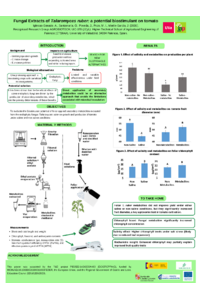
Salinity stress is a major constraint to global crop productivity, affecting physiological processes and reducing yield and quality in many horticultural crops. Although tomato (Solanum lycopersicum L.) is moderately salt-sensitive, salt-induced reductions in photosynthetic capacity, fruit size, and overall plant performance remain significant challenges for sustainable production. Endophytic fungi produce a diverse array of bioactive fungal extracts with potential biostimulant properties. This study evaluated whether foliar application of Talaromyces ruber extracts could alleviate salinity stress effects on tomato plants and improve fruit quality parameters. Tomato plants were grown in a climate-controlled greenhouse with four treatments established: control, salinity, fungal extracts and salinity + fungal extracts. Foliar application of fungal extracts were carried out at two developmental stages: early fruit set and full flowering. Physiological parameters, chlorophyll content, flavonol index, and anthocyanin index, were measured at three time points. Furthermore, yield components, fruit diameter, soluble solids content (°Brix), and shoot biomass were also evaluated. The interaction between salinity and fungal extract application significantly affected chlorophyll content during the first evaluation period, indicating that extracts enhanced chlorophyll accumulation specifically under saline conditions. Although salinity drastically reduced total fruit production per plant, the application of fungal extracts significantly improved fruit diameter regardless of salinity level, with mean fruit diameter increasing in extract-treated plants under both control and saline conditions. This suggests a positive effect on commercial fruit quality, although extracts did not significantly enhance total yield or shoot biomass. While the extracts tested did not confer tolerance to high salinity levels, their ability to improve fruit calibre highlights their potential as biostimulants in less extreme saline environments or when applied more frequently throughout the crop cycle. Future research should explore lower salinity levels, repeated applications, and identification of specific bioactive compounds responsible for the observed effects, contributing to the growing evidence supporting endophytic fungi as sources of sustainable, eco-friendly biostimulants for stress management in horticulture.
Keywords
plant growth promotion
fungal secondary metabolites
sustainable agriculture
salinity stress
Poster
POSTER_IGLESIAS-GANADO.pdf
Endophytic Microorganisms from Apple and Pear Fruits as Biocontrol Agents Against Penicillium expansum, Botrytis cinerea and Other Postharvest Pathogens
Genome-wide Identification and Characterization of Chitinase Genes in the Coffee Berry Borer (Hypothenemus hampei) and Its Potential as Molecular Targets for Pest Management