Event submissions
Published
This submission belongs to the session 8. Engineering Biotechnological Crop Resilience of the event The 1st International Electronic Conference on Plant Protection
Published date
01 Mar, 2026
Academic Editor
'%3e%3cpath%20d='M12.6657%2010.9104C12.4185%2010.325%2012.0599%209.79327%2011.6097%209.34482C11.1609%208.89508%2010.6293%208.5365%2010.0442%208.28888C10.0389%208.28626%2010.0337%208.28495%2010.0285%208.28233C10.8446%207.69279%2011.3752%206.73249%2011.3752%205.64904C11.3752%203.8542%209.92103%202.39999%208.1262%202.39999C6.33136%202.39999%204.87715%203.8542%204.87715%205.64904C4.87715%206.73249%205.40774%207.69279%206.22393%208.28364C6.21869%208.28626%206.21345%208.28757%206.20821%208.29019C5.62129%208.5378%205.09463%208.89284%204.64265%209.34613C4.1929%209.79493%203.83432%2010.3266%203.58671%2010.9117C3.34345%2011.4845%203.21226%2012.0987%203.20023%2012.7209C3.19988%2012.7349%203.20233%2012.7488%203.20744%2012.7619C3.21255%2012.7749%203.22022%2012.7867%203.22998%2012.7968C3.23975%2012.8068%203.25142%2012.8147%203.26431%2012.8202C3.2772%2012.8256%203.29105%2012.8284%203.30504%2012.8284H4.09109C4.14874%2012.8284%204.19459%2012.7825%204.1959%2012.7262C4.2221%2011.7148%204.62823%2010.7676%205.34617%2010.0497C6.08899%209.30683%207.0755%208.89808%208.1262%208.89808C9.17689%208.89808%2010.1634%209.30683%2010.9062%2010.0497C11.6242%2010.7676%2012.0303%2011.7148%2012.0565%2012.7262C12.0578%2012.7838%2012.1037%2012.8284%2012.1613%2012.8284H12.9474C12.9613%2012.8284%2012.9752%2012.8256%2012.9881%2012.8202C13.001%2012.8147%2013.0126%2012.8068%2013.0224%2012.7968C13.0322%2012.7867%2013.0398%2012.7749%2013.0449%2012.7619C13.0501%2012.7488%2013.0525%2012.7349%2013.0522%2012.7209C13.0391%2012.0947%2012.9094%2011.4855%2012.6657%2010.9104ZM8.1262%207.9024C7.52486%207.9024%206.9589%207.6679%206.53312%207.24211C6.10733%206.81633%205.87283%206.25037%205.87283%205.64904C5.87283%205.0477%206.10733%204.48174%206.53312%204.05596C6.9589%203.63018%207.52486%203.39567%208.1262%203.39567C8.72753%203.39567%209.29349%203.63018%209.71927%204.05596C10.1451%204.48174%2010.3796%205.0477%2010.3796%205.64904C10.3796%206.25037%2010.1451%206.81633%209.71927%207.24211C9.29349%207.6679%208.72753%207.9024%208.1262%207.9024Z'%20fill='%235D1EE1'/%3e%3c/g%3e%3c/svg%3e) Ana M. Rodrigues
Ana M. RodriguesCitation
Babur Ali Akbar, Agricultural Exploitation of the Trichoderma hamatum-Brassica Crops Interaction as a Biotechnological Tool for Nutraceutical and Defensive Improvement, in Proceedings of The 1st International Electronic Conference on Plant Protection, 2 March–8 March 2026, MDPI: Basel, Switzerland
Share
Email
Facebook
Twitter
LinkedIn
Agricultural Exploitation of the Trichoderma hamatum-Brassica Crops Interaction as a Biotechnological Tool for Nutraceutical and Defensive Improvement
'%3e%3cpath%20d='M12.6647%2010.9104C12.4176%2010.325%2012.0589%209.7933%2011.6088%209.34485C11.16%208.89511%2010.6283%208.53653%2010.0432%208.28891C10.038%208.28629%2010.0327%208.28498%2010.0275%208.28236C10.8437%207.69282%2011.3743%206.73252%2011.3743%205.64907C11.3743%203.85423%209.92005%202.40002%208.12522%202.40002C6.33038%202.40002%204.87618%203.85423%204.87618%205.64907C4.87618%206.73252%205.40677%207.69282%206.22296%208.28367C6.21772%208.28629%206.21248%208.2876%206.20724%208.29022C5.62031%208.53783%205.09365%208.89287%204.64167%209.34616C4.19192%209.79496%203.83334%2010.3266%203.58573%2010.9117C3.34247%2011.4846%203.21128%2012.0987%203.19925%2012.721C3.1989%2012.735%203.20135%2012.7489%203.20646%2012.7619C3.21157%2012.7749%203.21924%2012.7868%203.22901%2012.7968C3.23877%2012.8068%203.25045%2012.8148%203.26334%2012.8202C3.27623%2012.8256%203.29007%2012.8284%203.30406%2012.8284H4.09012C4.14776%2012.8284%204.19362%2012.7825%204.19493%2012.7262C4.22113%2011.7148%204.62726%2010.7676%205.34519%2010.0497C6.08802%209.30686%207.07452%208.89811%208.12522%208.89811C9.17592%208.89811%2010.1624%209.30686%2010.9052%2010.0497C11.6232%2010.7676%2012.0293%2011.7148%2012.0555%2012.7262C12.0568%2012.7839%2012.1027%2012.8284%2012.1603%2012.8284H12.9464C12.9604%2012.8284%2012.9742%2012.8256%2012.9871%2012.8202C13%2012.8148%2013.0117%2012.8068%2013.0214%2012.7968C13.0312%2012.7868%2013.0389%2012.7749%2013.044%2012.7619C13.0491%2012.7489%2013.0515%2012.735%2013.0512%2012.721C13.0381%2012.0947%2012.9084%2011.4856%2012.6647%2010.9104ZM8.12522%207.90243C7.52388%207.90243%206.95792%207.66793%206.53214%207.24215C6.10636%206.81636%205.87185%206.2504%205.87185%205.64907C5.87185%205.04773%206.10636%204.48177%206.53214%204.05599C6.95792%203.63021%207.52388%203.3957%208.12522%203.3957C8.72655%203.3957%209.29252%203.63021%209.7183%204.05599C10.1441%204.48177%2010.3786%205.04773%2010.3786%205.64907C10.3786%206.2504%2010.1441%206.81636%209.7183%207.24215C9.29252%207.66793%208.72655%207.90243%208.12522%207.90243Z'%20fill='%235D1EE1'/%3e%3c/g%3e%3c/svg%3e)
Babur Ali Akbar 1
1. Centre of Agricultural Biochemistry and Biotechnology, faculty of Agriculture, University of Agriculture Faisalabad, Faisalabad, 64101 , Pakistan, Pakistan
Abstract
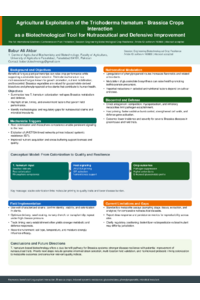
The exploitation of beneficial fungal-plant interactions represents a promising avenue for sustainable agricultural intensification, particularly in addressing simultaneous crop productivity and nutritional quality demands. Trichoderma hamatum, a filamentous fungus with established biocontrol and plant-growth-promoting capabilities, presents considerable potential when applied to Brassica crops a family of vegetables renowned for their glucosinolate-derived secondary metabolites with demonstrable nutraceutical properties. This review summary synthesizes current knowledge regarding the mechanisms by which T. hamatum colonization influences the biochemical profile and defensive architecture of Brassica species, with particular emphasis on its capacity to modulate antinutritional factor reduction whilst simultaneously enhancing phytochemical accumulation. Emerging evidence indicates that T. hamatum-mediated systemic physiological responses trigger upregulation of genes involved in the phenylpropanoid pathway and glucosinolate biosynthesis, thereby amplifying the nutraceutical potency of Brassica vegetables. Furthermore, the fungal endophyte demonstrates efficacy in suppressing major Brassica pathogens through both direct antagonism and induced systemic resistance mechanisms. We examine the ecological and agronomic implications of this interaction, including optimal colonization protocols, temporal dynamics of metabolite enhancement, and the influence of environmental variables on bioactive compound production. It addresses current limitations in field-scale implementation and discusses recent advances in understanding the molecular dialogue underpinning this mutualistic relationship. Additionally, evaluate the regulatory framework governing microbial inoculants within published research contexts and identify gaps in standardized methodologies for assessing nutraceutical enhancement. Integration of T. hamatum-based biotechnology into conventional and organic Brassica production systems offers a dual-benefit strategy: reducing reliance on chemical inputs whilst augmenting the nutritional and functional value of crops. This approach aligns with contemporary consumer demands for nutrient-dense produce and sustainability objectives in global food systems. Future research directions, including genomic characterization of strain-specific bioactivity and field validation across diverse agroecological contexts, are discussed to facilitate practical agricultural application of this promising biotechnological tool.
Keywords
beneficial fungal-plant interactions
Brassica crops
Brassica pathogens
biotechnological tool.
Poster
Babur Ali Akbar (8).pdf
Pear Stigmatic Exudate microRNAs as Next-Generation Anti–Fire Blight Biocontrols: Cross-Kingdom Mechanisms Targeting Erwinia amylovora, Technical Barriers, and Translational Pathways for IPM
Insects’ Frass as a nematicidal tool against Meloidogyne incognita