Event submissions
Published
This submission belongs to the session 10. Submissions under other topics of Plant Protection of the event The 1st International Electronic Conference on Plant Protection
Published date
01 Mar, 2026
Academic Editor
'%3e%3cpath%20d='M12.6657%2010.9104C12.4185%2010.325%2012.0599%209.79327%2011.6097%209.34482C11.1609%208.89508%2010.6293%208.5365%2010.0442%208.28888C10.0389%208.28626%2010.0337%208.28495%2010.0285%208.28233C10.8446%207.69279%2011.3752%206.73249%2011.3752%205.64904C11.3752%203.8542%209.92103%202.39999%208.1262%202.39999C6.33136%202.39999%204.87715%203.8542%204.87715%205.64904C4.87715%206.73249%205.40774%207.69279%206.22393%208.28364C6.21869%208.28626%206.21345%208.28757%206.20821%208.29019C5.62129%208.5378%205.09463%208.89284%204.64265%209.34613C4.1929%209.79493%203.83432%2010.3266%203.58671%2010.9117C3.34345%2011.4845%203.21226%2012.0987%203.20023%2012.7209C3.19988%2012.7349%203.20233%2012.7488%203.20744%2012.7619C3.21255%2012.7749%203.22022%2012.7867%203.22998%2012.7968C3.23975%2012.8068%203.25142%2012.8147%203.26431%2012.8202C3.2772%2012.8256%203.29105%2012.8284%203.30504%2012.8284H4.09109C4.14874%2012.8284%204.19459%2012.7825%204.1959%2012.7262C4.2221%2011.7148%204.62823%2010.7676%205.34617%2010.0497C6.08899%209.30683%207.0755%208.89808%208.1262%208.89808C9.17689%208.89808%2010.1634%209.30683%2010.9062%2010.0497C11.6242%2010.7676%2012.0303%2011.7148%2012.0565%2012.7262C12.0578%2012.7838%2012.1037%2012.8284%2012.1613%2012.8284H12.9474C12.9613%2012.8284%2012.9752%2012.8256%2012.9881%2012.8202C13.001%2012.8147%2013.0126%2012.8068%2013.0224%2012.7968C13.0322%2012.7867%2013.0398%2012.7749%2013.0449%2012.7619C13.0501%2012.7488%2013.0525%2012.7349%2013.0522%2012.7209C13.0391%2012.0947%2012.9094%2011.4855%2012.6657%2010.9104ZM8.1262%207.9024C7.52486%207.9024%206.9589%207.6679%206.53312%207.24211C6.10733%206.81633%205.87283%206.25037%205.87283%205.64904C5.87283%205.0477%206.10733%204.48174%206.53312%204.05596C6.9589%203.63018%207.52486%203.39567%208.1262%203.39567C8.72753%203.39567%209.29349%203.63018%209.71927%204.05596C10.1451%204.48174%2010.3796%205.0477%2010.3796%205.64904C10.3796%206.25037%2010.1451%206.81633%209.71927%207.24211C9.29349%207.6679%208.72753%207.9024%208.1262%207.9024Z'%20fill='%235D1EE1'/%3e%3c/g%3e%3c/svg%3e) Ana M. Rodrigues
Ana M. RodriguesCitation
Babur Ali Akbar, Multi-omics approach applied to the discovery of biopesticides from endophytic fungi, in Proceedings of The 1st International Electronic Conference on Plant Protection, 2 March–8 March 2026, MDPI: Basel, Switzerland
Share
Email
Facebook
Twitter
LinkedIn
Multi-omics approach applied to the discovery of biopesticides from endophytic fungi
'%3e%3cpath%20d='M12.6647%2010.9104C12.4176%2010.325%2012.0589%209.7933%2011.6088%209.34485C11.16%208.89511%2010.6283%208.53653%2010.0432%208.28891C10.038%208.28629%2010.0327%208.28498%2010.0275%208.28236C10.8437%207.69282%2011.3743%206.73252%2011.3743%205.64907C11.3743%203.85423%209.92005%202.40002%208.12522%202.40002C6.33038%202.40002%204.87618%203.85423%204.87618%205.64907C4.87618%206.73252%205.40677%207.69282%206.22296%208.28367C6.21772%208.28629%206.21248%208.2876%206.20724%208.29022C5.62031%208.53783%205.09365%208.89287%204.64167%209.34616C4.19192%209.79496%203.83334%2010.3266%203.58573%2010.9117C3.34247%2011.4846%203.21128%2012.0987%203.19925%2012.721C3.1989%2012.735%203.20135%2012.7489%203.20646%2012.7619C3.21157%2012.7749%203.21924%2012.7868%203.22901%2012.7968C3.23877%2012.8068%203.25045%2012.8148%203.26334%2012.8202C3.27623%2012.8256%203.29007%2012.8284%203.30406%2012.8284H4.09012C4.14776%2012.8284%204.19362%2012.7825%204.19493%2012.7262C4.22113%2011.7148%204.62726%2010.7676%205.34519%2010.0497C6.08802%209.30686%207.07452%208.89811%208.12522%208.89811C9.17592%208.89811%2010.1624%209.30686%2010.9052%2010.0497C11.6232%2010.7676%2012.0293%2011.7148%2012.0555%2012.7262C12.0568%2012.7839%2012.1027%2012.8284%2012.1603%2012.8284H12.9464C12.9604%2012.8284%2012.9742%2012.8256%2012.9871%2012.8202C13%2012.8148%2013.0117%2012.8068%2013.0214%2012.7968C13.0312%2012.7868%2013.0389%2012.7749%2013.044%2012.7619C13.0491%2012.7489%2013.0515%2012.735%2013.0512%2012.721C13.0381%2012.0947%2012.9084%2011.4856%2012.6647%2010.9104ZM8.12522%207.90243C7.52388%207.90243%206.95792%207.66793%206.53214%207.24215C6.10636%206.81636%205.87185%206.2504%205.87185%205.64907C5.87185%205.04773%206.10636%204.48177%206.53214%204.05599C6.95792%203.63021%207.52388%203.3957%208.12522%203.3957C8.72655%203.3957%209.29252%203.63021%209.7183%204.05599C10.1441%204.48177%2010.3786%205.04773%2010.3786%205.64907C10.3786%206.2504%2010.1441%206.81636%209.7183%207.24215C9.29252%207.66793%208.72655%207.90243%208.12522%207.90243Z'%20fill='%235D1EE1'/%3e%3c/g%3e%3c/svg%3e)
Babur Ali Akbar 1
1. Centre of Agricultural Biochemistry and Biotechnology, faculty of Agriculture, University of Agriculture Faisalabad, Faisalabad, 64101 , Pakistan, Pakistan
Abstract
Endophytic fungi represent a largely untapped reservoir of bioactive secondary metabolites with potential applications in sustainable agriculture. The discovery of novel biopesticides from these symbionts has been hindered by traditional screening methods that fail to capture the full biosynthetic capacity of fungal genomes. This study employed an integrated multi-omics strategy combining genomics, transcriptomics, metabolomics, and proteomics to systematically identify and characterize pesticidal compounds from endophytic fungi isolated from medicinal plants. Fungal endophytes were recovered from surface-sterilized plant tissues and authenticated through morphological examination and molecular phylogeny using multi-locus sequence typing. A total of 47 endophytic isolates were obtained from Azadirachta indica, Withania somnifera, and Ocimum sanctum, with 23 isolates selected for detailed analysis based on preliminary bioactivity screening. Whole-genome sequencing was performed using PacBio long-read technology to identify biosynthetic gene clusters associated with polyketide synthases, non-ribosomal peptide synthetases, and terpene cyclases. Genome analysis revealed 58 to 72 biosynthetic gene clusters per isolate, with an average genome size of 42.3 Mb. Transcriptomic profiling under various culture conditions revealed differential expression patterns of biosynthetic genes, with approximately 38% of identified gene clusters showing significant upregulation under stress conditions, while LC-MS/MS-based metabolomics facilitated the annotation of 523 secondary metabolites. Proteomic analysis confirmed the translation of key enzymatic machinery involved in secondary metabolism, identifying 847 proteins with 156 directly linked to specialized metabolite production. Bioactivity-guided fractionation of fungal extracts was conducted against agriculturally important pests, including Helicoverpa armigera, Spodoptera litura, and Tetranychus urticae, as well as phytopathogenic fungi such as Fusarium oxysporum and Botrytis cinerea. Testing revealed that 12 isolated fractions exhibited insecticidal activity with LC₅₀ values ranging from 18 to 165 μg/mL, while eight fractions showed antifungal properties with minimum inhibitory concentrations between 4.2 and 32 μg/mL. Integration of omics datasets through bioinformatics pipelines enabled the correlation of specific biosynthetic pathways with observed pesticidal activities. Several previously unreported compounds were identified, including modified polyketides and cyclic peptides exhibiting nanomolar-range insecticidal and fungicidal properties. Three lead compounds demonstrated LC₅₀ values of 23 nM, 67 nM, and 142 nM against H. armigera larvae. Mode of action studies using electrophysiology and enzymatic assays revealed interference with neuronal acetylcholinesterase activity (IC₅₀ = 15-34 nM) and disruption of fungal cell wall biosynthesis through β-1,3-glucan synthase inhibition (IC₅₀ = 2.8-8.6 μM). Genome mining identified silent gene clusters that were activated through epigenetic modulation using histone deacetylase inhibitors, expanding the chemical diversity accessible from these organisms by yielding 18 additional compounds not detected under standard cultivation. Quantitative structure-activity relationship modeling was applied to optimize lead compounds for enhanced stability and reduced mammalian toxicity, resulting in derivatives with 3.5 to 6-fold improved photostability and 40-60% reduced toxicity in mammalian cell lines. The compounds demonstrated favorable environmental profiles with rapid photodegradation (t₁/₂ = 6-14 hours under natural sunlight) and minimal non-target effects in preliminary ecotoxicological assessments, showing negligible toxicity to Daphnia magna (LC₅₀ > 500 mg/L) and honeybees (LD₅₀ > 100 μg/bee). This comprehensive multi-omics framework accelerates the pipeline from endophyte isolation to biopesticide. The findings highlight the potential of endophytic fungi as sources of next-generation biopesticides and provide molecular insights into fungal specialized metabolism relevant to agrochemical development.
Keywords
Endophytic fungi
integrated multi-omics strategy
Whole-genome sequencing
Helicoverpa armigera
Spodoptera litura
and Tetranychus urticae
Poster
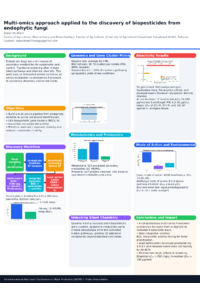
Poster Multiomics Endophytic Fungi.pdf
Assessing Ridolfia segetum Aqueous Extract as a Plant-Based Bioherbicide: Growth and Seedling Responses of Sinapis alba
Diversity and Biocontrol Efficacy of Entomopathogenic Fungi from Portuguese Chestnut Groves (Soutos) for Integrated and Sustainable Pest Management