Event submissions
EventsThe 5th International Electronic Conference on Brain Sciences & 1st International Electronic Conference on Neurosciences
Published
This submission belongs to the session S3. Behavioral Neuroscience of the event The 5th International Electronic Conference on Brain Sciences & 1st International Electronic Conference on Neurosciences
Published date
04 Mar, 2026
Academic Editor
'%3e%3cpath%20d='M12.6657%2010.9104C12.4185%2010.325%2012.0599%209.79327%2011.6097%209.34482C11.1609%208.89508%2010.6293%208.5365%2010.0442%208.28888C10.0389%208.28626%2010.0337%208.28495%2010.0285%208.28233C10.8446%207.69279%2011.3752%206.73249%2011.3752%205.64904C11.3752%203.8542%209.92103%202.39999%208.1262%202.39999C6.33136%202.39999%204.87715%203.8542%204.87715%205.64904C4.87715%206.73249%205.40774%207.69279%206.22393%208.28364C6.21869%208.28626%206.21345%208.28757%206.20821%208.29019C5.62129%208.5378%205.09463%208.89284%204.64265%209.34613C4.1929%209.79493%203.83432%2010.3266%203.58671%2010.9117C3.34345%2011.4845%203.21226%2012.0987%203.20023%2012.7209C3.19988%2012.7349%203.20233%2012.7488%203.20744%2012.7619C3.21255%2012.7749%203.22022%2012.7867%203.22998%2012.7968C3.23975%2012.8068%203.25142%2012.8147%203.26431%2012.8202C3.2772%2012.8256%203.29105%2012.8284%203.30504%2012.8284H4.09109C4.14874%2012.8284%204.19459%2012.7825%204.1959%2012.7262C4.2221%2011.7148%204.62823%2010.7676%205.34617%2010.0497C6.08899%209.30683%207.0755%208.89808%208.1262%208.89808C9.17689%208.89808%2010.1634%209.30683%2010.9062%2010.0497C11.6242%2010.7676%2012.0303%2011.7148%2012.0565%2012.7262C12.0578%2012.7838%2012.1037%2012.8284%2012.1613%2012.8284H12.9474C12.9613%2012.8284%2012.9752%2012.8256%2012.9881%2012.8202C13.001%2012.8147%2013.0126%2012.8068%2013.0224%2012.7968C13.0322%2012.7867%2013.0398%2012.7749%2013.0449%2012.7619C13.0501%2012.7488%2013.0525%2012.7349%2013.0522%2012.7209C13.0391%2012.0947%2012.9094%2011.4855%2012.6657%2010.9104ZM8.1262%207.9024C7.52486%207.9024%206.9589%207.6679%206.53312%207.24211C6.10733%206.81633%205.87283%206.25037%205.87283%205.64904C5.87283%205.0477%206.10733%204.48174%206.53312%204.05596C6.9589%203.63018%207.52486%203.39567%208.1262%203.39567C8.72753%203.39567%209.29349%203.63018%209.71927%204.05596C10.1451%204.48174%2010.3796%205.0477%2010.3796%205.64904C10.3796%206.25037%2010.1451%206.81633%209.71927%207.24211C9.29349%207.6679%208.72753%207.9024%208.1262%207.9024Z'%20fill='%235D1EE1'/%3e%3c/g%3e%3c/svg%3e) Woon‑Man Kung
Woon‑Man KungCitation
Valiant Orodeh Adeoye, Abayomi Mayowa Ajayi, Moses Aziakpono Omoirri, Peter Oghenebrorhie Orodeh, Emmanuel Ofutet, Felix Nnaemeka Ugwu, Magreth Michael Kileo, Andrew Mbowe, Ethanol Extract of Solanum campylacanthum Mitigates Hypoxia-Induced Neurobehavioural and Biochemical Alterations in Male Wistar Rats, in Proceedings of The 5th International Electronic Conference on Brain Sciences & 1st International Electronic Conference on Neurosciences, 9 March–11 March 2026, MDPI: Basel, Switzerland
Share
Email
Facebook
Twitter
LinkedIn
Ethanol Extract of Solanum campylacanthum Mitigates Hypoxia-Induced Neurobehavioural and Biochemical Alterations in Male Wistar Rats
'%3e%3cpath%20d='M12.6647%2010.9104C12.4176%2010.325%2012.0589%209.7933%2011.6088%209.34485C11.16%208.89511%2010.6283%208.53653%2010.0432%208.28891C10.038%208.28629%2010.0327%208.28498%2010.0275%208.28236C10.8437%207.69282%2011.3743%206.73252%2011.3743%205.64907C11.3743%203.85423%209.92005%202.40002%208.12522%202.40002C6.33038%202.40002%204.87618%203.85423%204.87618%205.64907C4.87618%206.73252%205.40677%207.69282%206.22296%208.28367C6.21772%208.28629%206.21248%208.2876%206.20724%208.29022C5.62031%208.53783%205.09365%208.89287%204.64167%209.34616C4.19192%209.79496%203.83334%2010.3266%203.58573%2010.9117C3.34247%2011.4846%203.21128%2012.0987%203.19925%2012.721C3.1989%2012.735%203.20135%2012.7489%203.20646%2012.7619C3.21157%2012.7749%203.21924%2012.7868%203.22901%2012.7968C3.23877%2012.8068%203.25045%2012.8148%203.26334%2012.8202C3.27623%2012.8256%203.29007%2012.8284%203.30406%2012.8284H4.09012C4.14776%2012.8284%204.19362%2012.7825%204.19493%2012.7262C4.22113%2011.7148%204.62726%2010.7676%205.34519%2010.0497C6.08802%209.30686%207.07452%208.89811%208.12522%208.89811C9.17592%208.89811%2010.1624%209.30686%2010.9052%2010.0497C11.6232%2010.7676%2012.0293%2011.7148%2012.0555%2012.7262C12.0568%2012.7839%2012.1027%2012.8284%2012.1603%2012.8284H12.9464C12.9604%2012.8284%2012.9742%2012.8256%2012.9871%2012.8202C13%2012.8148%2013.0117%2012.8068%2013.0214%2012.7968C13.0312%2012.7868%2013.0389%2012.7749%2013.044%2012.7619C13.0491%2012.7489%2013.0515%2012.735%2013.0512%2012.721C13.0381%2012.0947%2012.9084%2011.4856%2012.6647%2010.9104ZM8.12522%207.90243C7.52388%207.90243%206.95792%207.66793%206.53214%207.24215C6.10636%206.81636%205.87185%206.2504%205.87185%205.64907C5.87185%205.04773%206.10636%204.48177%206.53214%204.05599C6.95792%203.63021%207.52388%203.3957%208.12522%203.3957C8.72655%203.3957%209.29252%203.63021%209.7183%204.05599C10.1441%204.48177%2010.3786%205.04773%2010.3786%205.64907C10.3786%206.2504%2010.1441%206.81636%209.7183%207.24215C9.29252%207.66793%208.72655%207.90243%208.12522%207.90243Z'%20fill='%235D1EE1'/%3e%3c/g%3e%3c/svg%3e)
Valiant Orodeh Adeoye 1,2
Abayomi Mayowa Ajayi 3
Moses Aziakpono Omoirri 1,4
Peter Oghenebrorhie Orodeh 5
Emmanuel Ofutet 6
Felix Nnaemeka Ugwu 6
Magreth Michael Kileo 6
Andrew Mbowe 6
1. Department of Pharmacology, Faculty of Medicine and Pharmaceutical Sciences, Kampala International University in Tanzania, Gongo la mboto, Ilala District, Dar es salaam 12110, Tanzania, Tanzania
2. Department of Pharmacology and Therapeutics, College of Medicine, University of Ibadan, Sango-Ojo Road, Ibadan, Oyo State 200284, Nigeria
3. Department of Pharmacology and Therapeutics, College of Medicine, University of Ibadan, Sango-Ojo Road, Ibadan, Oyo State 200284, Nigeria, Nigeria
4. Department of Pharmacology and Toxicology, Faculty of Pharmacy, Federal University Oye-Ekiti, Ekiti State 371104, Nigeria
5. Department of Pharmacognosy and Traditional Medicine, Faculty of Pharmacy, Delta State University, Abraka, Delta state 330105, Nigeria, Nigeria
6. Department of Physiology, Faculty of Medicine and Pharmaceutical Sciences, Kampala International University in Tanzania, Gongo la mboto, Ilala District, Dar es salaam 12110, Tanzania, Tanzania
Abstract
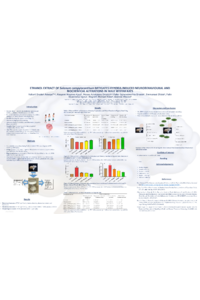
Introduction: Hypoxic stress disrupts homeostatic balance, triggering neuroendocrine and oxidative responses that manifest as behavioural impairments and biochemical alterations. Elevated corticosterone and oxidative damage are hallmark features of such stress-induced pathology. Solanum campylacanthum, a plant traditionally used as a pest deterrent, lacks empirical evidence supporting its medicinal application. However, its taxonomic synonym Solanum incanum has demonstrated antioxidant activity. This study investigates the potential of ethanol extract of S. campylacanthum leaves (EESC) to counteract hypoxia-induced neurobehavioral and biochemical disturbances in male Wistar rats.
Methods: Acute toxicity was evaluated using Lorke’s method, revealing an oral LD₅₀ exceeding 5000 mg/kg. Rats (150–200 g) were randomized into five orally treated groups (n=6): Group 1—vehicle (10mL/kg, distilled water) without exposure to hypoxia; Groups 2–5—10mL/kg, distilled water, EESC (100, 200, and 400 mg/kg), respectively, one hour before exposure to hypoxia which was induced by placing animals in sealed 450 mL chambers for 20 minutes daily over 14 days. Behavioural assessments (anxiety, depression, memory, and locomotion); serum corticosterone; brain oxidative markers, such as superoxide dismutase (SOD), catalase, glutathione (GSH), and malondialdehyde (MDA); and adrenal weights were evaluated.
Results: Oral administration of EESC significantly alleviated hypoxia-induced behavioural impairments, including anxiety, depressive-like symptoms, motor deficits, and memory decline. Biochemical analysis revealed that treatment with EESC dose-dependently reduced serum corticosterone and brain MDA levels when compared to hypoxic control, indicating suppressed stress and oxidative damage. Concurrently, antioxidant defenses were enhanced, with marked dose-dependent increases in SOD, catalase, and GSH concentrations. Additionally, EESC treatment significantly prevented adrenal gland hypertrophy, suggesting the modulation of the hypothalamic–pituitary–adrenal axis.
Conclusion: These findings collectively indicate that S. campylacanthum extract confers adaptogenic and antioxidant benefits under sustained hypoxic stress, supporting its potential for further pharmacological investigation.
Keywords
Solanum campylacanthum
Hypoxia
Neurobehavioural
Biochemical
Oxidative damage
Adaptogenic
Adrenal hypertrophy
Antioxidant
Stress-induced
Oral Presentation
val oral presentation neuro.pdf
Poster
Val poster refresh pdf.pdf
Remote evaluation of stereotypy in hypokinetic catatonia with the Timed Stereotypies Rating Scale
Chrysophyllum albidum G.don Pectin attenuated colitis-associated neurobehavioral deficits and inflammation in dextran sodium sulphate-induced colitis in high-fat diet fed Swiss mice