The 1st International Online Conference on Prosthesis
State of the Art and Future Perspectives on Dental Prosthesis
Part of the International Online Conference on Prosthesis series
10–12 December 2025
Dental Prosthesis, Dental Materials, Dental Implants and Prosthodontics, Digital Dentistry and Dental Implants, AI Robotics and Digital Tools Applied to Dental Prosthesis
- Go to the Sessions
- Event Details
-
- Welcome from the Chair
- Program Overview
- IOCPr 2025 Program - Day 1
- IOCPr 2025 Program - Day 2
- IOCPr 2025 Program - Day 3
- Book of Abstracts
- Poster Gallery
- Event Chairs
- Event Speakers
- Sessions
- Registration
- Instructions for Authors
- Publication Opportunity
- List of Accepted Submissions
- Event Awards
- Sponsors and Partners
- Conference Secretariat
- Events in series IOCPR
Announcements:
The IOCPr 2025 conference started.
The conference will be held from 10 - 12 December 2025, CET.
Day 1: Session 1 and Flash Poster Session
Day 2: Session 2
Day 3: Session 3
View the full program here: https://sciforum.net/event/IOCFB2024?section=#program.
All conference sessions will be virtual on Zoom. Registered attendees should have received unique Zoom links to attend the conference. If you have not received any Zoom links the day before the conference, please check your spam folder or contact us at iocpr2025@mdpi.com.
Click HERE for the poster gallery.
Click HERE for the abstract book (registrants only).
Welcome from the Chair
Dear Colleagues,
The 1st International Online Conference of Prosthesis ( ISSN: 2673-1592, Impact Factor: 4.5) focusing on the "State of the Art and Future Perspectives on Dental Prosthesis” will be held from 10 to 12 December 2025. The main purpose of the conference is to promote the use of recent advances in all dental prosthesis issues, address challenging problems, share the latest scientific innovations, and shape the future of dental implant prosthodontics-related technologies and processes.
This conference is an excellent opportunity for prosthodontics and dental implant researchers and scientists to interact, communicate with colleagues, learn from each other, share ideas and experiences, jointly solve problems, and suggest alternative solutions for a better future in the prosthodontics field. A distinct advantage of this virtual international conference is that participants are not required to travel and can simply attend the conference regardless of their location. Participants do not need to seek financial support for travel, nor do they need to leave the comfort of their home, office, and/or family to book a trip and, consequently, adjust to the corresponding time zone.
In this virtual conference setting, while presenters can deliver live and pre-recorded presentations simultaneously, participants can contribute to the discussion and provide feedback orally and/or using the "Chat" and "Reaction" functions. The main topics of this conference will cover the following:
- Dental Prosthesis;
- Dental Materials;
- Dental Implants and Prosthodontics;
- Digital Dentistry and Dental Implants;
- AI, Robotics and Digital Tools Applied to Dental Prosthesis.
All accepted abstracts will be published on the conference’s website. Participants are asked to submit an abstract of 200 to 300 words and refer to the abstract preparation guidelines in "Instructions for Authors" for more information.
Following the conference, participants may submit a full paper to MDPI’s Prosthesis journal. After the review process, authors of the accepted papers will receive a 20% discount on the APC before the paper is published in Prosthesis.
On behalf of the Organizing Committee, I welcome your attendance at the first International Online Conference of Prosthesis on the "State of the Art and Future Perspectives on Dental Prosthesis”.
Conference Chair:
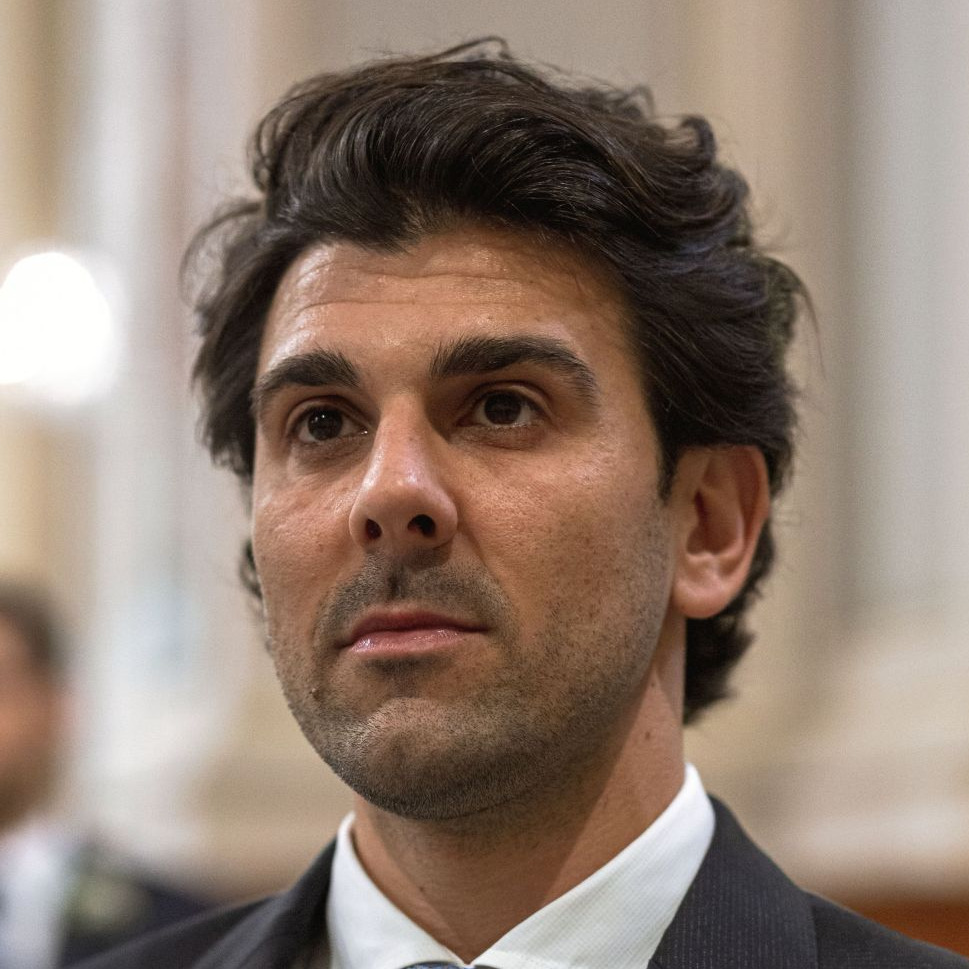
Prof. Dr. Marco Cicciù
Department of General Surgery and Surgical-Medical Specialties, University of Catania, Italy
Program Overview
|
Day 1 |
Day 2 |
Day 3 |
| Welcome and Opening Remarks Event Chair (10:30 CET| 04:30 EST| 17:30 CST) Session 1 . Dental Restorative Materials in Prosthodontics |
Session 2. Digital Technologies and Artificial Intelligence in Prosthodontics (Part 1) Keynote and Invited Talks (09:00 CET| 03:00 EST| 16:00 CST) |
Session 3. Innovations and Challenges in Dental Implants |
| Break | Break | |
| 10 November-Afternoon | 11 November-Afternoon | |
|
Flash Poster Session |
Session 2. Digital Technologies and Artificial Intelligence in Prosthodontics (Part 2) |
*CET - Central European Time
EST - Eastern Standard Time
CST - China Standard Time
IOCPr 2025 Program - Day 1
Session 1. Dental Restorative Materials in Prosthodontics
Date: 10 December 2025 (Wednesday)
Time: 10:30 (CET, Basel) | 04:30 (EST, New York) | 17:30 (CST Asia, Beijing)
| Time (CET) |
Speaker | Title |
|
10:30-10:40 |
Prof. Dr. Marco Cicciu |
Welcome and Opening Remarks |
| 10:40-10:50 | Prof. Dr. Marco Ferrari and Prof. Dr. Andrea Scribante Session Chairs |
Welcome by Session Chairs |
| 10:50-11:10 | Dr. Andrea Fabianelli Invited Speaker |
Palatal veneer as a valid tool in restorative dentistry |
| 11:10-11:25 | Maria Gabriela Packaeser de Souza Selected Speaker |
Economic and Environmental Evaluation of 3D Printing in Restorative Dentistry: A Scoping Review |
| 11:25-11:40 |
Yosra Gassara |
Less is More: The Impact of Minimally Invasive Posterior Restorations |
|
11:40-11:55 |
Ahila Singaravel Chidambaranathan Selected Speaker |
Incorporation of nanoparticles into the thermal behavior of polycarbonate resin: A systematic review |
| 11:55-12:10 |
Athina Niakou |
Cast Gold vs. Fiber Post-and-Core in Restoring Severely Compromised Mandibular Molars: A 3D-Finite Element Analysis |
| 12:10-12:25 | Rim kallala Selected Speaker |
Posterior Mini-Invasive Restorations: The Dilemma of Material Choice |
| 12:25-12:40 |
Malek Abidi |
Adhesive Cementation of Lithium Disilicate Versus Zirconia Materials: Study of 2 Case Reports |
| 12:40-12:55 |
Beatriz de Camargo Poker |
What is the effect of brushing and immersion in hygiene solutions on the roughness of 3D Printed resins for base and teeth dentures? |
| 12:55-13:10 | Fabio Andretti Selected Speaker |
Minimally Invasive Management of Traumatized Maxillary Incisors |
| 13:10-13:40 | Dr. Julfikar Haider Keynote Speaker |
3D printing of nanocomposites for denture |
| 13:40-14:00 | Break | Break |
Flash Poster Session
Date: 10 December 2025 (Wednesday)
Time: 14:00 (CET, Basel) | 08:00 (EST, New York) | 21:00 (CST Asia, Beijing)
| Time (CET) |
Speaker | Title |
|
14:00-14:05 |
Oana Elena Burlacu Vatamanu Poster Presenter |
3D Facial Imaging: A Comparative Study of Modern Scanning Techniques |
| 14:05:14:10 | Roldan Castro Hernandez Poster Presenter |
SUSTAINABLE 3D PRINTING : OPTIMIZING WASTE REDUCTION AND RECYCLING |
| 14:10-14:15 | Vincenzo Vallefuoco Poster Presenter |
Evaluating artificial surface bridging in intraoral scans: A comparative in vitro study of six IO scanners |
| 14:15-14:20 | Neada Hysenaj Poster Presenter |
OCCLUSAL SPLINTS THICKNESS IN THE TREATMENT OF TEMPOROMANDIBULAR DISORDERS, REVIEW OF CURRENT EVIDENCE. |
| 14:20-14:25 | Selçuk Demir Poster Presenter |
Metal–Organic Frameworks (MOFs) in Dental Research |
| 14:25:14:30 | Antonio Barbarisi Poster Presenter |
Microbiological study using phase-contrast microscopy for the disinfection of complete dentures anchored to ball-attachment implants |
| 14:30-14:35 | Sherine Philip Poster Presenter |
The Effect of Surface Modifications on the Biocompatibility of PEEK Dental Implant Material |
| 14:35-14:40 | Carlos Domínguez Vargas Poster Presenter |
Psychosomatic Bruxism and Dental Implant Complications |
| 14:40-14:45 | Haseeb H. AlDary Poster Presenter |
Patent-Based Socket-Shield Technique Utilizing Bone Trephine: A Case Series |
| 14:45-14:50 | Inesa Stonkutė Poster Presenter |
Systematic Review of CAD/CAM-Fabricated Customized Healing Abutments and Their Effect on Soft Tissue Esthetics |
| 14:50-14:55 | Hend Mohamed ElSayed Poster Presenter |
An In Vitro Acidic Media Simulation of GERD And Its Effect on Machine-Milled Ceramics' Optical Properties |
| 14:55-15:00 | Jyothi Venkat Sainath Poster Presenter |
Prosthetic rehabilitation of velopharyngeal insufficiency in a patient with locally advanced carcinoma oropharynx: a case report |
| 15:00-15:05 | Vito Cirillo Poster Presenter |
Evaluation of Dental Students’ Perception and Appreciation of 3D Augmented Reality Systems in Education: An Experimental Study. |
IOCPr 2025 Program - Day 2
Session 2. Digital Technologies and Artificial Intelligence in Prosthodontics (Part 1)
Date: 11 December 2025 (Thursday)
Time: 9:00 (CET, Basel) | 03:00 (EST, New York) | 16:00 (CST Asia, Beijing)
| Time (CET) |
Speaker | Title |
|
9:00-9:10 |
Prof. Dr. Fernando Zarone |
Welcome by Session Chairs |
| 9:10-9:30 | Prof. Dr. Umut Aslan Invited Speaker |
All on X prosthesis: A journey from analogue to digital |
| 9:30-10:00 | Prof. Dr. Marco Tallarico Keynote Speaker |
Where ART Meets Intelligence: AI and the Future of Veneer Aesthetics |
| 10:00-10:30 | Prof. Dr. Roberto Lo Giudice Keynote Speaker |
The precision in dentistry: AI and digital technologies |
| 10:30-10:50 |
Prof. Dr. Ieva Gendviliene |
Artificial Intelligence in Digital Implant Prosthodontics: Toward More Predictable Workflows |
|
10:50-11:10 |
Dr. Gennaro Ruggiero Invited Speaker |
Digital workflow in prosthodontics: New paradigms and smart solutions for effective simplification |
| 11:10-14:00 | Break | Break |
Session 2. Digital Technologies and Artificial Intelligence in Prosthodontics (Part 2)
Date: 11 December 2025 (Thursday)
Time: 14:00 (CET, Basel) | 8:00 (EST, New York) | 16:00 (CST Asia, Beijing)
| 14:00-14:15 |
Ruben Maria Paino |
Digital Implant-Prosthetic Protocol of Maxillary Lateral Incisor Agenesis: A 4-Year Clinical Assessment of Soft Tissue Integration and Biomaterial Compatibility |
|
14:15-14:30 |
Mariam Shawkat Selected Speaker |
A revolution in dentistry: AI-powered 3D scanning and printing system for custom prosthetics, implants, and orthodontics using Palano-enhanced implants |
| 14:30-14:45 |
Nesrine Slimene |
Clinical Application of Photogrammetry in Mandibular Full-Arch Immediate Implant Rehabilitation: A Case Report |
| 14:45-15:00 | Corina Marilena Cristache Selected Speaker |
A Full Digital Workflow for Immediate Removable Denture Fabrication and Overdenture Rehabilitation in Elderly Patients: A Proof of Concept for Maxilla and Mandible |
| 15:00-15:15 |
Annamaria Mastrosimone |
12 Month Clinical Evaluation of an Innovative Digital Index for the Follow-Up of Edentulous Patients |
| 15:15-15:30 |
Giulia de Durante |
Comparative in vitro study of the marginal fit of 3D-printed nanocomposite crowns with horizontal and vertical preparation geometries |
| 15:30-15:45 | Zhouyu Ding Selected Speaker |
DTX Studio Integrated with Exocad for Precise Esthetic Crown Lengthening and Veneers |
| 15:45-16:00 | Clarissa Esposito Selected Speaker |
Effect of Clinical Experience on Acquisition Time and Chairside CAD Design Accuracy: An In Vitro Study |
IOCPr 2025 Program - Day 3
Session 3. Innovations and Challenges in Dental Implants
Date: 12 December 2025 (Friday)
Time: 9:00 (CET, Basel) | 03:00 (EST, New York) | 16:00 (CST Asia, Beijing)
| Time (CET) |
Speaker | Title |
|
9:00-9:10 |
Prof. Dr. Ana Messias |
Welcome by Session Chair |
| 9:10-9:40 |
Prof. Dr. Luca Fiorillo |
Peri-implantitis: Etiopathogenesis, Risk Stratification, and Evidence-Based Management Pathways |
| 9:40-10:10 |
Prof. Dr. Gabriele Cervino |
Biomechanical Complications in Implant-Supported Prosthodontics: Evidence from Finite Element Analysis and Published Studies |
| 10:10-10:30 |
Dr. Guido Picciocchi |
Cemented vs scrwed prosthesis in digital era, new paradigms |
| 10:30-10:45 |
Abdulkareem Alotaibi |
Structural, Mechanical, and Biological Characterization of Polycaprolactone (PCL) Scaffolds for Dynamic Cell Cultures, Toward Dental Applications |
|
10:45-11:00 |
Mohamed Aissi |
Innovative Ag–CaP–ZrO₂ Coatings on Ti6Al4V: A Multifunctional Strategy to Improve the Durability of Dental Implants |
| 11:00-11:15 |
Jialing Sun |
Targeted delivery of miR-210 rosuvastatin in the treatment of periodontitis |
| 11:15-11:30 |
Mohammed Samir |
Internal Sinus Elevation with Osseodensification and i-PRF Sticky Bone Graft: A Case Report |
| 11:30-11:45 |
Yash Desai |
Evaluating the Effects of Mechanical and Electrical Stimuli on Osteoblast Mineralization in Dynamic Cell Cultures |
| 11:45-11:55 |
Prof. Dr. Marco Cicciu |
Closing Speech |
Book of Abstracts
The online version of the IOCPr 2025 Book of Abstracts, including program and all abstracts, is available to browse and download!
Event Chair
Department of General Surgery and Surgical-Medical Specialties, University of Catania, Italy
Prof. Dr. Marco Cicciu was born in Catania October 18, 1980. He received his scientific high school degree in July 1998. In the academic year 2002/03 he graduated in Dentistry with the score of 110 /110 cum laude at the University of Catania. He completed his PhD in Interceptive Orthodontics in 2006, at the University of Catania. Dr Marco Cicciu, completed two 6-month Fellowship on research at the Loma Linda University (from October 2007 to April 2008 and from November 2009 to May 2010), in order perform, on animals, experimental research of new carriers for the ' clinical application of growth factors, during which he received training to work on animals at the Animal Care Unit at Loma Linda University and Certificate of Research Training in Oral and Maxillofacial Surgery. He’s currently Visiting Professor at LLU. On 10 November 2009, he earned at the University of Milan Specialization in Oral Surgery with a score of 70/ 70 cum laude with a thesis entitled MSc "Using new carriers for the application of rhBMP2 bone defects in the jaw." Prof. Marco Cicciù is currently Associate Editor of the Journal Craniofacial Surgery. and Editor in Chief and of the “Prosthesis – MDPI” Journal. He’s Author of more then 250 international manuscript published on and international journals indexed on SCOPUS and PUBMED. From January 2021 he is Full Professor at the Dental School of the Messina University.
Session Chairs
Prof. Dr. Marco Ferrari
School of Dental Medicine, University of Siena, Italy
Prof. Dr. Marco Ferrari, graduated at School of Surgery and Medicine, of University of Pisa in 1983 and in General Dentistry degree in 1987 at University of Siena. In 1997-8 he attended the PostGraduate Program in Prosthodontics at Tufts University di Boston. In 1995 he took his PhD degree at University of Amsterdam, defending a thesis on “Bonding to dental structures”. In July 2002 Prof. Ferrari was appointed Full Professor and elected Dean of School of Dental Medicine, and he was renewed till now. Now is also the President and Coordinator of the Undergraduate course in Dentistry in english language at University of Siena and Chair of the Master Program in Prosthodontics Sciences at University of Siena. Between October 2003 and January 2006 he was appointed ‘Delegato del Rettore per le Relazioni Internazionali’ (Vice Rector of International Relations) of University of Siena. Past President of National Conference of Schools of Dental Medicine, IADR Central European Division, European Federation of Conservative Dentistry, Academy of Dental Materials. Actually is Secretary of Dental Materials Group of IADR. He is President Elect of European Prosthodontic Association and of Dental Material Group of IADR. In February 2019 was nominated in the Supreme Court of Health by the Italian Minister of Health. In May 2005, he was als appointed Director of School of Ph D in ‘Biotecnologies’. From November 2012 he was the Director of the Dental and Medical Biotechnology Department of Siena University and coordinator of the Tuscan School of Dental Medicine of Florence and Siena University. He is actually Professor of Prosthodontics and Restorative Dentistry, University of Leeds, Research Professor of Restorative Dentistry, Tufts University-Boston, Visiting Professor at Rochester University, Eastman Center, USA, and Xi’an University, 4th Biomedical University, China. He was in the editorial board of several international dental journals with impact factor (such as Journal of Dental Research, Journal of Dentistry, J Endodontics, Journal of Adhesive Dentistry, American Journal of
Prof. Dr. Andrea Scribante
Unit of Orthodontics and Paediatric Dentistry, Section of Dentistry, Department of Clinical, Surgical, Diagnostic and Paediatric Sciences, University of Pavia, Italy
Prof. Andrea Scribante is the Head of the Dental Hygiene Scool of The University of Pavia. He currently works as an Associate Professor at the School of Dentistry, School of Dental Hygiene, and the Postgraduate Program in Orthodontics (University of Pavia, Italy). He is a clinical resident at the Unit of Orthodontics and Paediatric Dentistry in the Section of Dentistry of the Department of Clinical, Surgical, Diagnostic, and Paediatric Sciences at the University of Pavia. He actively participates in academic publications and has signed over 190 publications in Scopus/PubMed-indexed international journals. He is also on the Editorial Committee or is an Editorial Board Member of many international journals and is a top peer reviewer for Publons.
Prof. Dr. Fernando Zarone
Department of Neurosciences, Reproductive and Odontostomatological Sciences, University Federico II of Napoli, Italy
Fernando Zarone is full professor of Prosthodontics, Dental Materials, Prosthetic and Lab Technologies, Implant Prosthodontics, and is head of SUDD (Scientific Unit of Digital Dentistry) at the Dept. of Neurosciences, Reproductive and Odontostomatological sciences, in the University “Federico II” of Naples (Italy). He teaches in the Degree programs in Dentistry and in Oral Hygiene, in many Post-graduate, Master, PhD courses and Continuing Education programs in his University and in other prestigious international Universities. He is professor in Digital Dentistry at University of Fés (Morocco). In the last decade, Prof. Zarone’s research work has been mainly aimed at the topics of Esthetics, new restorative materials and productive technologies, digital dentistry, minimally invasive restorations. A speaker at the most prestigeous international meetings / courses, he has been peer reviewer and author of publications in the main international scientific journals for years. Prof. Zarone is an active member of various scientific societies, like SIPRO (Italian Society of Prosthodontics and Oral Rehabilitation, in which is president elect) DDS (Digital Dentistry Society, in which is member of the scientific committee and past italian ambassador), IAO (Italian Society of Osseointegration), past-president of SIOPI (Italian Society of Dental- and Implant-Prosthodontics).
Prof. Dr. Roberto Sorrentino
Department of Neurosciences, Reproductive and Odontostomatological Sciences, University “Federico II” of Naples, Italy
Roberto Sorrentino graduated with honors in Dentistry in 2002 at the University Federico II of Naples. He has a Master of Science and Ph.D. in “Dental materials and their clinical applications” from the University of Siena (2004--2006). An Associate Professor of Prosthodontics and Digital Dentistry at the University Federico II of Naples and qualifying as a Full Professor in 2017, he lectures at several national and international Postgraduate and Master's Courses at different universities. He is a researcher, speaker, expert, and consultant for national and international dental companies, the author of more than 150 publications in national and international peer-reviewed scientific journals, and co-author of chapters of books on Prosthodontics, as well as a reviewer of more than 30 international peer-reviewed scientific journals. Past President of the Membership and Recruitment Committee of the International Association for Dental Research (IADR). Member of the Italian Society of Prosthodontics and Oral Rehabilitation (SIPRO). Member of the Academy of Dental Materials (ADM) and of the Italian Society of Dentistry and Maxillo-Facial Surgery (SIOCMF). Past Secretary of the Italian Society of Prosthetic Dentistry and Implant Prosthodontics (SIOPI). Member of the Restorative Advisory Board of GC Dental. The winner of national and international prizes for research and clinical activity, he is the co-founder of the dental blog and community, Zerodonto (www.zerodonto.com).
Prof. Dr. Ana Messias
Institute of Prosthodontics and Implant Dentistry, Faculty of Medicine, University of Coimbra, Portugal
Ana Messias received her degree in Dentistry in 2008 from the Faculty of Medicine of the University of Coimbra, Portugal, and completed a postgraduate programme in Prosthodontics in 2011 at the same university. She completed her PhD in 2019, specializing in biomechanics of dental implants and prostheses (Faculty of Medicine, University of Coimbra). Currently, Ana Messias is Assistant Professor of Removable Prosthodontics at the Faculty of Medicine of the University of Coimbra and teaches at the Doctoral Programme in Health Sciences of the same institution. Ana Messias has authored several international peer-reviewed articles and, as investigator at the Centre for Mechanical Engineering, Materials and Processes as well as at the Bioinformatics and Medical Statistics Laboratory of the University of Coimbra is active in the research field of numerical and experimental biomechanics of dental implants and prostheses, clinical studies and evidence synthesis.
Event Committee
Unit of Dental Hygiene, Section of Dentistry, Department of Clinical, Surgical, Diagnostic and Pediatric Sciences, University of Pavia, Italy
prevention, dental hygiene, periodontitis, bio-inspired, nonsurgical periodontal therapy, dentistry, scaling and root planing, probiotics, chlorhexidine, periodontology, clinical trial, orthodontic
Department of Industrial Engineering, University of Salerno Via Giovanni Paolo II, Fisciano, Italy
lubrication, tribology, acoustic, biomechanics, vibrations
Department of Neuroscience, Reproductive and Odontostomatological Sciences University of Naples "Federico II", Naples, Italy
dentistry, operative dentistry, biomaterials, endodontics
Department of Engineering, Manchester Metropolitan University, Manchester, UK
materials, polymer, machining, biomaterial, Li-ion battery, electric vehicle, photovoltaic, battery
Department of Oral and Maxillo Facial Sciences, “Sapienza” University of Rome, Rome, Italy
dental implant, periodontology, guided bone regeneration, guided tissue regeneration, digital workflow
Department of Prosthetic Dentistry and Dental Materials, Iuliu Hat, ieganu University of Medicine and Pharmacy, Cluj-Napoca, Romania
prosthodontics, orthodontics, occlusion, malocclusion, temporomandibular joint, temporomandibular joint disorder, dentistry, digital dentistry, MRI, CBCT, clinical medicine, TMJ, TMD, pediatric dentistry, stomatology, dental medicine
Department of Prosthodontics, School of Dental Medicine, University of Zagreb, Croatia
oral health related outcomes , prosthodontics
Department of Biomedical and Dental Sciences, Morphological and Functional Images, School of Dentistry, University of Messina, Italy
biomaterials, oral surgery, implantology, oral pathology, prosthodontics, bioengineering
Department of Biomedical and Dental Sciences and Morphofunctional Imaging, Messina University, Messina, Italy
dentistry, oral surgery, implantology, dental materials, bone regeneration, growth factors, digital dentistry
Keynote Speakers
Multidisciplinary Department of Medical-Surgical and Odontostomatological Specialties, University of Campania “Luigi Vanvitelli”, Italy
Peri-implantitis: Etiopathogenesis, Risk Stratification, and Evidence-Based Management Pathways
surgery; biomaterial; bone; dental implant; prosthesis; periodontal; Orthodontics; titanium surface; Inflammation; dentistry; regenerative; oral health; food; teeth; biofilm; digital; x-ray; cancer; Cytokines; growth factors; Bioengineering; fem; radiolog
Department of Medicine, Surgery and Pharmacy, University of Sassari, Italy
Where ART Meets Intelligence: AI and the Future of Veneer Aesthetics
dental implant, occlusion, bone atrophy, peri-implantitis, guided surgery
Department of Biomedical and Dental Sciences, Morphological and Functional Images, School of Dentistry, University of Messina, Italy
Biomechanical Complications in Implant-Supported Prosthodontics: Evidence from Finite Element Analysis and Published Studies
biomaterials, oral surgery, implantology, oral pathology, prosthodontics, bioengineering
Department of Engineering, Manchester Metropolitan University, Manchester, UK
3D printing of nanocomposites for denture
cad-cam; materials; polymer; Machining; biomaterial; li-ion battery; electric vehicle; photovoltaic; battery; dental biomaterials
Department of Biomedical and Dental Sciences and Morphofunctional Imaging, Messina University, Messina, Italy
The precision in dentistry: AI and digital technologies
dentistry, oral surgery, implantology, dental materials, bone regeneration, growth factors, digital dentistry
Invited Speakers
All on X prosthesis: A journey from analogue to digital
Implantology, digital dentistry, laminate veneers
Department of Neurosciences, Reproductive and Odontostomatological Sciences, University “Federico II” of Naples, Italy
Digital workflow in prosthodontics: New paradigms and smart solutions for effective simplification
dentistry, cad-cam, digital dentistry, dental materials, prosthodontics
Artificial Intelligence in Digital Implant Prosthodontics: Toward More Predictable Workflows
Inorganic Materials, Implant Dentistry, Oral Surgery, Maxillofacial Surgery, Bone Regeneration, Bone Resorption, Bone pathology, Osseointegration
Palatal veneer as a valid tool in restorative dentistry
Restorative Dentistry, Dental Materials, Biomaterials, Adhesion, Composite Resins, Operative Dentistry, Esthetic Dentistry
Genoa University, Italy
Registration
If you are registering several people under the same registration, please do not use the same email address for each person, but their individual university email addresses. Thank you for your understanding.
Please note that the submission and registration are two separate parts. Only scholars who registered can receive a link to access the conference live streaming. The deadline for registration is 8 December 2025.
Instructions for Authors
The 1st International Online Conference on Prosthesis will accept abstracts only.
The accepted abstracts will be available online on Sciforum.net during and after the conference.
1. Deadline for abstract submission: 12 August 2025 12 September 2025
2. Deadline for abstract acceptance notification: 11 October 2025
You will be notified of the acceptance of an oral presentation in a separate email.
Abstract submissions should be completed online by registering with www.sciforum.net and using the "New Submission" function once logged into the system. No physical template is necessary.
1. The abstract structure should include the introduction, methods, results, and conclusions sections of about 200–300 words in length.
2. All abstracts should be submitted and presented in clear, publication-ready English with accurate grammar and spelling.
3. You may submit multiple abstracts. However, only one abstract will be selected for oral presentation.
Detailed Requirements:
1. The submitting author must ensure that all co-authors are aware of the contents of the abstract.
2. Please ensure that all co-author information is thoroughly completed when submitting your abstract to prevent any omissions.
3. The requirements for full affiliation include:
(1) Department/School/Faculty/Campus;
(2) University/Company/Institute;
(3) City;
(4) Post/ZIP code or equivalent, where available;
(5) Country.
4. Please select only one presenter for each submission. If you would like to change the presenter after submission, please email us accordingly.
Note: We only accept live presentations.
- Size in pixel: 1080 width x 1536 height-portrait orientation.
It is the authors' responsibility to identify and declare any personal circumstances or interests that may be perceived as inappropriately influencing the representation or interpretation of clinical research. If there is no conflict, please state "The authors declare no conflicts of interest." This should be conveyed in a separate "Conflict of Interest" statement preceding the "Acknowledgments" and "References" sections at the end of the manuscript. Any financial support for the study must be fully disclosed in the "Acknowledgments" section.
MDPI, the publisher of the Sciforum.net platform, is an open access publisher. We believe authors should retain the copyright to their scholarly works. Hence, by submitting an abstract to this conference, you retain the copyright to the work, but you grant MDPI the non-exclusive right to publish this abstract online on the Sciforum.net platform. This means you can easily submit your full paper (with the abstract) to any scientific journal at a later stage and transfer the copyright to its publisher if required.
Only those who attend the live sessions or whose abstracts have been accepted will be eligible to receive Certificates of Participation. After the conference, certificates will be available in your logged-in area of Sciforum.net under “My certificates.”
Publication Opportunity
1. Prosthesis Journal Publication
Participants in this conference are cordially invited to contribute a full manuscript to a Special Issue published in Prosthesis (ISSN: 2673-1592, Impact Factor 4.5), with a 20% discount on the publication fee. All submitted papers will undergo MDPI’s standard peer-review procedure. The abstracts should be cited and noted on the first page of the paper.
Please note if you have IOAP/association discounts, conference discounts will be combined with IOAP/association discounts. Conference discounts cannot be combined with reviewer vouchers.
2. Proceeding Paper Publication
All accepted abstracts will be published in the conference report of IOCPr 2025 in Medical Sciences Forum (ISSN: 2673-9992); if you wish to publish an extended proceeding paper (4-8 pages), please submit it to the same journal after the conference.
Authors are asked to disclose that it is a proceeding paper of the IOCPr 2025 conference paper in their cover letter.
Proceedings submission deadline: 26 January 2026
Carefully read the rules outlined in the 'Instructions for Authors' on the journal’s website and ensure that your submission adheres to these guidelines.
- Title
- Full author names
- Affiliations (including full postal address) and authors' e-mail addresses
- Abstract
- Keywords
- Introduction
- Methods
- Results and Discussion
- Conclusions
- Acknowledgements
- References.
List of accepted submissions (41)
| Id | Title | Authors | |||||||||||||||||||||||||||||||||||||||
|---|---|---|---|---|---|---|---|---|---|---|---|---|---|---|---|---|---|---|---|---|---|---|---|---|---|---|---|---|---|---|---|---|---|---|---|---|---|---|---|---|---|
| sciforum-141064 | Less is More: The Impact of Minimally Invasive Posterior Restorations | , |
Show Abstract Comment |
||||||||||||||||||||||||||||||||||||||
|
Abstract Introduction: Methods: Results: Conclusions: |
|||||||||||||||||||||||||||||||||||||||||
| sciforum-148843 | Compressive Strength, Flexural Strength, Surface Microhardness, Wettability, and Bacterial Inhibition of Acrylic Bone Cements Modified with Silver-Doped CNTs |
Show Abstract Comment |
|||||||||||||||||||||||||||||||||||||||
|
Background: Acrylic bone cement is widely used in orthopedics and dentistry for primary bone fixation. However, its limited mechanical strength and poor biological interface pose clinical challenges. To enhance their properties, carbon nanotubes (CNTs) and silver nanoparticles (Ag) have been explored. CNTs are known to reinforce polymers, while Ag nanoparticles provide antimicrobial benefits. Combining both may yield a synergistic effect, improving mechanical strength and antibacterial performance. Objective: This study evaluates the effect of incorporating 0.05 wt% silver-doped carbon nanotubes (Ag-doped CNTs) into acrylic bone cement. Key properties assessed include compressive strength, flexural strength, surface microhardness, wettability, and antibacterial activity against Staphylococcus aureus. Methods: A control group was prepared using traditional acrylic powder mixed with monomer liquid. In the modified group, 0.05 wt% Ag-doped CNTs were added to the acrylic powder before mixing. Compressive strength, flexural strength, surface microhardness, and wettability were tested. Antibacterial activity was evaluated using an agar diffusion test against S. aureus to test the inhibition zone. Independent sample t-tests (p < 0.05) were used to compare results between groups. Results: The modified acrylic cement exhibited significantly higher compressive strength (91 MPa), flexural strength (73 MPa), surface microhardness (39.1 VHN), and improved wettability (contact angle: 92.2°) compared to the control group, which recorded values of 72.3 MPa, 54.3 MPa, 21.1 VHN, and 107.9°, respectively. Additionally, the modified cement demonstrated a larger inhibition zone diameter against S. aureus (12.6 mm) than the control (9.1 mm) (P < 0.05). Conclusion: Incorporating 0.05 wt% Ag-doped CNTs into acrylic bone cement significantly improves its mechanical and antibacterial properties. This modification holds strong potential for clinical applications in both orthopedics and dentistry, offering enhanced strength, better surface characteristics, and effective bacterial inhibition compared to traditional formulations. |
|||||||||||||||||||||||||||||||||||||||||
| sciforum-150015 | What is the effect of brushing and immersion in hygiene solutions on the roughness of 3D Printed resins for base and teeth dentures? |
,
,
,
,
Vinicius Sabedra ,
Mariane Gonçalves ,
|
Show Abstract Comment |
||||||||||||||||||||||||||||||||||||||
|
Printed digital and conventional complete dentures require appropriate hygiene materials and methods to prevent the formation of biofilm, tartar, stains, inflammation, and odor. However, some hygiene materials can affect resin properties, such as surface roughness, which, when increased, can favor biofilm adhesion and development. In the literature, it has been reported that roughness values ≤ 0.2 µm are considered clinically acceptable; however, studies evaluating the effects of hygiene protocols on the roughness of printed resins are scarce. So, this study compared the roughness of 3D printed resins for denture bases (3DB) and teeth (3DT) to conventional resins for base (CB) and teeth (CT), after hygiene protocol use. Ten specimens of each material were subjected to brushing and immersion in water (EA, control), 0.25% sodium hypochlorite (EHS), or 0.15% triclosan (ET). Roughness was measured after obtaining the specimens (T0) and after simulating daily 6-minute brushing and daily 20-minute immersion for 1 (T1) and 3 years (T3), using a confocal laser microscope (µm). Data were analyzed using Generalized Estimating Equations (GEEs) and Wald test with Bonferroni adjustment (α=0.05). Roughness was influenced by the following interaction: resin × hygiene protocol × time (p=0.012). In T1, the average roughness (Sa - µm) of the 3DB (EA: 0.239; EHS: 0.258; and ET: 0.265) and 3DT (EA: 0.211; EHS: 0.202; ET: 0.248) resins was considered unacceptable. In T3, the roughness of the 3DB (EA: 0.183; EHS: 0.161; ET: 0.199) and 3DI (EA: 0.181; EHS: 0.173; ET: 0.188) resins decreased, possibly due to the removal of superficial layers of resin through brushing, exposing inner layers with less roughness. Conventional resin roughness remains within acceptable limits regardless of hygiene protocol. Compared to conventional resins, printing resins should be indicated for short-term situations, when associated with the proposed hygiene protocols. Hygiene protocols can be recommended for both conventional resins during the periods studied. |
|||||||||||||||||||||||||||||||||||||||||
| sciforum-146898 | SUSTAINABLE 3D PRINTING : OPTIMIZING WASTE REDUCTION AND RECYCLING |
,
David Atilio ,
Alberto Pelluz
|
Show Abstract Comment |
||||||||||||||||||||||||||||||||||||||
|
Introduction: The accuracy and efficiency of dental model fabrication has experienced significant progress in recent years. However, environmental concerns, such as the use of petrochemical by-products, overproduction of plastic and waste management, have redesigned new materials that can lessen these environmental challenges and contribute to a better ecological transition. Objective: To analyze cutting-edge technology in 3D printing techniques applied to the fabrication of dental models, with a particular focus on sustainable practices. Methods: This systematic review was conducted according to PRISMA guidelines. A comprehensive literature search was conducted using the electronic academic databases PubMed, Web of Science, and Scopus. The search strategy incorporated specific keywords and MeSH terms relevant to sustainable dental 3D printing. Scientific articles reviewed and published between 2020 and 2025 were considered. Studies written in English, German and Spanish were included in the selection process. Results: A total of five in vitro studies met the inclusion criteria and contain sufficient information for this review. All studies are in vitro and are peer reviewed articles from the years 2023-2024. The materials investigated in these studies were polylactic acid (PLA), recycled PLA, recycled resins and soy-based resins. The studies employed either fused filament fabrication (FFF) or vat polymerization technology (VAT) as the main 3D printing techniques. Each study addressed sustainability as a central theme. Conclusion: The results of this systematic review show the potential of 3D dental models in the adoption of more sustainable materials such as biodegradable and/or recyclable polymers but this approach is relatively novel in the dental sector. The performance of these innovative materials has improved in terms of dimensional accuracy, efficiency and clinical application. Materials such as polylactic acid (PLA) and fused filament fabrication (FFF) are set to play a key role in the advancement of environmentally friendly dental manufacturing. |
|||||||||||||||||||||||||||||||||||||||||
| sciforum-149643 | Enhancing thermal and thermomechanical properties of 3D printed denture base resin with titanium dioxide nanotubes | , , |
Show Abstract Comment |
||||||||||||||||||||||||||||||||||||||
|
Introduction: Three-dimensional printed dentures have poor thermal and thermomechanical properties, which hinder their clinical applications. Previous denture nanocomposite studies focused on mechanical and physical properties. In this study, the impacts of TiO2 NT addition to 3D-printed denture based on some thermal properties were studied for the first time. Methodology: Digitally formed specimens (DLP Asiga 3D printer) for 1) Hot-Disc (thermal conductivity (W/km), diffusivity (mm2/s), volumetric heat capacity (MJ/m3K) tests). 2)Thermomechanical-analyzer (TMA) (coefficient of thermal expansion (10‒6/K), thermal strain (%) and elastic modulus (N/mm2)). 3) Glass transition temperature (Tg) (⁰C) (by DSC, DTA and TMA). 4) Thermal stability (weight%). 5) Degree of conversion (DC%) by ATR-FTIR. Following ISO (22007, 11359, 11357, 11358 and 10640), respectively. TiO2 NTs (Diameter=30-70nm and length=2-4µm) were added at 1.0 wt.% and 2.0 wt.%. Ultrasonication (3 minutes) for nanotube dispersion, magnetic stirrer (8 hours) for TiO2 NTs/ 3D liquid resin mixing. Printing settings: slice thickness=50µm, heater temperature=30°C, wavelength=385nm, 90-degree printing orientation and (65 watts/30 minutes) post-polymerization curing. The effective sample size was 30 specimens for each test (10 specimens for each group), which was calculated using G power (power=85%, alpha error=.05, effect size=0.25, groups=3, measurements=5 (30°C, 40°C,50°C,60°C,70°C)). Data analysis via SPSS and Prism 8.4. Shapiro–Wilk (normality), Levene (homogeneity), ANOVA and post-hoc tests were utilized. Significance level at α=.05. Results: Increasing TiO₂ NT concentration improved all the tested thermal and thermomechanical properties. However, Tg increased for the 1.0 wt.% group and decreased for the 2.0 wt.% group. The Tg decreased due to the aggregation of the nanofiller and functioned as a plasticizer or impurity, thus increasing the mobility of the chains. The DC% increased in both 1.0 wt.% and 2.0 wt.% groups, although this increase was statistically non-significant with a P value of 0.9801). Potential clinical impact: improvement in thermal perception. A marginal deterioration reduction between different denture parts interface, and improved ability to withstand wide range of intra-oral temperatures during eating. |
|||||||||||||||||||||||||||||||||||||||||
Event Awards

To acknowledge the support of the conference's esteemed authors and recognize their outstanding scientific accomplishments, we are pleased to announce that the conference will provide 4 awards including Best Oral Presentation Award and Best Poster Award.
The Awards
Number of Awards Available: 4
The Best Oral Presentation Award is given to the submission judged to make the most significant oral contribution to the conference.
The Best Poster Award is given to the submission judged to make the most significant and interesting poster for the conference.
There will be four winners selected for these awards. The winner will receive a certificate and 200 CHF each.
Sponsors and Partners
For information regarding sponsorship and exhibition opportunities, please click here.
Organizers
Media Partners
Conference Secretariat
Ms. Malina Naclad
Ms. Teodora-Felicia Sandru
Mr. Ionut Spatar
Mr. Russell Wang
Email: iocpr2025@mdpi.com
For inquiries regarding submissions and sponsorship opportunities, please feel free to contact us.
S1. Dental Restorative Materials in Prosthodontics
Session Chairs
Prof. Dr. Marco Ferrari, School of Dental Medicine, University of Siena, Italy
Prof. Dr. Andrea Scribante, Unit of Orthodontics and Paediatric Dentistry, Section of Dentistry, Department of Clinical, Surgical, Diagnostic and Paediatric Sciences, University of Pavia, Italy
Show all published submissions (15) Hide published submissions (15)
Submissions
List of Papers (15) Toggle list
S2. Digital Technologies and Artificial Intelligence in Prosthodontics
Session Chairs
Prof. Dr. Roberto Sorrentino, Department of Neurosciences, Reproductive and Odontostomatological Sciences, University “Federico II” of Naples, Italy
Prof. Dr. Fernando Zarone, Department of Neurosciences, Reproductive and Odontostomatological Sciences, University Federico II of Napoli, Italy
Show all published submissions (13) Hide published submissions (13)
Submissions
List of Papers (13) Toggle list
S3. Innovations and Challenges in Dental Implants
Session Chair
Prof. Dr. Ana Messias, Institute of Prosthodontics and Implant Dentistry, Faculty of Medicine, University of Coimbra, Portugal
Show all published submissions (13) Hide published submissions (13)
Submissions
List of Papers (13) Toggle list